

AI-Assisted Diagnosis Innovation Development Forum: Exploring the Future Path of AI in Medicine
The development of artificial intelligence (AI) signifies, in a sense, that technology is penetrating and profoundly transforming our lives. As AI intersects with the medical field and is applied to specific diagnostic contexts, it has significantly enhanced physicians’ diagnostic capabilities and improved patients’ treatment experiences. AI-assisted diagnostic technologies not only demonstrate effective application in specific disease areas but also enable automated disease screening in certain cases. The inherent advantages of AI-assisted diagnosis, along with its ongoing expansion and exploration within medicine, are creating new possibilities for healthcare.
In China, the total number of patient visits to medical institutions of all types exceeds 7 billion annually. Issues such as uneven distribution and irrational structural layout of medical resources persist, placing immense pressure on the healthcare industry to meet service demands. With the rapid advancement of healthcare informatization and the implementation of electronic medical records (EMRs) and health archives, vast amounts of data have been generated. Leveraging artificial intelligence (AI) technologies to assist in clinical processes and integrate and analyze this data presents new opportunities to enhance healthcare service capacity and address the shortage of medical resources.
On June 17, 2022, hosted by VB100 and VCBeat,Forum on Innovative Development of AI-Assisted Diagnosis, we will jointly explore how AI-assisted diagnosis supports screening and prevention in primary healthcare, as well as its future development directions and high-potential sectors. Our discussion will cover four key aspects: policy and environmental analysis, expert interpretation by physicians, industry exploration, and future outlooks, focusing on the implementation and effectiveness of AI-assisted diagnosis in hospitals.
Research and Application of AI Imaging in the Future Development of Medicine
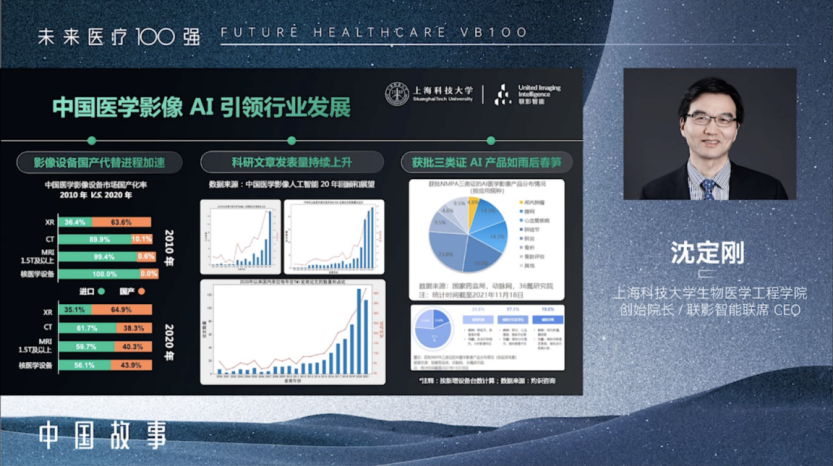
Shen Dinggang | Founding Dean, School of Biomedical Engineering, ShanghaiTech University / Co-CEO, United Imaging IntelligenceO
Global Momentum Drives Rapid Expansion of the AI Medical Imaging Industry; Global Market Size Projected to Exceed RMB 280 Billion by 2027. The Asia-Pacific Region Is Poised to Become the Fastest-Growing Segment in the Global Market Over the Next Five Years. Robust Growth Across the Industrial Chain, Research Sector, and Class III Medical Device Approval Processes Underscores the Flourishing State of the AI Medical Imaging Industry.
Professor Shen Dinggang shared two application examples of intelligent AI imaging. One is the intelligent management of the full life cycle of stroke, which connects the pathway from daily prevention to postoperative rehabilitation, providing full-cycle health tracking for patients. In particular, during emergency care, AI can intelligently quantify patient lesions based on medical imaging data and automatically issue critical alerts, assisting clinicians in formulating more precise treatment plans. The other is an intelligent management system for the full life cycle of lung cancer, which establishes an integrated smart management framework encompassing pre-hospital assessment, early screening, diagnosis, treatment, prognosis, and follow-up, thereby improving physicians' work efficiency while enhancing patient treatment outcomes.
Professor Dinggang Shen believes that the future development of AI in medical imaging will undoubtedly be driven by collaborative efforts among industry, academia, research institutions, and healthcare providers, leading to integrated intelligent diagnosis and treatment across multiple scenarios, diseases, and entire clinical workflows.
Current Status and Development Trends of Medical AI in the Diagnosis and Treatment of Cardiovascular Health
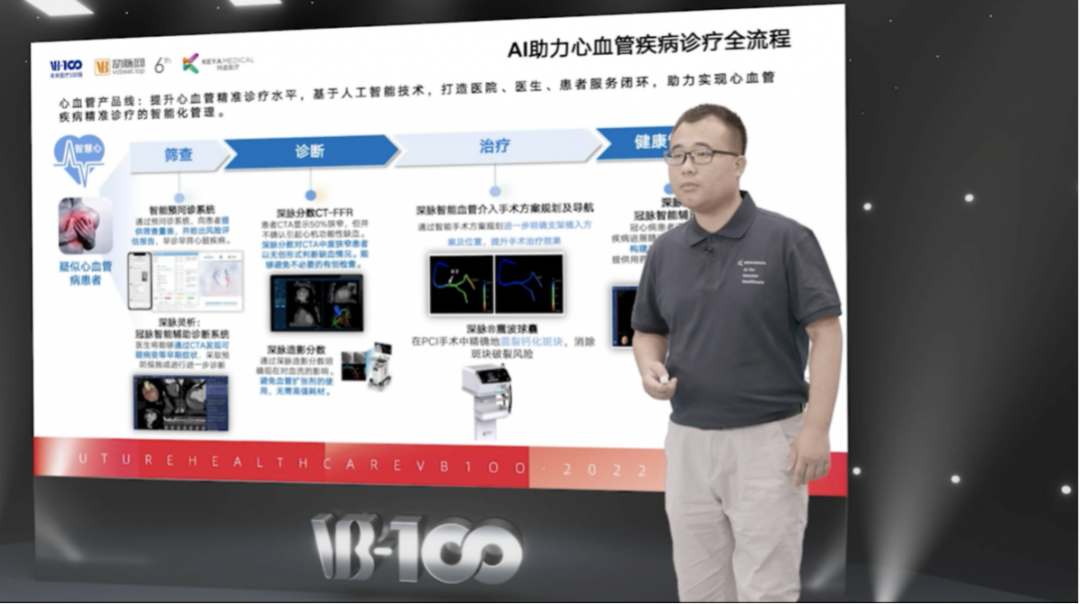
Li Guang | Head of Algorithms, Keya Medical Technology Co., Ltd.
According to the "Report on Cardiovascular Health and Diseases in China," there are currently 330 million patients with cardiovascular diseases in China, including 17 million with coronary heart disease (CHD). The large population affected by CHD has made it the leading cause of death in China, with its incidence and mortality rates continuing to rise annually, posing a serious threat to the health of Chinese residents. Meanwhile, as the level of medical security for residents improves, public attention toward cardiovascular diseases is gradually shifting from single-disease diagnosis and treatment, characterized as "low-frequency essential needs," to a full life-cycle health management model, characterized as "high-frequency essential needs."ThatAITechnologies in Coronary Heart Diseasein diagnosis, treatment, and full-cycle managementDiagnosis and TreatmentDomain EnergyExertWhat is its function?
Mr. Li Guang shared with us DeepVessel FFR (DVFFR), the first non-invasive product for precise assessment of cardiovascular function approved for market launch in China. From an application perspective, Keya Medical’s CT-FFR product requires neither vasodilator drugs nor pressure wires, significantly reducing patient discomfort and costs. At the technical level, to ensure algorithmic efficacy, the DVFFR model extracts imaging, structural, and functional features from various segments of the blood vessels. It employs a bidirectional long short-term memory (LSTM) recurrent neural network to comprehensively integrate local information at each point and global information across vascular branches. Through effective learning and thorough validation on extensive lesion data, the system can calculate FFR values at every point in the vascular tree, achieving precise FFR assessment. It demonstrates strong consistency with pressure wire-measured FFR, while outperforming HeartFlow’s product in the United States in terms of both accuracy and computational speed. Non-invasive, convenient, and rapid, DVFFR can be used not only for the precise diagnosis of coronary heart disease but also for cardiovascular health assessment and long-term health management.
Laying the Foundation for AI-Assisted Diagnosis: The Normalization of Digital Diagnostics

Fan Yujun | Founder of Tangerine, General Manager of Suruidi Medical Technology
Data show that there are currently fewer than 20,000 licensed pathologists in China. Based on the National Health Commission’s staffing requirement of one to two pathologists per 100 hospital beds, the shortage of pathologists exceeds 90,000. Major pain points facing the pathology diagnostics industry include uneven distribution of pathological resources, prolonged diagnostic turnaround times, low efficiency, and excessive workloads.
Mr. Fan Yujun believes that digital pathology is a breakthrough in addressing many of the pain points in pathological diagnosis. First, digital pathology provides higher-quality visual data for clinical diagnosis, saving physicians’ time in diagnosis and treatment. Second, it can promote tiered healthcare delivery and help resolve imbalances in medical resource distribution, enabling scenarios where patients are examined at the county level while diagnoses are made at the provincial level, thereby improving diagnostic capabilities at primary-care hospitals.
In the future, with the advancement of digital pathology, China will accumulate a rich repository of big data on human pathology. Building on this foundation, AI technologies will be able to learn from the diagnostic experience of physicians across China, enabling high-performance and high-accuracy diagnosis of digital pathology images. This represents the central axis driving the integration of AI intelligence into the field of pathology.
Construction of an AI-Integrated Imaging Middle Platform
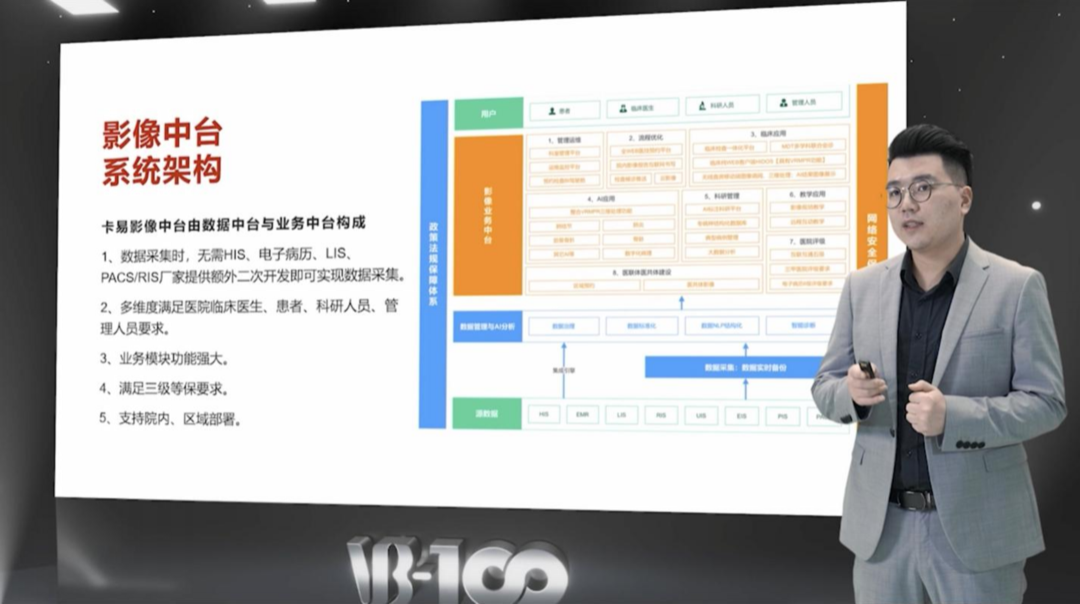
Chen Chuang | Product Manager, Kayi Smart Solutions
With the rapid development of intelligent healthcare in China, issues surrounding the management and utilization of medical data have gradually come to light. First, the volume of imaging data is massive and continues to grow, making it challenging for hospitals to manage this data independently. Second, a lack of strategic planning during the digitalization of hospital information systems has led to significant redundant work. Third, data governance and regulation must balance the imperative of ensuring data security with the need to meet the research requirements of physicians and partner academic institutions.
Thus, the imaging middle platform for the healthcare sector has emerged. Mr. Chen Chuang believes that the imaging middle platform is more than just a data middle platform; it serves as an intermediate layer between the front-end imaging business operations and the back-end technical infrastructure, bridging front-end needs with back-end resources. It represents a process of abstracting and sharing data capabilities to support business operations. For instance, as digitalization continues to advance and iterate, once imaging data is uploaded to the middle layer, more advanced algorithms can be employed to process the images, thereby sparing physicians from the frequent need to learn new processing software. Meanwhile, security issues associated with the data, as well as management and collaboration challenges, can also be addressed by the imaging middle platform.
How Industrial Parks Empower the Development of the AI Healthcare Industry
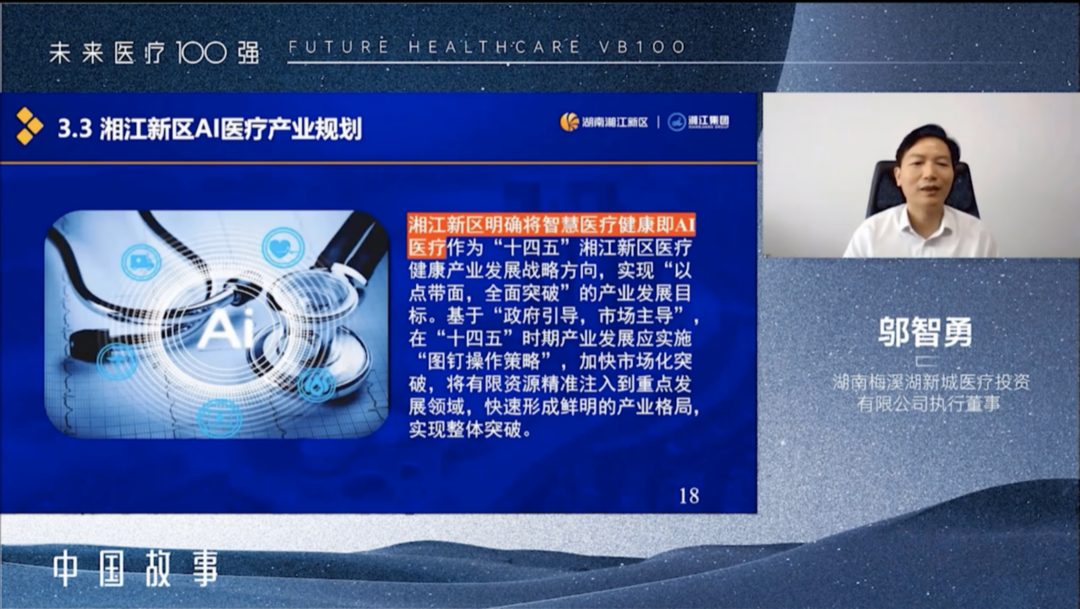
Wu Zhiyong | Executive Director, Hunan Meixihu New City Medical Investment Co., Ltd.
Currently, the AI healthcare industry still faces challenges such as difficulties in implementing supportive policies, inadequate data-sharing mechanisms, limited financing channels, and a lack of application scenarios.
Mr. Wu Zhiyong stated that the most critical aspect of building an industrial park is to help innovative enterprises address the aforementioned issues. Currently, Hunan Province has explicitly designated AI-powered medical devices as a key area for support and has established a green approval channel for medical devices to better serve the broad community of intelligent medical device companies. Taking Xiangjiang New Area as an example, it benefits from collaborative support from research institutions such as Xiangya School of Medicine and Hunan Provincial People's Hospital.2020In 2024, the number of enterprises in the health and medical industry chain in Xiangjiang New Area exceeded500home. Meanwhile, Xiangjiang New Area has clearly designated smart healthcare asAIAs a strategic direction for the development of the medical and health industry in Xiangjiang New Area during the 14th Five-Year Plan period, the healthcare sector has launched the “Meixi Lake–Wutong Tree” industrial chain soft environment initiative, leveraging parks such as the Changsha Health and Medical Big Data Industry Incubation Base as carriers, with a commitment to providing allAIHealthcare companies offer the best onboarding conditions and the most favorable innovation environment.
Roundtable Discussion: Technology and Applications: Exploring the Future Landscape of Medical AI
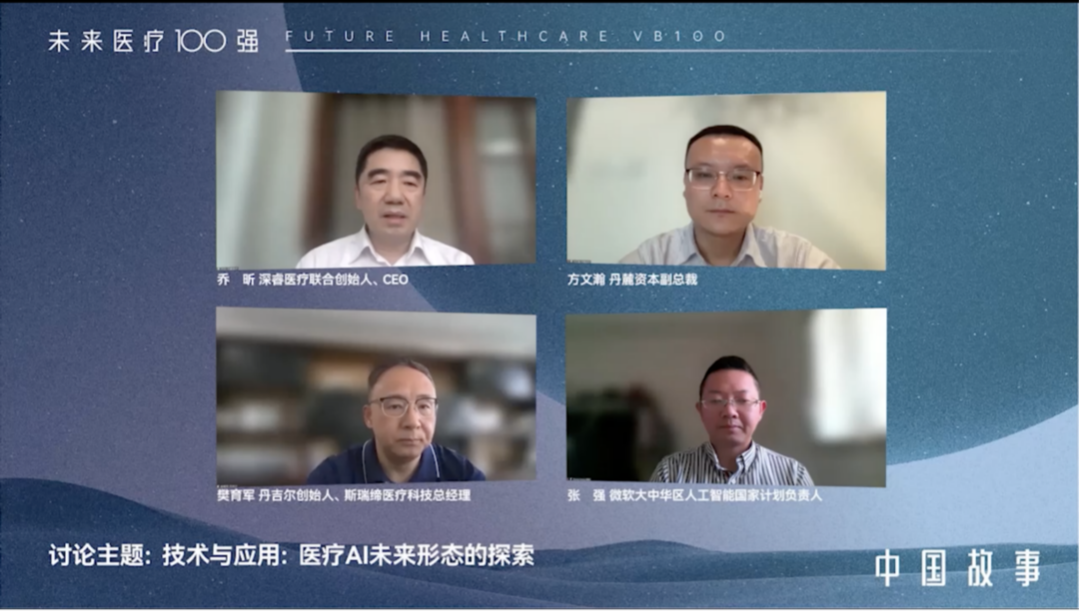
Moderator: Fang Wenhan | Vice President, Danlu Capital
Fan Yujun | Founder of Tangerine, General Manager of Sirui Di Medical Technology
Zhang Qiang | Head of Microsoft’s National AI Initiative, Greater China
Qiao Xin | Co-founder and CEO of Deepwise Medical
The application of artificial intelligence in the healthcare sector can facilitate the integration, openness, and sharing of medical information and health data. By leveraging AI to organize and analyze fragmented medical information, it provides assistance in the diagnostic process, enhances the quality of healthcare services, and addresses the imbalance in the allocation of medical and health resources. What, then, are the current opportunities and challenges for medical AI in China? And where lies the future direction of medical AI? At the “AI-Assisted Diagnosis Innovation and Development Forum,” hosted by VB100 and VCBeat, Fang Wenhan, Vice President of Danlu Capital; Fan Yujun, Founder of Tangerine and General Manager of Srui Di Medical Technology; Qiao Xin, Co-founder and CEO of Deepwise Medical; and Zhang Qiang, Head of the National AI Initiative for Greater China at Microsoft, participated in a roundtable discussion titled “Technology and Applications: Exploring the Future Form of Medical AI,” sharing their perspectives on these questions.
Fan Yujun, founder of Tangier and General Manager of Sridi Medical Technology, pointed out that while AI technologies in medical imaging have already received regulatory approval and entered clinical use, China’s pathology sector is still undergoing digital transformation, with true AI applications yet to be fully realized. Given the shortage of pathologists in China, hospital pathology departments are in urgent need of AI empowerment to enhance physicians’ work efficiency. Since diagnostic approaches vary across different organs and disease types in pathology, current AI solutions mostly focus on single disease entities. Therefore, he called on more AI healthcare companies to intensify their efforts in developing AI solutions for pathology.
Qiao Xin, Co-founder and CEO of Deepwise Medical, believes that artificial intelligence holds great promise in the healthcare and broader health sectors. It has become a prevailing trend to leverage intelligent technologies to deliver standardized medical services as well as personalized diagnosis and treatment. The development of smart healthcare in China represents an ambitious blueprint, encompassing the establishment of smart healthcare systems from national central cities to regional hubs. Artificial intelligence is facilitating the construction of a three-tier primary healthcare service network, comprehensively enhancing diagnostic efficiency and accuracy.
Zhang Qiang, Head of the National AI Initiative for Microsoft Greater China, stated that discussing AI within any sector by focusing solely on the technology itself is problematic; instead, AI technology, the industry itself, and regulatory frameworks must be examined in conjunction. Therefore, Microsoft Cloud is currently prioritizing efforts to support medical AI companies in bridging the “last mile” of technology implementation. Meanwhile, it also aims to enable leading Chinese AI healthcare enterprises to expand globally by leveraging Microsoft’s cloud platform.