

JianJian Home Doctor: Fulfilling a Three-Year Commitment and Deepening Digital Health Management for the Elderly
Data from the Seventh National Population Census indicate that China is experiencing population aging characterized by a large scale, rapid pace, and regional disparities. Meanwhile, the purchasing power of individuals aged 60 and above continues to strengthen, demonstrating more rigid and high-frequency demand for health-oriented products and services compared to other demographic groups. The "Report on the Development of China's Grand Health Industry," jointly released by institutions including the Institute of Population and Labor Economics at the Chinese Academy of Social Sciences, projects that total health-related consumption among the elderly will reach RMB 18.33 trillion by 2030.
The vast market potential has naturally attracted numerous players. Of course, each participant has adopted a different path based on its own advantages. In the fiercely competitive arena of digital health, companies such as WeDoctor and Haodf Online have focused on the service side, developing businesses like internet hospitals and online consultations; meanwhile, Zhiyun Health, which has recently passed the HKEX listing hearing, targets the niche market of chronic disease management, integrating the medical service chain, pharmaceutical supply chain, and digital marketing solutions.
Jianjian Family Doctor, which has been deeply engaged in the digital empowerment of primary healthcare since 2018, leverages the government-led family doctor and basic public health service systems to address long-standing pain points faced by primary healthcare institutions. These challenges span three key dimensions: operational efficiency, service experience, and performance evaluation, all of which are rapidly resolved through a comprehensive, full-scenario digital empowerment solution.# No. 1 Market Share in China's Digital Public Health Services Segment。
As is well known, entering the primary healthcare and health industry under stringent regulation, along with its corresponding service system, inevitably entails facing various policy interventions and the uncertainties of resource-driven market competition. This has been a major deterrent for many entrepreneurial teams. The founding team of Jianjian Family Doctor, composed of serial entrepreneurs, deeply understands that “challenges are opportunities.” After years of continuous insight and analysis into policies such as the new healthcare reform and the Healthy China initiative, Jianjian Family Doctor has identified a vast, untapped blue ocean in the primary healthcare market.
For a long time, the primary healthcare sector has been plagued by the challenges of “staff shortages coupled with excessive workloads” and the “prioritization of public health services over clinical care.” As foundational public health tasks mainly involve data collection and statistical tabulation—work that is simple, repetitive, cumbersome, and prone to errors—over 90% of primary healthcare institutions across China lack adequate information technology tools or digital capabilities to support corresponding services and management. The root cause of negative incidents frequently exposed by the media, such as “mass resignations of village doctors,” “falsification of health record data,” and “misappropriation of public health funding,” lies precisely in this deficiency.
The most critical issue, however, is that the substantial annual government funding allocated to health initiatives designed to benefit the public fails to be effectively implemented. Key healthcare reform projects, such as “integration of medical care and prevention” and “medical consortia,” lack a solid foundational support system, rendering them akin to “castles in the air.” Therefore,Health authorities are increasingly recognizing that the digital transformation of 954,000 primary healthcare institutions is imperative.。
Meanwhile, as a key instrument for deepening healthcare system reform, the family doctor contract service system was established in 2016. Despite initial mishaps such as involuntary enrollments, health authorities promptly adjusted policy directions and rectified formalistic practices like an excessive focus on meeting quotas. Coupled with the impetus provided by the pandemic in recent years to the development of primary healthcare systems, there has been a significant leap in awareness, adherence, and satisfaction regarding family doctor contracts and basic public health services. At the National Conference on Primary Healthcare held in March 2021, the National Health Commission announced that 430,000 family doctor teams had been formed nationwide. In March 2022, it issued the Guiding Opinions on Promoting High-Quality Development of Family Doctor Contract Services, emphasizing the need to improve the quality of basic public health and health management services.
“These developments demonstrate the government’s capability and determination in implementing relevant policies, serving as the driving force for our continued in-depth exploration.!” stated Jin Lei, General Manager of Jianjian Home Doctor.
After in-depth research and analysis, Jianjian Family Doctor quickly focused its attention on the digital public health services market—a sector characterized by numerous pain points, specific application scenarios, and a scale reaching hundreds of billions of yuan.
Unlike the product forms of similar manufacturers, Jianjian Family Doctor breaks through the conventional combination of software and hardware, integrating cutting-edge technologies in big data, artificial intelligence, and medical device manufacturing. It addresses the long-standing pain points and challenges in grassroots public health services, such as difficulties in data collection, low processing efficiency, challenges in process supervision and evidence collection, low traceability, and lack of effective basis for performance evaluation, creating a Jianjian-based®A comprehensive, scenario-wide digital empowerment solution centered on data robots. Meanwhile, the team has built an intellectual property matrix around its proprietary core technologies, comprising 7 patents and 64 software copyrights, thereby establishing a technological barrier that most competitors find difficult to match.
At the end of 2018, the Jianjian Family Doctor project team successfully completed its pilot program in Xiantao, Hubei Province. Within just three months of operation, it attracted attention from health authorities at all levels and across various regions, including the National Health Commission. The program was praised as “reliable and effectively implemented” and was recommended as a provincial model for Hubei Province. Subsequently, the team conducted a comprehensive review of the project, optimizing a standardized solution that could be rapidly replicated and implemented, and set a goal to cover 100 districts and counties and serve 100,000 family doctors within three years.
After adopting Jianjian Family Doctor’s Digital Public Health Examination Workstation, medical staff can complete their average weekly workload within half a day. The service process is efficient and well-organized, achieving full automation, paperless operations, and minimal manual intervention throughout. This has significantly improved the efficiency of service delivery and data processing, with examination reports generated immediately after each check-up. Corresponding costs for materials, management, and labor have been effectively controlled, helping institutions enhance key performance indicators such as service coverage, renewal rates, and resident satisfaction.
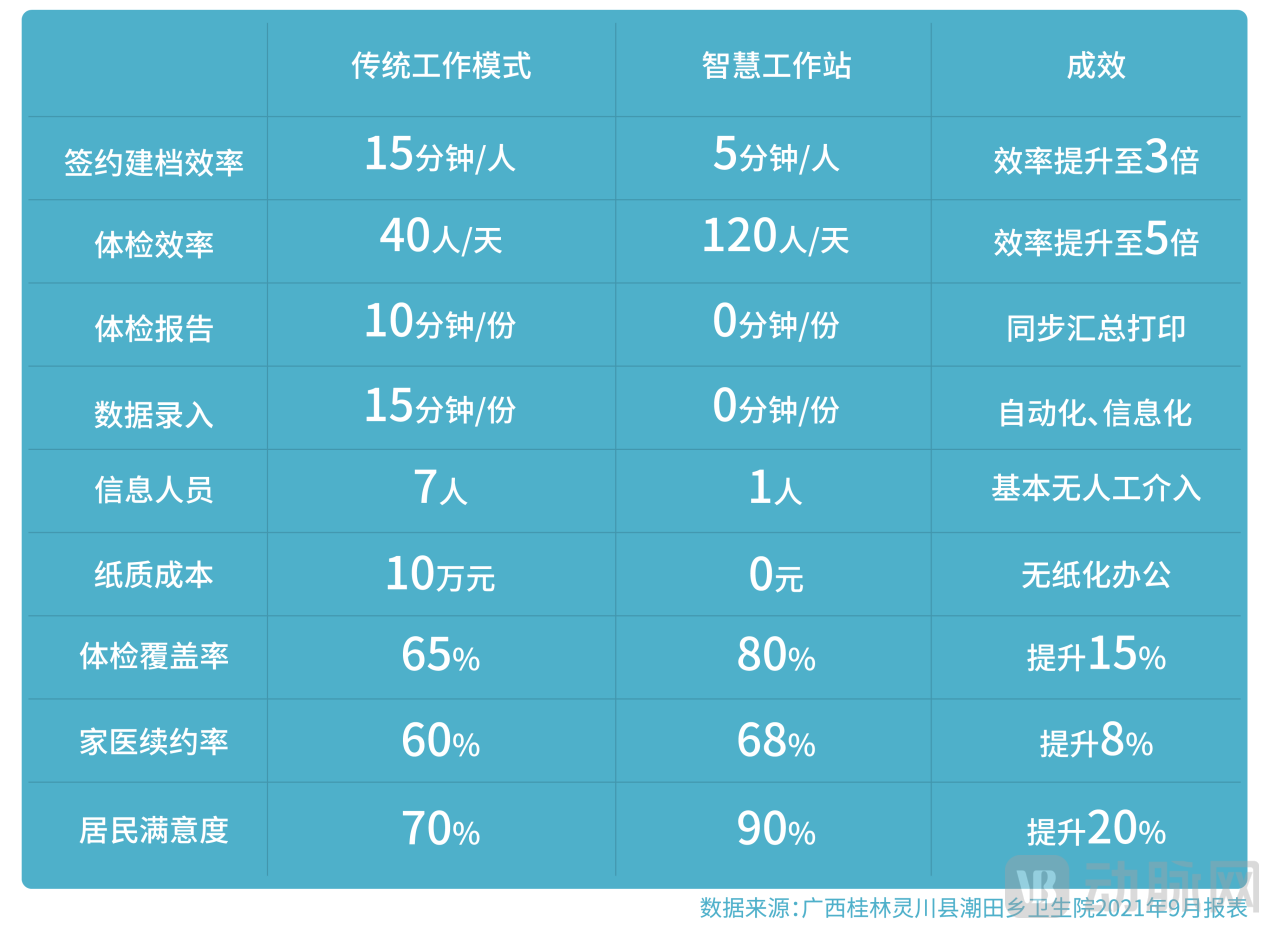
Furthermore, Jianjian Family Doctor has established a “7+7+7” standard service system, comprising seven major cloud data management systems, seven major standardized intelligent upgrades, and 24/7 operational after-sales support. This framework ensures consistency between expected outcomes and actual implementation across all aspects, including deployment, management, equipment, and human resources. In collaboration with Haier Biomedical and over 30 primary healthcare representative institutions across seven provinces, it released the industry’s first standard, T/STSI 30-2022 Specification for the Construction of Regional Platforms for National Basic Public Health Examination Services.
By leveraging a “brand + conferences + channels” market strategy, Jianjian Family Doctor rose to the forefront of the digital public health checkup sector within three years from 2019 to 2021.Business coverage spans over 150 districts and counties across China, reaching more than 3,000 township or community hospitals; revenue has grown continuously, with an increase exceeding 300%.. As of December 2021,The platform has registered nearly 40,000 family doctor teams (surpassing 100,000 family doctors), serving over 80 million elderly residents aged 60 and above., fulfilling the “Three-Year Pledge” as scheduled.
Benefiting from the rapid exploration and penetration of the public health examination market, Jianjian Family Doctor not only successfully navigated numerous operational crises during the three most challenging years for most enterprises, but also laid a solid foundation for the smooth launch of the next niche market.
“Previously, basic public health services were merely a task, lacking doctor-patient collaboration, and out-of-hospital services were completely disconnected from them,” Jin Lei admitted. “At present, we have only improved the front end of the service. How toTransform public health tasks into a continuous, closed-loop health management system, convert vast amounts of basic data into health profiles for elderly residents, and translate these profiles into actionable steps for family doctors, thereby consistently driving the high-quality development of health services for the elderly through data., is what we need to do in the future!"
According to the current widely adopted National Basic Public Health Service Specifications (Third Edition), health management for the elderly is the most detailed and clearly defined among its 12 service items. It primarily consists of general physical examinations and auxiliary tests, encompassing a total of eight major categories and over 50 subitems, including electrocardiography, ultrasonography, biochemical tests, complete blood count, urinalysis, blood pressure measurement, height and weight measurement, and assessment of Traditional Chinese Medicine (TCM) body constitution.
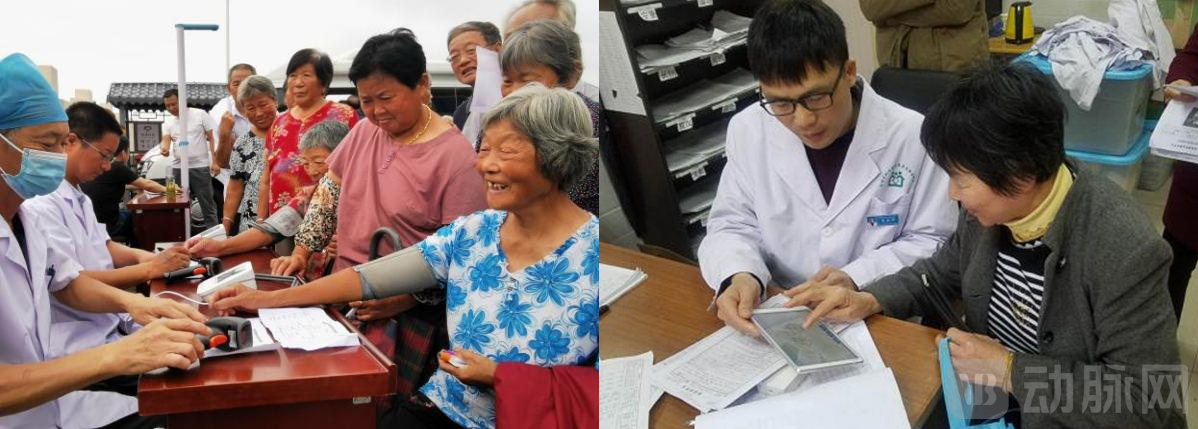
The aforementioned service is commonly referred to within the industry as “public health physical examinations” or “public health check-ups.” It primarily targets individuals aged 60 and above, is conducted once a year, funded by the government, and provided free of charge to residents within the jurisdiction. Many regions also include this service in their contracted care packages at no additional cost. However, most public health physical examinations lack post-examination or out-of-hospital services. As a result, elderly individuals often remain unclear about their health status after the check-up and are uncertain about how to proceed with diagnosis, treatment, or healthcare management, which has become a major point of criticism regarding this public-benefit policy.
In response, certain regions have introduced personalized service packages tailored to residents’ actual health conditions, encompassing chronic disease follow-up, health consultation, medication guidance, and rehabilitative care, with a corresponding service fee charged. Practice has demonstrated that the implementation of these personalized service packages has yielded positive results in improving the health outcomes of the elderly and patients with chronic diseases, enhancing the quality of primary care family physician services, and refining health insurance cost-containment mechanisms. Consequently, an increasing number of regions are adopting this model.
In fact, the Jianjian Family Doctor team began exploring corresponding products and models several years ago regarding how to deeply integrate the three smart service scenarios of family doctors, public health examinations, and health management, so as to achieve homogeneous, personalized, and refined health services driven by data, includingUsing digital therapeutics as the key methodology, with Jianjian®Xiao Jian, with the AI Health Brain as its core capability®Robots and Jianjian®Shuzhi Community。
According to reports, Jianjian®The AI Health Brain is based on the original Jianjian®An enhanced version iteratively developed from the data robot framework, this system represents the culmination of years of research by the Jianjian Family Doctor Big Data R&D Center in Shanghai. The AI Health Brain is primarily built upon national authoritative guidelines for chronic disease management and a multidimensional patient database. It possesses robust capabilities in data computation, memory, perception, learning, action, and governance, enabling rapid and precise assessment of health risk factors in elderly users, analysis of their health profiles, and generation of tailored AI-driven health management plans.
Xiao Jian®Designed for home-based health and elderly care, the robot integrates signature family doctor services—including health monitoring, health records, medication reminders, physical examination records, monitoring and early warning systems, and green-channel access—and features an age-friendly “one-touch” design. Unlike similar products, this robot leverages data from family doctor contracts, follow-up visits, and public health examinations to connect the resident side (organized by household) with the family doctor team side. This integration enables dynamic management of public health services and a closed-loop health management system that is scientific, safe, and accessible, thereby enhancing elderly users’ ability to manage chronic diseases and engage in self-care within their home environment.
Jianjian®Shuzhi Community aims to refine the 15-minute health service circle to meet the growing and diverse medical and healthcare needs of elderly users. Focusing on chronic disease screening and disease prevention, it integrates high-quality medical and healthcare resources to build a comprehensive digital health service scenario encompassing prevention, treatment, and management, thereby enhancing the capacity for integrated primary care and public health services. The community features ten functional service zones, including home-based health management, proactive health, self-service testing, 24-Hour Health e-Stations, TCM-specialized diagnosis and treatment, and smart family doctor studios.
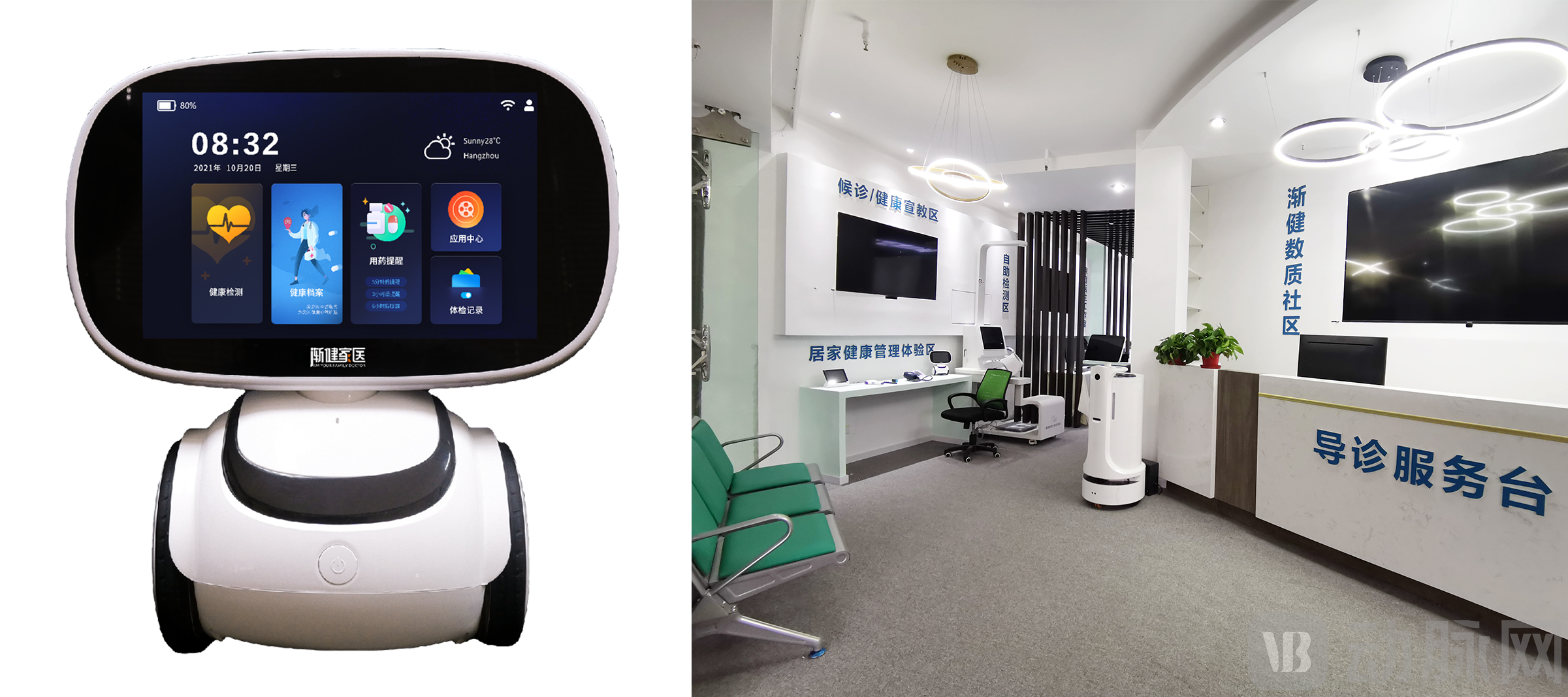 Xiao Jian®Robot (Left) Jianjian®Shuzhi Community (Right)
Jianjian®AI Health Brain and Xiao Jian®Robotics, Jianjian®Shuzhi Community is not only an innovation by Jianjian Family Doctor in the field of digital therapeutics after achieving certain market objectives, but alsoA Thoughtful Exploration of the Development Path for Primary Healthcare Under Strict Regulation, and How to Address the Health Needs of Elderly Users to Achieve a Closed-Loop Service Model and Connect with the Elderly Health Industry Ecosystem。
In the current era of integrating routine healthcare with epidemic prevention and control, primary healthcare institutions are tasked with heavier responsibilities such as nucleic acid sampling, vaccination, and environmental disinfection, while simultaneously maintaining fixed public health services and family doctor contracts. The resulting pressure is considerable, particularly regarding workforce allocation. Therefore, it is essential to leverage advanced digital technologies, such as big data and artificial intelligence (AI), to assist or replace repetitive, low-value medical tasks, thereby promoting high-quality development of healthcare services.
According to the "14th Five-Year Plan for National Aging Cause Development and Elderly Care Service System" issued by the State Council, as well as the recently released "Notice on Comprehensively Strengthening Elderly Health Services" by the National Health Commission, population aging will remain a fundamental national condition in China for a considerable period. Health service needs are the most urgent and prominent demands of the elderly. Improving the elderly health support system, promoting "Internet + Medical Health," "Internet + Nursing Services," and "Internet + Rehabilitation Services," and developing smart medical-nursing combined services oriented toward home, community, and institutional care will all be key priorities for the government in the future.
Meanwhile, the proportion of elderly individuals living with chronic conditions for extended periods will continue to rise, and the prevalence of chronic diseases among this population is also showing a sustained upward trend. These developments will inevitably stimulate and drive growing health-conscious consumer behavior among older adults, as well as increase the attention and investment from social groups and institutions in the field of elderly health care.
Therefore, Jianjian Home Doctor believes that the digital health service model for the elderly based on public health services,Not only does it naturally benefit from authoritative policy endorsement, but it will also leverage its extensively built service system to generate substantial organic traffic., by enabling information exchange across multiple scenarios and establishing a secure and standardized monitoring system for products and services, we achieve seamless connectivity among the pharmaceutical and medical device industry, healthcare and elderly care service providers, and various ecosystem stakeholders including elderly users, family doctors, hospitals at all levels, and regulatory authorities.
“Although the road ahead is fraught with challenges and stretches far into the future, at least the path forward holds promise!” Jin Lei, a serial entrepreneur firmly committed to long-termism, stated, “We will continue to focus on the three smart service scenarios of family medicine, public health, and health management, constantly improving our empowerment solutions that enable the transition from digital models to high-quality development.”Deliver greater value to stakeholders in the ecosystem, enable more older adults to access higher-quality health services, and contribute our unique “Jianjian” wisdom to achieving universal public health coverage and the Healthy China initiative!”