

NetRain Files IPO Prospectus: Qu Yi's Journey of Constant Reinvention Powers Digital Transformation in Healthcare
In an era where most people set their WeChat Moments to be visible for only the past three days, Qu Yi, founder of Natrai, might be considered an outlier. His earliest Moments posts date back to March 2014, when he wrote:
“Only when you bind your own chariot to something greater can you discover your true strength. If you consider only yourself and satisfy immediate needs, that is a form of poverty…”
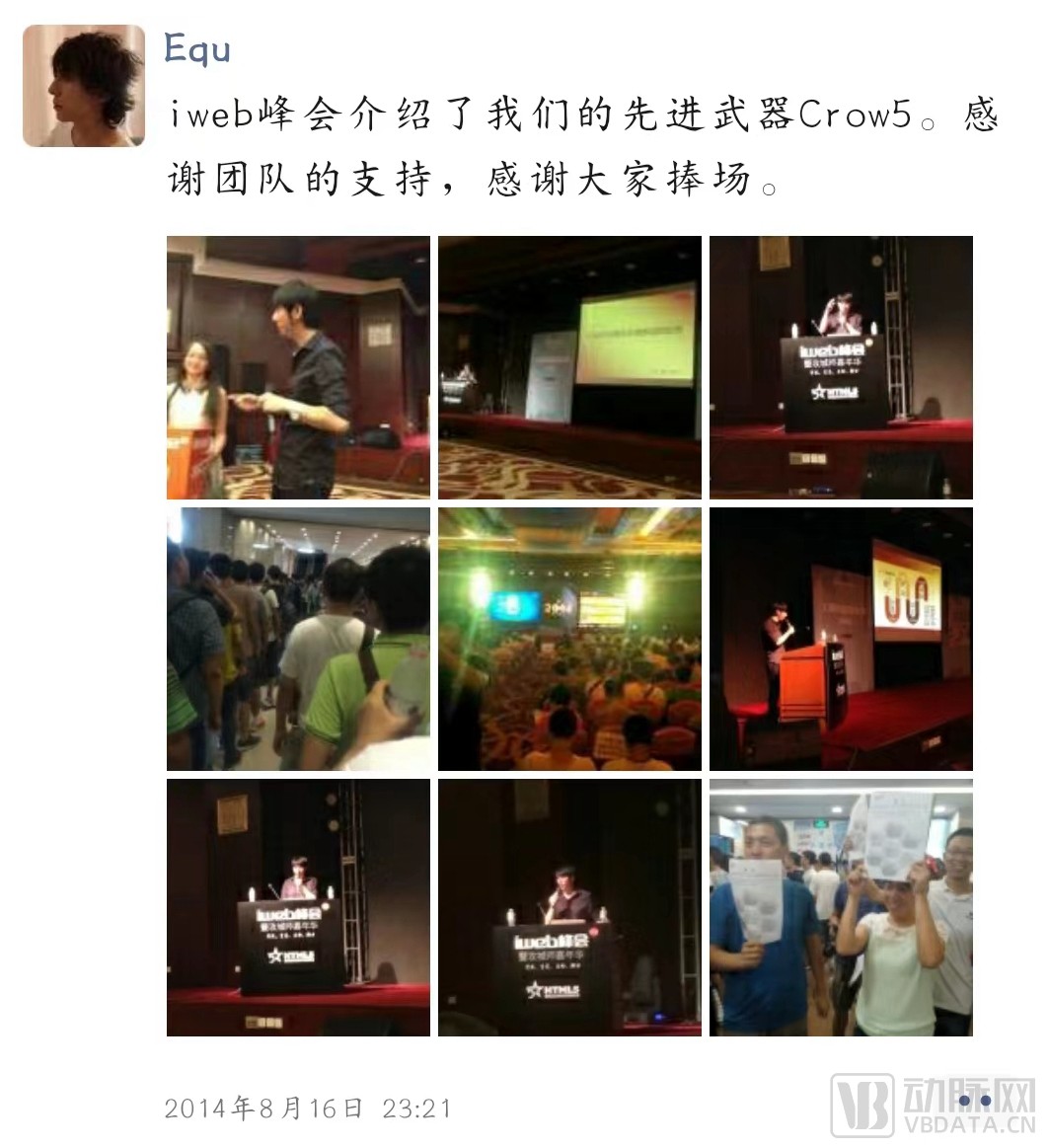
Qu Yi, who pursued “power,” was obsessed with “technology” for a long time. He went further and further in learning and mastering computer technology, even creating the HTML5 engine Crow5, which earned him a large number of devoted fans in the industry.
Once, he dismissed with contempt the characterization that he was “obsessed” with technology. However, after years of pursuing the “power of technology,” he suddenly had an epiphany: technology is constantly being rendered obsolete. Just as with the once-popular FLASH technology, even those who stood at the pinnacle of that field were forced to choose new domains and “start over” as emerging technologies took hold.
And as he came to realize this, he repeated his habitual “formatting” mindset from his previous pursuit of “technology.” However, this time, the “formatting” did not lead to learning an entirely new technology from scratch, but rather to appearing before the public in a brand-new identity—transforming from a tech geek into an executive in the healthcare industry.
In 2019, Qu Yi once again “reinvented” himself, venturing into the field of digital transformation in healthcare and becoming the founder and CEO of Knightree, a technology company that provides digital transformation services to upstream and downstream enterprises in the big health industry.

Naiterui primarily provides digital transformation products and services to a wide range of enterprises, including pharmaceutical companies, healthcare institutions, health management firms, insurance companies, biotechnology enterprises, and internet healthcare providers. Its portfolio of solutions—such as the Internet Hospital Solution, Medical Research Platform Solution, Physician Education Solution, and Prescription Circulation Platform Solution—has garnered widespread industry recognition. Clients across various sectors of the healthcare industry include Huadong Medicine, Shineway Pharmaceutical Group, Kunming Pharmaceutical Group, Yifeng Pharmacy Chain, Chia Tai Tianqing, and Beijing Children’s Hospital Tongyuan Network.
Qu Yi frankly admitted that “formatting” oneself requires immense courage and the overcoming of unimaginable difficulties. Yet, he clearly finds joy in the process.
When Coding by the West Lake Is No Longer the Happiest Thing
Ancestral home in Jilin, born in Hubei, and educated in Shanxi. This is a concise summary of Qu Yi’s past life.
Qu Yi, who once regarded Bill Gates as his life idol, was obsessed with computers. During his four years at university, the library was the place he visited most frequently. “At that time, I felt that being able to type on a laptop, coding by the West Lake, and working at an exceptionally impressive internet company would have been the pinnacle of my life, leaving me with no further aspirations.”
After graduating from university in 2004, he initially fulfilled his aspiration by joining an internet company in Hangzhou to work as a programmer. However, he soon left Hangzhou and stayed in Beijing for over a decade. These ten-plus years marked Qu Yi’s decade of exploring and mastering computer technology.
Initially, he emerged as a Java architect. Upon recognizing the rise of mobile internet, he pivoted to front-end development. Later, despite being regarded by outsiders as an “impure” front-end developer due to his non-traditional background, he created the HTML5 engine Crow5. Subsequently, as a tech geek with considerable influence, he has continuously participated in various high-level forums on computer technology.
The reasons that gave him the courage and made it imperative for him to “de-format” himself were related to his insights into the career development of computer technicians—
Only a small minority of technicians are naturally communicative and eager to engage in dialogue. However, it is nearly unheard of for individuals who rise to the positions of CTO or VP to lack communication skills. Transitioning from a technical role to a management position entails a shift in focus: one must move from emphasizing individual output to prioritizing team performance, and from realizing personal value to helping the team achieve its goals. This transition also means that one’s own technical skills may become “rusty,” leading even to scenarios where senior technical executives, after changing jobs, return to hands-on programming roles.
His innate refusal to accept defeat led him to choose “exhausting every possible means to adapt to the environment, rather than opting for a one-and-done approach of ‘lying flat.’” Self-“reformatting” was the strategy Qu Yi adopted. During this “reformatting” process, each new direction felt like starting from “scratch.” “It’s akin to playing a video game: when you’ve upgraded your rattan armor to level 11, you suddenly acquire a level-zero bronze armor. Although its defensive capabilities are initially low, continuous upgrades will undoubtedly make it stronger. And at that point, you might even obtain golden armor…”
If technology has been what he has diligently pursued over the years, then industry direction may be another theme he has contemplated throughout his career—
Over the past decade, Qu Yi has successively worked in the education, internet, and e-commerce industries.
For him, a significant turning point emerged during his tenure in the internet and e-commerce sectors. At that time, his internet company attempted to pivot into the gaming industry. However, an inner voice urged him to reject this path, as he foresaw his career becoming narrowly confined to the gaming sector. Unwilling to be trapped, he chose to leave. Later, during his time in the e-commerce industry, the relentless cycle of repetitive promotional campaigns left him exhausted. He was unwilling to engage in such monotonous self-repetition.
At that time, he was 30 years old, in the prime of his life, and he once again chose to “reformat” himself and start from scratch.
Entering the Door of Medical Digitalization at the Age of Thirty
2015 was a pivotal year for Qu Yi. During this period, he underwent a professional transition, moving from a technical role to become the company’s Chief Technology Officer (CTO).
Qu Yi still remembers that, at the time, he already held as many as 30 job offers. However, after meeting Shi Zhenyang, Chairman of Qilekang, in the early hours of that morning, he ultimately chose to join the company.
Currently, there are two reasons:
On one hand, the emergence of internet healthcare as a high-growth sector has created favorable industry prospects. The widespread adoption of mobile internet served as a powerful catalyst for the industry, leading to the establishment of companies such as Chunyu Doctor and WeDoctor (Guahao.com). The “Internet Plus” trend in 2014 further fueled a fervor for the development of internet healthcare. As an early entrant that began as a pharmaceutical e-commerce platform, Qilekang also demonstrates considerable growth potential.
On the other hand, it is also related to Qu Yi’s convictions. At the age of thirty, filled with passion, Qu Yi sought to better realize his life’s value. He believed that endeavors related to life and health were worthy of a lifelong commitment.
During Qu Yi’s tenure, 7LeKang steadily completed its transformation into a mobile healthcare provider. Qu Yi also witnessed the company secure successive rounds of new financing. In 2015, 7LeKang raised RMB 300 million in Series A funding from Jiangsu High-Tech Investment Group and Changjiang Guohong Capital. In 2016, it secured over USD 100 million in Series B financing. In 2017, under Qu Yi’s leadership, 7LeKang signed an agreement with the Yinchuan Municipal Government and obtained qualifications to operate an internet hospital in Yinchuan—one of the top ten such licenses nationwide at the time. As a result, 7LeKang’s industry profile continued to rise.
Qu Yi’s four-year tenure at Qilekang has shaped him in another dimension: whereas his focus was once solely on technology, he now must think with a broader perspective, continuously building his capabilities by leading his team and observing industry trends. Prior to this experience, the acquisition of such skills relied “entirely on reading and imagination.”
In 2019, Qu Yi embarked on a new journey by founding Naiterui, becoming the founder and CEO of this increasingly prominent enterprise.
At that time, the industry was undergoing significant changes.
On one hand, as healthcare reforms deepen and centralized procurement continues to advance, they have significantly impacted the profit models of pharmaceutical companies. With further declines in drug profits, a large number of pharmaceutical enterprises are facing challenges in transformation.
On the other hand, since the General Office of the State Council successively issued policy documents such as the “Opinions of the General Office of the State Council on Promoting the Development of ‘Internet + Healthcare’” in 2018, the previously lukewarm internet healthcare industry has had its status firmly established and has begun to recover overall.
Qu Yi has undoubtedly spotted industry opportunities. But perhaps more significant are the shocks and impacts of real-life experiences.
As early as 2017, his mother sought medical treatment everywhere due to her illness. At that time, top hospitals in China declared her condition incurable. However, the disease was ultimately cured by a practitioner of Traditional Chinese Medicine (TCM). This experience made him realize that there are flaws in the current healthcare environment and that his current strategic focus may not truly address patients' needs. In 2019, Qilekang faced internal personnel restructuring, which threatened to disband the team that had been united since the Gao Yang era.
He joined forces with more than 20 former colleagues to co-found Naiterui, aiming to “serve thousands of enterprises and safeguard the health of millions of households” by fostering industrial symbiosis and acting as an industry connector.
The difficulties were evident. On a macro level, the pandemic that erupted in 2020 pushed many companies to the brink of survival. However, the greatest challenge lay in investors’ skepticism; Qu Yi frequently faced doubts about whether there was sufficient market growth potential. He has mentioned on more than one occasion that Naitrui encountered the pandemic shortly after its establishment. The team of over 20 people once generated no revenue at all, and the company’s operations were sustained solely by Qu Yi’s personal savings. The pandemic brought many offline medical institutions to a standstill. To better help medical institutions and patients with chronic diseases address their consultation needs, Naitrui provided pro bono support to a Grade II Class A hospital in Jiangsu Province, enabling it to launch free clinic services through its system, which received widespread acclaim. This experience reinforced Qu Yi’s conviction that digital healthcare is a highly promising future direction that will create substantial social value, giving him the resilience to persevere.
The team has perhaps always been the key to Natrai’s rapid expansion. At that time, the pandemic was still flaring up intermittently. The company’s leadership considered transitioning to a distributed organizational model but faced substantial management costs. After prolonged internal debate, the team ultimately reached a consensus on this decision, which enabled Natrai to maintain normal business operations despite the recurring waves of the pandemic.
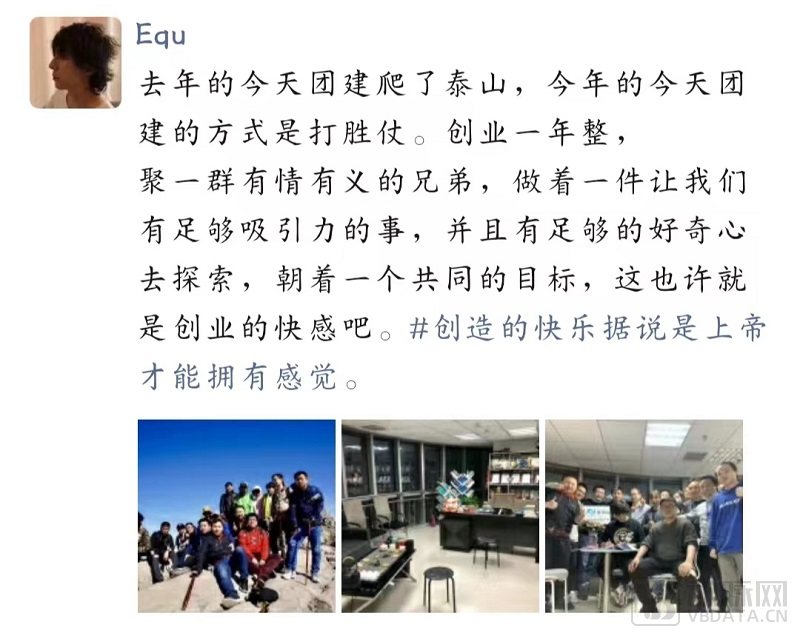
Naitrui once organized a team-building trip to Mount Tai, where every single participant completed the entire journey without exception. “An individual may walk faster, but together we can go further.” It is perhaps under this team ethos that Naitrui has rapidly gained traction, propelled by supportive policies for internet healthcare and growing demands from medical enterprises.
Leveraging Web 3.0 to Shape Internet Healthcare
Netray is fortunate.
During the most challenging phase of its startup journey, Natruy was finally discovered by investors and secured tens of millions in financing from players within the industry chain. In 2022, Natruy raised another round of funding from SIG.
Regarding SIG’s investment in Knightree, Qu Yi’s description of the deal remains nothing short of incredible. After a WeChat group was established on the 26th day of the twelfth lunar month, SIG’s person in charge promptly flew from Shanghai to Beijing for an in-person meeting. “We talked from morning until night, and after eight hours of discussions, the Term Sheet (TS) was issued the very next day. Both parties completed the signing on the 29th day of the twelfth lunar month, with the entire process taking just three days.” Qu Yi’s excitement remained beyond words.
Naiterui’s value is gaining further recognition. This capital injection has also enabled Naiterui to achieve more stable development. Enterprises collaborating with Naiterui have grown from zero to ten, and from ten to a hundred…

In addition to collaborating with enterprises of various types, Natrai has also continuously entered into partnerships with local governments this year, including the Tianjin Binhai New Area Government, the Chengdu Tianfu New Area Government, and the Zibo Municipal Government in Shandong Province.
Opting to collaborate with the government, Naiterui has benefited from its adoption of advanced models. Qu Yi stated that Naiterui has drawn on the Medical Mall model, which originated in the United States—
The Medical Mall, which originated in the United States, is a “one-stop” healthcare model that integrates commercial shopping and medical services. In this model, healthcare institutions are patient-centric, primarily featuring clinical specialties such as pediatrics, orthopedics, traditional Chinese medicine (TCM), dentistry, and medical aesthetics—sectors with strong consumer-driven characteristics. This model mainly targets high-end consumers, providing them with a more comfortable and convenient healthcare experience.
Naiterui also plans to establish related clusters by setting up physical medical institutions, thereby forming offline medical complexes. After these physical medical entities are established, the company will build online internet hospitals for them to centrally address various issues such as medication delivery and diagnostic testing.
Securing cooperation with the government itself signifies further recognition of Natray’s capabilities.
Qu Yi, who has always been attuned to technological advancements, also noted that the decentralization inherent in Web 3.0 will bring about new changes across industries. In the healthcare sector, patients will have the right to control their own data. Blockchain technology will further ensure data authenticity and unlock greater value. Meanwhile, personalized treatment plans tailored to individual patients will be more effectively implemented. This shift will necessitate a restructuring of underlying systems. For Knightree, its technological DNA will drive it forward, enabling better application of relevant technologies in healthcare scenarios.
As we accelerate the digital transformation of healthcare and enhance the professionalism, standardization, and transparency of industry players, better implementation of healthcare digitization will undoubtedly enable more patients to access high-quality medical care while reducing healthcare costs. This may well be the very value and purpose that Naiterui exists to fulfill.
However, this process undoubtedly still requires long-term persistence and effort, necessitating the continuous “formatting” of individuals and enterprises. This is, without a doubt, a somewhat painful process.
When we asked Qu Yi, CEO of Knightree, who has weathered numerous hardships, what he would do differently if given the chance to start over.
He replied without hesitation, “In all likelihood, I would follow the same path, entering the internet sector and ultimately contributing to the digital transformation of healthcare.”