

Tsinghua University Technology Transfer Roadshow: Empowering Industries with Innovation and Catalyzing Breakthroughs with Capital
Some say that in the healthcare sector, there has never been a greater need for innovation than today, nor has there ever been such strong emphasis on innovation and its translation into clinical practice.
This statement is not without merit. First,From a policy perspective, attaches great importance to the translation of scientific and technological achievements in the medical field. In 2021 alone, China releasedArticle 49Policies related to medical innovation and commercialization have further strengthened social guidance and support for the translation of scientific and technological achievements.
SecondlyFrom the perspective of the innovation production side, R&D entities centered on medical institutions, universities, and research institutes have increasingly focused on the translation of scientific and technological achievements in the healthcare sector in recent years, engaging more deeply and diversely in healthcare innovation and commercialization through various approaches.
FinallyFrom the perspective of innovation implementation, investment institutions are paying increasingly strong attention to early-stage medical projects, transitioning from “reluctant to invest” to “eagerly competing to invest” in the trend of “scientists becoming entrepreneurs.” According to statistics from VCBeat’s Orange Fruit Bureau, a total of ... occurred in China’s healthcare sector from January to May 2022.97 Early-Stage (Seed, Angel, Pre-A) Financing Deals, with Total Funding Exceeding RMB 6 Billion。
Although the early-stage healthcare market is booming, we must remain clear-eyed: the journey from scientific concept to laboratory results, then to technological maturation, product conversion, and eventual industrial implementation, is arduous and protracted. The primary pain point to address in this process is channel development. Without establishing channels that facilitate interaction among capital, industry, and researchers, even the most promising scientific achievements will struggle to transition from paper to production lines and generate their intended economic value.
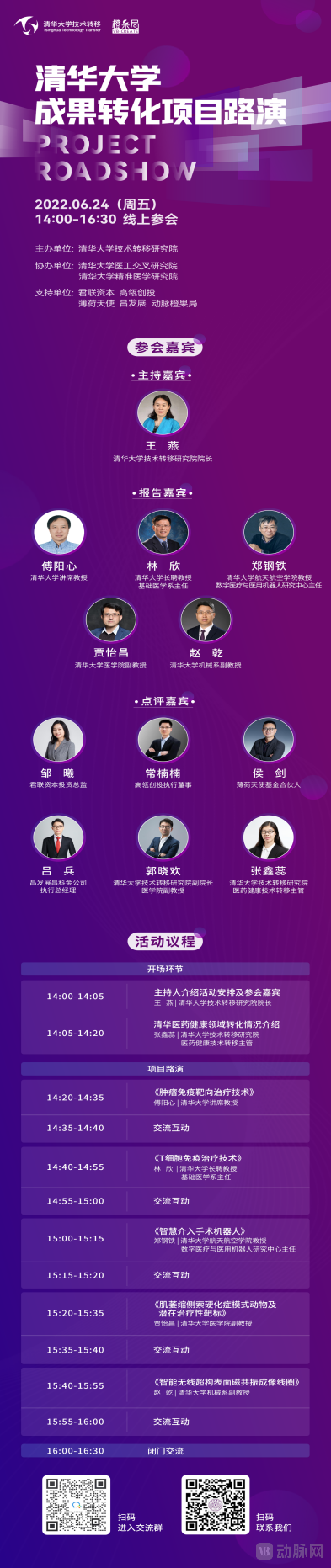
To address this pain point and provide more scientists with opportunities for “mutual engagement” with investment firms and industrial enterprises,Tsinghua University Institute for Technology TransferLaunch a series of roadshow events for the commercialization of organizational achievements, in collaboration withInstitute of Medical-Engineering Convergence, Tsinghua University; Institute for Precision Medicine, Tsinghua Universityand other research institutions,Legend Capital, Hillhouse Ventures, Bohe Angel, Changfa Zhan, VCBeat Orange Bureauand other industry partners, to be held at 14:00 on the afternoon of June 24The 19th Tsinghua University Technology Transfer Project Roadshow — "Pharmaceuticals and Healthcare" Special Session, with the aim of facilitating the commercialization of more valuable scientific and technological achievements, thereby bringing new changes to the development of the medical industry.
Conference Agenda and Speakers
Roadshow Project Overview
Project 1: Tumor Immune Targeted Therapy Technology
Speaker: Chair Professor at Tsinghua University - Yangxin Fu
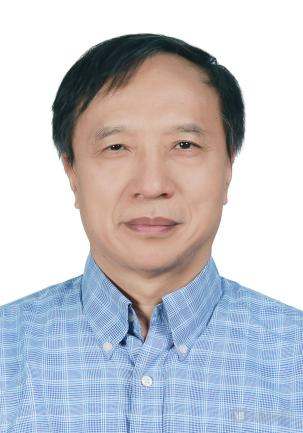
Team Profile:
The principal investigator of this research project is Professor Yang-Xin Fu, currently a Chair Professor at Tsinghua University. He previously served as a tenured and endowed professor, attending physician in the Department of Pathology, and member of the Immunology Committee at the University of Chicago, and held an endowed professorship in the Department of Pathology at the University of Texas Southwestern Medical Center. Professor Fu has made significant innovations in both clinical and basic medical research, enjoying high prestige and influence in the field of tumor immunology. He is a pioneer in studying the effects of drugs, radiotherapy, and targeted therapies on immune cells and their molecular mechanisms. In 2021, he joined Tsinghua University full-time to establish a research team focused on cancer immunotherapy. In recent years, he has led the development of next-generation bispecific antibodies, fusion proteins, cytokine prodrugs, and antibody prodrugs for cancer immunotherapy, demonstrating substantial application potential and value.
Project Overview:
Malignant tumors represent one of the major diseases threatening human life and health. Immunotherapy, particularly the development of emerging bispecific antibodies, has brought therapeutic hope to some patients with advanced-stage cancer; however, its application in solid tumors still faces various challenges. One achievement of this project is the development of a bispecific antibody that fuses an anti-PD-L1 antibody with an anti-CD3 antibody. This agent targets and reactivates pre-existing tumor-infiltrating lymphocytes, establishing a novel mechanism for the combined activation of dendritic cells and T cells, thereby more potently enhancing the tumor-eliminating capacity of the bispecific antibody and the establishment of immune protection. Another achievement involves a bispecific fusion protein combining an anti-CTLA-4 antibody with SIRPα. While blocking the CD47 pathway’s “don’t eat me” signal, it enhances the precise depletion of tumor-infiltrating inhibitory regulatory T (Treg) cells, improving efficacy while reducing potential side effects, thus demonstrating strong potential for clinical translation.
Project 2: T-Cell Immunotherapy Technology
Speaker: Lin Xin, Tenured Professor at Tsinghua University and Chair of the Department of Basic Medical Sciences
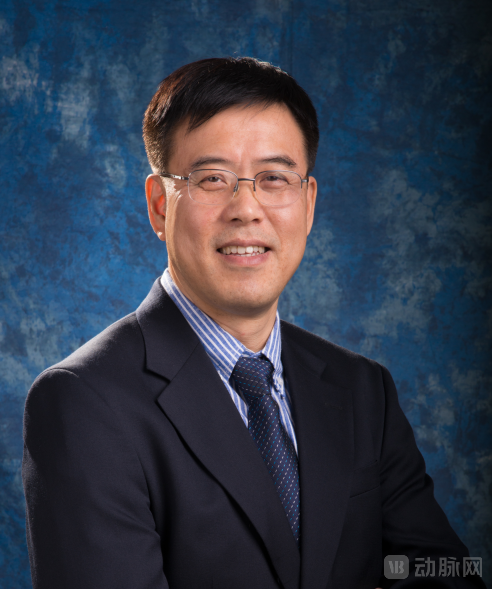
Team Profile:
Professor Xin Lin serves as the principal investigator of this research project. He is currently a tenured professor at Tsinghua University and has previously held positions at the State University of New York and The University of Texas MD Anderson Cancer Center. With over two decades of experience independently leading research teams in immunology focused on T cell activation, his landmark achievement includes the first discovery of a key molecule involved in T cell activation, which has been incorporated into authoritative English-language textbooks. He is a recipient of the Scholar Award from the American Association for Cancer Research (AACR) and the Scholar Award from the Leukemia & Lymphoma Society (LLS). Since joining Tsinghua University full-time in 2014, he has established a research team dedicated to inflammation and tumor immunology. Professor Lin has published more than 120 high-impact papers and has served as the principal investigator for over 20 major grants, including those from the U.S. National Institutes of Health (NIH), key projects funded by the National Natural Science Foundation of China (NSFC), and key research and development programs supported by the Ministry of Science and Technology of China.
Project Overview:
One key achievement of this project is the STAR-T technology, which employs an innovative T-cell receptor–antibody complex structure. This technology offers the advantages of natural dual-targeting, high affinity, and strong specificity, demonstrating promising clinical application prospects and substantial market potential in cell therapy for both hematologic malignancies and solid tumors. Another achievement involves an optimized TCR-T technology that overcomes the challenges of acquiring specific functional sequences of traditional TCR-T cells and addressing TCR typing difficulties across different patient HLA types, thereby enabling the industrial-scale application of TCR-T cell therapy. A spin-off company has been established for this project, and multiple investigator-initiated first-in-human (FIH) clinical trials have been launched in collaboration with several leading hospitals in China. Positive clinical safety and efficacy data have been obtained from dozens of patients, and these findings have been presented at top international academic conferences and published in prestigious journals. The lead candidate product, CD19/20 STAR-T for B-cell hematologic malignancies, submitted its Investigational New Drug (IND) application to the National Medical Products Administration (NMPA) in May 2022.
Project 3: Intelligent Interventional Surgical Robot
Speaker: Professor Zheng Gangtie, School of Aerospace Engineering, Tsinghua University; Director, Center for Digital Healthcare and Medical Robotics
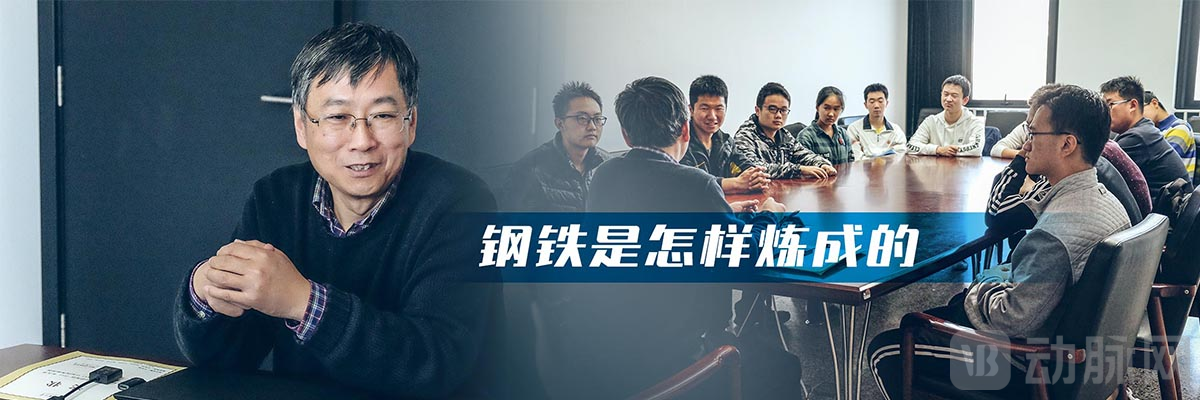
Team Profile:
The principal investigator of this research project is Professor Zheng Gangtie, who currently serves as the Director of the Center for Digital Healthcare and Medical Robotics at Tsinghua University. For many years, Professor Zheng has been conducting research in various fields, including orthopedic surgical robots, tumor therapy, and neurosurgical robots. He has published nearly 200 academic papers and holds more than 30 authorized invention patents.
Project Overview:
With the growing volume of interventional procedures and increasing patient demands, this project integrates cutting-edge robotics with pan-vascular interventional technology to design an interventional surgical robot system. This system enables remote operation while faithfully replicating traditional manual surgical techniques, thereby minimizing the learning curve for physicians. Furthermore, it eliminates the physical burden on doctors who previously had to wear heavy lead aprons for extended periods to shield against X-rays. Additionally, leveraging expertise in vascular biomechanics, motor control, and image recognition, our team has developed a force feedback mechanism for precise manipulation and accident prevention, as well as an image-guided wire navigation system. These innovations enhance procedural efficiency and reduce radiation exposure risks for both medical staff and patients.
Project 4: Animal Models of Amyotrophic Lateral Sclerosis and Potential Therapeutic Targets
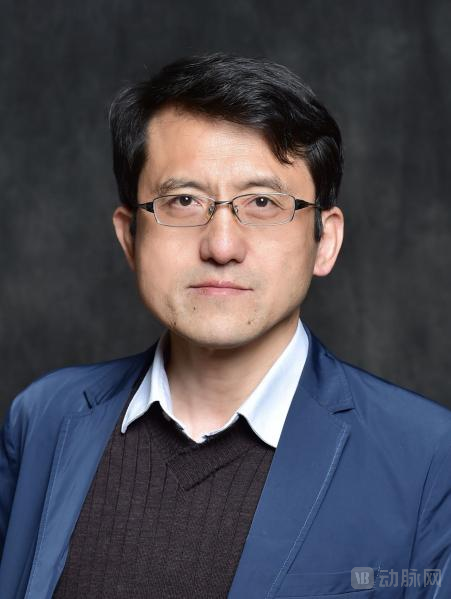
Keynote Speaker: Associate Professor at Tsinghua University School of Medicine - Ji Yichang
Team Profile:
The principal investigator of this research project is Dr. Yichang Jia, currently a Principal Investigator at the School of Medicine, Tsinghua University, and an expert in the field of neurodegenerative diseases. Dr. Jia earned his Ph.D. from the Institute of Neuroscience, Chinese Academy of Sciences, and primarily focuses on the mechanisms and translational medicine of amyotrophic lateral sclerosis (ALS). In 2007, he worked at The Jackson Laboratory, a premier institution for mouse genetics in the United States, where he utilized mouse genetic models to investigate the pathogenic mechanisms of neurodegenerative diseases. In 2012, he received the NIH Pathway to Independence Award (K99/R00). He was awarded the First Prize of Shanghai Science and Technology Progress Award in 2012 and the Second Prize of the National Natural Science Award of China in 2014. Dr. Jia has published numerous articles as first author or corresponding author in prestigious international academic journals, including Nature, Nature Neuroscience, Cell, and Brain.
Project Overview:
Amyotrophic Lateral Sclerosis (ALS), often referred to as the "leading fatal disease globally," has an average patient survival period of only 2–5 years, and there are currently no effective therapeutic drugs available. ALS is considered a "not-so-rare rare disease"; there are approximately 30,000 patients in the United States alone, and China sees about 30,000–50,000 new cases annually, representing a significant unmet clinical need. Our project team has identified potential therapeutic targets for ALS in mouse models, and gene therapy approaches hold promise for rescuing motor neurons in ALS patients, thereby significantly extending survival. A spin-off company has been established for this project, with core team members all hailing from Tsinghua University. We seek collaboration with investment firms, large pharmaceutical companies, and talented professionals dedicated to neurodegenerative diseases.
Project 5: Intelligent Wireless Metasurface MRI Coil
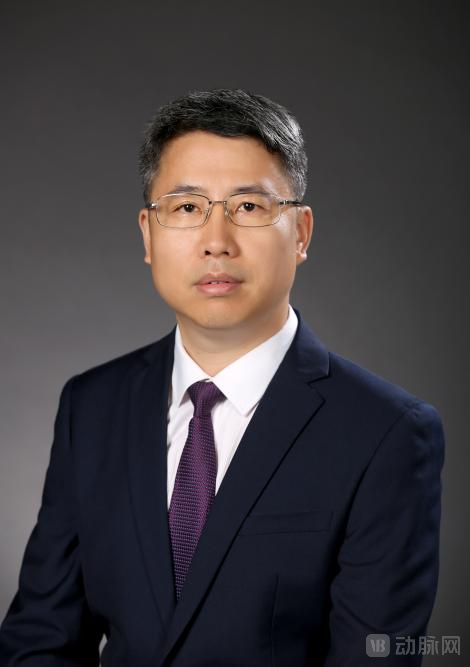
Speaker: Associate Professor Zhao Qian, Department of Mechanical Engineering, Tsinghua University
Team Profile:
The research team for this project is led by an academician of the Chinese Academy of Engineering, supported by several professors, and comprises a group of young core members with solid foundational expertise and creativity. Team members include: Zhao Qian, Associate Professor at Tsinghua University, who has long been dedicated to research in electromagnetic metamaterials; Zheng Zhuozhao, Professor at Tsinghua University and Director of the Department of Medical Technology at Beijing Tsinghua Changgung Hospital; Meng Yonggang, Professor at Tsinghua University, who has long focused on research into surface and interface mechanisms; and Zhou Ji, Academician of the Chinese Academy of Engineering, Professor at Tsinghua University, and Chairman of the Metamaterials Branch of the Chinese Society for Materials Research. The core members of the entrepreneurial team for this project include: Chi Zhonghai, who completed his bachelor’s, master’s, and doctoral studies in the Department of Mechanical Engineering at Tsinghua University. He possesses extensive experience in metasurface design and a strong theoretical foundation in magnetic resonance imaging. He served in the military for two years, during which he was awarded one Third-Class Merit Citation and recognized as an “Outstanding Soldier.”
Project Overview:
This project addresses the prevailing market pain points in the field of magnetic resonance imaging (MRI), namely low signal-to-noise ratio (SNR), cumbersome coil installation and removal, and difficulties in customized design, by proposing the development of intelligent wireless metasurface coils. Metasurface coils offer significant competitive advantages, including high SNR, elimination of installation and removal procedures, ease of customized design, low specific absorption rate (SAR), and independence from MRI equipment manufacturers. The MRI system market is characterized by rapid growth and substantial development potential, with target customers comprising hospitals and research institutions. This project has achieved breakthroughs in key technologies, established a portfolio of high-value patents, and possesses fully independent intellectual property rights.