

Localization of Life Science Tools Drives Interdisciplinary Integration and Industrial Collaboration
From June 14 to 18, 2022, the 6th Future Healthcare Top 100 Conference was held online as scheduled.
On the morning of June 16, byOrganized by VB100, VCBeat, and VCBeat New Medicine; Co-organized by Legend CapitalThe 2026 Life Science Tools Forum was held online. Centered on the theme of “domestication of life science tools,” the forum comprehensively explored current trends in industry ecosystem development from multiple perspectives through sessions focused on technological and product innovation. It aimed to deepen academic exchange and collaboration in the fields of life sciences and public health, promote interdisciplinary integration, and foster cooperation across upstream and downstream industries.
This forum featured five keynote speeches and two panel discussions. Below is a summary of the key points presented by each speaker:
Wang Feng: The Rapid Development in Antibodies, Vaccines, CGT, and Other Fields Has Increased the Use of Single-Use Technologies
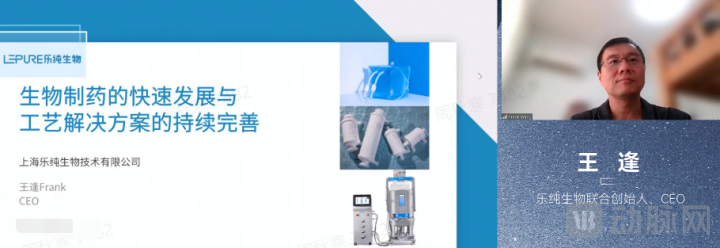
Wang Feng | Co-founder and CEO of LePure Biotech
How Should the Industry Optimize Single-Use Processes at the Technical Level to Drive Downstream Innovation, in Response to Growing Demand?Taking antibody production as an example, batch manufacturing is currently the mainstream approach, while continuous and semi-continuous processes are also being explored in parallel.Continuous and semi-continuous manufacturing offer advantages such as shortened production cycles, significantly reduced cleanroom area requirements, and lower fixed asset investments. The upcoming official release of ICH Q13 this year also clarifies key scientific and regulatory considerations, providing a harmonized guidance framework for the understanding of continuous manufacturing.
Wang Feng summarized: “Single-use process technology offers eight major advantages: low capital expenditure for facilities, equipment, and supporting infrastructure; reduced time required for facility construction, equipment commissioning, and validation; fewer requirements for cleaning and sterilization validation; lower operational costs (labor and energy consumption); high system flexibility and reduced warehousing space requirements; ease of implementing standardized operations to minimize the risk of errors; enabling intensive production to shorten new drug development cycles; and the ability to co-produce multiple products on the same production line.”
Compared with mature stainless steel systems, what choice should the industry make?Wang Feng responded, “Calculations using BioSolve on the cost distribution differences between stainless steel and single-use technologies indicate that single-use continuous production, owing to its higher capacity per production line, maintains a cost advantage up to the 3-ton scale. Furthermore, net present value (NPV) cost comparisons between single-use and stainless steel systems across different production scales show that stainless steel reactors become cost-advantageous when production volume exceeds the critical threshold of 15,000 L. Beyond cost considerations, the ‘uncertainties’ associated with innovative drugs—such as efficacy, dosage, demand, and regulatory requirements—also confer significant advantages to single-use technology processes.””
Li Haoqiang: Accelerating CMC Development of Bispecific Antibody Drugs as an Example to Illustrate How Specialized CDMOs Efficiently Empower Biopharmaceuticals
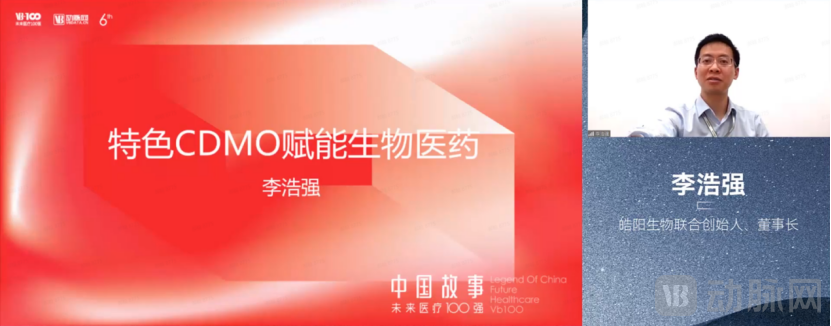
Li Haoqiang | Co-founder and Chairman, Haoyang Biotech
Over the past two years, amid profound shifts in the global landscape, the CDMO industry has witnessed intensifying competition.Therefore, how to highlight a company's technological characteristics and service barriers is a new challenge facing the industry today.。
Li Haoqiang, Co-founder and Chairman of Haoyang Biologics, stated, “I believe that biologics CDMO companies will build core competitiveness and avoid hyper-competition in three key areas. First, high-level stable cell line development to ‘win at the starting point of CMC’; second, culture media development tailored to their own platforms to reduce customer costs; and third, the development of innovative drugs, including bispecific antibodies and antibody-drug conjugates (ADCs), to accelerate technological breakthroughs across the biopharmaceutical sector.”
“Taking the acceleration of CMC development for bispecific antibody drugs through specialized technologies as an example, we illustrate how specialized CDMOs efficiently empower the biopharmaceutical industry. In recent years, a growing number of high-quality bispecific antibody drugs have been launched successively. During the CMC development process for their commercialization, the key focus areas are achieving high expression and high purity, shortening the development cycle, and ensuring favorable druggability. Key considerations include the design of expression vectors such as plasmids and signal peptides, optimization of high-throughput cell line screening methods, and establishment of high-throughput analytical systems. Simultaneously optimizing these three aspects can significantly enhance the efficiency of CMC development for bispecific antibodies.”
Wang Yantao: Culture Media Accounts for Over 30% of the Cost of Biologics—How Can This Core Raw Material in Biopharmaceuticals Achieve Domestic Production?
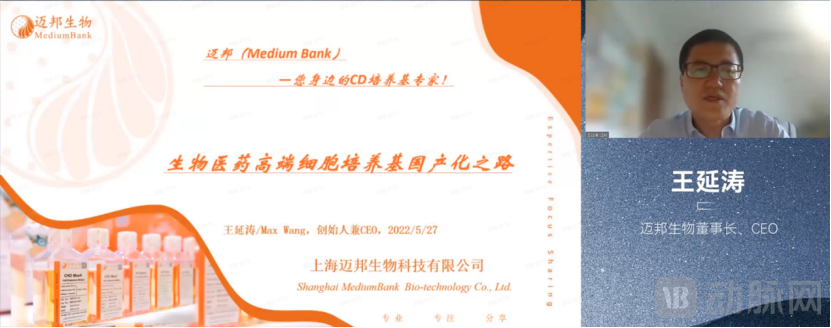
Wang Yantao | Chairman and CEO of Maibang Bio
Cell culture media are core raw materials in the research, development, and production of biopharmaceuticals, directly impacting the safety and efficacy of drug products.Over 90% of high-end cell culture media products and core optimization and development technologies are monopolized by large European and American companies, leading to severe "chokepoint" and supply chain issues for domestic production. Furthermore, domestically produced biologics face immense pressure to reduce costs amid broader trends such as centralized procurement. Since cell culture media account for more than 30% of the cost of biologics, selecting appropriate culture media can effectively address this challenge.
Although culture media can resolve many critical bottlenecks, they currently face numerous technical barriers in their own right, stated Wang Yantao, Chairman and CEO of Maibang Biotechnology:“Enterprises need to possess excellent formulations, high-quality raw materials, and robust manufacturing processes simultaneously.Among these, ensuring batch-to-batch consistency in the industrial-scale production of cell culture media is particularly critical. Factors such as formulation composition, raw material sourcing, manufacturing processes, analytical methods, and in-process quality control all exert significant influence on this consistency.
“Furthermore, leveraging AI-driven big data and intelligent learning enables the rapid design of next-generation media development strategies. Maibang Biotechnology’s innovative platform-based development approach targets Critical Quality Attributes (CQAs). By conducting AI-powered big data analysis on multiple interacting variables, it identifies Critical Material Attributes (CMAs) and Critical Process Parameters (CPPs), thereby achieving breakthrough efficiency in determining high-performance chemically defined (CD) medium formulations. Successfully executing this design requires the integration of three key elements: a high-throughput media formulation library based on big data, high-throughput screening equipment, and AI big data software. This new generation of process quality data-driven development platform technology will accelerate the entry of biopharmaceutical projects into clinical trials.”
Peter Peumans: How to Leverage Deep-Tech Stacks, Such as Semiconductors and Digital Technologies, to Improve Health?
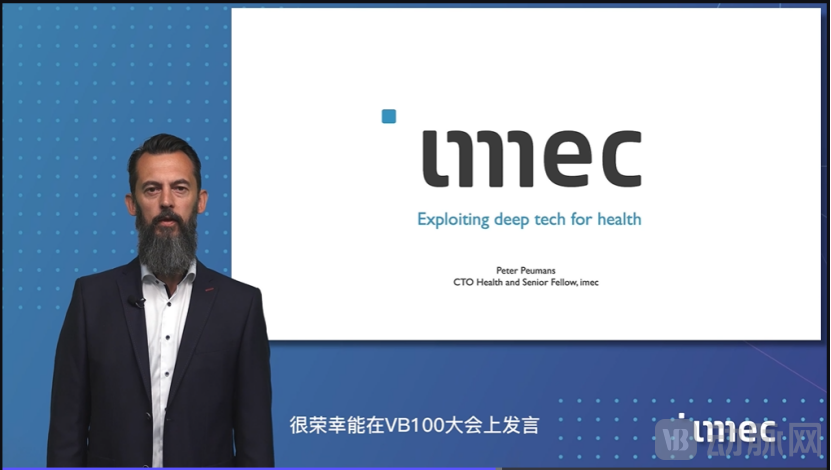
Peter Peumans | CTO, imec Life Sciences
Imec, the Belgian microelectronics research center, is a non-profit organization based in Belgium that focuses on nanoelectronics and digital technologies. It enhances technological capabilities in the semiconductor industry and its affiliated sectors—including healthcare—through industrial collaborations, partnering with international pharmaceutical companies such as Johnson & Johnson and GSK to develop industry technologies for the next 5–10 years.
Peter Peumans, CTO of Life Sciences at imec, stated: “With the rapid growth of the life sciences sector in recent years, imec is exploring how to leverage its strengths in semiconductor and digital technologies to enter the health and life sciences fields. Taking three systemic projects previously developed by imec as examples: we collaborated with Pacific Biosciences in California to develop single-molecule long-read sequencing chips; partnered with the Howard Hughes Medical Institute to develop the highest-throughput invasive brain-computer interface probes to date, which have significant implications for the treatment of neurodegenerative diseases; and jointly established miDIAGNOSTICS with Johns Hopkins Medicine School, utilizing silicon chips to perform complete sample processing workflows and obtaining CE-IVD certification.”
Imec is currently focusing on seven key areas, including precise health measurements that detect COVID-19 by measuring viral particles in exhaled breath, offering more accurate monitoring of infectious disease status than conventional throat swabs; human digital twins, which leverage semiconductor technology to map organs onto chips, with a particular focus on the challenging simulation of the blood-brain barrier to provide high-performance tools for preclinical drug testing; and deeper biological insights, achieved by integrating semiconductor and AI technologies to advance multi-omics toward the two extreme dimensions of single-cell/spatial omics and gene-protein interactions.
Zhang Jie: Complex Market Demands and Quality Control Systems Pose Significant Challenges for Biological Reagents
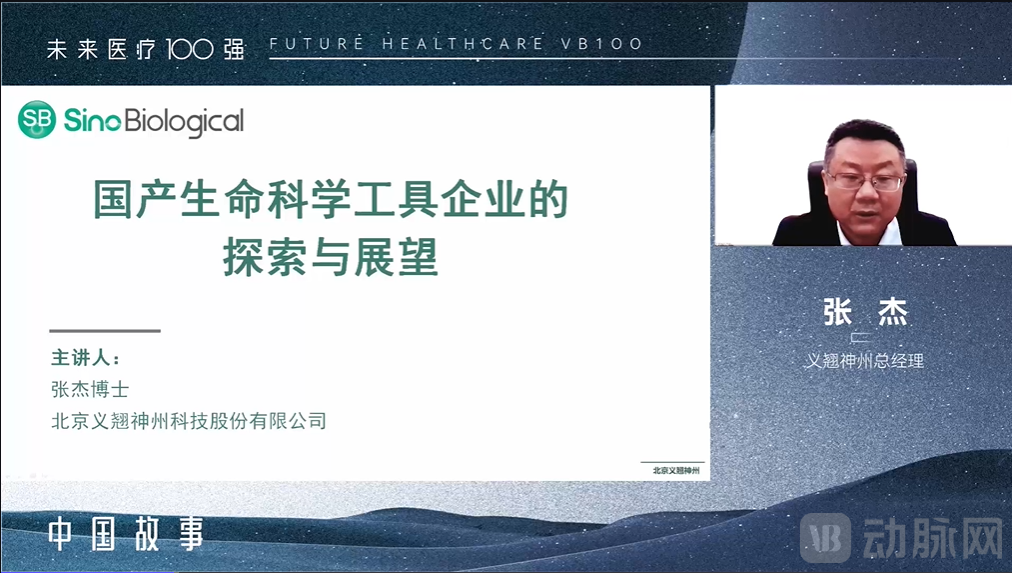
Zhang Jie | General Manager, Sino Biological
Life science tools have a broad range of applications. They not only support scientists in exploring the mysteries of life sciences but also enable biopharmaceutical companies to develop various new drugs, vaccines, and diagnostic-related products. As a foundational platform, they facilitate the rapid development of the entire biopharmaceutical industry and constitute a supporting industry in their own right.
Zhang Jie, General Manager of Sino Biological, stated, “There is currently substantial unmet demand in the biological reagents market, and suppliers face numerous challenges on the path to domestication of biological reagents in China.”
“First, it is essential to meet the complex and ever-changing demands of the market., biological reagent suppliers must establish end-to-end independent R&D capabilities and scaled production capacity; key technologies and critical reagents in the process must not be subject to external control.Another challenge stems from the quality control system., quality issues with antibody reagents result in hundreds of millions of dollars in waste globally each year. Quality research on biological reagents involves diverse technical approaches and complex customer application scenarios, requiring substantial investment and long-term accumulation and effort from reagent suppliers.”
Chinese biological reagent companies have broad prospects for future development. During their rapid growth, they need to focus on the stability of their supply chains, gradually expand from single-track operations to diversified tracks, and establish a strong global market presence.
Expert Roundtable: The Pace and Path of Domestic Production and Internationalization in the Biopharmaceutical Supply Chain

(From left to right: Shujun Yang, Investment Director at Legend Capital; Biwang Jiang, Chairman of Nanomicro Tech; Yantao Wang, Chairman and CEO of Mabang Bio)(Cao Liang, General Manager of Aiweituo; Ding Jianling, CSO of Lepu Biopharma)
From the initial “me-too” and “fast-follow” stages to today’s “first-in-class” innovations, China’s biopharmaceutical industry has undergone a transition from imitation to innovation. For upstream industries empowering biopharmaceuticals, is the development path similar? In the process of localization and internationalization, different customers often have distinct needs. How will suppliers gradually break through when facing diverse customers and requirements?
In this regard,Jiang BiwangHe stated, “In recent years, spurred by the pandemic outbreak, NanoMicro Tech has strategically expanded into vaccines, viruses, and other fields in response to market demand. In terms of internationalization, we have established subsidiaries in both the United States and India. To penetrate the European and American markets, we rely on innovative, original products; when serving Indian clients, we leverage our competitive advantage in cost-effectiveness.”
Cao LiangHe added, “In the long run, we suppliers must ‘survive’ long enough. After all, it takes a pharmaceutical company at least seven to eight years to develop a drug, another five to six years to market it overseas, and by the time international companies come to you for purchases, another five to six years may have passed.”
Wang YantaoHe agreed, stating, “Overall, Chinese biopharmaceutical companies are currently pursuing internationalization. Therefore, while we strengthen our localization efforts, we are also paving the way for global expansion. Through collaborations with leading domestic pharmaceutical enterprises, we will directly enter the international arena as their products are transferred to us.”
When it comes to internationalization,Ding JianlingHe stated, “A significant driver behind Lepure’s entry onto the international stage is that foreign products have failed to meet customer demands. Therefore, achieving import substitution is not merely a result of successful business development strategies and technological innovation; more importantly, it stems from addressing the critical needs of downstream clients. When we fulfill these downstream customer requirements while leveraging our own technological strengths, globalization becomes an inevitable progression.”
Finally,Jiang BiwangIt concluded: “Whether pursuing domestic localization or international expansion, as long as a company possesses stable production and supply capabilities, technological innovation capacity, and a robust quality control system, it can continue to maintain rapid development.”
Wang YantaoIt stated: “For Maibang Biotech, we need to pursue development with technology as the core driver. By integrating upstream process optimization, ensuring a stable raw material supply chain, maintaining batch-to-batch product consistency, and strategically laying out upstream and downstream systems around technology and market demands, we can gradually achieve stable international production capacity.”
Cao LiangHe continued, “As a life sciences tools company, much of our business is B2B. Overreliance on generic products makes one easily replaceable. Instead, we can develop products with technological barriers through customization, helping Chinese companies create globally competitive offerings and growing alongside our clients. Meanwhile, we continuously iterate our products in response to evolving customer needs.”
Ding JianlingHe concluded, “A company may pursue multiple strategic directions, but we must possess the discernment to adjust our strategic layout in response to market demands. Furthermore, as an upstream supplier, securing our raw material supply is equally critical; only by effectively managing our own supply chain can we consistently meet customer needs. Ultimately, whether our goal is import substitution or global expansion, the key to success lies in our reputation, which requires unwavering adherence to quality.”
Roundtable with Industry Leaders: The Rise of China’s Life Science Tools Industry
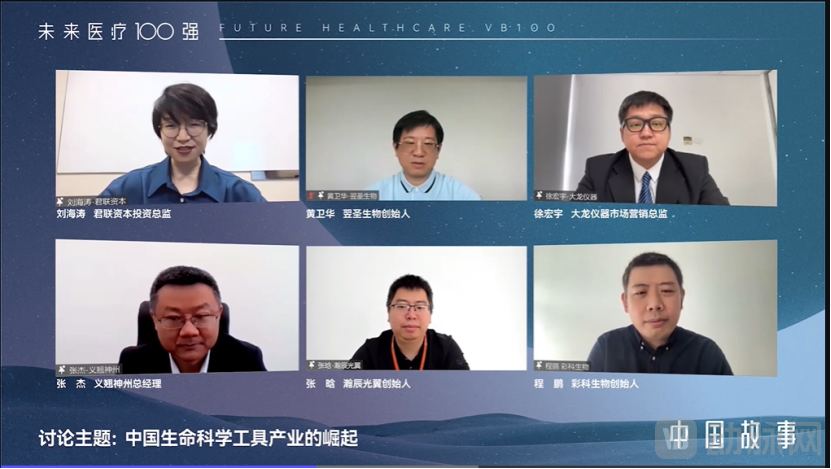
(From left to right, top to bottom: Liu Haitao, Investment Director at Legend Capital; Huang Weihua, Founder of Yeasen Biotechnology; Xu Hongyu, Marketing Director at DragonLab)Zhang Jie, General Manager of Sino Biological; Zhang Han, Founder of Hanchen Guangyi; and Cheng Peng, Founder of Caike Bio)
Amid rapid revenue growth and continuous capital infusion, many enterprises are facing varying degrees of involution. How can businesses break through the pressure-laden growth ceiling and achieve sustainable expansion?
Zhang Jie“He stated: ‘With the support of capital, many enterprises have transitioned from their early survival stage to a phase of rapid growth. Startups have also gradually shifted from focusing on single-product offerings in their early days to pursuing diversified development. In the process of accumulating technological and product expertise, there are few shortcuts available. We must continuously integrate new technologies to sustain corporate expansion. Furthermore, while expanding, it is crucial to strengthen the strategic planning and management capabilities of the company’s pipeline. Given that resources are always limited, we need comprehensive insights and sound judgment regarding the market, technology, risks, regulations, and development trends.’”
Zhang Han“We believe that moderate competition is beneficial to industry development. On the other hand, by leveraging the effects of intense internal competition, we can rapidly refine our team, technology, and products, capitalize on our cost-performance advantage to expand overseas quickly, and capture a broader market. Furthermore, as the company grows and expands, we will gradually evolve from a single-product enterprise into a platform-based organization. Taking ourselves as an example, our initial focus was on agricultural research equipment. When we recognized the platform potential of our technological accumulation, as well as the significant market potential and unmet needs in the field of medical diagnostic equipment, we expanded horizontally into the medical sector. Achieving this transition from 0 to 1 requires the company to simultaneously possess multiple conditions, including top-tier talent and equipment, platform-oriented thinking, relevant distribution channels, and inclusive and open management capabilities.”
Cheng PengHe stated, “The technologies and products we have developed are widely applicable. We are currently in the early stages of commercialization, as are our benchmark companies; therefore, hyper-competition is not an issue. Under this premise, we place greater emphasis on refining our platform-based technologies and strengthening our technological barriers to continuously raise the market ceiling across a broader range of application scenarios. Taking our single-cell multi-omics platform as an example, beyond antibody screening applications, we are actively expanding into areas such as cell therapy and synthetic biology. Meanwhile, our single-molecule platform is strategically positioned to address indications in multiple neurological fields, including Alzheimer’s disease.”
Xu HongyuHe stated, “Involution is inevitable in every industry once it reaches a certain stage of development. Orderly and healthy competition helps companies strengthen their resilience and capacity for sustainable growth. For enterprises, accumulating industry insights to make strategic moves in advance ensures they are well-prepared for any storm. Furthermore, products serve merely as a vehicle for a company to showcase its capabilities and should not be regarded as the sole metric of its development. Since products eventually become obsolete, only continuous innovation can guarantee a company’s progress. Amidst the pandemic, I actually view involution and competition as positive forces. If you fail to adapt, you will witness competitors that respond swiftly to market demands quickly reaping the benefits. As the market expands, products and technologies will also iterate at an accelerated pace.”
Huang WeihuaIn summary: “Relatively speaking, we are not particularly concerned about issues such as ‘involution,’ because our R&D strategies are primarily driven by market demand. In this context, ‘competition’ often merely reflects our own efforts to achieve technological breakthroughs. For upstream companies, resolving core foundational technologies is the primary driving force. Meanwhile, product positioning must also be addressed from the perspectives of market strategy and promotional communications. Corporate development strategies are not solely vertical; they involve an interplay of both horizontal and vertical dimensions.”