

BionicM Files IPO Prospectus: Pioneering Powered Prosthetics Enable Amputees to Walk Naturally

BionicM
Developer of Intelligent Rehabilitation Robotics Products
“When I wore a traditional prosthesis, I had to stiffen my leg and swing the prosthetic limb forward with each step; otherwise, I would fall, which made my gait uneven. Now, with the intelligent powered prosthesis, it’s much easier!” On January 7, 2022, in the fitting room of the Hubei Provincial Rehabilitation Assistive Technology Center, Zhang Yang (a pseudonym), who underwent left above-knee amputation due to a car accident and had been using a traditional prosthesis for over ten years, was trying onBionicM(hereinafter referred to as"BionicM") after receiving the intelligent powered prosthetic limb, he said excitedly.
According to statistics, there are over 12 million lower-limb amputees worldwide, such as Zhang Yang (pseudonym), with a market size of approximately USD 6 billion and a compound annual growth rate (CAGR) steadily exceeding 6%. In China, there are approximately 4 million lower-limb amputees.[1], Sun Xiaojun, Founder and CEO of BionicM, is one of them.
Those who have met Sun Xiaojun cannot help but be moved by his positive, optimistic, confident, and resilient spirit, feeling proud and admiring of the achievements he has attained to date.
At nine years old, Sun Xiaojun should have been running freely under blue skies and bright sunshine. However, after twisting his ankle during a basketball game in Shiqian County, Guizhou Province, in southwest China, he was diagnosed with osteomyelitis upon arrival at the hospital. Due to the lack of timely treatment, he unfortunately underwent amputation.
The cruel arrows of fate did not fell this young man from a modest background. Instead, with rock-solid perseverance, relentless self-improvement, and extraordinary dedication, he stood up to resist the boundless sufferings of life. He earned his bachelor’s degree in Material Forming and Control Engineering from Huazhong University of Science and Technology, his master’s degree in Mechanical Engineering from the University of Tokyo, and his Ph.D. in Intelligent Machinery and Information Science from the University of Tokyo. His research focuses on the design and control of intelligent powered prosthetics.
In 2011, at the age of 24, he received his first prosthetic limb with the assistance of Japan’s disability welfare services. Although he was able to bid farewell to crutches, he encountered numerous inconveniences while using the prosthesis: traditional prosthetic limbs, lacking powered actuation, are prone to causing fatigue during wear; they cannot flex when ascending or descending stairs, making the process laborious; users are susceptible to falls if they lose focus or walk slightly faster; gait patterns exhibit significant vertical oscillation; and product lifespan is short...
At that time, Sun Xiaojun, who was engaged in product design and R&D at Sony Corporation in Japan, conceived the idea of developing his own intelligent powered prosthetic limb.
“I am an engineer myself, capable of designing better prosthetics. I am determined to transform this industry in my three roles as a prosthetic user, developer, and entrepreneur. What I am committed to now is ensuring that everyone in the world—including people with disabilities, the elderly, and those with mobility impairments—can move and walk freely, participate in social activities without hesitation, and pursue their dreams with courage,” said Sun Xiaojun.“The world kisses me with pain, and I return it with song.”
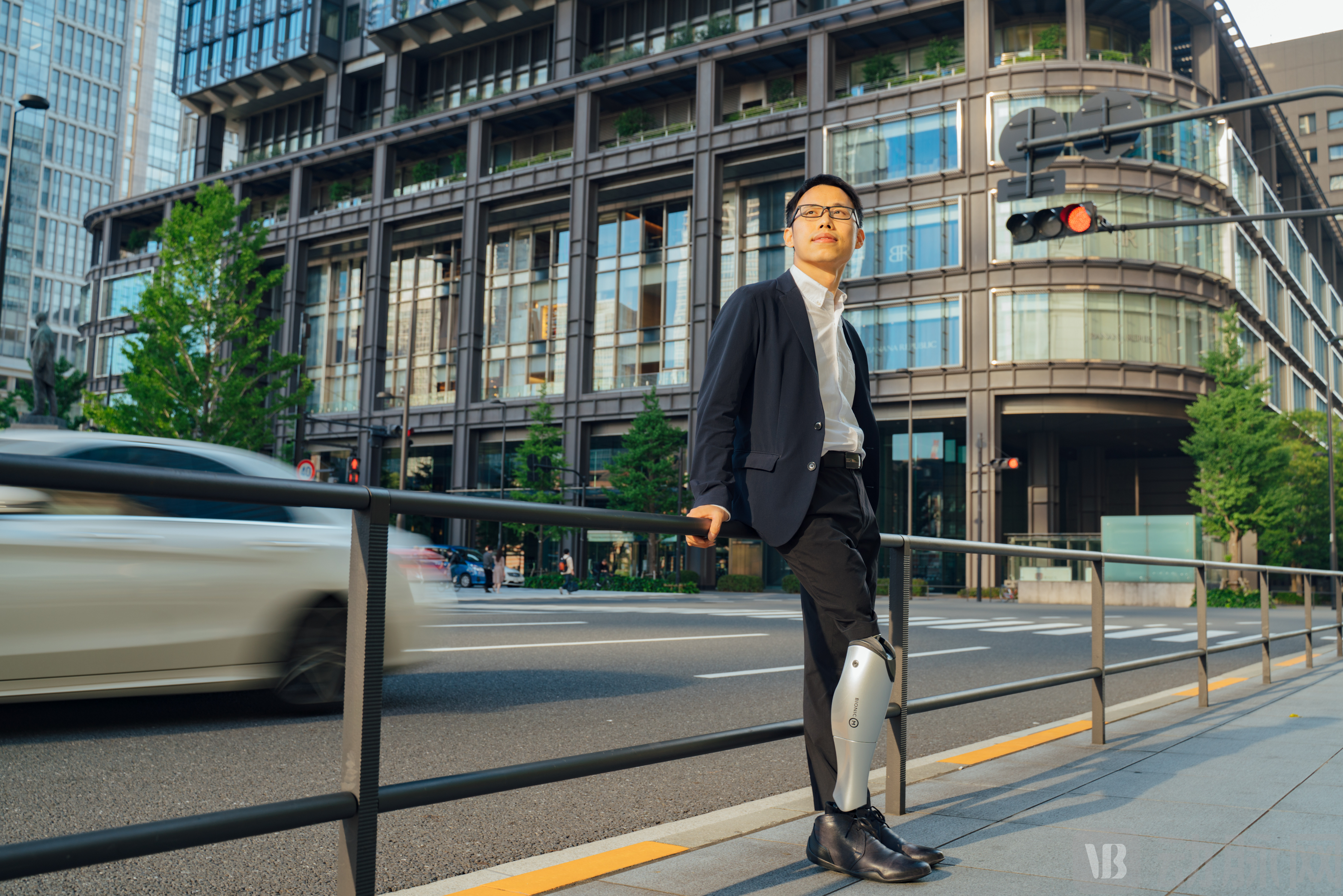
Sun Xiaojun, Founder of BionicM
BionicM is an international company dedicated to enhancing individual mobility, established and operating simultaneously in Tokyo, Japan, and Shenzhen, China, in 2018.
By seamlessly integrating humanoid robotics technology with the human body, the company has designed a novel robotic intelligent powered prosthesis. Equipped with sensors, the prosthesis perceives user intent and environmental changes in real time, controlling motors to deliver appropriate torque and speed, thereby providing power assistance to help users walk more effectively.
Under the call and influence of Dr. Sun Xiaojun, the founder, BionicM has attracted successive waves of elite professionals from China and Japan across both industry and academia. The company’s core team comprises senior technical experts and management elites from prestigious universities such as the University of Tokyo, the University of California, Berkeley, Keio University, and Peking University, as well as from Fortune 500 companies including SONY, P&G, Mitsubishi Electric, HONDA, CANON, and SHARP. According to Dr. Sun Xiaojun, currentlyThe Japanese team is responsible for hardware.Design and Development,The Shenzhen team is responsible for intelligent software.R&D.
With such a formidable team, BionicM has showcased its prowess in major competitions worldwide—winning the Red Dot Best of the Best and the Red Dot: Best of the Best (Red Dot Star) in 2020, securing first place in Japan for the James Dyson Award, receiving the Grand Prize at the SXSW Interactive Innovation Awards in the United States, claiming the championship in the AI and Robotics category at the Hong Kong Elevator Pitch Competition, and achieving first place in the Japan division of the Shenzhen International Innovation & Entrepreneurship Competition.
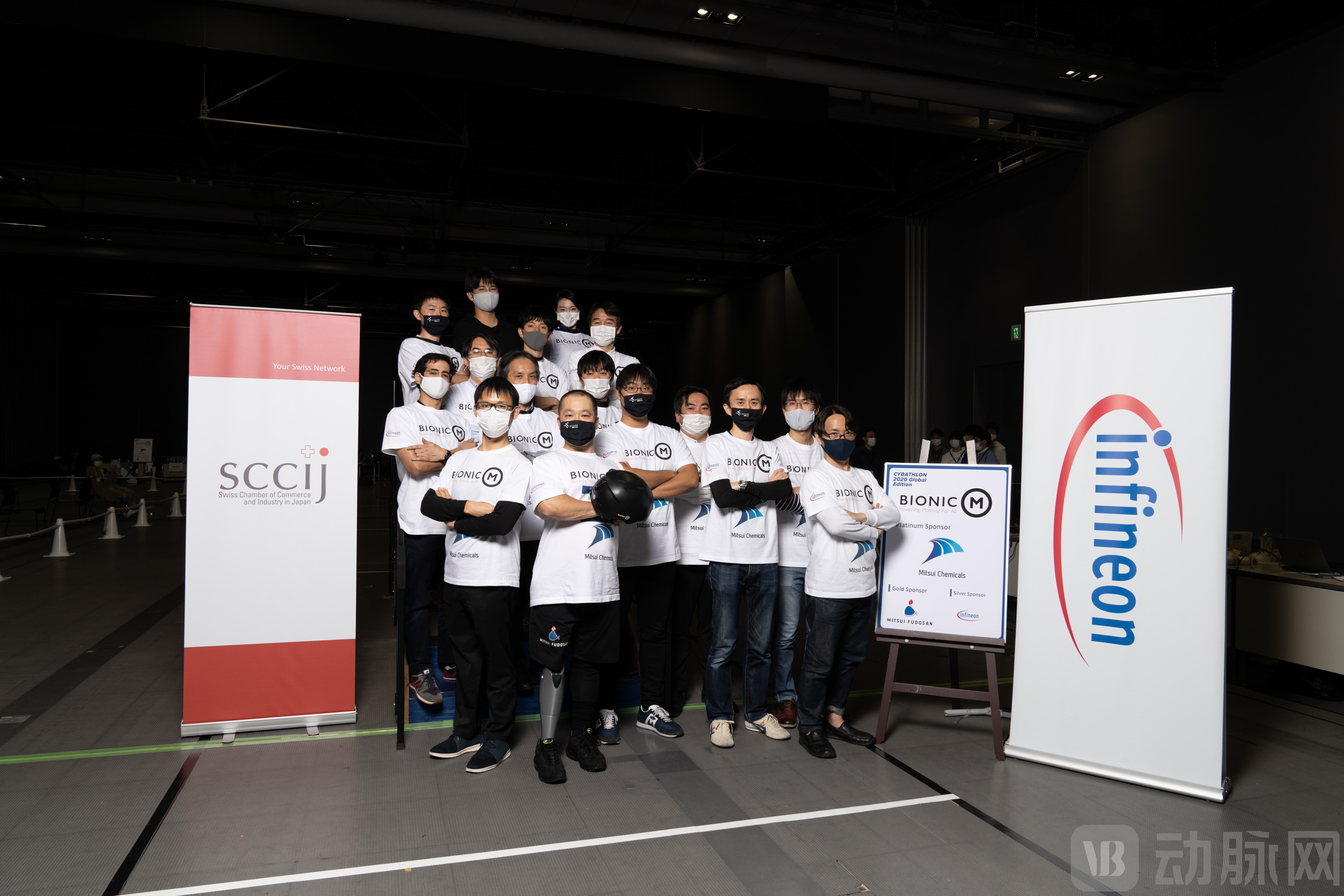
BionicM Team Photo
6 years of R&D, 10 generations of prototypes,
The world’s first “legs” featuring “muscles” and “nerves,” capable of intelligent learning and evolution
Amputees struggle to walk with conventional prostheses, unable to ascend and descend stairs in an alternating pattern; their unstable center of gravity makes them prone to falls and increases the risk of secondary physical injuries. This is largely because key muscle tissues in the residual limb are removed during amputation surgery.
Some standard prosthetic products on the market cannot fully replicate the biomechanical functions of the human leg, forcing users to overuse their residual limbs and other muscle groups to compensate for the lack of energy provided by the prosthesis. As a result, they exhibit an uneven gait and experience significant exertion while walking.
According to Sun Xiaojun, the vast majority of smart prosthetics currently available on the market are passive.BionicM's bionic intelligent prostheses are powered.The challenge with the latter lies in how toEnsure the prosthesis is lightweight and durable while providing sufficient power to support the human body in performing complex movements., andHow sensors perceive user intent and environmental changes in real time, intelligently controlling the motor to output appropriate torque and speed, thereby providing stable, safe, and natural walking that mimics a biological leg through a combination of rigidity and compliance.
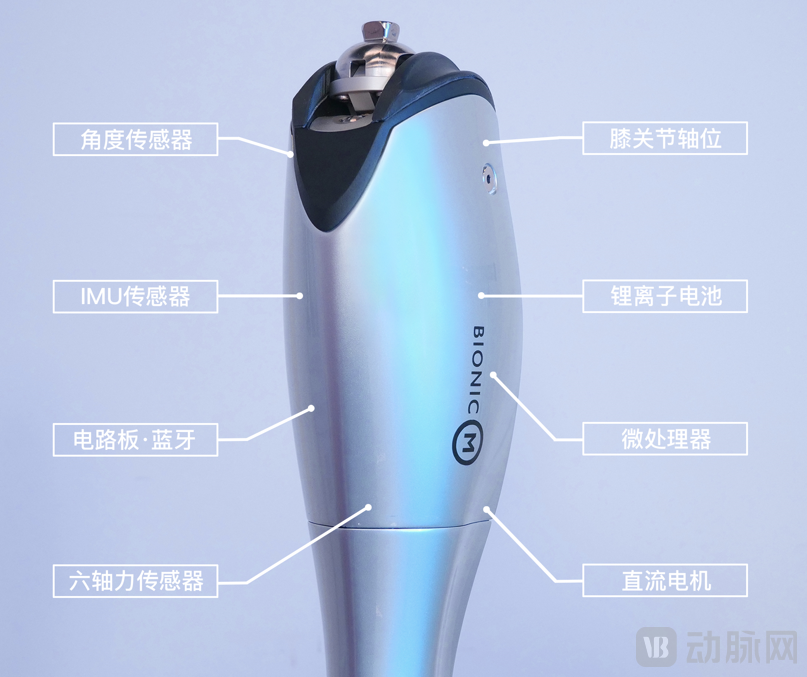
BionicM Intelligent Powered Prosthetic Product Schematic
The Japanese team focuses on hardware design, with all materials, components, and motors—except for sensors—being independently developed. The Shenzhen team is responsible for designing the core bionic algorithms of the software system.
After six years of R&D and real-world wear testing, with continuous modifications based on biomechanics and bionics, BionicM’s intelligent bionic prosthetic limb went through ten generations of prototypes before finally launching the current product—BionicM Intelligent Powered Prosthetics.This product features a “brain,” “nerves,” “muscles,” and “skeleton,” and incorporates five core technologies: “bionic muscle design,” “unique drive technology,” “ergonomic design,” “bionic core algorithms,” and “kinetic energy recovery technology.”
By leveraging multiple sensors integrated into the prosthesis to detect the user’s posture and movements, bionic control algorithms provide corresponding power assistance for walking. This approach reduces user fatigue and prevents secondary injuries. Furthermore, by applying artificial intelligence and machine learning to gait data collected from the sensors, the system can better perceive the user’s intent and environmental changes. It adaptively adjusts the prosthesis to match the user’s gait characteristics, enabling easier and more natural ambulation.
In terms of performance,BionicM’s intelligent powered prosthetic limb is constructed from titanium alloy and carbon fiber, weighing approximately 2.9 kg. It enables a knee flexion angle of up to 134°, supports a maximum load of 100 kg, and features an IPX4 water-resistance rating. A full charge takes approximately 3 hours and provides enough power for around 30,000 steps. Once the battery is depleted, the device seamlessly transitions to function as a passive prosthesis for continued use. To help users monitor power consumption, the remaining battery level is displayed both on the prosthetic limb itself and via its companion mobile app.
In terms of power mode,This product covers most daily life scenarios and offers five modes: stair climbing, walking, resting, and standing up.
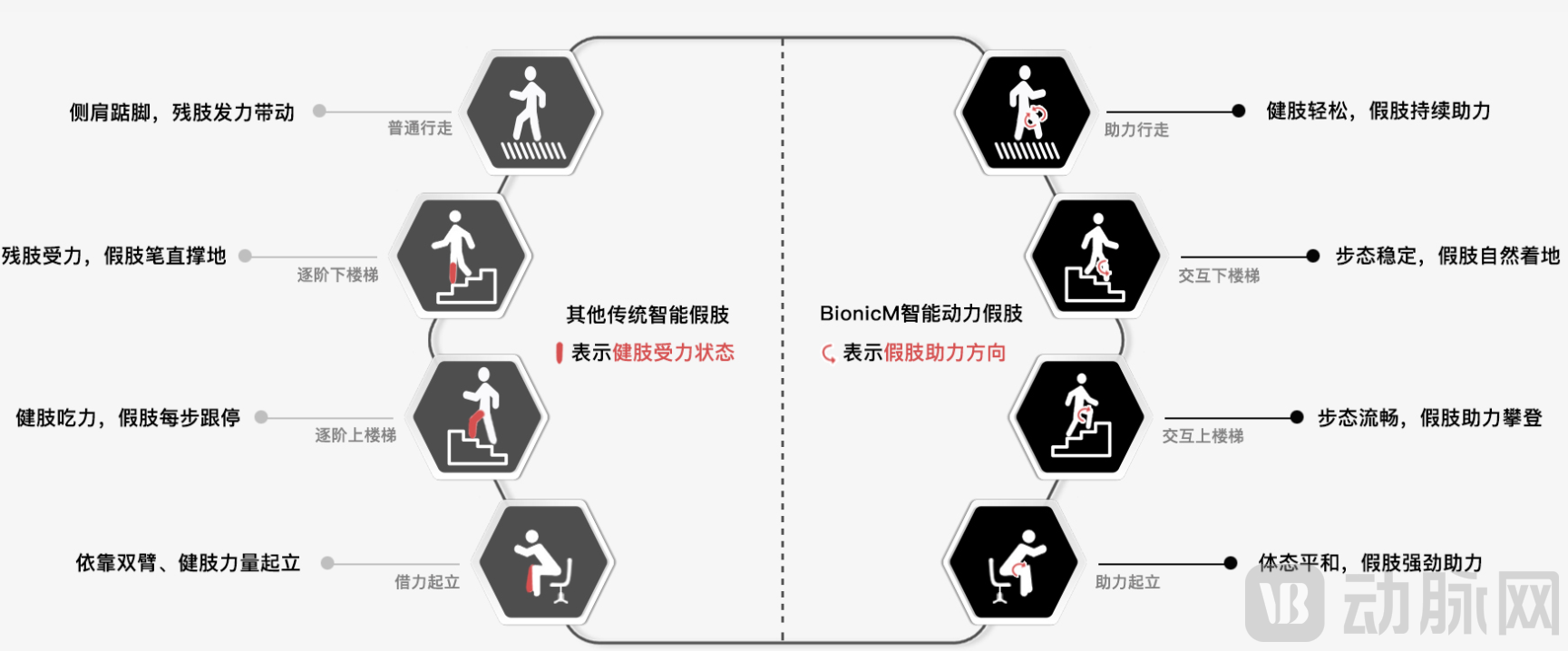
Traditional Smart Prosthetics VS BionicM Smart Powered Prosthetics
In terms of design philosophy,Most prosthetic limbs on the market feature a simple, slender design that facilitates concealment within trouser legs. In contrast, the BionicM intelligent powered prosthesis resembles the human leg in form, showcasing the aesthetic strength of muscular contours. Sun Xiaojun hopes that this product will not only serve as an extension of the user’s body, assisting them with standing and walking, but also provide psychological reconstruction and support, enabling users to embrace their true selves and welcome life. In 2020, this design stood out among 4,170 entries from 52 countries and regions worldwide, earning the highest honor at the German Red Dot Award—the Red Dot: Best of the Best.
As a rehabilitation assistive device, this product obtained the Certificate of Conformity issued by the National Quality Inspection and Testing Center for Rehabilitation Aids under the Ministry of Civil Affairs in October 2021. In addition, the company is currently conducting testing and R&D.Intelligent Powered Ankle Joint, to help more individuals with lower-limb disabilities.
According to Sun Xiaojun, the global prosthetics industry is currently characterized by an oligopolistic market structure, with nearly all mid-to-high-end prosthetic devices originating from Europe.
According to a set of data from 2015, the top three companies in terms of global market share for prosthetic manufacturers were Otto Bock (Germany), Össur (Iceland), and Blatchford (UK), with respective shares of 43%, 20%, and 5%.[2]According to statistics, the market size in related fields is approximately $6 billion, with a CAGR steadily maintaining growth above 6%.[3]In contrast, the domestic market for intelligent powered prostheses remains a blue ocean, and Chinese-made powered prostheses are in urgent need of breaking through.
It is understood that BionicM’s intelligent powered prosthetics are primarily sold in China and Japan, with each set priced at approximately RMB 300,000. Although this price is more than 50% lower than that of comparable international products, Sun Xiaojun admits that he is not satisfied with it. At present, the product is manufactured on a small scale through manual assembly, resulting in high production costs. He is actively seeking additional funding to expand production capacity and reduce supply chain costs, thereby making the technology accessible to more people in need.
At this stage, BionicM is in the early phase of its commercial growth ramp-up, primarily relying onProduct Sales, After-Sales ServiceProfitability. Sun Xiaojun stated that users generate substantial amounts of data while using intelligent powered prostheses, and the company plans to expand its service scope in the future by leveraging these data to provideHealth Monitoring, Health Managementand other value-added services.
According to Sun Xiaojun, BionicM willApplication for U.S. FDA Approval, and by virtue ofGaining Entry into the European and American Markets with High Cost-Performance Advantages. At the same time, R&D investment will be increased with a view to launchingMore Affordable, Inclusive Smart Powered Prosthetics, and hopes that throughPublic Welfare Organizations, Commercial Insurancecollaborate to help more individuals with physical disabilities regain their ability to stand.
“Though the glow is faint, may it shine; though the path is arduous and long, perseverance leads to arrival.” Sun Xiaojun hopes that every individual with disabilities can break through internal barriers, refuse to place limits on life, and let their lives flourish.
References:
1. "[China Daily] Spotlight on the Prosthetics PhD and His Smart Prosthetic Limbs"
2. Behind the Beijing Winter Paralympics: The Prosthetics Industry Awaits the Spotlight
3. “BionicM Secures Tens of Millions in Series A Funding, Launching a New Operational System for an Excellent Journey”