

30 Real Estate Developers Enter the Trillion-Yuan Elderly Care Market: A Decade-Long Dilemma Remains Unresolved
Uniqlo sells fresh flowers, China Post offers milk tea, Ma Yinglong launches eye creams, and Dong-E-E-Jiao markets coffee. Cross-industry integration has become a pathway for many companies seeking transformation. In this light, real estate developers entering the elderly care sector seems hardly incongruous.
What Makes the Elderly Care Industry So Attractive to Real Estate Developers for Cross-Sector Expansion?
According to data from the “White Paper on the Development of China’s Elderly Care Industry” released by the Chinese Academy of Social Sciences, the scale of China’s elderly care industry will reach RMB 13 trillion by 2030. Such a market size holds strong appeal for real estate developers currently facing significant instability. The vast market has enabled these developers to envision future opportunities.
However, real estate developers’ cross-sector forays into healthcare have long suffered from poor adaptation. Whether it was Lanhai Medical’s high-end clinics located in Lujiazui and on Huaihai Road’s K11 mall, or Wanda Group’s multi-billion-yuan investment in building medical industrial parks in Chengdu, Kunming, and other regions, none ultimately succeeded.
Upon closer examination, the healthcare services sector is not like real estate, where capital injection can rapidly open up markets and enable high-turnover monetization. Instead, it requires years of specialized and meticulous operations to recoup the substantial initial investments. Compared with pure medical services, elderly care demands comprehensive capabilities in areas such as funding, land acquisition, and community management—precisely the strengths of real estate developers. Consequently, these companies have increasingly extended their reach into the elderly care industry.
Real estate developers entering the elderly care sector is hardly a novel phenomenon. The stark contradiction between the national trend of population aging and the inadequate development of supporting elderly care infrastructure has led many real estate companies to recognize the growth potential of the elderly care industry at an early stage.
Some real estate industry insiders believe that, much like the current property management sector, the elderly care industry will grow into a trillion-yuan market after more than 20 years of cultivation. If the past decade is taken into account, it will take approximately another 10 years to reach this milestone.
Why Another 10 Years?
In a decade, the post-1960s and post-1970s generations, who have benefited from China’s national development dividends, will enter old age. This cohort is characterized by relatively strong economic conditions, as well as more open attitudes toward consumption and elderly care compared to today’s elderly population. Furthermore, as most of their offspring are only children, the lack of multiple siblings to share caregiving responsibilities will further amplify the demand for elderly care services.
For real estate developers, the rapid growth of the past two decades has demonstrated one fact: by aligning with national development needs and fulfilling social responsibilities, they can also reap greater dividends. Therefore, entering the elderly care sector is not too early for real estate developers; rather, if they fail to act now, they may lose the opportunity altogether in the future.
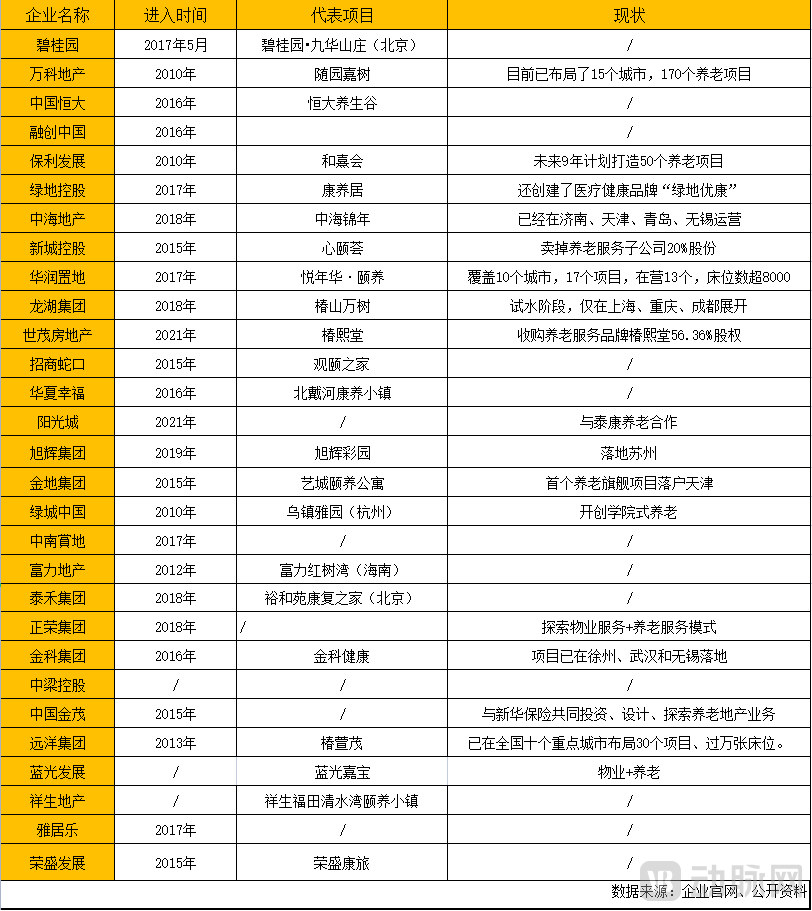
Some Real Estate Developers Entering the Senior Housing Market
On the other hand, compared to real estate development, elderly care projects are more complex, involving a wide range of issues such as product design, operational management, healthcare resources, talent development, innovation in profit models, and family ethics. The earlier real estate companies enter the elderly care sector, the sooner they can cultivate their capabilities in this field.
From the perspective of real estate developers, land auctions across various regions are increasingly imposing requirements for self-held properties. Similar to the commercial real estate landscape two decades ago, some companies have abandoned this path early on due to perceived complexities, while others have persisted and ultimately cultivated first-class commercial operational capabilities. For self-held property assets, integrating them with elderly care services to generate additional revenue streams is an essential competency that real estate developers must master.
Having missed out on commercial operations, we cannot afford to miss the elderly care services sector.
The Elderly Care Strategy Revealed in the Annual Report
In China, the name Vanke is unavoidable when discussing real estate developers; even in the niche sector of senior housing, Vanke was among the early entrants.
Vanke first mentioned elderly care-related terms in its 2009 annual report, stating its intention to explore the real estate business model for senior living. There was little activity in the following years, with some annual reports not even mentioning it. It was not until 2013 that Vanke established two new subsidiaries: Wuxi Oak Hui Elderly Care Management Service Co., Ltd. and Beijing Oak Hui Elderly Care Investment Management Co., Ltd.
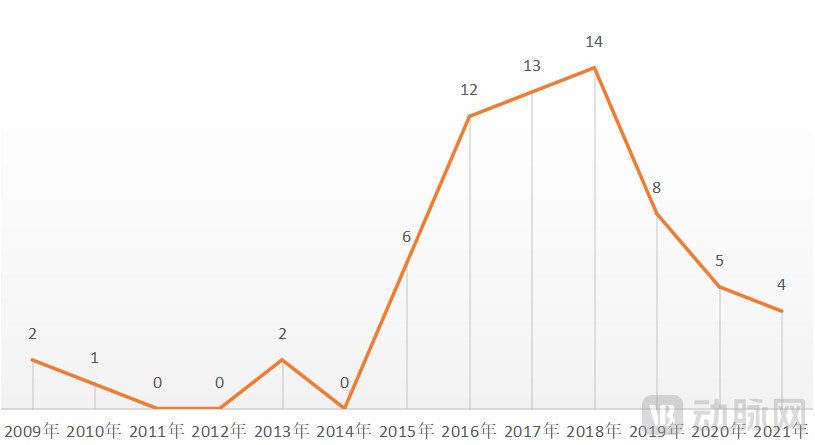
Number of Mentions of Elderly Care Business in Vanke’s Annual Reports Over the Years Data sourced from corporate annual reports
In 2014, Vanke did not mention any elderly care-related businesses in its annual report. It was not until the 2015 annual report that Vanke referenced the elderly care market and senior housing, projecting that the senior real estate sector would reach a market size of RMB 1 trillion by 2023. That same year, Vanke announced its transformation into a “urban supporting service provider,” incorporating elderly care institutions and services into its new business scope, and established Chengdu Vanke Elderly Care Service Co., Ltd.
In 2016, Vanke continued to mention elderly care 12 times in its annual report. Its first large-scale senior living community, the Hangzhou Suiyuan Jiashu project, has been operational since 2015 and currently houses over 600 seniors, having served as a reception and tour site for the 2016 G20 Summit.
By 2017, Vanke had positioned itself as an “urban and rural development and lifestyle service provider,” integrating its elderly care operations into the “Better Life Scenario Creator” pillar, one of its four core business lines. At the same time, it announced that its elderly care business had expanded to 15 cities, comprising 50 projects with beds and approximately 120 bed-free day-care or home-based service centers.
In 2018, Vanke mentioned in its annual report a collaboration with Microsoft to explore smart elderly care services. Over the following three years, the annual reports provided little further detail on its elderly care business.
Vanke’s exploration of senior housing real estate has left only the aforementioned fragmented mentions in its annual reports over the past decade.
The Property Is Not the Focus; Service and Medical Care Are
Yu Liang, Chairman of the Board of Directors of Vanke, once stated publicly: “Vanke will evolve into a provider of better-life services. In the future, when people think of Vanke, they should associate it with a better life, not just houses. I do not endorse the term ‘elderly-care real estate’; what Vanke aims to deliver is ‘elderly-care services,’ not real estate.”
It is precisely this underlying tone that makes Vanke’s elderly care business more service-oriented.
In its annual report, Vanke mentioned the Suiyuan Jiashu elderly care project several times. Beyond being one of the few profitable ventures, more importantly, Vanke developed four major service modules and 86 detailed service items around elderly care needs in this project.
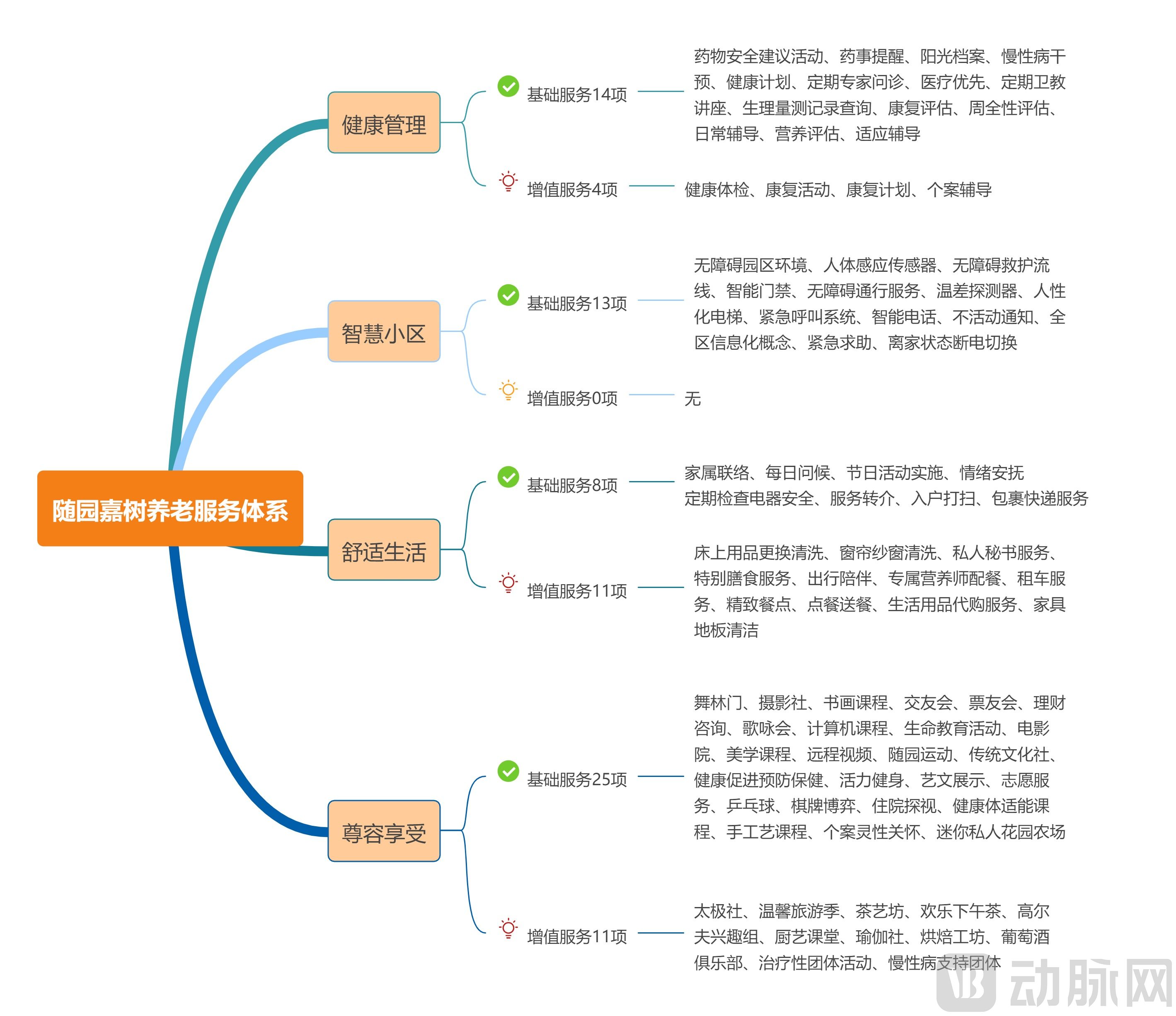
Vanke’s Elderly Care Service System
Although Vanke’s annual reports have made only brief mentions of its elderly care business in recent years, we can still discern the company’s strategic moves from these sparse remarks. In recent years, Vanke has explored the integrated medical and elderly care sector by collaborating with external resources, as exemplified by “Shanghai Shenyang” and the “Beijing Vanke–Beijing Enterprises Guangxi Medical and Elderly Care Center.”
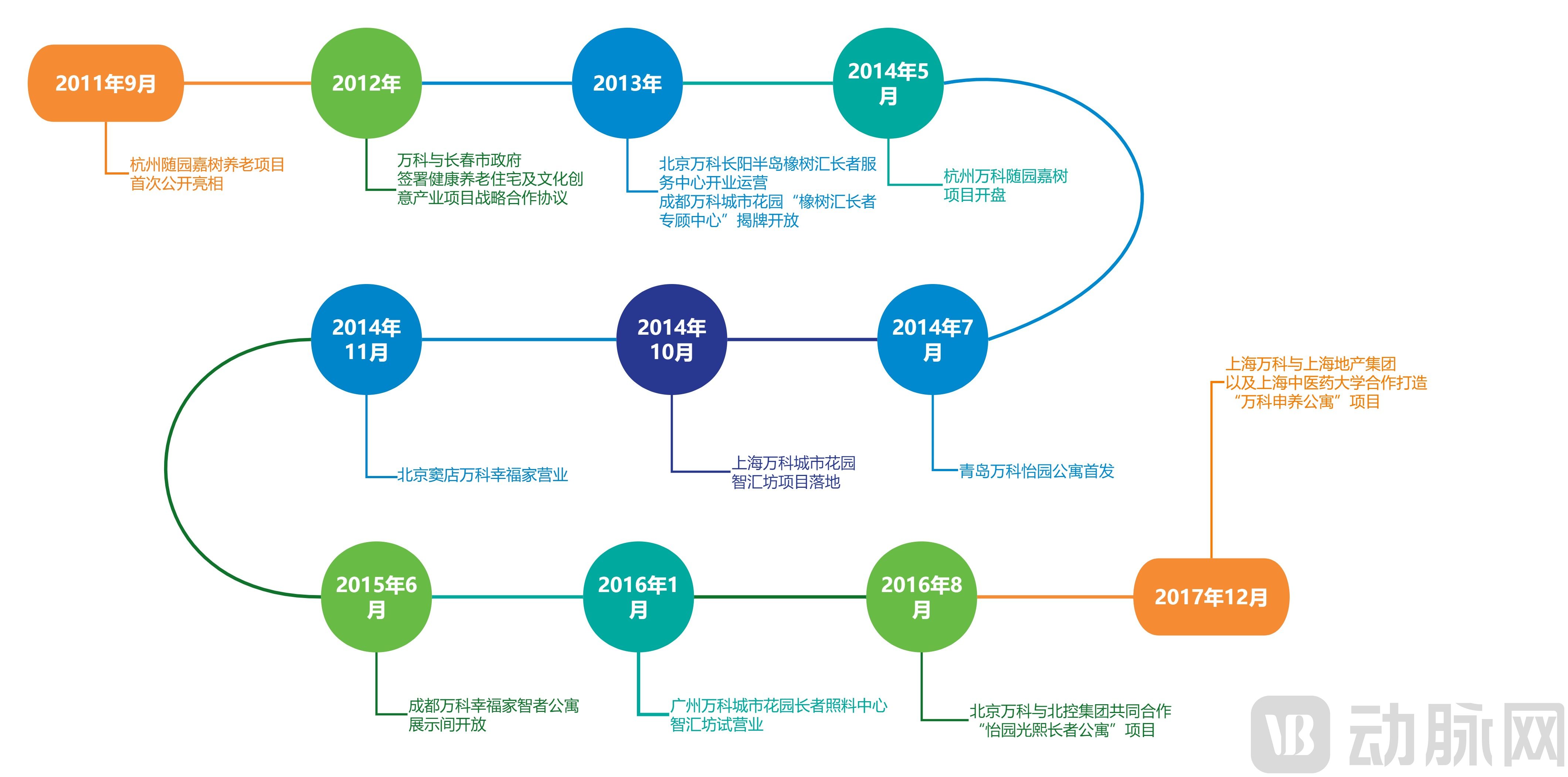
Vanke Elderly Care Business Development Timeline
Shanghai Shenyang was jointly established by Shanghai Vanke, Shanghai Land Group, and Shanghai University of Traditional Chinese Medicine, focusing on the elderly care operations and services sector. As its name suggests, the company concentrates on the Shanghai market, striving to build a comprehensive portfolio of elderly care operational services encompassing housing (senior apartments), nursing (care institutions), medical care (rehabilitation and nursing hospitals), and community-based services (community centers for the elderly).
Currently, Shenyang has officially put into operation more than a dozen community-embedded centers, including Chenghua Zhihuifang, Chuanbei Zhihuifang, and Quyang Zhihuifang, as well as the Binjiang Lanyue Senior Apartment and the Zhenping Road Wangnianhui Care Institution. Meanwhile, Shenyang is preparing over 30 additional facilities of various types, including community-embedded centers, care institutions, senior apartments, and rehabilitation nursing homes, which are distributed across Shanghai’s main central districts.
The Beikong Guangxi Medical and Elderly Care Center is jointly operated by Beijing Vanke and Beijing Enterprises Group. The entire center covers an area of 7,000 square meters, with a gross floor area of nearly 18,000 square meters, and is divided into two sections: the Guangxi Senior Apartments and the Guangxi Rehabilitation Hospital. The senior apartments offer 110 beds.
The Guangxi Project adopts a cooperation model in which Vanke’s Medical and Elderly Care Division in Beijing provides service and management control standards. Vanke is responsible for upgrading related facilities and services, introducing resources such as universities for the elderly and rehabilitation hospitals, with the aim of establishing it as a benchmark elderly care project in Beijing.
As Vanke deepens its involvement in the elderly care industry, the integration of medical services has become an inevitable challenge. For older adults, particularly the very elderly, rehabilitative care is a crucial guarantee of quality of life. The “elderly care + rehabilitation” model not only ensures the continuous enhancement of elderly care service quality but also addresses the medical needs of the surrounding population, thereby generating new revenue streams.
Gains and Losses
Currently, Vanke’s organizational structure does not include an independent business unit dedicated to elderly care services. In previous years, explorations into this sector were primarily conducted by its regional branch companies across various cities, which resulted in a fragmented and inconsistent branding of Vanke’s elderly care product lines during that period.
From 2013 to 2016, Vanke launched five elderly care brands in succession: “Oak Club,” “Zhihui Fang,” “Happy Home,” “Jiayuan,” and “Suiyuan Home.” This proliferation was clearly detrimental to brand promotion. After 2016, Vanke began consolidating its internal brands, gradually streamlining its elderly care business under three core brands: Suiyuan, Yiyuan, and Jiayuan.
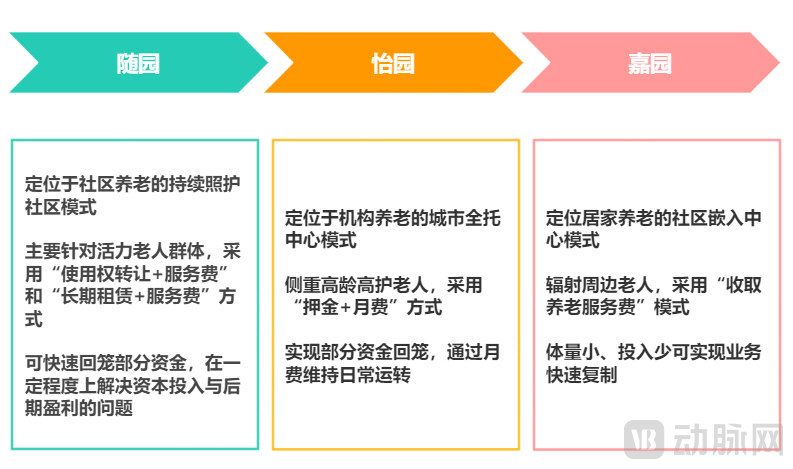
Vanke Elderly Care Business Brand
With such a brand architecture, branch offices in various cities can select the appropriate brand for operations based on their business type. For instance, the Fangshan Suiyuan project in Beijing is a rare large-scale elderly care facility featuring government-enterprise cooperation and a public-building-private-operation model.
Although Vanke entered the elderly care industry at an early stage, its introduction of medical resources was relatively lagging, resulting in a mismatch in the development pace between its two core service capabilities: eldercare services and medical care.
Liu Xiao, Senior Vice President of Vanke Group, once compared elderly care to Vanke’s “other shore”—where one can see the turbulent waves of the river, yet also glimpse the vast world beyond. Amidst these rushing currents, Vanke has been moving forward steadily.
Strategic Intent in the Annual Report
In addition to Vanke, Poly, another leading domestic real estate enterprise, also entered the elderly care industry at an early stage. Poly first mentioned in its 2009 annual report that it would expand into businesses such as senior housing to create new profit growth points, and formally proposed a plan to develop senior housing in its 2010 annual report.
Since 2011, Poly has officially promoted elderly care real estate projects in cities such as Beijing, Shanghai, and Guangzhou, and established a specialized management company for the elderly care industry. In 2012, Poly launched its first elderly care product—Poly Anping Hexi Club Linyu Senior Living Center—which has since become a strategic component of Poly’s elderly care real estate portfolio.
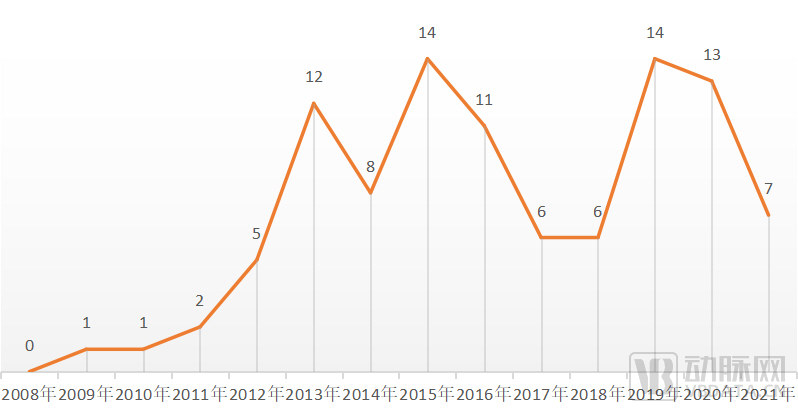
Number of Mentions of Elderly Care Business in Poly’s Annual Reports Over the YearsData sourced from corporate annual reports
In 2013, Poly officially released its elderly care industry strategy, which is to enter the elderly care industry through a whole-industry-chain approach and create a “trinity” Chinese-style elderly care system that integrates institutional elderly care, community-based elderly care, and home-based elderly care.
With the rollout of its “trinity” elderly care strategy, Poly has been refining age-friendly design standards for home-based care since 2014, when it first publicly unveiled model units for senior living apartments. In community-based care, Poly facilitated age-friendly renovations in 51 communities, earning praise from People’s Daily.
Furthermore, the pilot institutional elderly care project “Hexi Club” in Beijing commenced operations, achieving an occupancy rate of over 64% in 2014, significantly higher than the industry average. Building on this success, in 2015, Poly continued to optimize the operation of the Beijing “Hexi Club” elderly care facility, launched a new pilot project, “Xitang Hexi Club,” in Shanghai, and simultaneously advanced preparatory work for elderly care facilities in Guangzhou, Chengdu, and other cities. To better promote home- and community-based elderly care services, Poly also established and operated six community health living centers across China.
Notably, since 2014, Poly has organized the China International Senior Industry Expo. Leveraging this platform, Poly has gained deeper insights into cutting-edge technologies, products, and solutions in the elderly care sector; global market trends and technological developments in senior care; and the future direction of the aging industry, extending its expertise beyond senior living real estate development.
By 2016, Poly’s elderly care business had cultivated its own senior care ecosystem through platforms such as Hexi Club, Healthy Living Pavilions, and the Senior Expo, while simultaneously intensifying its mergers and acquisitions in the health and eldercare sector. The company aimed to position itself as a comprehensive community service provider, with a focus on property management, health and eldercare, and community commerce.
In the following years, Poly did not elaborate on new strategic directions for its elderly care business in its annual reports, but instead continued to refine its existing operations and polish its services.
Hexi Hui to Build a Smart Elderly Care Service System
For an enterprise of Poly’s scale, the development of any business unit will inevitably follow a standardized trajectory, which facilitates both service delivery and business replication. The same holds true for elderly care services.
The Xishang Service System of Hexihui is composed of three major segments: business data, service products, and operational management, which represent the operation end, output end, and support end, respectively.
For consumers, what is intuitively perceived is the service product at the output end. Poly has built a "Renewed Service System" centered around three core areas: lifestyle, culture and entertainment, and healthcare. This system encompasses six key dimensions—sense of security, sense of value, sense of vitality, sense of identity, sense of comfort, and sense of fulfillment—and includes a total of more than 130 basic and value-added services.
Of course, the provision of these services relies on robust operational support. Based on practical considerations, Poly has established a systematic and standardized framework for elderly care operations, thereby enhancing the professionalism of its management and service teams.
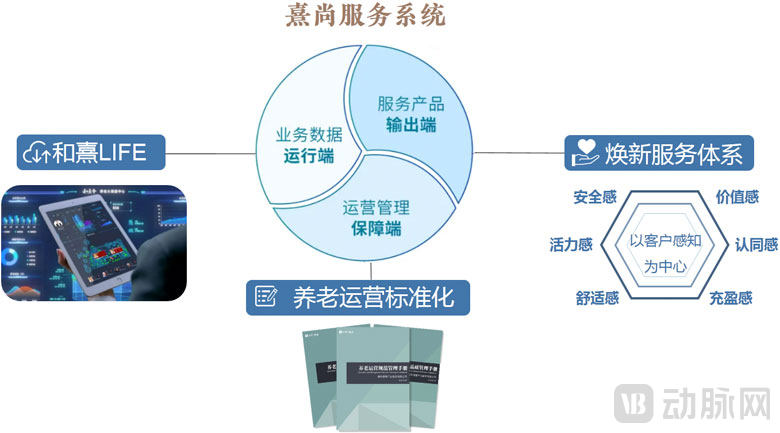
Poly Elderly Care Service SystemSource: Poly’s official website
While the establishment of standards is undoubtedly important, their implementation relies on personnel. The shortage of elderly care workers is a common challenge facing China’s eldercare industry, and Poly Group is no exception. To address this, Poly has developed the Hexi LIFE Big Data Smart Platform, which utilizes intelligent devices for health monitoring and tracking.
“The Hexi LIFE Platform” not only monitors, records, and analyzes the health and daily living status of elderly individuals, but also conducts intelligent analysis of staff performance, enabling timely allocation of human resources and improving labor efficiency, thereby achieving the data-driven objectives of smart elderly care.
Since its launch in 2012, Hexi Club has witnessed Poly’s gradual transformation and upgrade from traditional elderly care to smart elderly care, reflecting the development trajectory of China’s eldercare sector.
There is no shortage of smart devices related to elderly care and health management on the market; however, older adults are more accustomed to interpersonal communication and show little interest in using such devices. Furthermore, for elderly care operators, current products span multiple brands and categories, with poor interoperability in data transmission. This makes data integration and subsequent utilization inconvenient.
Hardware is hardware, data is data; the systems are not integrated.
The development of smart elderly care should focus on building a systemic platform that breaks down barriers between different products. By leveraging digital technologies to integrate application scenarios such as cloud clinics and online pharmacies, it aims to achieve IoT-enabled services that promote the equalization of medical resources and the enhancement of health service quality.
For Poly, smart elderly care is not merely a tool for premium pricing; rather, it is exploring this sector through systematic platforms and standardized services.
Currently, the Hexi LIFE platform has integrated and is compatible with over ten smart home-based elderly care bed retrofitting device systems in Guangzhou, seamlessly addressing the home safety needs of community-dwelling seniors. Additionally, it has designed tailored service modules for four distinct groups—self-reliant seniors, those requiring assistance, those needing nursing care, and those with severe disabilities—to deliver refined, personalized services.
Gains and Losses
Poly’s ability to conduct cutting-edge explorations in smart elderly care as a real estate developer has been significantly bolstered by its years of hosting the China International Senior Care Industry Expo. The expo’s aggregation of advanced technologies, products, and solutions, along with its presentation of emerging trends and technological developments in the elderly care market, has enabled Poly to identify the direction of industry development and commit substantial resources to this sector.
Since the launch of Beijing’s first Hexihui project in 2012, Poly has established the institutional elderly care brand “Hexihui,” the public-private partnership elderly care brand “Yinfuyuan,” the community-based home care brand “Heyuehui,” and “Poly Hepin,” a specialized provider of age-friendly products and home modifications for the elderly. This has gradually formed an integrated tripartite elderly care model that relies on institutions as the service foundation, communities as the service setting, and homes as the service endpoint.
Whether it is Hexi Club, senior living apartments, or age-friendly community services, the payback period remains long. For Poly, the future challenge lies in how to smoothly replicate these businesses nationwide without tying up excessive capital.
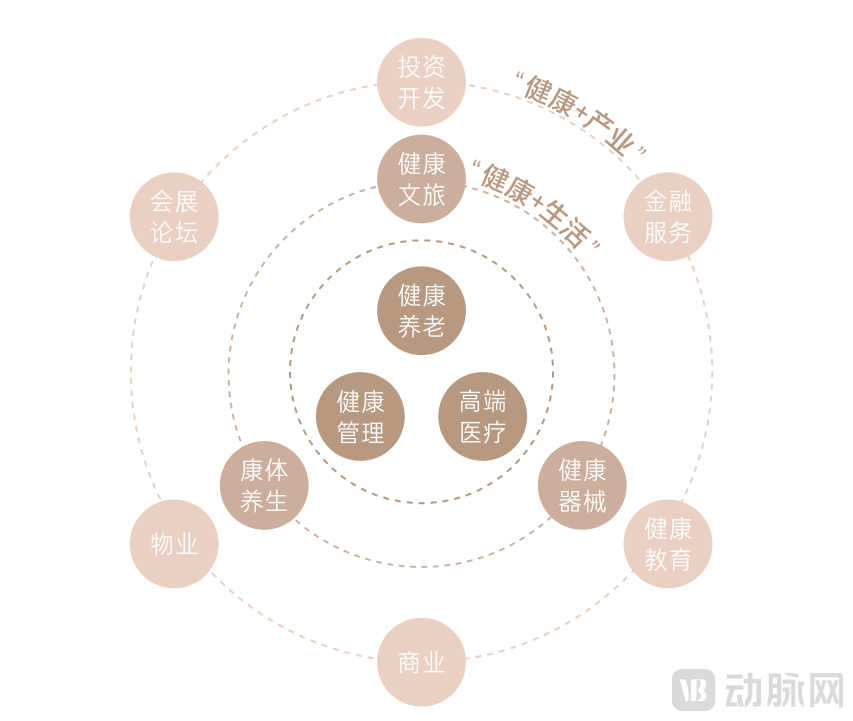
Poly Health and Elderly Care Product LayoutSource: Company's official website
From a strategic layout perspective, Poly’s eldercare portfolio extends beyond core elderly care services to encompass a comprehensive health and wellness industry chain. This includes “Poly Heping,” a supplier specializing in age-appropriate products and home modifications; the “SIC Senior Care Expo”; the media platform “Global Aging”; the “Taiping Poly” eldercare industry fund; and talent development initiatives for the senior care sector. For a real estate company diversifying into this field, Poly has established a remarkably solid foundation.
2022 marked the 10th year of Sino-Ocean Group’s entry into the elderly care industry. Over the past decade, Sino-Ocean has not only witnessed the rapid growth of China’s elderly care sector but also successfully established the “Chun Xuan Mao” elderly care brand.
Although Sino-Ocean does not match the scale of Vanke or Poly, it was not significantly behind in entering the elderly care industry. As early as 2011, Sino-Ocean proposed developing real estate projects for senior living. In 2012, the company officially launched its elderly care service brand, “Chun Xuan Mao.”
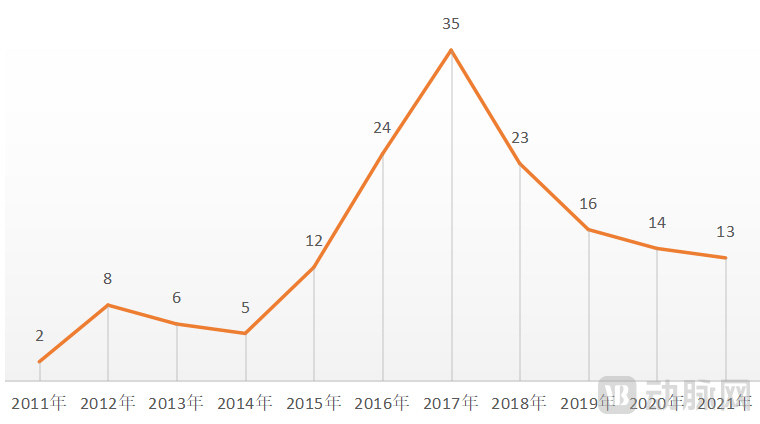
Number of Mentions of Elderly Care Business in Sino-Ocean's Annual Reports Over the YearsData sourced from corporate annual reports
Since the official opening of the first Chunxuanmao Kaijian (Beijing Yizhuang) Senior Apartment in 2013, ten years of development have enabled Chunxuanmao to establish three core product lines: “CLRC Senior Communities,” “CB Senior Apartments,” and “CBN Nursing Homes.”
With these three product lines, Chunxuanmao has achieved comprehensive coverage of high-quality health and wellness care as well as high-quality medical-nursing integration, developing a diverse portfolio of elderly care products to meet the varied needs of seniors. It has pioneered an integrated elderly care service chain that accompanies seniors throughout their lives, from retirement to end-of-life care.
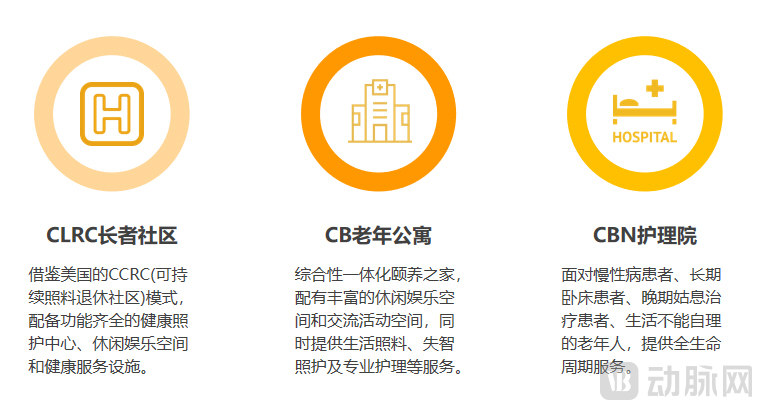
Sino-Ocean Chunxuanmao Senior Care Product Line
Chunxuanmao’s core lies in product innovation, beginning with the introduction of the WELL Building Standard—known as the “Oscars of Architecture”—and incorporating 168 age-friendly design details. By adopting Meridian’s caregiving philosophy from the U.S. and adapting it to local conditions, Chunxuanmao has developed non-pharmacological solutions for dementia care, thereby enhancing the quality of life for seniors with dementia. Additionally, by introducing international life-support technologies and guided by the principles of “maintaining dignity” and “supporting independence,” the company delivers customized professional service plans.
Furthermore, Chunxuanmao has not lagged behind in leveraging digital technologies to empower elderly care services. The company independently developed the WeCaring health and elderly care information platform, establishing a closed-loop service system that encompasses health data collection, creation of health records, health risk assessment, formulation of health plans, health guidance and intervention, evaluation of health management outcomes, and comprehensive dynamic health tracking.
Seniors residing in our communities and their family members can use the “My Chunxuanmao” app to check health data and daily living status at any time. Home-based clients can also access health monitoring, assessment, and management services through the “Happy Chunxuanmao” mini-program. This enables seniors and their families to monitor health data in real time, enhance health literacy and awareness of health management, and cultivate a lifestyle conducive to healthy longevity.
After a decade of growth, the Chunxuanmao brand has established more than 30 elderly care facilities across eight cities, with 11,000 beds and nearly 2,000 staff members. Over these ten years, Chunxuanmao has built its reputation for professional elderly care by centering on its service system. Moving forward, Chunxuanmao will upgrade its services around the core concept of “Health + Sharing,” facilitating a transition from professional elderly care to health-focused elderly care.
Unlike the financially robust Vanke and Poly, Sino-Ocean’s exploration of elderly care is more focused. Sino-Ocean has directed its limited resources toward introducing elderly care services, building a closed-loop service system, and concentrating all resources under the Chunxuanmao brand. However, Sino-Ocean has not escaped the asset-heavy model of elderly care real estate, with a return period as long as 10 to 15 years, which poses a significant challenge for real estate developers.
If senior living real estate merely uses elder care as a marketing gimmick to sell properties, such products clearly lack competitiveness. Greentown, known for its distinctive product philosophy among property developers, has also taken an unconventional approach in developing its senior living offerings.
From the outset of the design phase for the Wuzhen Yayuan project, Greentown took into account factors such as site selection, industrial support, wellness and elderly care models, service systems, and operational teams. This approach expanded the product’s functionality from a singular focus on elderly care to a multifaceted offering encompassing vacation, leisure, wellness, cultural enrichment, and medical services. Ultimately, by adopting an organizational structure modeled after educational institutions, the project addressed customers’ multi-level needs and pioneered an academy-style model for joyful wellness and elderly care.
Greentown Wuzhen Yayuan is located in Wuzhen. The site was chosen not only for its natural environment but also for its convenient proximity to Shanghai, Hangzhou, Suzhou, Wuxi, and other cities, making it ideal for urban residents seeking a lifestyle centered on wellness, retirement, and leisure vacations.
The integrated medical and elderly care industrial model is undoubtedly the focal point of the development and operation of Wuzhen Yayuan’s health and wellness industry. With a total planned area of 5,500 mu, the park is a composite leisure, health, and elderly care-themed industrial park that integrates six major functions: Yile Academy, Yada International Rehabilitation Hospital, International Elderly Care Center, Wellness Residential Area, Specialty Commercial District, and Five-Star Wellness Resort Hotel.
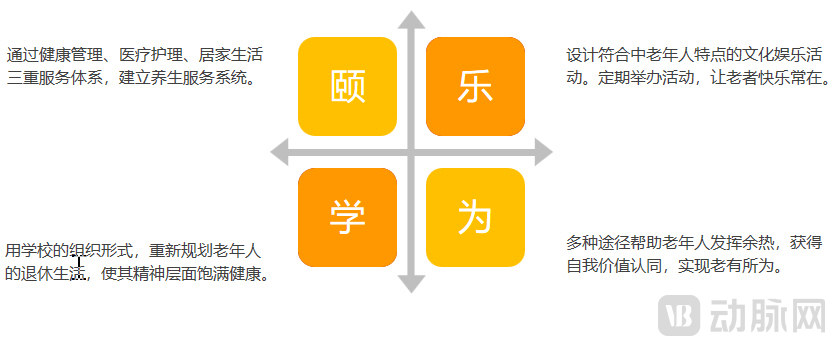
Greentown Elderly Care Service System
Integrated medical and elderly care is merely the foundation; what truly sets Wuzhen Yayuan apart is its academy-based senior living model. The Yile Academy represents an innovation within Greentown’s elderly care service system, fulfilling seniors’ spiritual needs through its four-pillar service framework: “Wellness, Enjoyment, Learning, and Contribution.”
Greentown has established a dedicated subsidiary, Greentown Yile Education Company, to handle the operation and promotion of Yile Academy. Since 2011, it has been responsible for implementing the establishment and promotion of Yile Academy within Greentown communities across China. To date, more than 20 Yile Academies have been opened in various regions nationwide. The curriculum covers a wide range of subjects, including Tai Chi, computer skills, photography, calligraphy and poetry, vocal music, dance, nutritional therapy, and early childhood education. These offerings cater to the diverse needs of the elderly population, such as improving physical health and applying learned knowledge in practice.
In addition to independently developed projects, Greentown has also participated in publicly built, privately operated projects, adopting an asset-light operational model. These facilities are funded and constructed by the government, with Greentown responsible for their operation and management. The fee structure primarily consists of bed fees, basic service fees, meal charges, and tiered nursing care fees. As the majority of costs are borne by the government, the pricing is lower than that of industry peers.
For real estate developers that have established their own service systems and possess certain medical resources, participating in public-built, privately operated projects may become a major channel for exporting their elderly care capabilities in the future.
Although many real estate developers had the foresight to enter the trillion-yuan elderly care market early on, after a decade of development, the challenge facing them today remains the same as it was ten years ago: profitability, profitability, and profitability!
Whether it is Vanke, Poly, or Sino-Ocean Land and Greentown, there are currently four business models in the senior housing real estate sector. However, the reality is that none of these models have achieved stable profitability after ten years of development. Yu Liang, Chairman of Vanke’s Board of Directors, stated publicly, “Almost none of Vanke’s 170 senior living projects across China are profitable.”
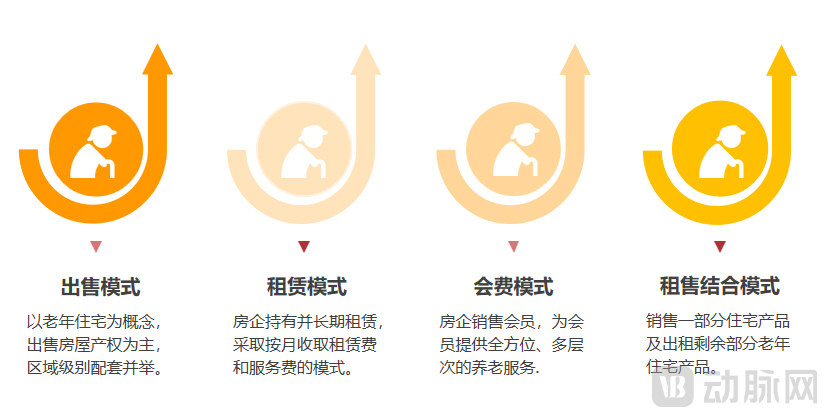
Four Business Models of Senior Housing Real Estate
Although real estate companies are entering the elderly care market to lay out their future strategies, failing to achieve profitability is not a sustainable solution. Where does the crux of the problem lie?
First,Rigid Mindset, real estate developers and elderly care service providers operate with distinct mindsets. For real estate developers, the core focus is land, and their primary objective is to generate value around it. In contrast, for elderly care service providers, the core is service, with their main task being to create more valuable services.
Surrounding the land, many issues will arise. For example, calculations show that a large-scale elderly care project reaches its limit at 200–300 mu. However, for real estate developers accustomed to prioritizing scale above all else, if they can acquire 1,000 mu, they will never settle for just 800 mu. Consequently, this has led to the perception that real estate developers engage in elderly care projects primarily to boost property sales.
Next isHigh Cost of CapitalIn recent years, the Chinese government’s “Three Red Lines” policy for real estate developers has made it clear that these companies were often superficially strong, relying on continuous financing to sustain a high-turnover business model. Accustomed to recouping their investments within no more than six months, real estate developers now face a stark contrast with elderly care projects, which the industry generally considers to have a payback period of 10 to 15 years.
If real estate developers retain and operate elderly care real estate projects, it will, on one hand, lead to significant capital immobilization with low utilization efficiency. On the other hand, it will increase the demand for debt financing, resulting not only in a higher leverage ratio but also in impaired debt-servicing capacity. Continued development of elderly care real estate projects will also lead to an increased proportion of long-term debt in enterprises’ overall debt structure.
Once again, it isIncorrect Marketing ApproachReal estate developers naturally tend to replicate the phased marketing strategies used in residential projects when venturing into senior living real estate, whereas senior living projects emphasize sustainability. Moreover, traditional real estate promotional channels fail to effectively reach the target demographic, necessitating the development of new, effective channels. Furthermore, sales for such projects rely not on persuasive scripting but on delivering service experiences, as elderly customers are paying for services rather than merely for the property itself.
Finally,Supply-Demand Structural Mismatch, senior living real estate has mechanically adopted the high-end model of “bustling outside, tranquil inside” from traditional property developers. In product design, it piles on various amenities and services; however, the more features added, the narrower the target audience becomes, ultimately catering only to high-end clientele. Since the needs of this premium segment are inherently niche, tailoring services exclusively to this group hinders the project’s replicability and expansion.
For real estate developers, capturing a share of the elderly care market requires addressing two key issues: first, service and operations; second, medical resources.
If elderly care services can still be delivered through partnerships with professional senior care institutions or by introducing overseas service systems, operations, in fact, remain a significant weakness for many real estate developers, as evidenced by their post-sales property management practices. The elderly care industry demands even higher and more specialized operational capabilities; therefore, enhancing their own operational proficiency is an urgent challenge that real estate developers must address.
Elderly care services are often closely linked to healthcare, and the professional skill requirements for specialized elderly care staff are relatively high. For the vast majority of real estate developers, this represents a domain in an entirely different dimension. Medical resources frequently constitute the core competitiveness of elderly care projects, so how to successfully integrate such resources is a critical consideration for real estate developers.
If the past decade saw real estate developers make numerous explorations by integrating elderly care into property development, then the key to unlocking this trillion-dollar market lies in how they can derive better services and more diverse business models from these past endeavors.