



Recently, a glaucoma patient became a participant in a special human trial. Unlike traditional drug-injection therapies, this time, what was injected into the patient’s eye was a gene therapy that restores cellular function through partial reprogramming.
If this human clinical trial proves successful, its significance will extend beyond introducing a new treatment for glaucoma; it may also herald a broader new chapter in anti-aging therapies, demonstrating that reversing aging can be validated through clinical trials.
In January 2026, the Investigational New Drug (IND) application for ER-100, a cellular reprogramming anti-aging gene therapy developed by the U.S. biotechnology company Life Biosciences, was officially approved by the U.S. Food and Drug Administration (FDA), initiating the Phase I first-in-human clinical trial of this anti-aging gene therapy (NCT07290244). On June 9 (local time), Life Biosciences announced that the first participant had received dosing.
David Sinclair, co-founder of the company and a researcher at Harvard Medical School, stated to the media, “Our research indicates that aging is not irreversible damage; rather, it is largely caused by the loss of epigenetic information. This clinical trial represents the first opportunity to test whether restoring this information can improve human diseases.”
 Figure | David Sinclair (Source: Personal homepage)
Can senescent cells be safely reverted to a youthful state?
The theory of cellular reprogramming offers the possibility that aging is reversible, positing that cellular senescence does not necessarily imply damage but may instead represent a loss of information.
A significant achievement in this field was the discovery by Shinya Yamanaka, a professor and surgeon at Kyoto University in Japan, in 2006. He identified four specific proteins (later named Yamanaka factors, including Oct4, Sox2, c-Myc, and Klf4) that can convert adult cells into induced pluripotent stem cells (iPS cells), which are capable of differentiating into new cell types.
Shinya Yamanaka was awarded the 2012 Nobel Prize in Physiology or Medicine for his pioneering success in reprogramming adult human cells. In February this year, Japanese regulators approved the first iPS cell-based therapies for the treatment of severe heart failure and Parkinson’s disease.
For years, scientists have sought to identify new methods for partially reprogramming senescent cells to restore them to a more youthful state, while avoiding the complete loss of their specialized characteristics and functions.
In 2020, the Sinclair team discovered in their research [1] that activating three specific genes—Oct4, Sox2, and Klf4 (OSK)—in mice with optic nerve damage could promote neuronal regeneration and reverse vision loss in aged mice and those with glaucoma.
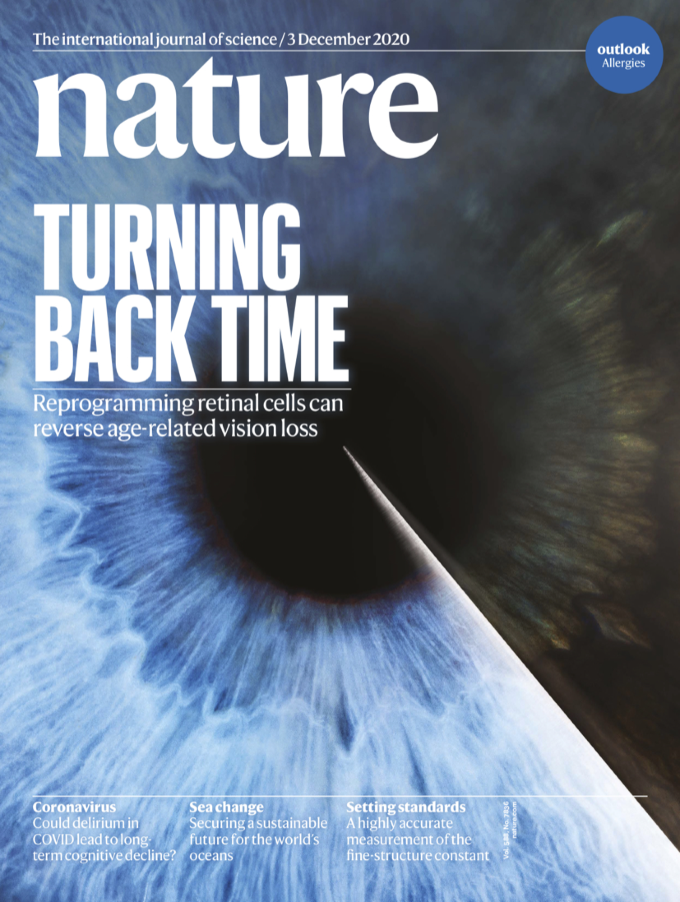
Previously, they had validated this technology in experiments involving mice, other rodents, and monkeys, demonstrating not only effective therapeutic efficacy but also an absence of serious side effects.
Despite the promising outlook, a critical issue that cannot be overlooked is the substantial risk associated with this technology, which could potentially lead to carcinogenesis. “If it can be safely applied in humans, gene reprogramming technology holds enormous potential,” Matt Kaeberlein, co-founder of the U.S. longevity biotech company Optispan, told the media. “Currently, this technology is still in its very early stages, and there is a high likelihood of catastrophic side effects.”

This therapy is primarily indicated for the treatment of open-angle glaucoma (OAG), a chronic neurodegenerative disease and one of the leading causes of blindness. Although OAG is often closely associated with elevated intraocular pressure, damage to retinal ganglion cells persists despite treatment, and some individuals with normal intraocular pressure also develop OAG.
The company has prioritized ocular trials for its novel therapy because the eye carries a relatively lower risk of life-threatening side effects compared to other organs. The primary objective of this pioneering trial at its current stage is to verify the safety and tolerability of the therapy in humans, with the aim of repairing damaged retinal ganglion cells (RGCs) in glaucoma patients and restoring vision.
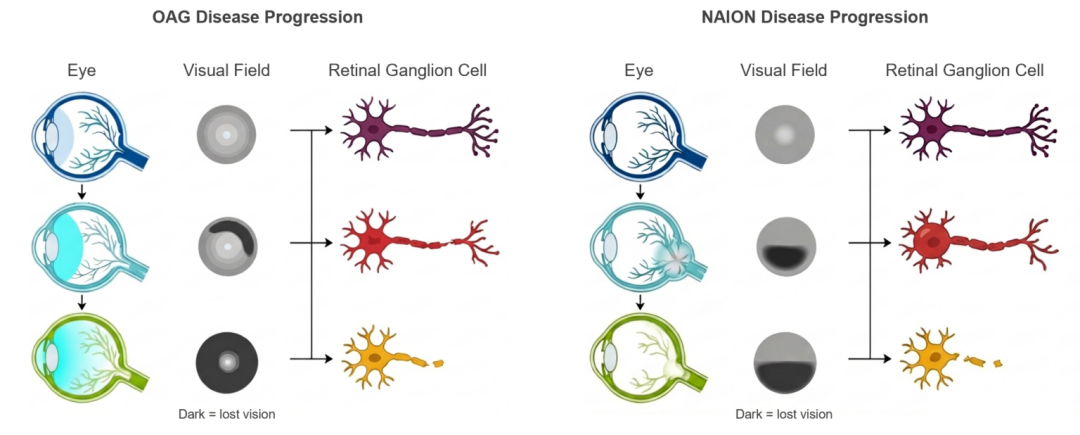 (Source: Life Biosciences)
The optic nerve serves as an ideal model for validating this technology. Since retinal ganglion cells exhibit negligible axonal regeneration in adulthood, any observed restoration of optic nerve function following the experiment would largely substantiate that reprogramming played a pivotal role during the therapeutic process.
Currently, this clinical trial is recruiting patients with glaucoma or non-arteritic anterior ischemic optic neuropathy (NAION). NAION is the most common acute optic neuropathy in adults over 50 years of age and one of the leading causes of sudden vision loss; there are currently no approved treatments.
Life Biosciences’ clinical trial aims to use a virus commonly employed in gene therapy to deliver three reprogramming genes into retinal ganglion cells, whose axons constitute the optic nerve.
To enhance safety, the gene is activated when subjects take the inducer doxycycline (an antibiotic); if antibiotic administration is discontinued, the gene is switched off. The advantage of this design lies in its ability to precisely control gene expression, preventing it from persisting longer than necessary for cellular regeneration.
This trial offers a new therapeutic option for improving the treatment of patients with glaucoma and non-arteritic anterior ischemic optic neuropathy (NAION); however, the application of this technology is not limited to a single disease. Currently, Life Biosciences is also exploring the use of epigenetic reprogramming technology for treating liver diseases in animal models. In April this year, the company completed an $80 million Series D financing round.
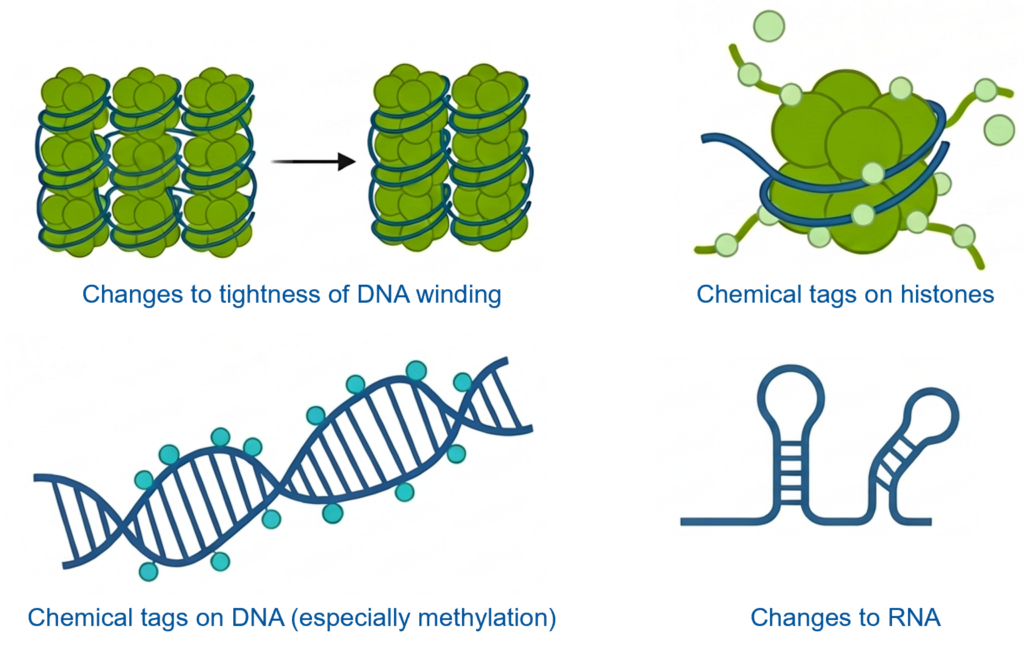 (Source: Life Biosciences)
If cellular reprogramming proves feasible, it could theoretically be expanded to treat a broader range of diseases, such as Alzheimer’s disease, macular degeneration, liver diseases, muscle degeneration, cardiovascular diseases, and even the aging process.
Currently, the field of cellular reprogramming has attracted billions of dollars in investment. This June, Eli Lilly participated in the financing round of NewLimit, a biotech startup focused on cellular reprogramming, while Merck invested in Rejuvenate Bio. Tech giants Jeff Bezos and Sam Altman have also placed their bets on two Silicon Valley startups, Altos Labs and Retro Biosciences, respectively.
However, one question needs to be clarified: Does restoring optic nerve growth equate to reversing aging? Currently, there is no unified consensus within the field on this issue. Looking further ahead, whether this technology can make cells in other parts of the body "younger," and whether human lifespan can be extended through reprogramming, remains unknown.
However, this trial has revealed greater possibilities. Rather than debating “whether aging can be reversed,” scientists may next focus on “whether reversing aging is sufficiently safe and to what extent we can reverse it.”
References:
1.https://doi.org/10.1038/s41586-020-2975-4
2.https://www.cell.com/cell/fulltext/S0092-8674(22)01570-7
3.https://www.nature.com/articles/d41586-026-01836-7
4.https://www.businessinsider.com/first-ever-reverse-aging-treatment-injected-into-a-human-2026-6
5.https://www.wired.com/story/longevity-startup-doses-first-human-in-bid-to-reverse-age-related-sight-loss/
Operations/Layout: He Chenlong
Note: Cover/hero image AI-generated