

Next-Gen Heart Valves: From Global Sensation to Solving Residual Issues of Current Products?

Anteris
Cardiac Valve Researcher

Medtronic
Medical Device Manufacturer

CroíValve
Medical Device Developer

Foldax
Heart Valve Developer

Tricares
Medical Device Developer

Today, let's review several innovative next-generation heart valve replacement products.—Anteris' Bionic TAVR Valve, CroíValve andLaplace’s Tricuspid Valve Replacement, Foldax’s Polymer Mitral Valve, TriCares’ Transcatheter Tricuspid Valve System.
These companies are no longer satisfied with "minor improvements" to existing products but are instead pursuing fundamental innovations in material science, valve design, and interventional pathways. This article will systematically review the technical features, clinical progress, and strategic layouts of these five companies. Whether they can resolve the residual issues of current products remains to be seen, and we look forward to more evidence-based support.
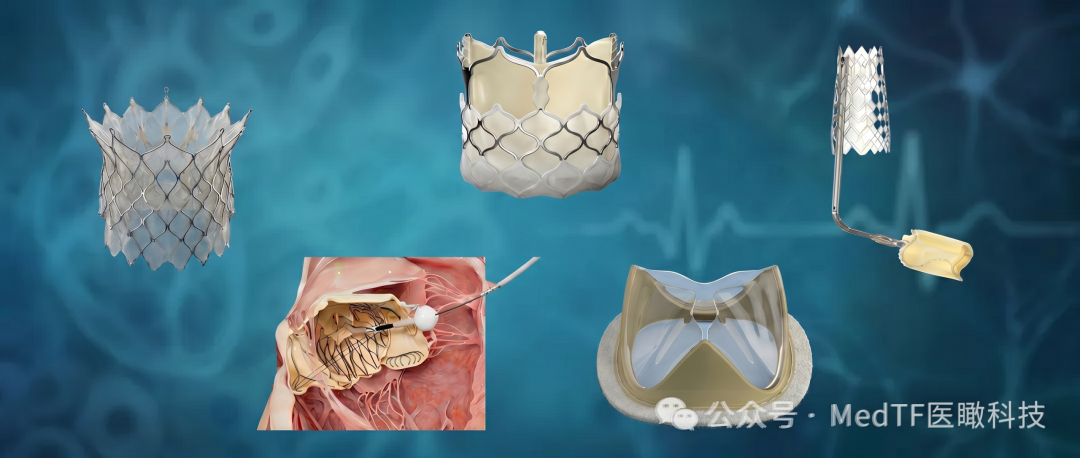

Anteris Technologies: The Challenger of Bionic TAVR
From "Metal Frame + Biological Leaflet" to "Monolithic Bionic Design"
Anteris Technologies is a medical device company dual-listed on Nasdaq (AVR) and the Australian Securities Exchange (AVR). Headquartered in Eagan, Minnesota, with a core R&D team based in Brisbane, Australia. Its flagship product, the DurAVR transcatheter heart valve, adopts the world's first "biomimetic valve" design concept—made from a single piece of natural-shaped tissue material, aiming to mimic the hemodynamic performance of a healthy human aortic valve.

Figure 1. The DurAVR Bionic Valve
In November 2025, the FDA approved DurAVR for the initiation of the global pivotal PARADIGM trial under an Investigational Device Exemption (IDE). This trial is a prospective, randomized controlled study that will compare DurAVR head-to-head with existing commercialized TAVI systems. In January 2026, Anteris completed a $320 million financing round to support the execution of the PARADIGM trial and advance commercialization. As of early 2026, DurAVR had been successfully implanted in 130 patients, covering complex anatomical structures, and successfully completed the world's first dual DurAVR implantation.
Medtronic's Strategic Investments and Market Signals
In January 2026, Medtronic announced a strategic investment in Anteris, with the specific amount undisclosed. This investment occurred after Medtronic sold its aortic valve and surgical valve business to Edwards Lifesciences for over $20 billion in October 2025, and is seen as a signal of Medtronic's repositioning in the TAVR field as both a "financial investor and commercialization partner." Anteris CEO Wayne Paterson stated that the company is actively advancing the global commercialization strategy for DurAVR and has initiated early discussions with relevant parties regarding pricing strategies and Medicare reimbursement pathways for the U.S. market. To date, Anteris completed a private placement financing round of approximately AUD 38.5 million (approximately USD 25.2 million) in October 2025 to support patient recruitment for the PARADIGM trial and expand manufacturing capacity.

CroíValve: Transcatheter Tricuspid Valve Repair System with Innovative Anchoring Method
"Coaptation" Technique Preserving Native Valve
The Duo system, developed by the Irish company CroíValve, adopts a technical pathway of repair rather than replacement in the field of transcatheter tricuspid valve intervention. The Duo system consists of a stent anchored in the superior vena cava and a valve device that crosses the annulus. It fills the leaflet coaptation gap through a "coaptation" mechanism, working synergistically with the native leaflets instead of replacing them. This design implies that the valve of the Duo system only needs to be fixed across the annulus without deep tissue anchoring on the annulus, thereby reducing the risk of damage to the native annular structure.
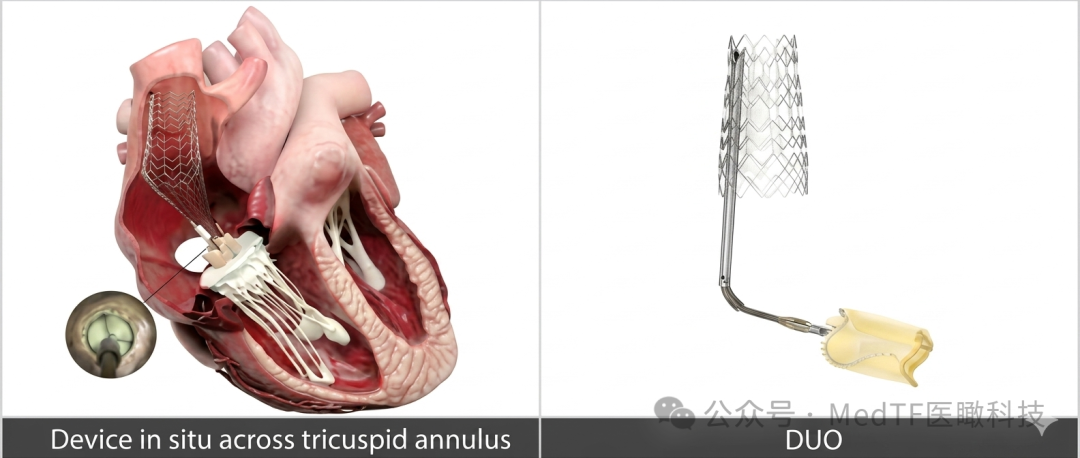
Figure 2.The Duo tricuspid valve repair device in the heart.
The Duo system received FDA Investigational Device Exemption (IDE) in early 2026 and initiated the Early Feasibility Study (EFS). This study is a prospective, multicenter, single-arm trial designed to evaluate the safety and performance of the Duo system in patients with severe tricuspid regurgitation. Polish physicians have completed the first transcatheter tricuspid regurgitation treatment using the Duo Adapt system.
Core Advantage of Technical Differentiation
The anatomy of the tricuspid valve is highly individualized — the annulus is a dynamic D-shape, and the leaflet coaptation morphology varies significantly. The key advantage of the Duo system lies in its "anatomy-independent" feature: regardless of annulus size or the width of the coaptation gap, Duo can achieve effective sealing through its adaptive valve design. CroíValve has received funding from the European Innovation Council (EIC) Accelerator to support the clinical development and commercialization of the Duo system.

Foldax: The World's First Polymer Heart Valve
From Metals and Biological Tissues to LifePolymer
Salt Lake City-based Foldax has developed a heart valve, the Tria mitral valve, made entirely from polymer materials. The leaflets are made of proprietary LifePolymer material, designed to simultaneously avoid the dual dilemmas of lifelong anticoagulation required by mechanical valves and the long-term calcification and degradation of biological valves. Mechanical valves are highly durable but require lifelong warfarin use; biological valves do not need long-term anticoagulation but degrade within 10-15 years. LifePolymer is engineered at the molecular level to be anti-calcification, biostable, and highly biocompatible, aiming to achieve a compromise — no need for anticoagulation while offering long-term durability.
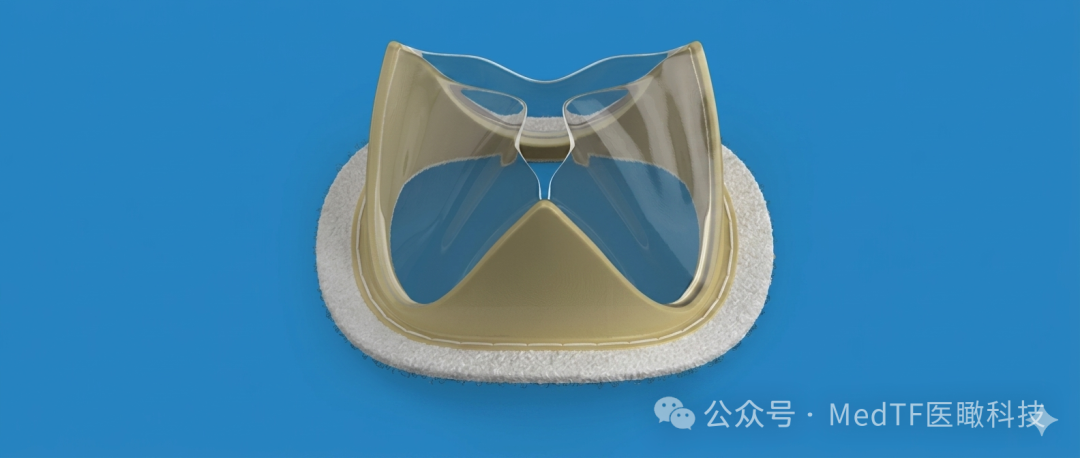
Figure 3.The Tria mitral valve.
Global First Polymer Valve Launch and Clinical Data
In June 2025, Foldax's Tria mitral valve received approval from India's Central Drugs Standard Control Organization (CDSCO) for market release, becoming the world's first commercially available polymer heart valve. This regulatory milestone marks the transition of polymer valve technology from concept validation to commercialization.
At the clinical data level, the one-year follow-up results of the Tria mitral valve were published in 2025, showing no valve-related deaths, significant hemodynamic improvement, and enhanced patient quality of life. The one-year results of another multicenter trial also confirmed the stable long-term hemodynamic performance of the Tria valve, with the authors noting that the polymer leaflet material may extend the durability of surgical mitral valve replacement. Currently, the Tria valve is primarily used as a surgical valve, and Foldax plans to expand its technology platform into the transcatheter valve field.

Laplace Interventional: TTVR System Designed for Complex Tricuspid Valve Anatomy
Flexible Framework and Pacing Lead Compatibility
Laplace Interventional, headquartered in Plymouth, Minnesota, has developed a transcatheter tricuspid valve replacement system. The core design features of the system include: a flexible frame to reduce pressure on the atrioventricular node and conduction system; a low-profile transjugular delivery system; and a dedicated pacemaker lead pathway incorporated into the valve design, ensuring the feasibility of pacemaker implantation post-procedure if needed.
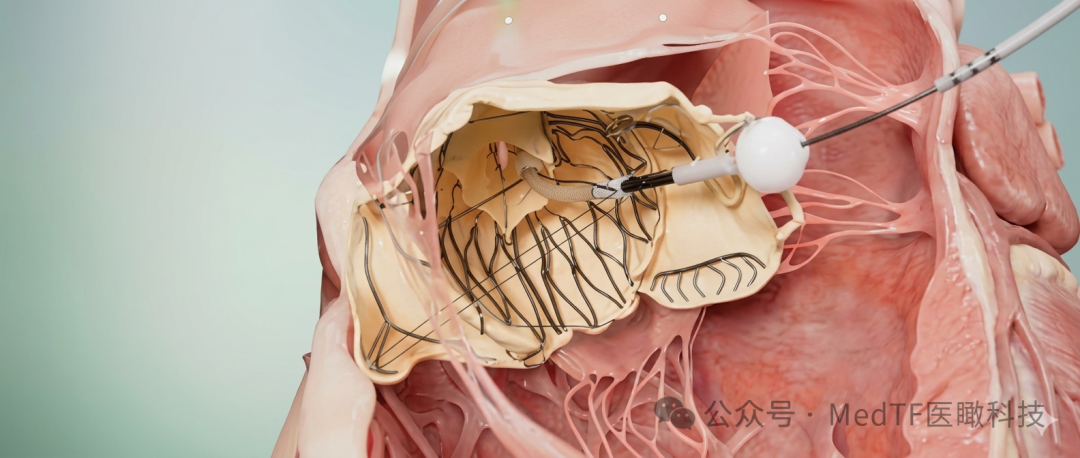
Figure 4. The LaPlace TTVR system
Early Clinical Experience
In May 2025, a case using the Laplace TTVR system to treat severe tricuspid regurgitation was published in JACC. The patient had small right atrium and right ventricle dimensions, making traditional TTVR solutions unsuitable due to anatomical limitations, while the Laplace system successfully completed the implantation. Researchers believe that the Laplace system offers a viable alternative for patients with tricuspid regurgitation and complex anatomical structures. Currently, Laplace is undergoing an early feasibility study (EFS), a prospective, multi-center, single-arm trial, assessing the safety and technical feasibility of its TTVR system across multiple centers in Canada and the United States.

TriCares: FDA IDE Approved Newcomer in Transcatheter Tricuspid Valve Replacement
Dual-Stent Design: Low Profile Delivery and Precise Anchoring
TRiCares, headquartered in Munich, Germany, has a core product called Topaz, a transcatheter tricuspid valve replacement system that features a unique dual-stent design. This design divides the valve frame into two parts: the atrial end and the ventricular end, achieving a balance between anchoring stability and delivery profile. Topaz’s delivery system has a low profile, making it suitable for femoral vein access without the need for thoracotomy or transapical puncture.
In April 2026, TriCares announced that its Topaz TTVR system received FDA Investigational Device Exemption (IDE) approval, and will initiate a pivotal trial. The trial will evaluate the safety and effectiveness of Topaz in patients with severe tricuspid regurgitation who are at increased surgical risk.

Figure 5. The Topaz TTVR system
First-in-Human Data: Average 35-Minute Procedure Time
Topaz's First-in-Human Study Data Released in May 2025: Among 20 patients who received Topaz implants, postoperative tricuspid regurgitation was reduced to trace or none/mild levels. The average procedure time was only 35 minutes. Follow-up at 30 days showed a cardiovascular mortality rate of 10%, no Topaz-related pacemaker implantations, and a 100% complete elimination rate of TR.
At the financial level, TriCares signed a 20 million euro loan agreement with the European Investment Bank in January 2026 to support the clinical development and commercialization preparation of Topaz.
Conclusion
From Anteris's bionic monolithic TAVR valve, to Foldax's polymer surgical mitral valve, and then to the technological path differentiation of CroíValve, Laplace, and TriCares in the tricuspid valve field — the common characteristic of these five companies is that they are no longer satisfied with incremental improvements to existing products but are insteadMaterials Science, Valve Design, and Anatomical AdaptabilitySeeking a fundamental breakthrough.
From the perspective of regulatory progress, Foldax has achieved commercialization in India first, Anteris's pivotal trials are underway, and TriCares and CroíValve have received FDA IDE approval. In terms of capital, Anteris has secured strategic investment from Medtronic, TriCares has gained support from the European Investment Bank, and Foldax continues to attract attention with its unique technology platform.
The competition for the next generation of heart valve replacement is shifting from "who can make a smaller delivery system" to "who can make"Valves that are closer to physiological conditions, more durable, and better suited for complex anatomical structures". The technical approaches of the aforementioned five companies provide different answers for achieving this goal.

? Click to view more exciting content
World's First AI-Driven Spectral CT, Philips Verida Approved!