Dr. Jin Geng, Founder of Zhongke Shuaitian and Researcher at Shenzhen Institute of Advanced Technology, Emphasizes Staying True to the Mission in Scientific Commercialization
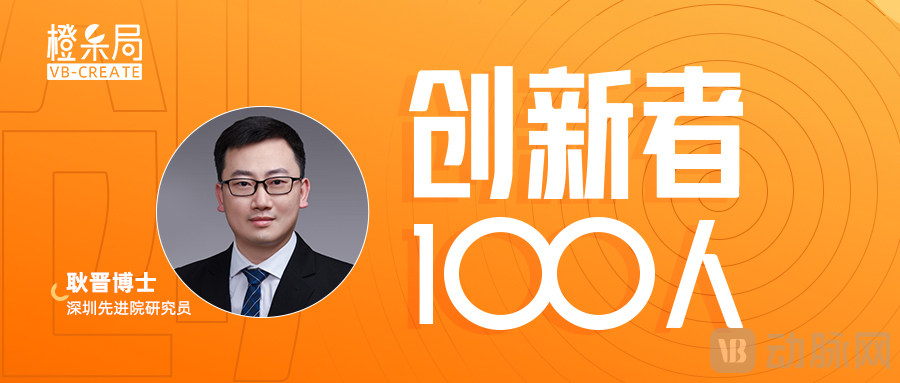
Geng Jin, a researcher at the Shenzhen Institute of Advanced Technology (SIAT) and an expert in the field of tumor diagnosis and therapy, has been selected for the Chinese Academy of Sciences’ “Hundred Talents Program” and the Guangdong Province Pearl River Talent Program. He currently serves as a Researcher at the Institute of Biomedicine and Biotechnology, SIAT, Chinese Academy of Sciences, and as the Director of the Center for Polymeric Drugs. He is also a review expert for key projects funded by the National Natural Science Foundation of China and the Chinese Academy of Sciences, including international cooperation initiatives.
He has been invited to deliver 15 academic presentations at prestigious conferences, including the Faraday Discussions of the Royal Society, the AAAFM-UCLA International Conference, the American Chemical Society (ACS) National Meeting, and the Gordon Research Conferences. He has been awarded the Isaac Newton Trust Fellowship by the University of Cambridge and the EPSRC Fellowship by the UK Engineering and Physical Sciences Research Council.
Over the past five years, Dr. Geng Jin has published 16 papers as corresponding author or co-corresponding author in top-tier international journals such as Nature Chemistry. He was invited to write a review article on the applications of in vivo self-assembly in the biomedical field for the prestigious journal Angewandte Chemie. His research findings have practical value in the biopharmaceutical sector. To date, he has been granted one world patent and one Chinese patent, with an additional ten patents pending. Furthermore, a novel drug candidate developed for combination radiotherapy has entered the preclinical study phase.
For Dr. Geng Jin, the translation of scientific research achievements is a natural process.
The United Kingdom has a mature system for the commercialization of research findings. During his doctoral studies, Dr. Geng Jin’s supervisor had already successfully commercialized one of their research outcomes. In the final six months of his PhD program, Dr. Geng worked at his supervisor’s company, where he experienced the distinctly different atmospheres of commercial and academic research. The well-established and seamless process of translating scientific achievements into practical applications abroad also planted in him the aspiration to
seeds of fruit transformation.
Upon returning to China, Dr. Geng Jin joined the Shenzhen Institute of Advanced Technology (SIAT), where he conducts research on tumor therapy and diagnostics. Shenzhen is a fertile ground for innovation and entrepreneurship, and SIAT has consistently maintained an open attitude toward facilitating the translation of scientific achievements into practical applications by researchers.
Guided by the ideal of empowering industries through macro-environmental trends, experience, and technology, Dr. Geng Jin has unsurprisingly embarked on the path of translating scientific research achievements into practical applications. As a researcher in one of the disciplines most closely integrated with industry, his transition from industrial engagement to commercialization is entirely logical.
“There are certain projects that are a good fit, and coupled with the favorable environment, I decided to give them a try,” stated Dr. Geng Jin. Since 2019, he has been conducting applied research focused on the diagnosis and treatment of tumors, and has established two companies to date.
The process of translating scientific research achievements into practical applications is long and arduous. Successful commercialization requires funding, market access, and a dedicated team. However, in the view of Dr. Geng Jin, the driving force behind all this is innovation itself.
“Research is aimed at breakthrough innovation, and sometimes it is detached from real-world needs,” he stated. Before assessing whether a project is suitable for commercialization, researchers should consider the project itself from at least three perspectives: The first level concerns what the technology can be transformed into and whether it meets market demand; the second level relates to market maturity, specifically whether there are already established companies or products in the market and if the sector has become a “red ocean”; the third level involves commercial value, namely whether the solution offers lower costs or a better user experience compared to existing market alternatives.
Taking Dr. Geng Jin’s BODIPY (boron-dipyrromethene) fluorescent dye project, which is currently undergoing commercialization, as an example, Dr. Geng conducted in-depth research and analysis from both market and demand perspectives, spanning from the initial basic research phase to the final decision on industrialization.
Due to its high sensitivity, ease of operation, and low cost, fluorescence analysis and detection technology has gained prominence in recent years and is widely applied in various fields, including DNA hybridization assays, gene recombination detection, early diagnosis of tumor cells, and immunoassays. In 2019, the surge in next-generation sequencing (NGS) technology spurred the emergence of numerous companies focused on cancer detection and gravity-flow-based early screening. However, as an upstream technology, the field of fluorescent probes has seen limited corporate involvement to date.
The core of fluorescent probes is the fluorescent dye. In terms of the market, several fluorescent dyes currently available have varying degrees of advantages and disadvantages.
For example, coumarin dyes, despite their favorable photostability and oil solubility as well as large Stokes shift (the difference between the wavelengths of maximum absorption and emission for the same electronic transition), possess unsaturated internal structures that undergo hydrolysis in dilute alkaline solutions. Another common class, naphthalimide dyes, can interact with DNA; however, their pale coloration and low molar extinction coefficients limit their practical applications. Furthermore, none of the commercially available fluorescent dyes currently enable real-time detection.
“The market for detection probes is substantial, with significant demand in the field of genetic testing,” he stated. In 2019, after exploring the application of BODIPY dyes in fluorescent probe development, Dr. Geng Jin synthesized a novel biothiol stain, leading to product offerings for both scientific research and medical diagnostics. In 2021, Dr. Geng’s project, “High-Efficiency Real-Time Fluorescent Detection Probes for Biothiols Based on BODIPY,” was selected for inclusion in the “High-Value Patent Project Database in the Biomedical Field” by the Chinese Society of Biotechnology. He has since co-founded a company with the Shenzhen Institute of Advanced Technology and completed the transfer of relevant intellectual property rights.
In addition to biosulfhydryl probes, Dr. Jin Geng has also facilitated the commercial translation of an anti-tumor radiopharmaceutical. Based on this innovative drug, the company has completed its first round of financing. Moving forward, he will further build up his team and gradually promote the commercialization of the achievement under the name of a market-oriented company.
“Every project requires a highly complete team to see it through from start to finish,” he stated. In the view of Dr. Geng Jin, the translation and implementation of a scientific achievement cannot be supported by a single individual; any successfully translated outcome requires team collaboration as it reaches certain developmental milestones. “Establishing an appropriate team in the early stages is essential to enable scientists to strike a balance between translational work and scientific research,” he continued.
During the commercialization of anti-tumor projects, after establishing the company, Dr. Geng Jin chose to gradually delegate responsibilities for business development, corporate operations, and industrial resources to the CEO, while focusing his own efforts on drug planning, product design, and technical R&D—areas where he excels.
Unlike ordinary entrepreneurs, scientist-entrepreneurs juggle dual careers in scientific research and business ventures. Consequently, some investors express concern, arguing that scientists have a fallback option during the entrepreneurial process, whereas investors have no way back once they commit capital. In response, Dr. Geng Jin believes that, in addition to innovation itself and the team, scientists should also think twice before proceeding with the commercialization of their achievements.
“Scientists need to think things through clearly before they begin, and then stick with it,” he stated, emphasizing that the translation of scientific research achievements should not be undertaken blindly.
The first consideration is whether a project is suitable for commercialization. Although scientists’ projects are often backed by patents, not all research initiatives meet the criteria for technology transfer or possess short-term commercial potential given current market trends. In the pre-commercialization phase, scientists should carefully assess whether their achievements align with the current market landscape and warrant the investment of time and effort required for successful translation into practical applications.
Next is the novelty of the project in the market. Before commercialization, scientists must have a thorough understanding of both the project and the market. For instance, when translating a project into a product, what is the benchmark? Does the product possess uniqueness? If it lacks uniqueness, what are its advantages over existing products? Furthermore, during the development process, similar products will inevitably be launched by the market; in such scenarios, where does the competitive edge lie? The former requires pre-investment market forecasting and analysis, while the latter tests the adaptability of the product and the team in response to market changes.
“It is essential to have a thorough understanding of the market during the initial preparation phase,” he stated.
Finally, unwavering commitment to the original mission is essential. Transitioning from scientific research projects to commercial enterprises represents a significant leap for both scientists and the technologies themselves. Only a handful of research projects ultimately achieve practical implementation, and even fewer successfully enter the market and meet market expectations.
Similarly, the capital side is also evolving. Investors may chase a particular hotspot at a certain point in time, but once the hype cools down, even the same projects may find themselves with no takers.
“External environments change, but your own plans must remain steadfast,” stated Dr. Geng Jin. Taking the capital winter that emerged around 2019 as an example, investment and financing across the entire pharmaceutical industry tightened, with investors adopting a wait-and-see approach and project valuations being adversely affected. While the industry undergoes different changes at different times, entrepreneurs cannot arbitrarily halt their projects. Therefore, he believes that when considering the translational value of a project, scientists should not overly rely on current investment hotspots; instead, they should take a step back to reflect on the project’s intrinsic value beyond these trends.
Entrepreneurship is a perilous endeavor, and so is the commercialization of scientific research. Precisely because of this, scientists should give full consideration and make proper arrangements before entering the field. “Once you start, strive to see it through,” said Dr. Geng Jin.
It is reported that the company founded by Dr. Geng Jin has entered the stage of commercial operation. Among its ventures, the anti-tumor radiopharmaceutical company has completed a round of financing and is expected to enter clinical trials in 2023. Projects related to biothiol fluorescent probes will also be translated into commercial applications at the company with the participation of the Shenzhen Institute of Advanced Technology. The company plans to develop service products targeting research needs while simultaneously developing commercial products for tumor marker detection, thereby further advancing toward clinical application.