

Secrets Behind the Agglomeration of Industry Giants in Changping Life Science Park
Editor’s Note: This article is from 21st Century Business Herald, authored by Ma Tingting, Shen Junhan, and Chen Li. Republished with permission by VCBeat.
In the past two years, COVID-19 outbreaks have occurred sporadically across multiple regions, presenting a severe challenge to epidemic prevention and control. During this period, companies in industries such as nucleic acid testing and COVID-19 vaccines have rapidly come into public view, with many demonstrating their sense of responsibility and commitment through high-quality products and services.
“As a premier domestic hub for life sciences R&D and industrial agglomeration, the distinctive characteristics of BioPark entail an incumbent responsibility on our part,” Jin Yi, Deputy Director of the Future Science City Management Committee and Director of the BioPark Services Division, told 21st Century Business Herald. Since the onset of the COVID-19 pandemic in 2020, a cohort of high-quality enterprises has emerged within the park, leveraging their technological strengths to actively engage in frontline scientific and technological efforts against the epidemic.
According to Jin Yi, Life Science Park currently has 10 third-party medical laboratories qualified for nucleic acid testing, making it one of the areas in Beijing with the most abundant nucleic acid testing resources. During periods of heightened epidemic pressure, the daily testing capacity of institutions within the park reached millions of samples. In addition to serving Beijing residents, many of these institutions have also supported epidemic prevention and control efforts in other provinces and cities across China.
In the early stages of the outbreak in February 2020, Beijing Zhuocheng Huisheng Biotechnology Co., Ltd., a company within the park, obtained market approval for its nucleic acid testing reagent product through the National Medical Products Administration’s emergency review pathway. This was the first approved nucleic acid testing reagent product in Beijing.
Meanwhile, companies based in the industrial park have played an active role in the research and development of a range of pandemic-related products and therapeutics, including COVID-19 antigen tests, vaccines, and drugs. Their products have either received prompt regulatory approval for market launch or entered clinical trials, contributing to China’s—and indeed the world’s—fight against the pandemic.
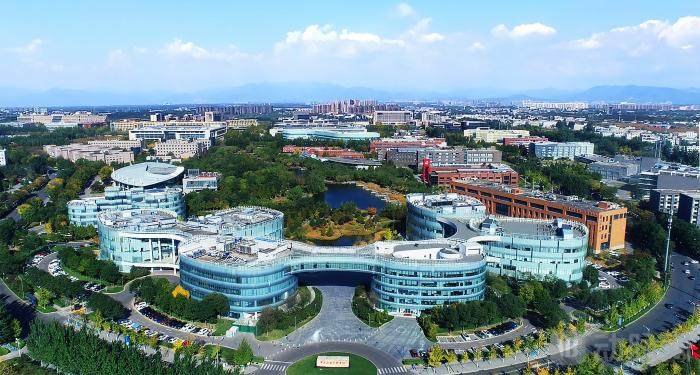
Zhongguancun Life Science Park
Zhongguancun Life Science Park, officially known as the “Zhongguancun Life Science Park,” is a national-level biomedical industry base whose construction was launched in 2000. It also serves as a leading hub for innovation in life sciences research across China. Over the past two decades, the Park has undergone continuous aggregation of resources and sustained growth, achieving remarkable accomplishments.
In 2021, pharmaceutical and health enterprises above the designated size in the industrial park generated RMB 24.06 billion in revenue, a year-on-year increase of 27.2%, driving the total revenue of Changping District’s pharmaceutical and health industry to RMB 71.71 billion, up by 22% year on year, thereby accelerating the development of the pharmaceutical and health sector.
Life Park has been able to pursue its development goals in an orderly manner, thanks to its precise positioning and support from a series of relevant policies. According to Jin Yi, against the backdrop of Beijing’s vigorous development of high-end, precision-cutting-edge industries and its promotion of high-quality capital-city development, Life Park has experienced three key milestones in recent years.
In 2018, Beijing released the “Action Plan for Accelerating Collaborative Innovation in the Pharmaceutical and Health Industries (2018–2020),” establishing the pharmaceutical and health industry as one of the “dual engines” driving Beijing’s development. This also endowed Life Science Park with a new positioning and new responsibilities.
In 2019, in accordance with the overall deployment of Beijing Municipality, Life Science Park implemented reforms to its management mechanism by establishing a Management Committee to coordinate public management services across the park. Relevant state-owned platform companies were assigned respective responsibilities for park development and construction, industrial services, and property management. Meanwhile, market-oriented third-party professional teams were introduced to support industrial operations and services, thereby enhancing the park’s market-driven, specialized, and internationalized operational standards. This gave rise to a new mechanism characterized by the “Management Committee + Platform Companies + Professional Teams” model. The reform of the management mechanism has injected new vitality into the next phase of development for Life Science Park.
In 2020, Beijing comprehensively advanced the development of its “Two Zones.” The Life Science Park and its surrounding area, covering 10.26 square kilometers, were incorporated into the Science and Technology Innovation Zone of the China (Beijing) Pilot Free Trade Zone. This integration has created a synergistic policy advantage by overlapping three national-level functional zones: the National Independent Innovation Demonstration Zone, the National Pilot Free Trade Zone, and the National Comprehensive Demonstration Zone for the Expanded Opening-up of the Service Sector. These developments have presented new historical opportunities for the Life Science Park to strive toward higher goals.
In addition to top-down policy support and industrial agglomeration effects, the development of pharmaceutical and healthcare enterprises also relies on a continuous supply of high-end professional talent. The growth of the Life Science Park has undoubtedly benefited from the talent advantages of the entire capital region. In particular, the Life Science Park is located at the junction of Changping and Haidian Districts, linking the Future Science City and Zhongguancun Science City. This strategic location offers unique geographical advantages, with proximity to prestigious universities such as Peking University and Tsinghua University, as well as a concentration of renowned higher education institutions and research organizations in the fields of biomedicine and related disciplines.
Jin Yi emphasized, “In terms of basic research, Life Science Park has successfully attracted a number of prestigious research institutions and novel R&D entities with national and global reputations, including the National Institute of Biological Sciences, Beijing; the Beijing Academy of Brain Science and Brain-Inspired Intelligence; and the National Center for Protein Sciences. This area is inherently a hub for high-caliber talent, which indeed benefits from the strategic layout of national initiatives and the development of the capital.”
The high concentration of research institutions is also a key factor in attracting industrial enterprises. Genetron Health, which settled in the Zhongguancun Life Science Park in 2015, is a typical example. It is an innovation-driven enterprise specializing in precision oncology care that grew out of the Life Science Park. Wang Sizhen, Co-founder, Chairman, and CEO of the company, told reporters that when the company was founded in 2013, it established its R&D center in Yizhuang to focus on scientific research. At that time, Phases I and II of the Zhongguancun Life Science Park had already taken shape, with research institutions such as the Beijing National Engineering Research Center for Biochips and the National Institute of Biological Sciences, Beijing, as well as R&D centers of multinational pharmaceutical giants like Novo Nordisk, successively moving into the park.
Wang Sizhen stated, “The park has a clear functional positioning and boasts comprehensive advantages, including an international perspective and industrial agglomeration, which align perfectly with Faneson’s corporate positioning and development needs. The park’s emphasis on innovative vitality also resonates with our corporate spirit of ‘Explore, Apply, Change.’ Coupled with the favorable entrepreneurial support measures provided by the Changping District Government and the Life Science Park, we ultimately decided in 2015, after comprehensive consideration, to establish our headquarters here.”
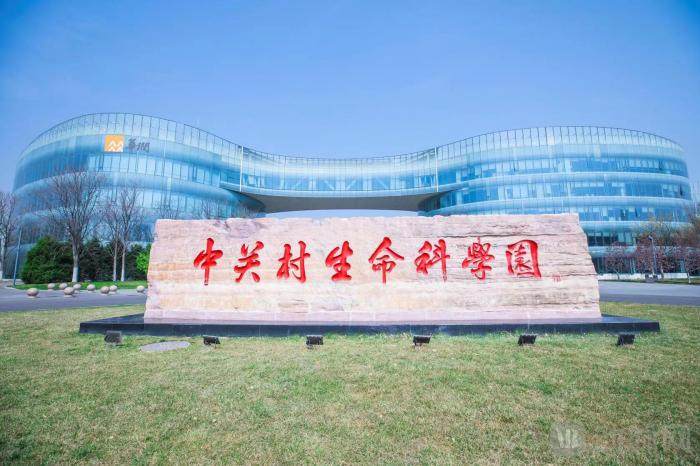
Here, Genetron Health has also achieved a business transformation. Early-stage R&D achievements have been translated into commercial products, its own commercialization team has been established, collaborations with more hospitals have been initiated, and market education for precision oncology has been successfully carried out. Wang Sizhen told reporters from 21st Century Business Herald that, in addition to providing policy and financial support, the industrial park has helped the company attract and retain talent and built platforms for technology, services, and exchange. As the mother fund for science and technology industries in Changping District, the Changping Development Fund, together with its partner funds, has provided strong support by introducing capital and enabling sustainable development during our growth process.
How to Attract and Retain Talent in the Life Science Park: Beyond Safeguards such as Housing, Healthcare, and Children’s EducationIn addition to safeguard measures such as housing, healthcare, and children’s education, Jin Yi believes that the more critical factor is whether individuals can fully utilize their talents. “People need to feel that there is a platform here, with room for entrepreneurship and professional development, enabling them to realize their self-worth. I believe this is the most important element in attracting talent. This requires concerted efforts from both the government and the market to jointly build such a platform.”
Jin Yi cited an example, stating, “For start-up biotech companies, they cannot solve all problems independently; many technical and service platforms need to be established in a coordinated manner. For instance, for original drugs developed in China to move from the laboratory to commercialization, a key step is breaking through clinical development. Clinical development is also the most time-consuming, capital-intensive, and labor-intensive phase for biotech companies in achieving commercialization. To address pain points such as long clinical trial cycles, high entry barriers, and low international mutual recognition, Changping District, in accordance with municipal and district-level strategic layouts, partnered with Hillhouse and its wholly-owned platform, Gaobo Medical, in 2020 to establish Beijing’s first international research hospital dedicated to clinical translation and clinical research within the Life Science Park. With breakthroughs in the clinical field, this facility is poised to give rise to more innovative and life-saving drugs in the future.”
Wang Sizhen told reporters that the park has taken the lead in institutional and mechanistic innovation. Through institutional and service innovations, it has continuously accumulated and enriched its innovation resources, consistently attracting high-quality enterprises and top-tier R&D institutions. It has gathered a group of leading scientists and high-end talents introduced from both domestic and overseas markets, with hundreds of innovative pharmaceutical and healthcare companies settled in the park. As a result, it has become an innovation “highland” for Beijing’s biomedical industry, demonstrating significant industrial agglomeration and innovation spillover effects.
After more than 20 years of industry cultivation and immersion, Life Science Park has nurtured numerous well-known pharmaceutical companies. As a representative example, BeiGene stands as a classic paradigm of the park’s unique “scientist + entrepreneur” model.
In 2005, the National Institute of Biological Sciences, Beijing (hereinafter referred to as NIBS), was established in the Life Science Park as a pilot initiative for China’s national science and technology system reform. After more than a decade of development, NIBS’s scientific and technological innovation capabilities and potential have reached world-leading levels.
In 2010, Dr. Xiaodong Wang, Director of the National Institute of Biological Sciences and a foreign associate of the Chinese Academy of Sciences (CAS), together with Mr. John Oyler, founder of a well-known CRO company in BioPark, co-founded BeiGene in BioPark, embarking on the journey from translating original scientific achievements into commercialization. After more than a decade of development, BeiGene has grown from a startup with just over a dozen employees into China’s only large-scale innovative pharmaceutical enterprise currently listed on stock exchanges in three different markets. Jin Yi summarized, “One of the most distinctive features of BioPark is its concentration of top-tier R&D institutions and high-caliber talent, providing a continuous stream of technological innovation momentum for industrial development, particularly for the growth of innovative pharmaceutical companies.”
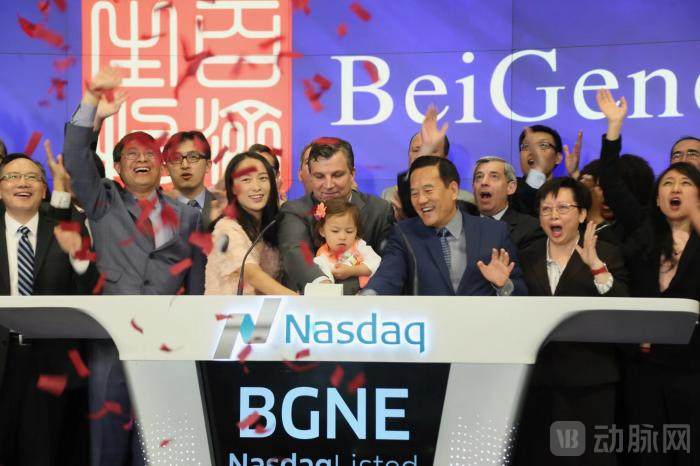
Notably, BeiGene’s transition from the R&D phase to commercialization has also been a critical period marked by the most rapid expansion in R&D and production capacity. In this regard, Jin Yi stated, “BeiGene now has over 1,000 R&D personnel at the Life Science Park, facing significant constraints in pilot-scale R&D space. As an industrial park, our primary responsibility is to provide high-quality space and infrastructure for enterprises. With support from both municipal and district authorities, BeiGene’s new pilot-scale R&D center, covering more than 20,000 square meters, has been approved and is expected to officially break ground in September this year.”
Another listed company in BioPark, InnoCare Pharma, has also demonstrated “accelerated” growth. Within just five years of settling in BioPark, InnoCare Pharma evolved from a start-up into a publicly listed company. Meanwhile, its first innovative drug, orelabrutinib, received marketing approval from the National Medical Products Administration prior to the company’s IPO, achieving dual listings for both the drug and the enterprise. This is nothing short of a miracle in the industry.
Jin Yi stated, “Many of the companies currently clustered in the park are original pharmaceutical enterprises founded by renowned scientists, university professors, or medical experts. By integrating with capital, entrepreneurs, and the industrial sector, these companies have evolved from early-stage technology-driven firms to achieving corporate and drug listings, ultimately realizing the commercialization of scientific achievements and fostering corporate growth. This characterizes the development trajectory of enterprises in the Life Science Park. Currently, there are over 50 companies in the park founded by renowned scientists.”
To help scientists translate their most significant research findings into products and ultimately achieve commercialization, Life Park has introduced a series of specialized teams to provide industrial operation services. Professional service platforms such as the Newborn Nest Innovation Center, Feibiao International Innovation Center, and Hetang Shenghua Cell and Gene Therapy Innovation Center—founded by industry elites and teams from various fields—have all been established in Life Park. These platforms will effectively introduce market-driven innovative elements from both domestic and international markets into the park, further helping scientists connect with these resources.
Jin Yi introduced, “Professionals, together with specialized teams, should establish a number of professional incubators and accelerators. These platforms can help scientists connect with domestic and international innovation resources, including capital, intermediary services, and CXO (Contract X Organization) services. It is difficult for biopharmaceutical companies to address all their challenges within a single region; they require such specialized platforms to link with global innovation resources and factors. Only in this way can enterprises integrate all aspects of industry, academia, research, and application, thereby truly transforming scientific and technological achievements into marketable products.”
Currently, Changping District has formulated an Action Plan for Doubling the Development of the Pharmaceutical and Health Industry, leveraging the innovation advantages of the Life Science Park. The goal is to double industrial revenue by the end of the 14th Five-Year Plan period, with the total revenue of the district’s pharmaceutical and health industry exceeding RMB 140 billion. In terms of spatial planning, 3,000 mu of industrial space will be released during the 14th Five-Year Plan period to accommodate the growth of the pharmaceutical and health industry, bringing the total available space in the district to over 10,000 mu.
Regarding tenant enterprises, Life Science Park currently hosts more than 500 pharmaceutical and healthcare companies, with the total number in Changping District exceeding 800. Jin Yi stated, “Moving forward, we will prioritize the development and construction of Phase III of Life Science Park, coordinate industrial space resources across Changping District, and gradually expand our developmental depth. We aim to meet the needs of innovative enterprises at every stage—from R&D spaces of several hundred square meters, to pilot-scale production facilities of several thousand square meters, and finally to manufacturing spaces of tens of thousands of square meters—enabling the local translation of pharmaceutical and healthcare innovations. Our goal is to continuously build ‘Life Valley’ into a globally leading hub.”
While emphasizing the clustering of enterprises, Life Park has also set specific goals for improving enterprise quality. “We aim to cultivate more competitive leading companies. By the end of the 14th Five-Year Plan period, we strive to have 20 listed pharmaceutical and healthcare companies in the entire Life Valley region, enabling more enterprises to achieve dual listings of both their products and their corporations.”
Since settling in the Life Science Park, Genetron Health has keenly observed the park’s transformation. First, a complete industrial chain has taken shape, with increasing diversification across sectors. In recent years, the park has fully leveraged the policy dividends from the “Two Zones” initiative to strengthen forward-looking industrial planning, promote the coordinated development of life sciences innovation and the pharmaceutical and healthcare industries, and drive an upgrade in industrial capabilities. It has aggregated resources spanning the entire value chain—including basic research, pilot-scale R&D, production and distribution, and end-user medical services—within the pharmaceutical and healthcare sectors, establishing an industrial system that is beginning to achieve significant scale.
Secondly, the supporting facilities and services within the park are becoming increasingly comprehensive. By innovating its institutional mechanisms, the park has continuously introduced attractive talent policies and improved various service platforms, including intellectual property protection, import and export of special items and biological materials, and a sci-tech financial supermarket. It provides meticulous, end-to-end “one-stop” services for enterprises in the park, covering everything from raw material import and export to the commercialization of scientific and technological achievements, and capital operations. Currently, construction of Phase III of the Zhongguancun Life Science Park has commenced. Upon completion, it will systematically enhance the level of supporting services in the surrounding area, such as transportation and healthcare, thereby attracting more talents and enterprises to settle in Changping District and take root in the Life Science Park.
Third, the park’s development is becoming increasingly internationalized. By maintaining a global perspective, introducing international innovation resources and expert talent from both home and abroad, expanding international business operations, and fostering numerous biopharmaceutical innovators targeting global markets, the park has gradually established an internationally oriented innovation ecosystem for the biomedical industry. Both the overall development standards of the park and the scientific research capabilities and product innovation strengths of its tenant enterprises are at the forefront globally.
According to Wang Sizhen, this fertile ground for innovation has seen increasingly close linkages among emerging industries and enterprises in innovative biologics, genetic testing, gene editing, vaccines, and RNA, forming an ecosystem for biomedical innovation. “Thanks to the various open platforms established by the industrial park, as well as the opportunities provided for company visits and business exchanges, we have engaged in business cooperation with upstream and downstream enterprises within the park, such as consumable and instrument suppliers, thereby integrating our supply chain platform. We have also achieved varying degrees of business interaction and strategic partnerships with many pharmaceutical companies. For instance, we have collaborated with Edigene and InnoCare Pharma, both located in the park, on companion diagnostics for drugs,” he said.