

WeDoctor's 'Eye Health Month' Drives Nationwide Awareness with Expert Livestreams, Free Online Clinics, and Professional Education
How can myopia prevention and control be effectively implemented in children and adolescents? How should adult myopia be corrected, prevented, and managed? When vision deteriorates with age, is it due to presbyopia or cataracts? Eye health has become an increasingly prominent public concern.
Recently, WeDoctor joined forces with the Eye & ENT Hospital of Fudan University, the Shanghai Municipal Center for Prevention and Treatment of Eye Diseases, Baidu Health, Aier Eye Hospital, Nanfang Health, and other institutions to launch a large-scale public welfare campaign titled “Eye Care Month.” Leveraging their respective strengths in expert resources, patient services, and platform operations, and relying on WeDoctor’s digital service platform, these partners are committed to providing comprehensive and continuous protection of public eye health, thereby supporting the nationwide prevention and control of ophthalmic diseases.
Launched on June 7, “National Eye Care Day,” and concluding on June 22, the campaign brought together nearly 100 experts in ophthalmology. Through online free clinics and popular science lectures, these experts disseminated knowledge on eye health and guided patients with eye diseases to seek medical care scientifically. Notably, a series of nearly 10 live-streamed sessions by experts attracted over 100,000 online viewers, significantly boosting public enthusiasm for eye health.

Multiple Organizations Jointly Host “Eye Care Month” Public Welfare Campaign
Currently, with socioeconomic development and the accelerating pace of population aging, the public has higher demands for eye health. However, China still faces the persistent challenges of insufficient total supply and uneven distribution of high-quality ophthalmic medical resources. The “14th Five-Year Plan” National Eye Health Plan (2021–2025) proposes actively promoting the application of the “Internet+” healthcare service model in ophthalmology, leveraging information technologies such as online diagnosis and treatment and telemedicine to improve the accessibility of ophthalmic medical services. It also calls for strengthening eye health education through new mainstream media to enhance public awareness of prevention and control of eye diseases and foster a favorable social environment.
To facilitate convenient access to high-quality ophthalmic care for the general public, the organizers leveraged “National Eye Care Day” as an opportunity to adopt an “Internet + Healthcare” model. They established an online platform that brings together 100 physicians from more than 20 hospitals in Shanghai, Zhejiang, and Jiangsu provinces—including the Eye & ENT Hospital of Fudan University and the Shanghai Eye Disease Prevention and Control Center—to provide eye care services. These experts have joined the WeDoctor platform to offer free clinics, providing patients with complimentary online consultations and medical advice. Meanwhile, to enhance the engagement and vividness of health education, the experts conducted live-streamed sessions on topics such as cataracts and lens diseases, myopia, and dry eye syndrome, while also offering real-time, face-to-face answers to patients’ questions through the WeDoctor platform.
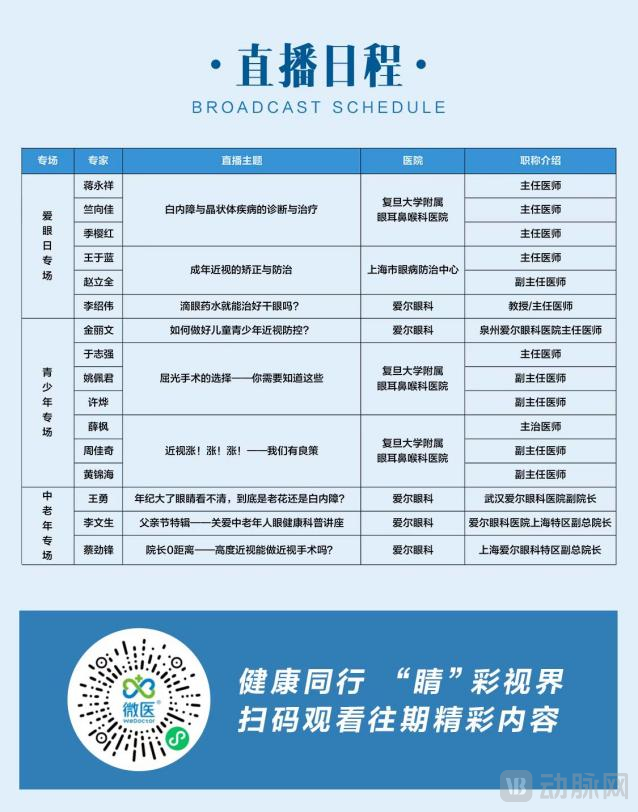
“Eye Care Month” Live Streaming Schedule
Furthermore, WeDoctor has partnered with Baidu Health to establish a dedicated section for eye health education, specifically targeting adolescents and middle-aged and elderly individuals—two groups with a high prevalence of ocular diseases. This section provides professional educational content on eye conditions, health consultations, and related information.
Zhu Jianfeng, Chief Physician and Doctor of Ophthalmology at the Shanghai Eye Disease Prevention and Treatment CenterIntroduction: Currently, the overall prevalence of myopia among children and adolescents in China exceeds 50%, while the incidence of adult eye diseases—such as age-related cataracts, age-related macular degeneration, glaucoma, and diabetic retinopathy—also presents a severe challenge. “Ocular health is an integral component of overall physical health and has a profound impact on people’s quality of life; therefore, society as a whole must place genuine emphasis on the prevention and control of eye diseases.”
“We hope that through this Eye Care Month campaign, we can not only help patients access professional ophthalmic medical and health services, but more importantly, ‘awaken’ greater public awareness of eye health.”Dr. Wang Yang, President and Chief Technology Officer of WeDoctorIt is worth noting that the recent “Eye Care Month” campaign has generated significant resonance. Under the “Ophthalmology” topic on the WeDoctor platform, views have exceeded 7 million, reflecting a growing public emphasis on eye health.
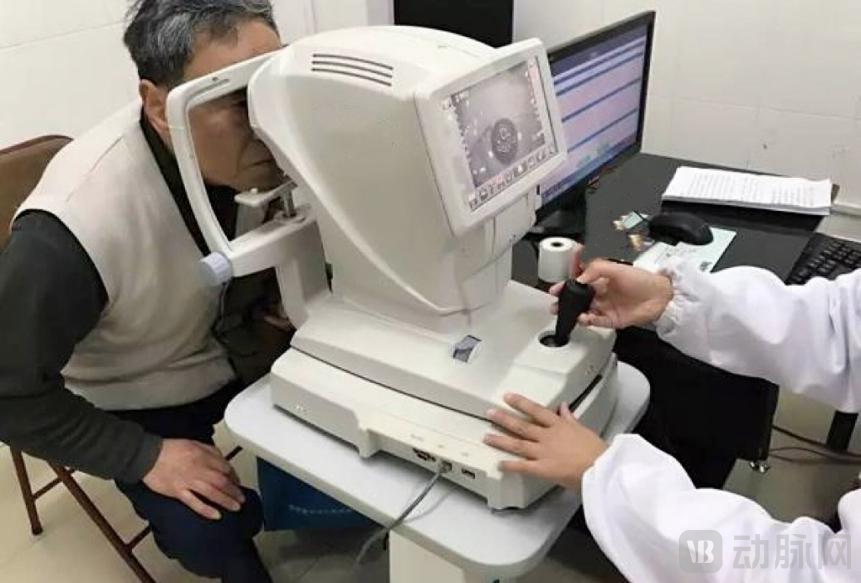
Ophthalmology AI System Assists Physicians in Diagnosing and Treating Patients
During this period, WeDoctor also implemented intelligent upgrades to its internet hospitals, deploying advanced digital health products such as AI-assisted diagnostic systems for ophthalmology. These tools support ophthalmologists in delivering efficient, high-quality care to a broader patient base, thereby meeting the surging demand for ophthalmic services.
It is reported that WeDoctor, as China’s largest digital healthcare service platform, has accumulated extensive medical resources across numerous specialties, including ophthalmology. To date, the WeDoctor platform connects with nearly 8,000 hospitals nationwide, covering more than 95% of Grade A tertiary hospitals. It has over 290,000 registered physicians, 86% of whom are attending physicians or above. The company operates more than 34 internet hospitals, 19 of which have integrated with national health insurance payment systems. The platform boasts 265 million registered users.