

Chongqing Xishan Technology Files for Sci-Tech Innovation Board IPO: Doctor-Founded Firm Reports RMB 200 Million Revenue After Two Decades in Domestic Surgical Power Tools Market
Following Shanwaishan, another company in Chongqing’s medical device sector is poised to go public. Among the “Three Mountains and One Sea” representing Chongqing’s medical device industry, two have now reached the IPO threshold.
Recently, the STAR Market IPO application of Chongqing Xishan Science&Technology Co., Ltd. (hereinafter referred to as “Xishan Technology”) has been accepted. The company plans to raise RMB 661 million, with Orient Securities serving as the sponsor. Xishan Technology will issue no more than 13.250367 million shares, accounting for no less than 25% of the total share capital after the issuance.
Surgical instruments represent a sector rich in publicly listed companies. The field of minimally invasive surgical instruments includes multiple listed firms such as Kangji Medical, Tianchen Medical, Micro-Tech (Nanjing), and Tiansong Medical.
Surgical instruments encompass a wide variety of categories, with drilling, grinding, cutting, dissecting, and stapling each supporting markets worth billions. Within these niche segments, Chongqing Xishan Science&Technology Co.,Ltd.’s core offerings are surgical power systems, including complete units, consumables, and accessories.
Surgical power systems typically refer to devices that supply the necessary mechanical power from mains electricity or batteries to surgical cutting instruments (such as drills, mills, saws, burrs, and shavers). They are primarily used in surgical procedures requiring cutting/incision, grinding, drilling, and sawing of bone and other tissues, facilitating the creation of bony channels and removing obstacles for surgical access. Currently, these products are mainly applied in various clinical departments, including neurosurgery, otolaryngology, orthopedics, and breast surgery.
As a core device in surgical procedures, the research and development of surgical power systems present significant barriers to entry, with stringent requirements for materials, manufacturing processes, and stability. This market is primarily dominated by imported brands such as Medtronic, Stryker, and Johnson & Johnson.
Over the past two decades, Chongqing Xishan Science&Technology Co.,Ltd. has broken through in the surgical power device market, filled the domestic gap, become a major market player, and is one of the few local enterprises in China covering multiple sub-sectors of minimally invasive surgical instruments.
How can Xishan Technology, as a domestic enterprise, capture market share? What is the ceiling of the surgical power device market? VCBeat interprets Xishan Technology's prospectus.
Chongqing Xishan Science&Technology Co.,Ltd. was established in 1999. Its founder, Guo Yijun, is a native of Zhuji, Zhejiang Province. At the age of 18, he enrolled at Chongqing University, majoring in Mining Engineering Physics within the Department of Mining Engineering. After obtaining his bachelor’s degree, Guo taught at the Jiangsu Xuzhou Coal Industry School. Upon resigning from his teaching position, he pursued a master’s degree in Biomedical Engineering at Chongqing University. After graduation, he was assigned to a state-owned medical device company, where he was responsible for sales in the Chongqing market.
After the restructuring of this state-owned enterprise, Guo Yijun decided to start his own business and established Xishan Technology. At that time, Xishan Technology mainly relied on income from medical device trading to sustain its operations.
In the early days of his startup, Guo Yijun wore multiple hats. In an interview with VCBeat, he stated, “We recruited seven or eight people from the job market to get things off the ground, while I shouldered all responsibilities myself—serving as a R&D specialist, manager, and sales representative.”
Initially, Xishan Technology cast a wide net in R&D, experimenting with multiple products, including hemorheology analyzers, semen analyzers, and electric craniotomes.
In 2000, Xishan Technology developed an electric craniotome, a type of surgical power device. Subsequently, the company secured its first round of financing. In 2002, Xishan Technology received RMB 1 million in equity investment from the Chongqing High-Tech Zone Innovation Fund.
However, the broad-based approach encountered obstacles. For a startup, a scattered strategy makes it difficult to cover all aspects comprehensively; the lack of product focus and refinement led to poor market feedback.
In 2004, Xishan Technology embarked on its first transformation. Recognizing that surgical power systems had become key medical devices for performing minimally invasive surgeries, Guo Yijun decided to devote all company resources to the development of electric craniotomes, positioning the company as a “pioneer in powered surgical tools.”
In the surgical power tool sector, Chongqing Xishan Science&Technology Co.,Ltd. has steadily broadened its footprint over the past 20 years, expanding its product portfolio from neurosurgery to orthopedics, otorhinolaryngology (ENT), and breast surgery.
The surgical power device sector is dominated by European and American companies such as Medtronic and Stryker. Despite its relatively lagging technological foundation, Chongqing Xishan Science&Technology Co.,Ltd. overcame the challenges of independent research and development. Guo Yijun deeply understood that core technologies cannot be purchased or replicated through imitation; the path to independent innovation must be forged step by step through self-reliance.
Leveraging its breakthroughs in the field of surgical power devices, Xishan Technology achieved rapid growth and was listed on the National Equities Exchange and Quotations (NEEQ) on December 11, 2015.
After being listed on the New Third Board, Xishan Technology was not content with limiting itself to the surgical power tools sector. In 2015, the company initiated a new round of strategic transformation, evolving from a pioneer in surgical power tools to a provider of minimally invasive surgical product solutions. During this period, Xishan Technology conducted extensive research and development of minimally invasive surgical instruments, including endoscopes, plasma surgical systems, ultrasonic bone scalpels, ultrasonic scalpels, staplers, and vacuum-assisted breast biopsy systems.
These R&D investments became a key strategic move for Xishan Technology to subsequently turn losses into profits.
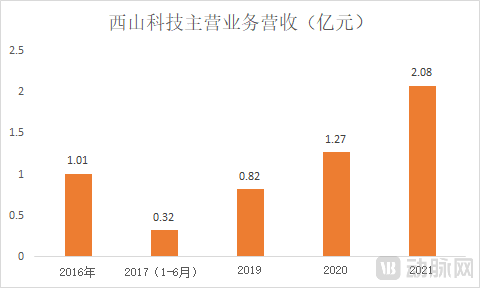
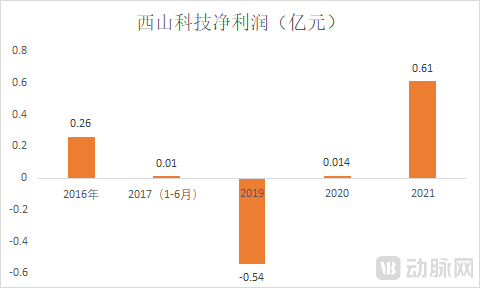
From a financial perspective, Chongqing Xishan Science&Technology Co.,Ltd. incurred losses from 2013 to 2015, but turned profitable in 2016. In 2016, its revenue reached RMB 101 million, representing a year-on-year increase of 135.72%. The net profit attributable to shareholders of the listed company was RMB 26.4121 million, marking a turnaround from loss to profit.
Following its transformation in 2015, Xishan Science & Technology’s most successful product has been the Vacuum-Assisted Breast Biopsy System. Launched in 2020, it became the company’s top-selling complete device that year, making a significant contribution to Xishan Science & Technology’s sales growth.
In the financial data, Xishan Science & Technology’s 2021 revenue from complete breast surgery systems amounted to RMB 13.27 million, while consumables revenue reached RMB 52.56 million, accounting for 44% of total consumables sales. The primary growth driver was the market launch of the vacuum-assisted breast biopsy system, with its corresponding consumable products becoming a new source of sales growth.
The launch of the breast lesion vacuum-assisted biopsy system helped Chongqing Xishan Science&Technology Co.,Ltd. return to profitability in net profit.
According to the prospectus, Chongqing Xishan Science&Technology Co.,Ltd. recorded revenues of RMB 82.496 million, RMB 127 million, and RMB 209 million in 2019, 2020, and 2021, respectively, representing a compound annual growth rate (CAGR) of 59.11% over the past three years. During the same period, its net profits were RMB -54.1988 million, RMB 14.1907 million, and RMB 61.4294 million, respectively; while its net profits excluding non-recurring gains and losses were RMB -59.1939 million, RMB 7.3238 million, and RMB 51.9068 million, respectively.
The breast lesion rotational core biopsy system achieved strong sales performance shortly after its market launch, primarily because there were previously no domestically produced products in this market. As the first Chinese manufacturer to independently develop and produce vacuum-assisted minimally invasive breast rotational core biopsy devices, Chongqing Xishan Science&Technology Co.,Ltd. has played a significant role in achieving import substitution.
Breast Lesion Vacuum-Assisted Biopsy System is primarily used for vacuum-assisted biopsy sampling of breast tissue with abnormalities detected by imaging or physical examination. This product advances the traditional open surgical approach for suspicious breast lesions toward a minimally invasive technique, enabling repeated excisions of suspicious breast lesions to obtain histological specimens. It holds significant value in the early diagnosis of breast cancer and provides an improved method for its detection and diagnosis.
According to the 2021 China Health Statistics Yearbook, there were 270,000 hospital discharges for malignant breast tumors and 310,000 for benign tumors in China in 2020. From 2015 to 2020, the number of new breast cancer cases in China increased from 304,000 to 331,000, representing a compound annual growth rate (CAGR) of 1.7%. The number of new breast cancer cases is projected to reach 354,000 by 2024. With the widespread adoption of medical technologies and heightened health awareness, women are placing increasing emphasis on the prevention and screening of early-stage breast cancer, indicating broad market prospects for vacuum-assisted breast biopsy systems.
Prior to the market launch of Xishan Technology’s products, the key players in the breast biopsy device market included Mammotome (under Danaher), BD (Becton, Dickinson and Company), and Hologic.
Chongqing Xishan Science&Technology Co.,Ltd.'s prospectus did not estimate the size of the breast biopsy market. Industry insiders stated that the current market size in China has reached RMB 3 billion, but the market share of domestically produced products remains relatively low.
How Did Chongqing Xishan Science&Technology Co.,Ltd. Achieve Strong Sales in Its First Year of Launch in an Import-Dominated Market?
On the one hand, it relies on price advantagesTaking the vacuum-assisted biopsy needles used in minimally invasive breast surgery systems as an example, Chongqing Xishan Science&Technology Co.,Ltd. launched its products at prices lower than those of imported competitors, thereby forcing importers to reduce their prices. Upon the market entry of domestically produced equipment, the prices of imported products immediately dropped by approximately 30%. This has reduced the medical burden on patients in China; based on an annual volume of 500,000 procedures nationwide, it saves patients RMB 500 million per year in medical costs.
On the other hand, it relies on product innovation to offer what others do not have and to innovate where others already have offerings.In minimally invasive breast vacuum-assisted biopsy systems, Chongqing Xishan Science&Technology Co.,Ltd.’s breast biopsy technology enables precise excision of lesion sites, avoiding inadvertent injury to surrounding healthy tissue. Meanwhile, it displays window information and blade position in real time on the screen, facilitating more intuitive and accurate surgical procedures for physicians.
Furthermore, through innovative hardware and software design, Chongqing Xishan Science&Technology Co.,Ltd. has achieved real-time monitoring and control of pipeline negative pressure, vacuum canister fluid levels, and instrument insertion status, significantly enhancing the safety and convenience of surgical procedures.
During Chongqing Xishan Science&Technology Co.,Ltd.’s transformation and expansion, some projects encountered obstacles. Taking surgical staplers as an example, in 2019, Xishan Technology ventured into the surgical stapler business and obtained registration certificates for its stapler products. However, due to the inclusion of surgical staplers in centralized volume-based procurement, Xishan Technology suspended the expansion of its surgical stapler business.
The deferral of projects such as surgical staplers and intraoperative neurophysiological monitoring systems also significantly reduced Xishan Technology’s R&D expenses. From 2019 to 2021, Xishan Technology’s R&D expenses were RMB 34.9541 million, RMB 18.7654 million, and RMB 28.0886 million, respectively.
An examination of the key historical milestones in the development of Chongqing Xishan Science&Technology Co.,Ltd. reveals that the products which accelerated its growth shared a prominent characteristic: they were dominated by imports, with no domestic alternatives available. This highlights a trend: future opportunities for innovation in the medical device industry will increasingly stem from original innovations, while the scope for imitative innovation continues to shrink.
There are numerous companies vying for opportunities in the broad minimally invasive surgery sector. The overall minimally invasive surgery market is primarily composed of two major segments: the imaging platform (endoscopic processors and scopes) and the instrument platform (minimally invasive surgical devices and consumables).
High-end products on the device platform primarily include electric endoscopic staplers, ultrasonic scalpel systems with disposable transducers, high-frequency electrosurgical units, and related consumables. Characterized by high technical barriers and high value-added, these products command a substantial market size. Currently, both the domestic and global markets are dominated by international giants; however, some Chinese startups and listed companies have already achieved breakthroughs in certain segments of the high-end product landscape.
Currently, Xishan Technology’s product portfolio covers multiple products in the minimally invasive surgery market. What is the future growth potential for Xishan Technology in this sector?
Let’s first examine Xishan Technology’s area of strength: the surgical power tool market. Xishan Technology’s products are primarily used in neurosurgery, orthopedics, breast surgery, and otolaryngology. In this market, Xishan Technology holds a significant advantage over its domestic counterparts.
Chongqing Xishan Science&Technology Co.,Ltd. has become one of the leading enterprises in China’s surgical power device sector. Leveraging its nationwide marketing network, the company’s products have been sold to nearly 1,000 tertiary hospitals, establishing a solid user base and strong brand recognition. According to statistical data from Zhongcheng Shuke on publicly disclosed tender awards for surgical power devices at end-user hospitals between 2019 and 2021, Chongqing Xishan Science&Technology ranked among the top three in terms of the number of successful bids for surgical power devices used in traditional departments (such as neurosurgery, otolaryngology, and orthopedics). Furthermore, its breast lesion rotational biopsy system, launched in 2020, also ranked among the top three in the market in 2021.
The domestic market for surgical power devices is also experiencing growth. According to data from the prospectus, Zhongcheng Shuke’s statistics on publicly disclosed procurement bid awards for surgical power devices from 2019 to 2021, based on industrial big data, show that the number of units awarded in bids for surgical power devices (including breast lesion rotational biopsy systems) was 589, 688, and 716 in 2019, 2020, and 2021, respectively.
Chongqing Xishan Science&Technology Co.,Ltd. is still promoting disposable consumables in the field of surgical power devices, which is expected to drive market expansion in the future.
In addition to surgical power systems, Xishan Technology has also strategically focused on two major areas: endoscopy systems and energy-based surgical devices. The company has already obtained registration certificates for its 4K endoscopic camera system and bipolar radiofrequency electrodes.
Although Chongqing Xishan Science&Technology Co.,Ltd. has strategically positioned itself through R&D in high-frequency electrosurgical, ultrasonic, plasma, and endoscopic products, these niche segments are not devoid of domestic competitors. A cohort of Chinese manufacturers has already emerged, and import substitution is actively underway in the mid- to low-end markets.The challenge for Xishan Technology lies in the emergence of a cohort of competitive domestic enterprises, making it difficult to achieve breakthroughs in a market characterized by entrenched giants and surrounded by rising newcomers.
Imaging platforms are the core devices in minimally invasive surgery. The endoscopy market is divided into two major segments: rigid endoscopes and flexible endoscopes. China’s rigid endoscope market is in a phase of rapid growth. According to Haitai XinGuang’s prospectus, the market size for rigid endoscopes in China was approximately RMB 6.5 billion in 2019. Major players in the rigid endoscope market include Karl Storz, Olympus, Stryker, Richard Wolf, as well as Haitai XinGuang, Aohua Endoscopy, and Mindray. In 2019, the market size for flexible endoscopes in China was approximately RMB 5.3 billion. Key participants in the flexible endoscope market include Olympus, Fujifilm, Pentax, and Sonoscape.
In the energy-based surgical device market, the main players in the electrosurgical unit (ESU) market are Medtronic, Olympus, ERBE, and Shanghai Hutong; Johnson & Johnson dominates the ultrasonic scalpel market, while strong domestic competitors include Jieshi and Yisi. The plasma knife market features companies such as Smith & Nephew, Fangrun Medical, Lainuo Medical, and Jessi.
Overall, Xishan Technology’s breakthroughs in the surgical power tools and breast vacuum-assisted biopsy markets have demonstrated its R&D capabilities. With two decades of deep engagement in China’s medical device market, the company has accumulated extensive experience in market access and commercialization. Looking ahead, Xishan Technology has the opportunity to replicate its advantages in surgical power tools across other therapeutic areas, thereby providing high-performance, high-quality, and more competitive medical device solutions for China’s healthcare system.
Reference: Guo Yijun’s “Ultimate Goal” at Xishan Technology: To Become a Leader in the Medical Device Industry – Shangyou News
Role Models of Zhejiang Entrepreneurs Outside the Province | Guo Yijun, Vice Chairman of the Presidium and Executive Vice President of the Zhejiang Chamber of Commerce in Chongqing: A New-Era Zhejiang Entrepreneur Dedicated to Diligence, Pragmatism, Innovation, and Contribution