

Uxi Needles Completes RMB 30 Million Pre-A Financing to Accelerate Development of Global Leading Intelligent Puncture Medical Robot Systems
FUXI Robot
Developer and Manufacturer of Intelligent Infusion Robots
VCBeat has learned that Fuxi Jiuzhen Intelligent Technology (Beijing) Co., Ltd. (“Fuxi Jiuzhen”), a provider of intelligent puncture medical robot system solutions, recently completed a RMB 30 million Pre-A financing round.
The proceeds from this round of financing will be primarily allocated to clinical trials, product registration, and market launch of the FUXI Intelligent Infusion Robot, as well as expanding the company’s R&D team to accelerate the development of multiple product pipelines, including robots for nerve block (anesthesia) puncture, tumor ablation puncture, and traditional Chinese medicine acupuncture.
Medical robotics is a typical field integrating medicine and engineering, spanning multiple disciplines including healthcare, materials science, mechanical engineering, artificial intelligence, and big data. This requires founding teams to comprise not only professional elites but also multidisciplinary talents capable of integrating strategy, customer relations, marketing, product development, and distribution channels. Such teams must ensure breakthroughs from 0 to 1 in product innovation while effectively meeting clinical needs, thereby achieving the goals of enhancing medical efficiency, benefiting the public, and driving corporate growth.
Fuxi Nine Needles stands at the apex of the life and health industry chain, effectively addressing the widespread challenges faced by medical robotics enterprises, namely the shortage of interdisciplinary talent and the dilemma of products that receive critical acclaim but fail to achieve strong market sales.
The company brings together top-tier industry elites, with its core founders being seasoned veterans in the fields of industry and information technology. They have led intelligent healthcare industry research and project management at national-level premier research institutes, thereby establishing comprehensive, multi-dimensional capabilities spanning strategic research, clinical market development, technological R&D, and medical device distribution.
This endows Fuxi Nine Needles with forward-looking vision, keen insight, robust R&D capabilities, agile alignment with clinical needs, and efficient internal management, providing a solid foundation for the company to achieve its product development and future performance targets.
Fuxi Nine Needles is committed to becoming a global leading provider of intelligent puncture robot systems. FUXI is its first medical robot deployed for clinical infusion therapy, demonstrating significant comparative advantages in terms of clinical needs, scope of application, and level of intelligence.
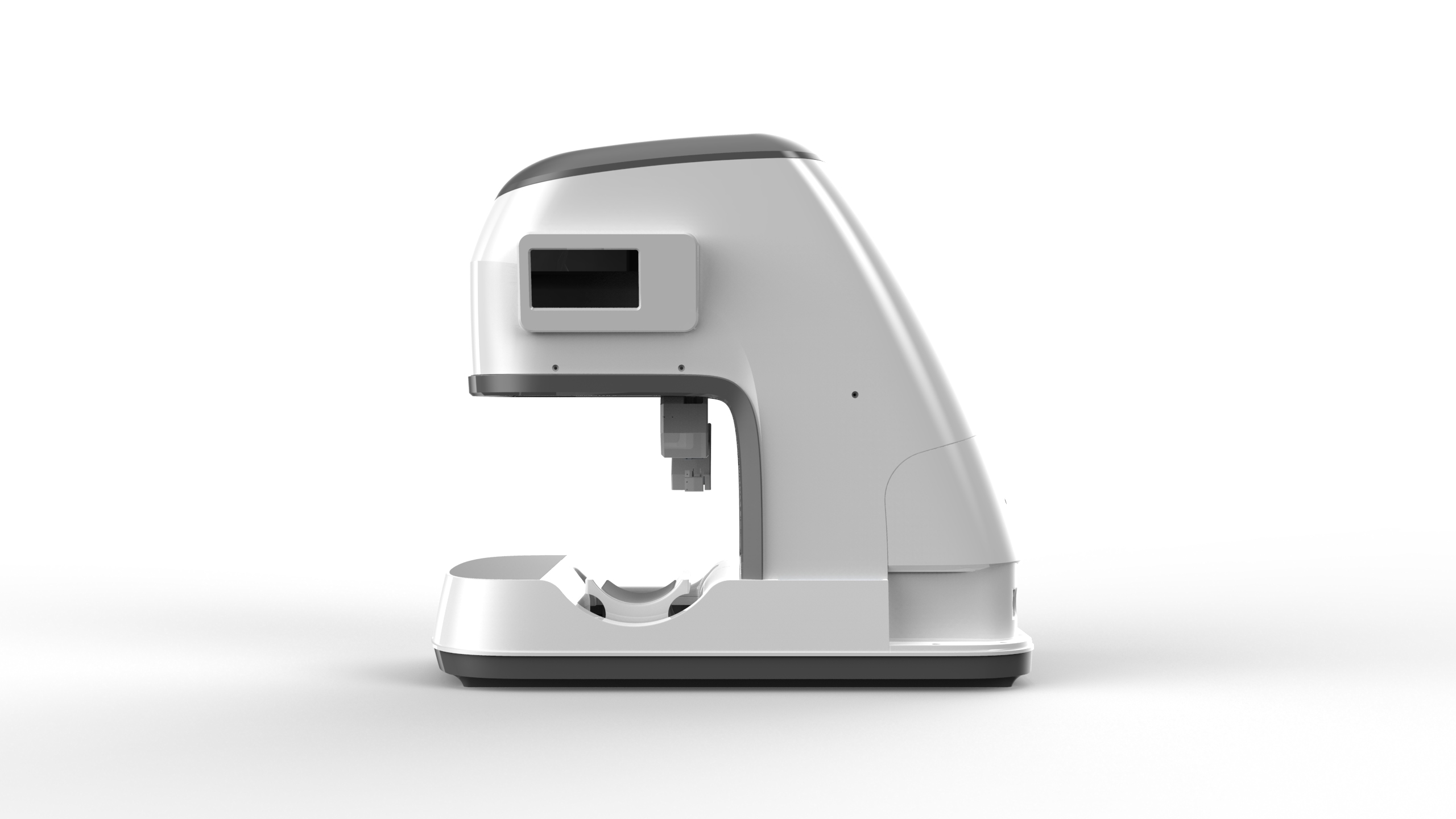
FUXI Intelligent Infusion Puncture Robot
Yang Fan, Chairman of Fuxi Nine Needles, pointed out“Venipuncture is the most common medical procedure, primarily relying on the experience and condition of healthcare professionals. Survey data indicate that approximately 27% of patients in clinical settings have poorly visible veins, with 40% of these cases being unidentifiable by visual inspection alone. The first-attempt success rate for manual venipuncture is less than 90%. Venipuncture is even more challenging in children, the elderly, and critically ill patients, leading to occasional doctor-patient disputes due to ‘poor visibility, inaccurate needle insertion, and unstable handling.’”
“The shortage of nursing talent is plaguing countries around the world. According to data from the World Health Organization, the global shortfall of nurses will reach 4.6 million by 2030. Although the number of registered nurses in China has exceeded 5 million, the country faces a severe aging population and a year-on-year decline in its working-age population. By 2030, China will face a shortfall of at least 2 million registered nurses, particularly in rural and remote areas under the tiered diagnosis and treatment system, as well as among the elderly and patients with acute and critical conditions. The demand for precise puncture medical solutions tailored to specific clinical scenarios is becoming increasingly prominent.”
“In light of this, we assembled a joint product development task force comprising experts from multiple disciplines—including medicine, artificial intelligence, mechanical engineering, materials science, and big data—to address the practical needs of the healthcare industry. This effort successfully yielded the FUXI Intelligent Infusion Puncture Robot. The device is not only widely applicable in tertiary hospitals, community hospitals, and elderly care facilities, but also excels in special scenarios with scarce medical resources, such as infectious disease environments, border outposts, long-distance naval vessels, scientific research stations, space stations, and battlefields.”
Liu Xu, President of Fuxi Nine Needles, remarked“FUXI pioneered the ‘infrared recognition + ultrasound guidance + force-sensing follow-up’ puncture technology, overcoming the challenges of traditional puncture procedures. The product has obtained national patents in key areas such as mathematical modeling of vascular tissue mechanical properties, puncture path navigation, puncture behavior control, and precise and safe manipulation of the puncture process.”
“Compared with traditional blood-drawing robots that have single functions and fixed algorithms, FUXI possesses compliant control and safe interaction capabilities for puncture robots adaptable to multi-mode operations. It can upgrade its algorithms through cloud-edge collaboration technologies, thereby ensuring continuous enhancement of the device’s intelligence.”
The investor in this round of financing, Hebei Linkong Group, stated“Fuxi Jiuzhen’s intelligent puncture robot project boasts globally leading technology and broad application prospects. By leveraging investment to drive production, we have introduced this project to the Langfang Airport Economic Zone, aiming to accelerate the industrialization of R&D achievements in puncture robots and foster the clustered development of the intelligent medical robot industry in the zone, thereby establishing a highland for the life and health industry.”
Currently, Fuxi Jiuzhen operates a R&D center and production base spanning over 3,000 square meters in the Langfang area of the Beijing Daxing International Airport Economic Zone. This round of financing will further accelerate the R&D upgrades and market expansion of the company’s intelligent puncture technology.
"Steadfast in our original aspiration, we forge ahead with determination; persevering without pause, we look forward to a promising future."
The convergence of innovative technology and capital markets will accelerate Fuxi Jiuzhen’s progress in the development of intelligent puncture robots.
Hebei Linkong Group Co., Ltd. is a wholly state-owned enterprise approved by the People's Government of Langfang City. Established in September 2018 with a registered capital of RMB 5 billion, the company serves as the primary entity for development and construction, investment and financing, operation and management, and resource integration within the Langfang Airport Economic Zone. It is specifically responsible for implementing the comprehensive development, construction, operation, and maintenance of the zone.
The Airport Economic Zone of Beijing Daxing International Airport is a major strategic initiative for the coordinated development of the Beijing-Tianjin-Hebei region, with a planned area of 150 square kilometers. The Langfang portion covers 100 square kilometers and is positioned as a functional hub for international exchanges, a national leader in aviation science and technology innovation, and a demonstration zone for the coordinated development of the Beijing-Tianjin-Hebei region.
The Langfang Airport Economic Zone covers a construction land area of 46.8 square kilometers, including 21.9 square kilometers (46.8%) for industrial use, 19.2 square kilometers (41.1%) for public services, municipal facilities, and green spaces, and 5.7 square kilometers (12.1%) for residential use. Focusing on high-end, high-tech, clustered, and intensive development, the zone integrates the planning of three major functional areas: the Scientific Research and Innovation District, the High-End Industrial Manufacturing District, and the Aviation Services Functional District, thereby building high-quality industrial and innovation chains.