

Reconciling Interests: How Research Institutions and Scientists Can Achieve Win-Win Collaboration in Medical Innovation
The Essence of Collaboration Is “Division.” Only When Responsibilities Are Clearly “Divided” Can Partnerships Be Harmoniously “United.”
However, many domestic institutions have not been successful in their collaborations with scientists, partly becauseThe shared interests of the two parties have not found a balance.In the process of medical innovation and translation, both research institutions and scientists have made tremendous efforts. Scientists devote their time and energy wholeheartedly to scientific research, while research institutions provide platforms, equipment, and resources, serving as the “strongest support” for scientists during the technology development phase.
The initial collaboration proceeded quite smoothly; however, conflicts over benefit distribution emerged during the more long-term phase of outcome commercialization:From the scientists’ perspective, they have devoted considerable effort to achieving a research breakthrough, yet the institution claims an excessively large share of the rewards. From the institution’s standpoint, it has provided substantial resources but receives disproportionately little return.
For advanced technologies to reach the market, the key lies in bridging the “last mile” within the public system, which necessitates addressing the distribution of interests.
This is not simple, because there are also two types of “distortions” in intellectual property rights and benefit distribution. The first type isScientists Do Not “Split”, poor coordination with research institutes regarding intellectual property rights in service inventions has resulted in the company’s inability to secure complete and uncontested ownership of technologies, which will become a significant hidden risk to the company’s development;
The second type isHospitals and Clinics Are Not Well “Segmented”The lack of market-aligned policy measures and a robust system for medical innovation and translation has led to overly rigid control over intellectual property rights and benefit distribution, as well as market-disconnected management of scientists, ultimately becoming an “obstacle” to the advancement of achievement translation.
It is precisely based on these that,VCBeat Orange BureauOrganizing the “Institutes and Translation” Online Panel, Specially InvitedDr. Wu Xiaoli, Director of the Institute-Local Cooperation and Technology Transfer Office at the Shenzhen Institutes of Advanced Technology, Chinese Academy of Sciences; Dr. Pan Zhiwen, Chief Physician in the Department of Cardiology at Zhongshan Hospital Affiliated to Fudan University; Dr. Fang Li, Director of the Xiangya Medical Division at the Intellectual Property Center of Central South University; and Dr. Chen Yang, a senior healthcare investor, exploring and addressing core questions from multiple perspectives: How can research institutions achieve win-win collaboration with researchers? How do they demonstrate their “art of exit”? And where lies the value of technology transfer officers in this process? These insights offer valuable food for thought for scientists and research institutions.
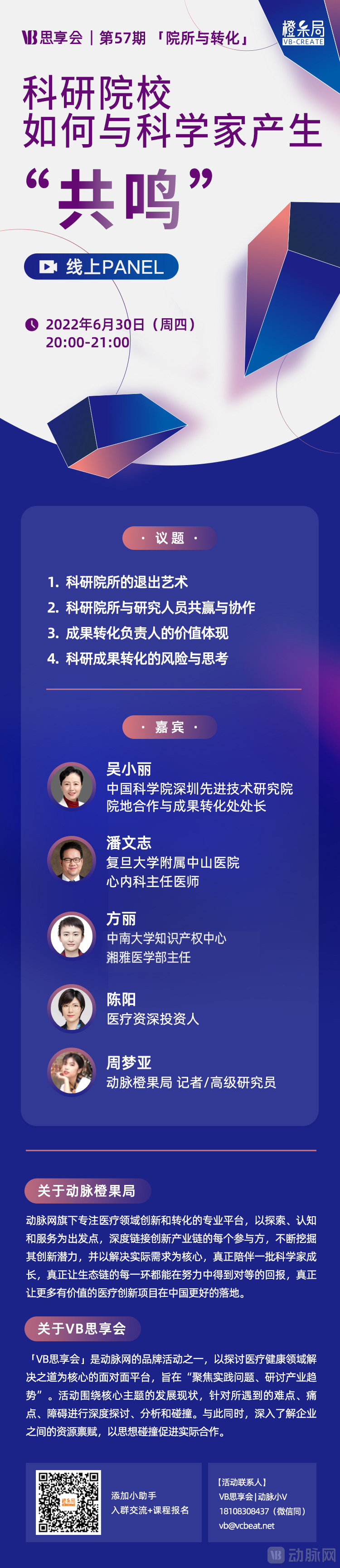
Guest Introduction
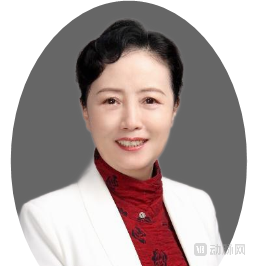
Dr. Wu Xiaoli
Director of the Institute-Local Cooperation and Technology Transfer Office, Shenzhen Institutes of Advanced Technology, Chinese Academy of Sciences
Senior Economist, previously engaged in management roles at national ministries and universities. Currently serves as Director of the Office for Institute-Local Government Cooperation and Technology Transfer, and Director of the Scientific Cooperation Center at the Shenzhen Institutes of Advanced Technology, Chinese Academy of Sciences. Simultaneously holds the positions of Chairman of Zhuhai CAS Institute of Advanced Technology Co., Ltd., Chairman of Tianjin CAS Institute of Advanced Technology Industry Co., Ltd., Board Member of Wuhan CAS Advanced Materials Technology Co., Ltd., Board Member of Shenzhen Beidou Intelligent Technology Co., Ltd., and Board Member of Shenzhen CAS Technology Transfer Equity Investment Fund Management Co., Ltd. Has long been dedicated to scientific and technological cooperation, institute-local government collaboration, and technology transfer initiatives.
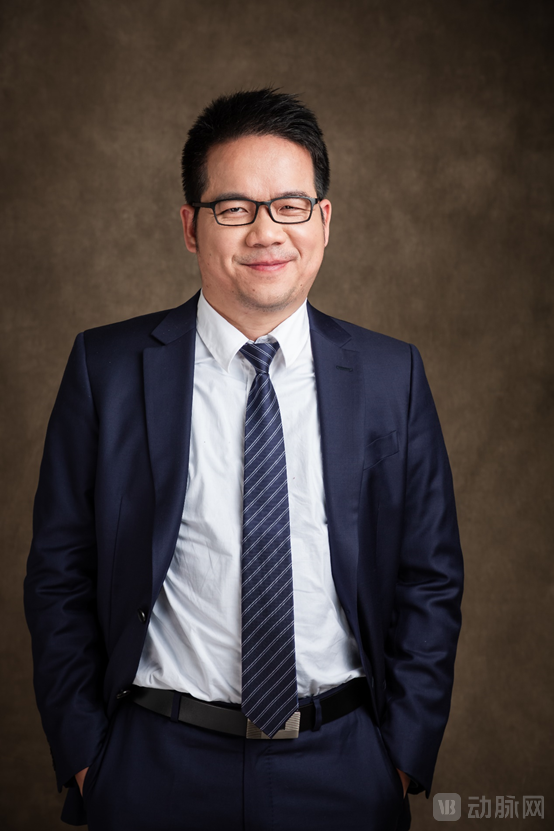
Dr. Pan Zhiwen
Chief Physician, Department of Cardiology, Zhongshan Hospital Affiliated to Fudan University
M.D., Chief Physician, Department of Cardiology, Zhongshan Hospital Affiliated to Fudan University; Master’s Supervisor; Deputy Leader, Structural Heart Disease Group, Cardiovascular Branch, Shanghai Medical Association; Secretary-General, China Structural Week; Secretary, Structural Heart Disease Group, Cardiovascular Branch, Chinese Medical Doctor Association; Head of R&D Department, China Cardiovascular Physicians Innovation Club (CCI); Recipient of the “Top Ten Young Medical Professionals” Award at Fudan University (2017); Recipient of the Shanghai Municipal Health and Family Planning Commission May Fourth Youth Medal (2017); Recipient of the Oriental Rising Star Award (2019); Recipient of the CIT Young Investigator Award (2020); Recipient of the Silver Snake Award, the highest honor for young health professionals in Shanghai (2021); Promoted in 2021 to become the youngest Chief Physician at the Shanghai Institute of Cardiovascular Diseases.
Specializing in the clinical practice and device research and development of structural heart disease, particularly transcatheter valve therapy (TVT), he has personally performed over 1,000 transcatheter aortic valve replacement (TAVR) procedures and drafted five Chinese expert consensus statements on TVT. He holds 18 authorized invention or utility model patents and two international PCT patents, with 11 patents successfully commercialized. Under the guidance of Academician Junbo Ge, he developed the world’s first transapical mitral valve clip, ValveClamp (which has completed pre-market clinical trials), and the world’s first puncturable occluder, ReAces (which has completed exploratory clinical trials). He served as the editor-in-chief of China’s first monograph on TVT, Transcatheter Heart Valve Therapy, authored 50 SCI-indexed papers and more than 160 Chinese papers, with his work cited 1,928 times, and edited two monographs. He has presided over five research projects, including the National Key R&D Program and projects funded by the Shanghai Municipal Science and Technology Commission. He was awarded the First Prize for Scientific and Technological Progress by the Ministry of Education (2020) and the Third Prize for Scientific and Technological Progress in Shanghai (2014).

Dr. Li Fang
Director of the Xiangya Medical Department, Intellectual Property Center, Central South University
Master of Medicine; Ph.D. Candidate in International Intellectual Property Law; Director, Office of Discipline Construction and Planning, The Third Xiangya Hospital of Central South University; Deputy Director, Intellectual Property Center of Central South University; Director, Xiangya Medical Division of the Center. Formerly served as Deputy Director of the Research Department at Xiangya Hospital of Central South University and Assistant at the Yale-China Association, Yale University. Major social appointments include Expert in the Strategic Research Group on Transformation of Health and Healthcare Scientific and Technological Achievements under the Ministry of Science and Technology; Project Review Expert for the Chinese Red Cross Foundation; Executive Director of the Hunan Provincial Society for Intellectual Property Law Studies. With over ten years of experience in research management and the transfer and transformation of scientific and technological achievements, has led and participated in numerous research projects at various levels, including those funded by the World Health Organization (WHO), the China Medical Board (CMB), and national, provincial, and ministerial authorities. Has published multiple papers on research management and the transfer and transformation of scientific and technological achievements. Think tank articles published in the “Hunan Provincial Think Tank Results Special Report” have received important instructions from provincial leaders.

Dr. Chen Yang
Senior Healthcare Investor
Dr. Chen Yang previously led investments in innovative medical devices at Northern Light Venture Capital, bringing over a decade of combined experience in clinical practice and early-stage healthcare investment. Prior to entering the investment field, Dr. Chen worked for many years on the clinical front lines at Fuwai Hospital, National Center for Cardiovascular Diseases, and Beijing Anzhen Hospital. He possesses extensive clinical expertise and industry resources, having participated in several international multicenter academic studies and large-scale clinical trials of cardiovascular devices, as well as the early research and development of multiple innovative medical devices. Additionally, he serves as a startup mentor for several clinical translation centers in China, providing guidance on zero-to-one market selection, strategic direction, and device R&D advisory, with a commitment to advancing China’s domestic medical device innovation driven by unmet clinical needs.
Organizer Introduction
A specialized platform under VCBeat, dedicated to innovation and translation in the healthcare sector. Guided by the principles of exploration, insight, and service, we deeply connect every stakeholder in the innovation value chain, continuously unlocking their innovative potential. With a core focus on addressing practical needs, we genuinely support the growth of scientists, ensure that each link in the ecosystem receives equitable returns for their efforts, and facilitate the successful implementation of more high-value medical innovation projects in China.
「VB“Si Xiang Hui” is one of VCBeat’s flagship events, serving as a face-to-face platform centered on exploring solutions in the healthcare sector, with the mission to “focus on practical challenges and discuss industry trends.” The event conducts in-depth discussions, analyses, and exchanges around the current development status of core themes, addressing encountered difficulties, pain points, and barriers. Meanwhile, it gains a thorough understanding of the resource endowments of participating enterprises, fostering practical collaborations through intellectual exchange.