

Sovajo Surgical Robotics: A Clinician-Founded Innovator in Orthopedic Robotics Submits IPO Prospectus

Sovajo
Surgical Robot Developer
Since the first orthopedic surgical robot system, ROBODOC, received FDA clearance in 2008, attention to orthopedic surgical robots has continued to rise both domestically and internationally. In 2013, Stryker, a global giant in the orthopedic medical industry, announced its acquisition of MAKO Surgical Corp. and its RIO robotic arm-assisted joint surgery system, thereby positioning itself in the market for joint replacement surgical robots and further propelling such systems into the spotlight.
From the demand side, according to data from the Chinese Medical Doctor Association, the number of joint replacement surgeries in China reached nearly 700,000 in 2018, including 439,324 total hip arthroplasties, 249,259 total knee arthroplasties, and 11,200 unicompartmental knee arthroplasties.
From the supply side, there are pain points such as high qualification requirements for physicians performing joint replacement surgeries, excessive reliance on surgeons’ experience, and significant disparities in surgical proficiency among different physicians and hospitals of varying tiers.
Therefore, joint replacement surgical robots capable of achieving sub-millimeter precision have become the key to breaking through the status quo by effectively addressing the pain points of traditional surgery.
Joint replacement surgical robots are high-tech systems integrating software and hardware for clinical surgery. To develop a truly high-standard, mature, and reliable surgical robot, meticulous design and refinement of software algorithms are required on one hand, while high-precision and high-stability hardware control is essential on the other. Therefore, enterprises face numerous challenges in the research and development of joint replacement surgical robots.
VCBeat recently learned that Changzhou Suwen Jiuzhou Medical Technology Co., Ltd. (hereinafter referred to as “Suwen Jiuzhou”) is a medical innovation company that builds its foundation from the ground up—starting with robotic arm selection and low-level control algorithm design, rather than adopting a quick, modular “building-block” approach. Through in-depth needs assessment, careful selection of key components, and iterative algorithm optimization, the company’s R&D team has developed a knee arthroplasty surgical robot system characterized by comprehensive functionality, high precision, and high stability.
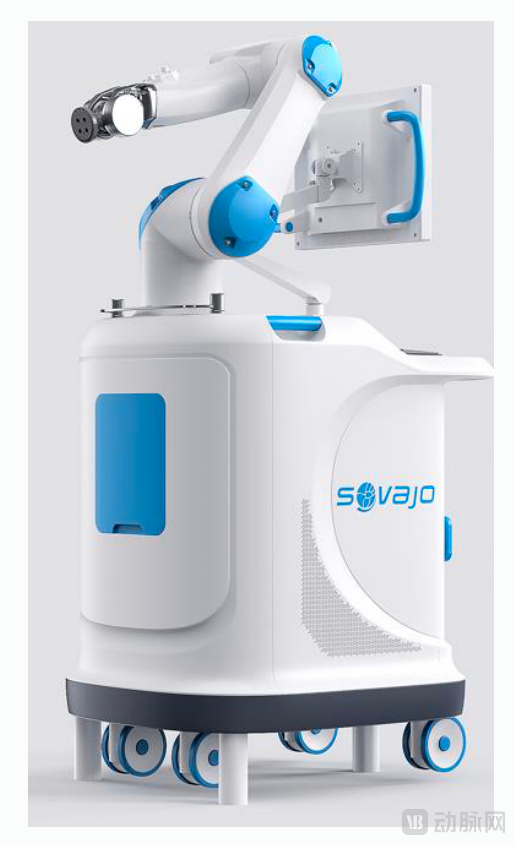
Sovajo Knee Arthroplasty Surgical Robot
It is understood that Lin Bigui, founder of Suwen Jiuzhou, leveraged his decade of experience in orthopedic robotics research at the PLA General Hospital (301 Hospital) to lead the project’s development. Through strategic collaborations with multiple research institutions—including the Chinese Academy of Sciences and Zhejiang University—as well as medical device enterprises, the team developed the “Sovajo Knee Joint Surgical Robot.” This product integrates capabilities such as image data reprocessing, 3D comprehensive surgical planning, high-precision registration, precise robotic arm control, real-time tracking, and safety management—functions achieved by only a few imported brands. With its comprehensive functionality, ease of operation, accurate bone cutting, and support for intelligent platform sharing, the system is poised to fill a domestic gap in China.
The product is currently in the NMPA registration clinical trial phase.
Specifically, Suwen Jiuzhou has addressed relevant issues across three dimensions: hardware (such as robotic arms), software, and algorithms.
Unlike common collaborative robotic arm-based surgical robot solutions, Suwen Jiuzhou’s knee surgery robot employs a cost-effective robotic arm with a proven track record overseas. This design simultaneously ensures the flexibility required during robotic arm traction and the rigidity needed for bone cutting procedures, thereby delivering an optimal user experience. Furthermore, it withstands high-frequency vibrations generated during osteotomy, ensuring precise bone resection.
Dr. Lin Bigui, the founder, told VCBeat:“The ‘Sovajo Knee Arthroplasty Surgical Robot’ is the first domestically produced knee surgical robot to achieve an integration of manipulator flexibility and rigidity. During the initial phase, the team devoted considerable effort to selecting the robotic arm. After evaluating various trade shows and conducting hospital surveys, the company ultimately chose a robotic arm that, despite its high development complexity, offered superior precision and reliability. This selection enabled the successful development and implementation of various control algorithms, meeting requirements for stability, accuracy, feedback tracking, and safety management.”
It is reported that, based on insights derived from the real-world clinical experience of both clinical experts and its founders, Suwen Jiuzhou has defined software functional modules, carried out refined development, and implemented continuous optimization, resulting in multiple novel functional modules with high clinical value.
During the development of software-related algorithms, Suwen Jiuzhou conducted continuous simulations to perform forward and inverse mapping validation between virtual images and real bone structures, undergoing five iterations of algorithm refinement. The software’s algorithm matches comparable imported products in terms of registration time, response speed, and registration accuracy.
Suwen Jiuzhou was originally founded by one orthopedic surgeon and three engineers.
Dr. Lin Bigui, the founder, was originally an orthopedic surgeon. After graduating from the Department of Clinical Medicine at the First Military Medical University, he worked and studied for seven years across various levels of hospitals, including garrison hospitals, military region hospitals, service-specific general hospitals, and the PLA General Hospital (301 Hospital). Driven by a strong passion for medical device R&D and a sincere commitment to empowering clinical practice, he subsequently spent ten years gaining extensive experience at leading medical companies such as Stryker Chuangsheng Medical and Mindray Medical. During this period, he was responsible for product management and marketing, led comprehensive corporate strategic planning, oversaw the planning of full-line orthopedic products and the implementation of product projects, and organized diverse marketing and promotional campaigns. Additionally, he led his team in the successful development of surgical robots for neurosurgery, spinal orthopedics, and trauma care.
In 2020, Lin Bigui co-founded Suwen Jiuzhou with two other PhDs and an orthopedic medical device expert. With a focus on strategic direction, differentiated development, and a closed-loop value chain, Suwen Jiuzhou adopts a commercially logical, clinically oriented approach. Starting with its joint replacement surgical robot project and leveraging the Chinese PLA General Hospital’s (301 Hospital) extensive clinical research and application experience in orthopedic surgical robots, the company has strategically positioned its product portfolio to advance intelligent and digital healthcare. Over the past two decades, it has remained true to its original mission of empowering clinical practice.
It is reported that Suwen Jiuzhou completed a tens-of-millions RMB angel financing round in early 2022, jointly invested by Changzhou Longcheng Jingu and Dandelion Venture Capital, and is currently launching a new round of financing.
Achieving optimal lower limb alignment and joint balance through precise osteotomy is the cornerstone of knee arthroplasty. Traditional knee replacement instruments are characterized by numerous components and complex operations, with room for improvement in planning and osteotomy accuracy. In contrast, surgical robots serve as ideal operative assistants with strong clinical necessity. Building on its technological foundation in knee surgery robots, Suwen Jiuzhou has also deployed supporting products such as assisted diagnosis and treatment systems. The company aims to rapidly platformize its artificial intelligence technology, covering three major surgical scenarios: preoperative planning, intraoperative navigation, and postoperative evaluation, thereby constructing a comprehensive medical ecosystem. It strives to launch refined products and services within two years.
With the release of policies such as the “13th Five-Year Plan Outline for the Development of the Orthopedic Robotics Industry,” the “Development Plan for the Medical Equipment Industry (2021–2025),” and the “Guidelines on Improving Pricing and Related Policies for Assistive Procedures Including ‘Surgical Robots’ and ‘3D Printing’ in Orthopedics (Draft for Comment),” orthopedic surgical robots are transitioning from a phase of unregulated growth to one of standardization and marketization, with high-quality solutions continually emerging.
“Intelligent orthopedics and digital orthopedics are widely recognized as the future direction. Developing solutions that perfectly address clinical pain points and meet clinical needs requires prolonged refinement, continuous optimization, and improvement. It is irresponsible to hastily adopt a crude solution merely to obtain medical device registration. Our team’s relentless pursuit is to provide doctors and patients with a more professional, user-friendly product that effectively resolves real-world surgical challenges.”Lin Bigui concluded.
In the future, Suwen Jiuzhou will continuously optimize the robot’s functionality and user experience based on clinical feedback and market demands. Leveraging an intelligent shared platform, it will gradually expand its orthopedic product portfolio and establish a closed-loop medical ecosystem in the field of orthopedics, anchored by a combined model of equipment and consumables. This initiative aims to serve both physicians and patients widely, thereby realizing the corporate vision and social value of “making medical technology accessible to all.”