

Wuhan Youngsen Biotech Files IPO Prospectus Highlighting Breakthrough Polyurethane Artificial Vascular Grafts with Promising Clinical Data
Recently, the shortage of vascular grafts triggered by the pandemic has drawn attention from multiple media outlets.
In fact, the issue with artificial blood vessels is not merely a shortage but a critical bottleneck. Currently, there are at least three major pain points in China’s artificial blood vessel industry: First, the Chinese market is monopolized by overseas companies, and no domestically produced artificial blood vessels have been approved to date. Second, the number of physicians in China qualified to perform artificial blood vessel-related surgeries is limited, failing to meet the demands of the vast patient population. Third, on a global scale, only large- and medium-diameter artificial blood vessels have received regulatory approval for marketing, while small-diameter artificial blood vessels remain unapproved.
Nevertheless, a number of companies in China have emerged to address the challenges associated with artificial blood vessels. For example, Wuhan Youngsen Biotech Co., Ltd. (hereinafter referred to as “Wuhan Youngsen”), founded in 2009, is a national high-tech enterprise established specifically to tackle the technical hurdles in artificial blood vessel development.
According to reports, Wuhan Youngsen Biotech Co., Ltd. is located in the Wuhan Optics Valley Bio-city, a national-level biological industry base. As a hard-tech enterprise under the CP Group, it leverages innovative polyurethane raw materials as its foundational technology to pioneer the research and development of high-end medical devices in the cardiovascular field, such as artificial blood vessels.
Ouyang Chenxi, co-founder of Wuhan Youngsen Biotech Co., Ltd., stated, “The establishment of Wuhan Youngsen was driven by the aim to address the global challenge of developing small-diameter synthetic vascular grafts. In the course of tackling this issue, we have successively developed a range of large- and medium-diameter synthetic vascular grafts. In light of the current domestic market for synthetic vascular grafts in China, we plan to submit these products for regulatory registration to fill gaps in the local market and generate additional funding for R&D. Moving forward, Wuhan Youngsen will remain focused on the research and development of small-diameter synthetic vascular grafts, with the goal of providing safe and effective solutions for patients worldwide.”
As can be seen, unlike companies that recklessly charge into global challenges, Wuhan Youngsen Biotech Co., Ltd., while initially committed to developing small-diameter artificial blood vessels, has adopted a mature and rational approach. It has pursued continuous R&D through a progressive strategy of “moving from shallow to deep, and from simple to complex,” and plans to commercialize its phased R&D achievements to secure adequate cash flow.
Based on diameter, artificial blood vessels are classified into large-diameter, medium-diameter, and small-diameter categories. Specifically, those with a diameter greater than 10 mm are considered large-diameter, those ranging from 6 to 10 mm are medium-diameter, and those smaller than 6 mm are small-diameter.
Currently, artificial blood vessels widely used in clinical practice are all of medium and large caliber, primarily employed for major vessel replacement, vascular bypass grafting, and the establishment of hemodialysis vascular access.
In vascular bypass grafting, patients with coronary stenosis can undergo coronary artery bypass grafting (CABG), a procedure that establishes a vascular conduit between the aorta and the distal segment of the obstructed coronary artery using a graft vessel to improve myocardial blood supply. Similarly, severe lower extremity arterial disease may be treated by creating a new blood flow pathway around the diseased vessels to enhance perfusion to the lower limbs.Currently, the vessels used for coronary artery bypass grafting can only be selected from the patient's own vasculature.。
Regarding hemodialysis vascular access, the "Chinese Expert Consensus on Vascular Access for Hemodialysis" recommends that autogenous arteriovenous fistula should be the first choice for long-term vascular access. When an autogenous arteriovenous fistula cannot be established,The secondary option should be an arteriovenous graft (AVG), such as a prosthetic vascular graft arteriovenous fistula.. Currently, dialysis catheters widely used in clinical practice should be considered as the last resort.
Currently, tunnelled cuffed dialysis catheters account for a relatively high proportion of use in China, whereas arteriovenous grafts account for a relatively low proportion.In this regard, experts advocate in the consensus that for maintenance hemodialysis patients in whom an autogenous arteriovenous fistula cannot be established, prosthetic arteriovenous grafts (such as synthetic vascular grafts) should be used whenever possible to reduce the use of dialysis catheters.
As China’s population continues to age, the number of affected patients will keep rising, and the market demand for vascular grafts will grow even larger. However,Patients have limited autologous blood vessels that cannot regenerate, creating an urgent clinical need for a large supply of artificial blood vessels.
Taking coronary artery bypass grafting (CABG) as an example, the vascular grafts currently used in CABG are primarily autologous vessels, such as the internal mammary artery, the great saphenous vein, and the radial artery. However, the internal mammary artery is prone to spasm and bleeding, has limited length, and requires advanced anastomotic techniques; the 10-year patency rate of the great saphenous vein is only approximately 50%; and the radial artery is susceptible to spasm. Meanwhile, newly created vascular conduits in CABG may undergo restenosis, and the availability of autologous vessels is limited. Therefore, artificial blood vessels specifically designed for CABG have become one of the optimal vascular graft options.
It is worth noting that coronary artery bypass grafting (CABG) requires small-diameter synthetic vascular grafts, for which no approved products are currently available worldwide. This represents one of the key pain points that Wuhan Youngsen Biotech Co., Ltd. aims to address.
Ouyang Chenxi stated, “Adopting a progressive R&D strategy from basic to advanced levels, we have developed large-diameter synthetic vascular grafts, including straight, curved, and sinus-type grafts, as well as medium-diameter (approximately 6 mm) synthetic vascular grafts for hemodialysis.”Meanwhile, our small-diameter artificial blood vessel under development has already been approved for the National Innovative Medical Device Green Approval Channel and is currently in the animal testing phase.”
Unlike existing artificial blood vessels on the market, Wuhan Youngsen Biotech Co., Ltd. has developed the world’s first polyurethane composite “three-layer bionic structure artificial blood vessel.” Reportedly, this product is primarily indicated for coronary artery bypass grafting, arteriovenous fistula creation, and the treatment of peripheral vascular diseases.
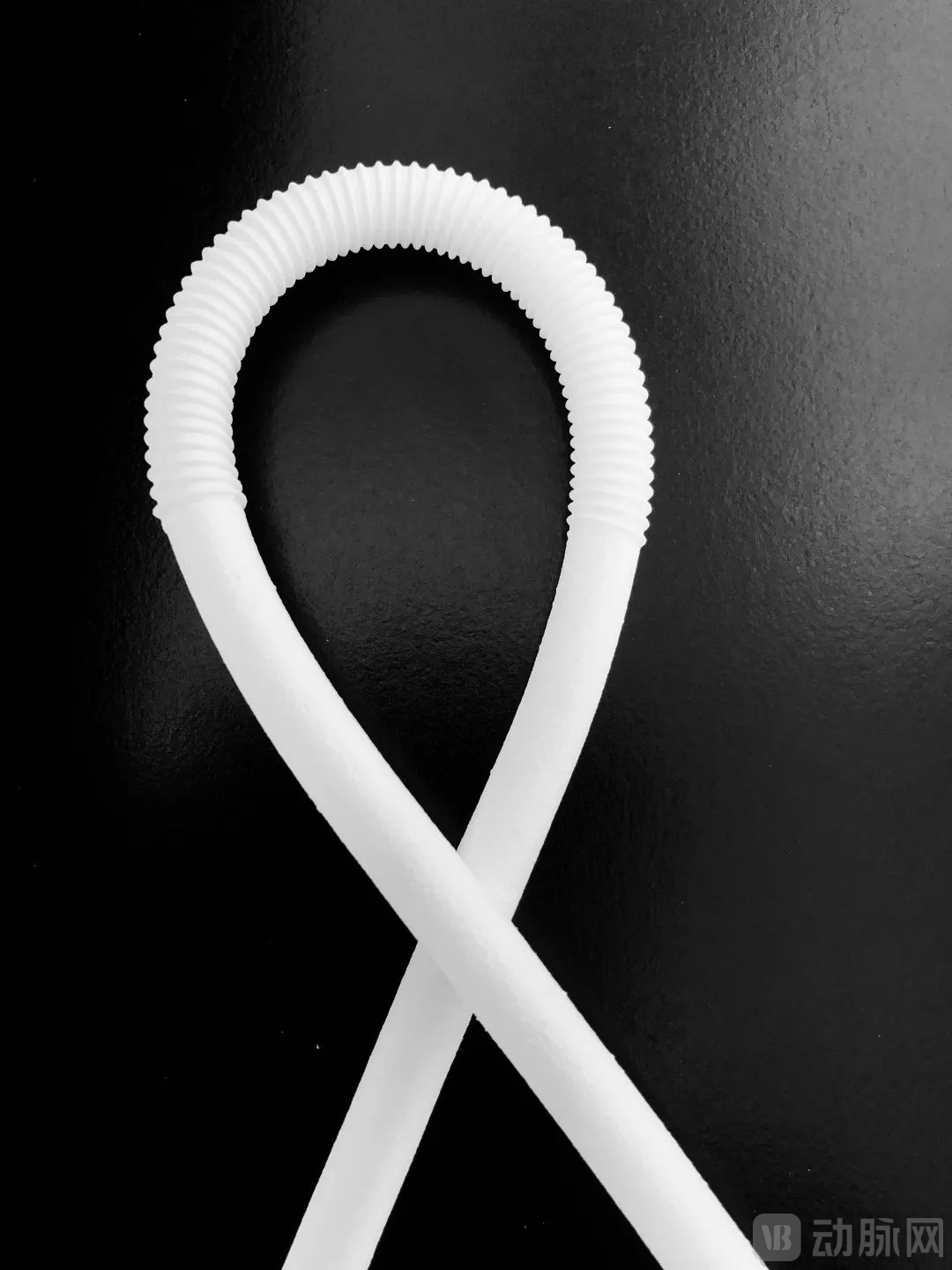
Data indicates that human blood vessels consist of three layers: the intima, media, and adventitia. The "trilayer biomimetic artificial blood vessel" developed and launched by Wuhan Youngsen Biotech Co., Ltd. similarly features a three-layer structure. Its inner layer is made of polyurethane, which offers superior hemocompatibility; the middle layer consists of polyester fabric to enhance the mechanical properties of the artificial blood vessel; and the outer layer is also composed of polyurethane. Polyurethane was selected for its excellent hemocompatibility, while polyester fabric was chosen because it provides the necessary mechanical support required for artificial blood vessels.
In terms of structure, Wuhan Youngsen innovatively adopted a three-layer bionic structure, endowing this artificial blood vessel with excellent compliance, resistance to needle-hole bleeding, effective anticoagulation properties, and non-adhesion to surrounding tissues.
In addition to innovations in structure and materials, Wuhan Youngsen Biotech Co., Ltd. has also performed surface modification and functionalization on this innovative blood vessel, loading it with anticoagulant drugs to improve its long-term patency rate. Currently, this product has become the only domestically produced artificial blood vessel that mimics the structure of human native arteries, holding a leading position internationally.
In December 2020, the polyurethane composite “three-layer biomimetic structured artificial blood vessel” successfully completed the world’s first clinical application at Fuwai Hospital, Chinese Academy of Medical Sciences, and subsequently initiated clinical trials at multiple institutions, including Fuwai Hospital (Chinese Academy of Medical Sciences), Tongji Hospital Affiliated to Tongji Medical College of Huazhong University of Science and Technology, Zhongnan Hospital of Wuhan University, Renmin Hospital of Wuhan University, West China Hospital of Sichuan University, Tianjin Chest Hospital, and Xijing Hospital.
Early-phase clinical controlled trials demonstrated that this artificial blood vessel exhibits excellent anti-seepage performance, reducing average surgical time by nearly 2 hours, decreasing postoperative thoracic drainage volume by two-thirds, and shortening the hospital stay from 9 days to 6 days.。
It can be said that this world-first product has disrupted the artificial vascular grafts dominated for over 60 years globally, which primarily used polyester and expanded polytetrafluoroethylene (ePTFE) as main materials, and has gained consistent recognition from both experts and patients in clinical practice.
In addition to the straight-type polyurethane composite "three-layer bionic structure artificial blood vessel," Wuhan Youngsen has also developed curved blood vessels, sinus-type blood vessels, and ring-reinforced blood vessels for dialysis.
Among these, the arc-shaped vascular graft employs an arched manufacturing process, designed with reference to the structure and function of the aortic arch, and is primarily used for the repair and replacement of lesions in the aortic arch. The dialysis-access vascular graft with rings incorporates a partial reinforcement ring structure, offering enhanced kink resistance, elasticity, and softness, as well as durability against repeated punctures; it also features drug-loading and controlled-release capabilities, making it mainly suitable for arteriovenous fistula procedures. The sinus-type vascular graft, a global first, creatively mimics the structure and function of the human aortic sinus, focusing on addressing the diagnosis and treatment of diseases involving lesions at the aortic root.
The ability to simultaneously deploy such a broad product portfolio and develop multiple world-first innovations stems from the fact that Wuhan Youngsen’s R&D team is a quintessential medical-engineering interdisciplinary team, composed of highly experienced experts in both clinical medicine and engineering.。
Among them, Ouyang Chenxi is a Chief Physician at Fuwai Hospital, Chinese Academy of Medical Sciences; a Foreign Member of the Russian Academy of Natural Sciences; a Visiting Professor at Stanford University in the United States; and holds a Ph.D. from Hannover Medical School in Germany, with extensive clinical experience. The R&D team members of Wuhan Youngsen are all senior R&D executives recruited from well-known domestic medical device companies, as well as masters and doctors in the field of biomaterials from various universities.
Ouyang Chenxi stated, “Only through the integration of medicine and engineering can the most perfect medical devices be created, and Wuhan Youngsen is a typical enterprise embodying this integration.”
Leveraging its outstanding R&D capabilities, Wuhan Youngsen Biotech Co., Ltd. consecutively undertook projects under the National Key R&D Program in 2017 and 2018, and this year won the Excellence Award at the finals of China’s inaugural Disruptive Innovation Competition.
Wuhan Youngsen Biotech Co., Ltd. aims to secure registration certificates for five vascular-related products within the next three years and achieve an initial public offering (IPO).