

Columbia University's Startup Ecosystem Secures $15.3 Billion in Funding Within a Year, Bridging Academia and Innovation
It’s graduation season once again. A new cohort of young people, laden with luggage and clutching their diplomas, stands at the crossroads of life. The majority of them choose to step out of campus and into the workforce.
and inColumbia University (hereinafter referred to as “Columbia”), some individuals have already launched their entrepreneurial ventures while still on campus, and it is Columbia University that has opened the door to a new dimension for them.
Jern Kunpittaya, a member of the Class of 2023 from Thailand, arrived on campus eager to become an engineer researching cryptocurrency. Unexpectedly, the Columbia Engineering entrepreneurship team gave him the push he needed, transforming the coding assignments in his laptop into a tangible product. “This far exceeded my expectations; before I came here, I was just a high school student with my nose buried in books!”

Columbia University Campus Landmark: The Statue of Alma Mater
In 2022, founder Jern Kunpittaya’s startup Edge Protocol, incubated at Columbia University, secured $1.75 million in seed funding, officially launching its operations.
Such thrilling entrepreneurial stories continue to emerge in front of Alma Mater, the iconic statue on the Columbia University campus—In the past 12 months alone, startup teams from Columbia University secured a total of $15.3 billion in investment.
Startup Myths Have Also Faced Backlash; Former Laggards Once Led the Pack
Columbia University’s commercialization index score in the 2017 report “The Concept of Business: Best Universities for Technology Transfer” published by VCBeat InstituteSecond. And ten years ago, the then-Mayor of New York CityMichael Bloomberg(Michael Bloomberg) has repeatedly criticized Columbia University in public for failing to leverage its advantageous resources and for remaining stagnant in innovation and entrepreneurship.
In 2008, the United States experienced a financial crisis that severely impacted New York City’s economy. Mayor Michael Bloomberg launched a series of practical initiatives to encourage entrepreneurship, introducing an action plan for technological innovation and startup development centered on the city’s traditional strengths in sectors such as finance, media, and life sciences.
Columbia University is located in the heart of New York City, with the world’s financial center at its back. It should have ridden this momentum to rise, so why did it fail to keep pace and miss this prime opportunity?
Prior to this, Columbia University’s research findings had yet to move beyond the laboratory:Columbia University’s Scientific Research Division Has Not Yet Established Extensive Collaborative Networks with External Partners, for example, cross-disciplinary collaboration with business schools is relatively limited; communication networks among scientists, engineers, entrepreneurs, venture capitalists, and technology transfer office personnel have not been established; and the entrepreneurial culture is not sufficiently vibrant.
These have become impediments to entrepreneurship development at Columbia University, primarily manifested in two aspects:First, the high investment in knowledge R&D has not significantly promoted the commercialization of research outcomes; second, measures to facilitate knowledge commercialization have been less than ideal.
Take New York City’s most competitive sector—life sciences—as an example. Although New York City is the second-largest recipient of National Institutes of Health (NIH) funding in the United States, securing over $1 billion annually, it lags behind cities such as Boston and San Diego in the number of biotechnology companies. In the first half of 2008, only 11 biotech firms in New York City received venture capital investment, significantly fewer than the 47 in Silicon Valley and the 38 in Boston.
During this period, Columbia University boasted the eighth-ranked research medical school in the United States. Despite having a research center dedicated to environmental technologies, clean-tech companies were few and far between, and they failed to attract venture capital interest.
Furthermore, although Columbia University has set aside dedicated, ongoing proof-of-concept funding on campus and achieved certain results, it still lags far behind the MIT Deshpande Center for Technological Innovation and the UC San Diego von Liebig Entrepreneurism Center.
“Good universities have no walls,” says David Hochman, an expert in regional economic development.The reason is that the initiatives in Massachusetts and San Diego extended beyond university boundaries to engage with external entrepreneurs, whereas Columbia University merely leveraged internal resources for proof-of-concept without establishing connections with New York City’s resources.Contact.
When advanced technologies remain isolated in laboratories, it takes people to build bridges that connect them to reality.
The Underdog’s Comeback: Cultivating Entrepreneurial Acumen Internally, Fostering a Sci-Tech Innovation Culture Externally
Despite criticism from all quarters, Columbia University could not refute the claims, as the cold, hard data spoke for itself. Everyone was questioning:Why Is Such a World-Class University So “Stretched Thin” in Innovation and Translation?
Columbia University, having acknowledged the reality, did not simply “give up”; instead, it swiftly implemented sweeping reforms in innovation and translation. So, what exactly did these reforms entail?
Step 1: Entrepreneurship Education—An Introductory Course for Future CEOs
“Startups in America 2017” states: Regardless of race, educated adults are more likely to start businesses than their peers without formal education. To stimulate entrepreneurial awareness among potential entrepreneurs, help them acquire the knowledge needed for entrepreneurship, and enhance their entrepreneurial capabilities, Columbia University implements entrepreneurship education through various forms, including entrepreneurship courses, networking events, practical projects, and startup competitions.
With the collaborative support of various schools, including the business school,Columbia University offers over 100 courses on the theory and practice of entrepreneurship,Inter-college collaboration within the university has been established. Theory-oriented entrepreneurship courses are primarily offered as electives to students across the entire university, with faculty comprising both internal expert professors and external specialists from relevant fields, ensuring a diverse range of instructors. Practice-oriented entrepreneurship courses are mainly targeted at all faculty members and students of the university, and are also open to alumni.
In addition to more than 100 theoretical courses covering various stages of entrepreneurship, Columbia University’s entrepreneurship education emphasizes practical experience. Take“Lean LaunchPad Course”From the perspective of course design: First, team members do not write complex business plans; instead, they use the Business Model Canvas to summarize a series of untested assumptions.
Second, by employing the “get out of the building” approach, team members solicit feedback from potential users, buyers, and partners on the business model, covering aspects such as product features, pricing, distribution channels, and customer acquisition strategies. Finally, they refine their assumptions and redesign the product based on the collected customer insights.
The course is firmly grounded in consumer needs, making it highly practical and down-to-earth.
Step 2: Extensive Outreach of Entrepreneurial Incentives
Columbia University Annually Awards a Total Sum in Prizes to Startups$6.4 million, covering a wide range of fields and projects. Columbia University's entrepreneurship competition consists of two major categories:For All Students and Alumni of the Universitythe Columbia Entrepreneurship Challenge, the Technology Entrepreneurship Challenge, the Public Policy Entrepreneurship Challenge, andFor All Undergraduate StudentsUndergraduate Entrepreneurship Challenge.
The diverse and widely accessible competition prize money, as one of the sources of incubation funding, serves as important seed capital for Columbia University faculty and students, providing basic financial support for their entrepreneurial activities.
Nthabiseng Mosia, a member of the Class of 2016 at the School of International and Public Affairs (SIPA), has long been concerned about electricity access in sub-Saharan Africa. Together with her classmates Eric Silverman and Alexandre Tourre, she submitted a business plan for an energy supply venture addressing Africa’s power challenges to the 2016 SIPA Dean’s Public Policy Challenge, part of the Columbia University Venture Competition. They won the competition, receiving a $25,000 prize.
Nthabi used the prize money to transform her entrepreneurial dream from a concept on paper into field research conducted in Sierra Leone in December 2015.
Step 3: Comprehensive Incubation Support for Startups
In implementing its entrepreneurial support initiatives, Columbia University collaborates extensively with external organizations, including local governments, businesses, and peer institutions, to provide multiple layers of incubation support for entrepreneurs’ ventures.
Opened in June 2014Columbia Startup Lab (CSL), shared with WeWork, the largest provider of co-working spaces in New York City, is a testament to Columbia University’s long-standing commitment to innovation, collaboration, and entrepreneurship.
Columbia Startup Lab (CSL)Designed to provide entrepreneurs with more affordable, high-quality startup spaces, thereby helping them overcome the challenges of limited physical space and costly office rentals. Currently, Columbia University’sCSL has entered 59 companies founded by alumni entrepreneurs.
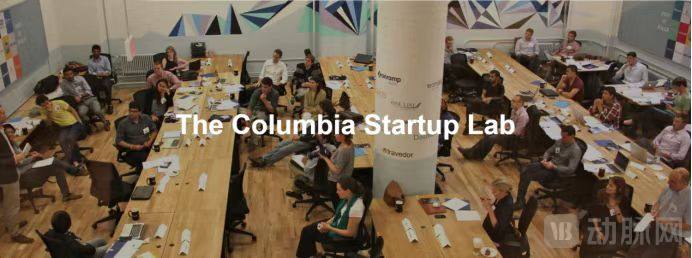 (Image source: Columbia University official website)
For “novice” entrepreneurs unfamiliar with the initial stages of launching a startup, Columbia University offers entrepreneurial consulting and mentoring services from two perspectives:On the one hand, it provides consulting and mentoring to the university’s start-ups by leveraging studio-based projects.
The Columbia Startup Law Clinic, a joint initiative by Perkins Coie and Columbia Law School, enables law students to assist the firm’s attorneys in providing free legal consulting services to startup teams comprising faculty, students, and alumni.
On the other hand, Columbia University establishes collaborative partnerships with experts from various external fields through its Entrepreneur-in-Residence program. This connectivity with external experts is a win-win initiative: it not only helps novice entrepreneurs get started quickly, but also enables these experts to acquire valuable resources such as information and professional networks while serving New York City’s startups, thereby enhancing their capacity to better support Columbia University.
Introduction to Jern mentioned at the beginning of the article:“Entrepreneurship has become an adjunct to our curriculum, which means that our theoretical knowledge is linked to the workplace, or in other words, what happens in the laboratory does indeed translate into real life.”
The aspiring “Stars of Tomorrow” are putting their learning into practice, poised to shine brightly. Columbia University’s motto is “In lumine Tuo videbimus lumen” (“In Thy light shall we see light”). It is hard to say precisely who is borrowing whose light among universities, academic researchers, the local entrepreneurial ecosystem, and society at large. Yet as a new era of technological innovation dawns, within Columbia’s sphere we already witness a luminous synergy where industry, academia, research, and capital mutually illuminate one another.