

Shuangbo-Led Team Launches Quandou Health to Build China's Largest Digital TCM Decoction Pieces Platform and Files IPO Prospectus
Traditional Chinese Medicine (TCM) has always been a valuable asset in China’s traditional culture, playing an important role in different historical periods. As concepts such as “medicine and food share the same origin” and “preventive treatment of disease” gradually gain popularity, the market size of TCM continues to expand.
As the saying goes, “Only with high-quality medicinal materials can there be high-quality medicines.” The quality of traditional Chinese medicinal (TCM) materials and TCM decoction pieces is a decisive factor in the efficacy of TCM diagnosis and treatment. However, due to the wide range of sources for TCM materials and the diversity of their distribution channels, it is difficult to ensure the quality of TCM decoction pieces.
In light of this, Dr. Yu Rong, Chairman of Tianyi Group, and Dr. Wu Peiying, Vice President of the Group, have jointly founded “Quandou Health” to build China’s largest digital platform for the traditional Chinese medicine (TCM) industry. The initiative aims to support the development of a unified national market in China by providing resource information, market transaction services, and industry-specific solutions for TCM decoction pieces, thereby enhancing standardization and product quality across the sector.
Recently, VCBeat interviewed Yuan Henge, Vice President of Quandou Health, who shared insights into the company’s strategic business layout and the digital transformation pathway of the traditional Chinese medicine (TCM) industry.
The founding team of Quandou Health can be described as "luxurious."
One of the founders is a renowned investor in the big health industry, an investor in multiple domestic and overseas listed companies, and the Founder and Chairman of Shanghai Tianyi Investment Group.Yu Rong, who also holds a Doctor of Medicine in Traditional Chinese Medicine from the China Academy of Chinese Medical Sciences; the other co-founder is a senior executive at Shanghai Jahwa Group, Shanghai Pharmaceuticals Group, and Shanghai Tianyi Investment Group.Wu PeiyingHe is also a Ph.D. in Chinese Materia Medica from Shanghai University of Traditional Chinese Medicine and serves as a doctoral supervisor and professor.
Vice President of the Company, Yuan Henge, graduated from the College of Business at the University of Nebraska with a Bachelor’s degree, Magna Cum Laude. Former marketing and operations expert at Tencent and Sina, with over 15 years of extensive industry experience in internet operations.Cai Junde, Director and CFO of the CompanyWith over 20 years of experience in financial management, investment, and supply chain management for listed companies, well-versed in the control systems and corporate governance of publicly traded entities.
When asked why he joined Quandou Health, Yuan Henge stated that, as a veteran of the internet industry, he keenly recognized that the era of industrial internet has arrived. With national macro policies supporting the traditional Chinese medicine (TCM) industry and growing public awareness of health and wellness, the integration of modern internet technologies with traditional TCM is sure to spark remarkable synergies.
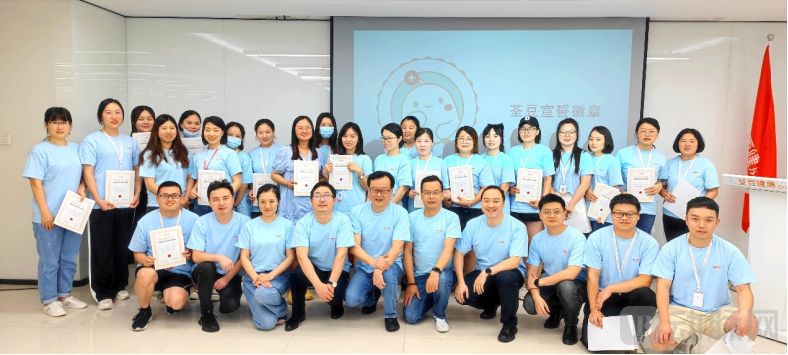
Quandou Health Team
The company is named “Quandou Health,” embodying the aspiration that “may there be no suffering from disease in the world, even if it means letting the medicines on the shelves gather dust.” It reflects a heartfelt wish for universal health, as “Quandou” sounds like “quan dou” (meaning “all”) in Chinese. For the Quandou Health team, building a socially responsible enterprise dedicated to safeguarding public health will naturally lead to commercial success.
The establishment of the core team marks the company’s full-scale launch of technological R&D and product iteration. Quandong Health targets the niche market of traditional Chinese medicine (TCM) decoction pieces.
According to Yuan Henge, traditional Chinese medicine (TCM) decoction pieces refer to finished pharmaceutical products processed and prepared by GMP-certified TCM decoction piece manufacturers under the guidance of TCM theory, which can be directly used for prescription dispensing or formulation. They also serve as raw materials for manufacturers of proprietary Chinese medicines. According to data provided by Quandou Health, the market size of TCM decoction pieces in China reached RMB 340 billion in 2022. Supported by favorable policies, the industry has maintained an average annual growth rate of 10%, and the market size is expected to exceed RMB 500 billion by 2026. Yuan Henge noted that the fragmented, small-scale, and disordered structure of the TCM decoction pieces industry chain has led to widespread difficulties across the sector, characterized by generally low efficiency, high costs, and frequent quality issues. At the source, the small-scale and geographically dispersed nature of TCM herbal cultivation, coupled with the inability to command premium prices for high-quality products, has left farmers neither motivated nor capable of producing high-quality herbs. This has resulted in a focus on quantity over quality, persistent challenges in addressing pesticide residues and heavy metal contamination, and falsified quality traceability records. The lack of price premiums for superior quality, exacerbated by information asymmetry, has led to unregulated planting practices among farmers, creating cyclical boom-and-bust patterns (“three good years followed by three bad years”). Consequently, farmers struggle to generate profits, hindering the revitalization of herb-growing regions.
In the production of prepared herbal slices (Yinpian), in addition to the Chinese Pharmacopoeia, each province and municipality has its own processing specifications, creating significant regulatory barriers. There is a lack of nationwide, unified quality grading standards for Yinpian products. The industry lacks leading enterprises and internal specialization; companies strive for product breadth rather than excellence, resulting in clustered production of homogeneous goods and disorderly price competition. This further leads to industry fragmentation and lack of scale, with overall backward and excessive capacity. Consequently, Yinpian enterprises generally face high costs, low efficiency, abnormally high quality risks, and operational difficulties.
For various types of medical institutions, leading hospitals face high drug prices, where kickbacks and rent-seeking behaviors prevent high prices from translating into high quality, and may even expose them to quality risks. Long-tail medical institutions struggle with operational difficulties, driving a demand for low-priced drugs; their procurement channels are chaotic (e.g., sourcing from illegal channels such as traditional Chinese medicine markets), resulting in substandard medication quality, the proliferation of counterfeit and inferior drugs, and significant operational risks. The overall lack of market mechanisms has led to a "Gresham's Law" effect, where bad money drives out good.
Ultimately, this prevents grassroots consumers from purchasing qualified and reliable traditional Chinese medicine (TCM) products at affordable prices, eroding their confidence in TCM and undermining its broad public foundation. Meanwhile, mid-to-high-end consumers are unable to access high-quality TCM products even at premium prices, compromising therapeutic efficacy and diminishing trust among this demographic. As a result, the TCM industry may miss its best opportunity for development, leading to the scenario where “TCM perishes due to the failure of its herbal medicines.”
One of the key reasons for the aforementioned issues lies inGaps in Industry Standards. In response to this situation, Quandong Health has leveraged its strengths to sign agreements with multiple research institutions—including the Sichuan Academy of Traditional Chinese Medicine Sciences, the Institute of Medicinal Plant Development of the Chinese Academy of Medical Sciences, Shanghai University of Traditional Chinese Medicine, and Chengdu University of Traditional Chinese Medicine—as well as numerous domestic manufacturers of traditional Chinese medicine (TCM) decoction pieces. Together, they are jointly developing the “Hanfang Zhonghe” quality grading standards for TCM decoction pieces, which are based on the Chinese Pharmacopoeia. The company has essentially established the industry’s only system that builds upon the Chinese Pharmacopoeia and focuses on big data regarding medication use in primary TCM medical institutions across China.1000+ Quality Grade Standards for Traditional Chinese Medicine Decoction Pieces, and will continue to undergo iterative optimization, with integrated application across product quality specifications for 200 upstream manufacturing enterprises and medication guidance for 100,000 downstream healthcare institutions.
Meanwhile, with the support of the China Association of Traditional Chinese Medicine, this standard is actively promoting the certification of group standards for traditional Chinese medicine (TCM) decoction pieces. There are plans to submit it as an industry standard in 2023 and as a national standard in 2025, thereby facilitating the healthy, standardized, orderly, and sustainable development of the industry.
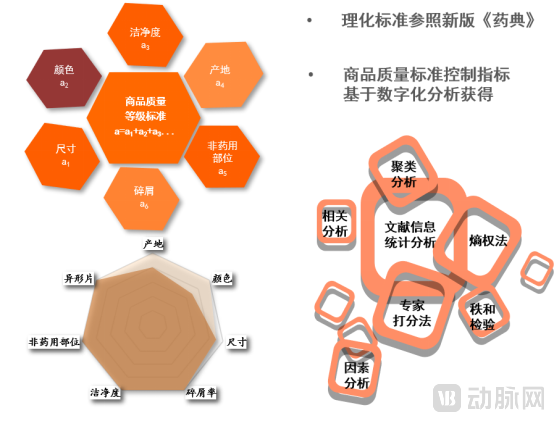
Partial Dimensions of the Quality Grading Standards for Traditional Chinese Medicine (TCM) Decoction Pieces, Jointly Formulated by Quandou Health and Industry-Academia-Research Institutions
With the support of industry-grade product standards, ensuring supplier quality, establishing warehousing facilities, and maintaining stable logistics have become even more stringent challenges for Quandou Health.
In terms of supplier quality control, Quandong Health has distilled a rigorous selection methodology known as the “Four Gates of Life and Death.”
Qualification Gateway:QuanDou Health verifies the qualifications and checks for any adverse records of suppliers before onboarding them.
Production Gateway:Quandou Health will conduct assessments of decoction piece manufacturers’ production facilities and equipment, manufacturing processes, production personnel, and process management to ensure suppliers’ production capacity and quality control capabilities.
The Gate of Laboratory Medicine: Quandong Health recognizes that laboratory testing is generally the weakest link for manufacturers of prepared herbal slices. To address this, Quandong staff conduct on-site audits at suppliers’ facilities. They carefully evaluate whether the quantity and variety of testing equipment and facilities are adequate, whether staffing levels are appropriate, and whether technical competencies are sufficient, thereby ensuring the authenticity of quality control for prepared herbal slices and guaranteeing that the quality of finished products remains controllable.
Gate of Capabilities:QuanDou Health evaluates whether suppliers possess the production responsiveness required to meet its standards, demanding not only rapid response and guaranteed supply volumes but also the consistent stability of herbal slice quality. Additionally, QuanDou Health assesses manufacturers’ capability to focus on product varieties aligned with future industry trends, thereby fostering their scaled and intensive manufacturing capabilities.
With the stability of the supply side for traditional Chinese medicine (TCM) decoction pieces ensured, resolving warehousing and distribution challenges has become another major hurdle.
“Setting up multi-warehouse networks is not challenging in terms of warehousing itself, but rather depends on whether regulatory authorities grant operational approval,” Yuan Henge explained. Due to persistent quality issues over the years, local drug administrations across China have implemented stringent review processes for traditional Chinese medicine (TCM) decoction pieces.
Through the team’s relentless communication and a strong reputation for zero quality risks during operations, Quandou Health has embarked on its nationwide warehousing expansion, starting from Chongqing.
Currently atChongqing (Southwest Warehouse), Xi'an (Northwest Warehouse), Zhengzhou (Central China Warehouse), Jinhua (East China Warehouse)Complete the diamond-shaped layout, expected to be finished by the end of the year.National 8-Warehouse Layout, ensuring next-day delivery warehousing and distribution experience for a vast base of grassroots customers across China.
“Many people perceive us as an e-commerce enterprise specializing in traditional Chinese medicine (TCM). In reality, our ultimate ambition lies in building an industrial internet for the TCM sector and driving industrial digitalization,” explained Yuan Henge with a smile. E-commerce serves as a rich vein of data; by operating its e-commerce platform, Quandou Health can acquire and accumulate authentic, high-value industry data. These data assets will empower Quandou Health to provide more refined and diversified support services to stakeholders across the upstream and downstream of the industry chain. For instance, the company is already leveraging platform-based big data to offer upstream clients insights into user demand. Looking ahead, Quandou will further drive the digital transformation of upstream enterprises by digitizing their business operations, production processes, and facilities. This will establish digitalized production endpoints integrated with Quandou Health’s data ecosystem. By upgrading these facilities into flexible, intelligent systems, the company aims to achieve smart manufacturing, thereby enabling rapid, cost-effective responses to the personalized demands of the long-tail market for TCM decoction pieces.
“The core of a unified national market is to break down regional barriers, enable standardized cross-regional competition, and eliminate outdated production capacity. This allows the market to drive leading enterprises to grow stronger and larger, thereby enhancing their capacity to further invest in innovation and R&D, and fostering a virtuous cycle of high-quality development across the entire industry.”
According to Yuan Henge, the production of traditional Chinese medicine (TCM) decoction pieces has long been characterized by regional fragmentation, with an average of over 70 processing plants per province. The lack of differentiated production has plunged major manufacturers into protracted price wars, resulting in a “bad money drives out good” market dynamic. Quan Dou Health aims to reshape the industry landscape by transforming more than 2,000 small, scattered, and disorderly competitors into 200 high-quality TCM decoction piece manufacturers that engage in both competition and cooperation, each leveraging focused product portfolios.
Currently, the company has established a presence with coordinated operations between Chengdu and Chongqing and a nationwide layout, completing the construction of its Chengdu High-Tech Headquarters and its Chongqing Shapingba Base. It is also advancing collaborations with research institutions, universities, and enterprises to drive digital transformation in the industry. Partnering universities and institutions includeSichuan Provincial Academy of Chinese Medical Sciences, Shanghai Pharmaceuticals, China Association of Traditional Chinese Medicineetc., with areas of collaboration including the development of quality grade standards for traditional Chinese medicine (TCM) decoction pieces, optimization of manufacturing processes for TCM decoction pieces, digital production, intelligent manufacturing, and the development of intelligent commercial technology systems for data integration across the TCM decoction pieces industry.
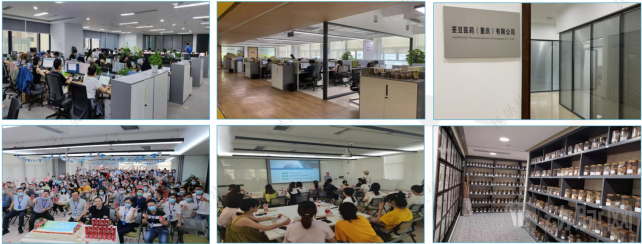
Real Photos of Quanda Health's Corporate Environment
From the current competitive landscape, the niche segments within the digitalization of the traditional Chinese medicine (TCM) decoction piece industry are just getting started.The company currently has no strategic-level competitors.
Looking ahead, the company aims to establish a digital platform for the traditional Chinese medicine (TCM) decoction pieces industry within ten years, thereby facilitating the development of a unified national market in China, empowering industrial upgrading and high-quality development, and ultimately providing diversified services to various stakeholders in the TCM sector.
Quan Dou Health currentlyCurrently Conducting Series A Financing, primarily used to build digital technology systems and digital demonstration factories, and to continuously strengthen the company's core competitiveness.