

MedShine Innovation Reports 50% Annual Business Growth, Empowering MedTech Innovation with Integrated CRO+CDMO Services
From its pilot launch in the Shanghai Free Trade Zone in 2017, to the expansion of the pilot program to 21 provinces, autonomous regions, and municipalities directly under the Central Government in 2019, and finally to its incorporation into the top-level legal framework for the medical device industry, the Regulations on the Supervision and Administration of Medical Devices (2021 Revision), in 2021, the Marketing Authorization Holder (MAH) system for medical devices has now been in place for five years.
After five years of incubation, accumulation, and explosive growth, the Marketing Authorization Holder (MAH) system for medical devices is finally exerting its maximum influence and driving the development of China’s medical device industry.
For example, an increasing number of innovative R&D enterprises are opting to engage third-party medical device CRO/CDMO companies to provide one-stop pre-market services, including market research, risk assessment, registration sample manufacturing, testing and inspection, clinical trials, quality management system establishment, and regulatory submission. It is understood that these innovative R&D enterprises, by outsourcing pre-market regulatory submissions to third-party CRO/CDMOs, can devote more resources to product technology development and improvement, significantly reducing overall costs; moreover, the product registration timeline is substantially shortened, thereby enhancing their market competitiveness.
Furthermore, bolstered by the implementation of the Medical Device Registrant System, the medical device CRO/CDMO market has witnessed a new wave of dynamic growth. A large number of CRO firms and manufacturers have been drawn into the sector, transforming and upgrading their business offerings. Representing established, seasoned medical device CRO companies, Medicalstrong was among the first in China to launch one-stop pre-market regulatory consulting services combining CRO and CDMO models during the pilot phase of the Medical Device Registrant System. Meanwhile, enterprises newly founded between 2019 and 2022 are accelerating their expansion into the medical device CRO/CDMO business.
These established and newly founded medical device CRO/CDMO companies, acting as the tentacles of the Marketing Authorization Holder (MAH) system, are extending the influence and benefits of this system to a broader range of innovative medical device R&D enterprises. With the full liberalization of the MAH system for medical devices, the medical device CRO/CDMO market is experiencing rapid growth.
Taking Medicalstrong as an example, this article explores the changes in the medical device CRO/CDMO industry and domestic medical device innovation models five years after the full implementation of the Medical Device Registrant System.
In December 2017, the Shanghai Food and Drug Administration released the “Implementation Plan for the Pilot Program of the Medical Device Registrant System in the China (Shanghai) Pilot Free Trade Zone,” taking the lead in proposing the “decoupling” of medical device registration from production, thereby making it possible to engage in “sample development and scaled-up contract manufacturing” of medical devices.
The release of this plan enabled Medicalstrong to recognize the development opportunities and potential in the third-party R&D and manufacturing outsourcing market. The company promptly decided to expand its CDMO business, and in early 2018, it restructured, realigned, and upgraded its corporate strategy. By extending upstream along the industry chain and leveraging its strengths in CRO services, Medicalstrong broke down the boundaries between R&D, regulatory registration, clinical trials, quality systems, and manufacturing. It became the first in the market to launch a “one-stop pre-market regulatory consulting service for medical devices integrating CRO and CDMO.”
A review of Medicalstrong’s development trajectory and performance over the past five years amply demonstrates that this strategic adjustment was both correct and highly forward-looking. Today, Medicalstrong’s CRO and CDMO businesses are advancing in tandem like a dual-engine drive, accelerating their momentum.
He Xiaochen, Chairman and General Manager of Medicalstrong, stated: “Over the past five years, Medicalstrong has maintained its overall business50% ofCAGRTo date, we have cumulatively assisted clients in obtaining over 1,500 registration certificates for imported and domestically produced medical devices, completed or currently executed more than 300 clinical trial projects, and served over 500 global partner clients. Behind these figures, we observe a high frequency of repeat purchases by key accounts and new client referrals from existing customers, which also reflects the year-on-year improvement in client satisfaction with our CRO and CDMO services and our growing industry reputation.”
It is understood that Medicalstrong’s CRO services encompass product testing, animal studies, clinical trials, preparation of clinical evaluation reports, quality management system consulting, and regulatory submission support. With the launch of its CDMO business, these two service lines complement and reinforce each other, enabling seamless synergy and mutual conversion, thereby driving the company’s overall rapid growth.
First, through its CDMO business, Medicalstrong can engage with clients during the product research or project initiation phase, helping them assess and analyze product risks from the outset, thereby anticipating and mitigating potential issues in advance;
Second, the CDMO business has stimulated greater customer demand. Medisstrong offers corresponding solutions for consulting needs at all stages prior to the market launch of medical device products, eliminating the need to engage multiple agencies separately. Meanwhile, the range of client types served has become more diverse, including not only manufacturers but also research institutes, clinical institutions or physician groups with R&D capabilities, medical distributors urgently seeking transformation due to the Two-Invoice System, and enterprises adopting the License-in model.
Third, enhanced customer stickiness. Previously, the business service cycle essentially ended once clients obtained their medical device registration certificates. Now, Medicalstrong can also assist clients with front-end product R&D translation, development validation, prototype production, and even scaled-up manufacturing after market launch.
Fourth, resources from clinical institutions and experts have been restructured and fully integrated. Many clinical experts and institutions are well-versed in clinical application scenarios and needs, possess technical R&D capabilities, and urgently need to translate these technologies into products. Medicalstrong has accumulated substantial resources during the clinical trial services phase, enabling it to effectively integrate and leverage these assets to support clinical institutions and experts in product development, regulatory submission, and commercial production, thereby achieving mutual benefits for all parties involved.
Medicalstrong’s CDMO services encompass technology transfer, production of registration samples, establishment of quality management systems, and large-scale contract manufacturing, covering product areas such as active medical devices, passive medical devices, implantable medical devices, sterile medical devices, and in vitro diagnostic reagents.
Medicalstrong’s CDMO business is independently operated by its wholly-owned subsidiary, Bangxun Pharmaceutical Technology (Shanghai) Co., Ltd. After nearly five years of planning and construction, along with in-depth research and analysis of the Medical Device Registrant System and the entrusted production model, the platform has completed the development of its infrastructure. This includes 3,000 square meters of ISO Class 10,000 and ISO Class 100,000 cleanrooms, production areas, and R&D validation laboratories in Shanghai and Wuxi, all of which have been sequentially put into operation.
Furthermore, leveraging its hardware infrastructure and profound understanding of regulatory requirements, Medicalstrong has collaborated with domestically leading research institutes and expert resources to establish a library of original products, jointly exploring the path of “contracted R&D” for innovative products.
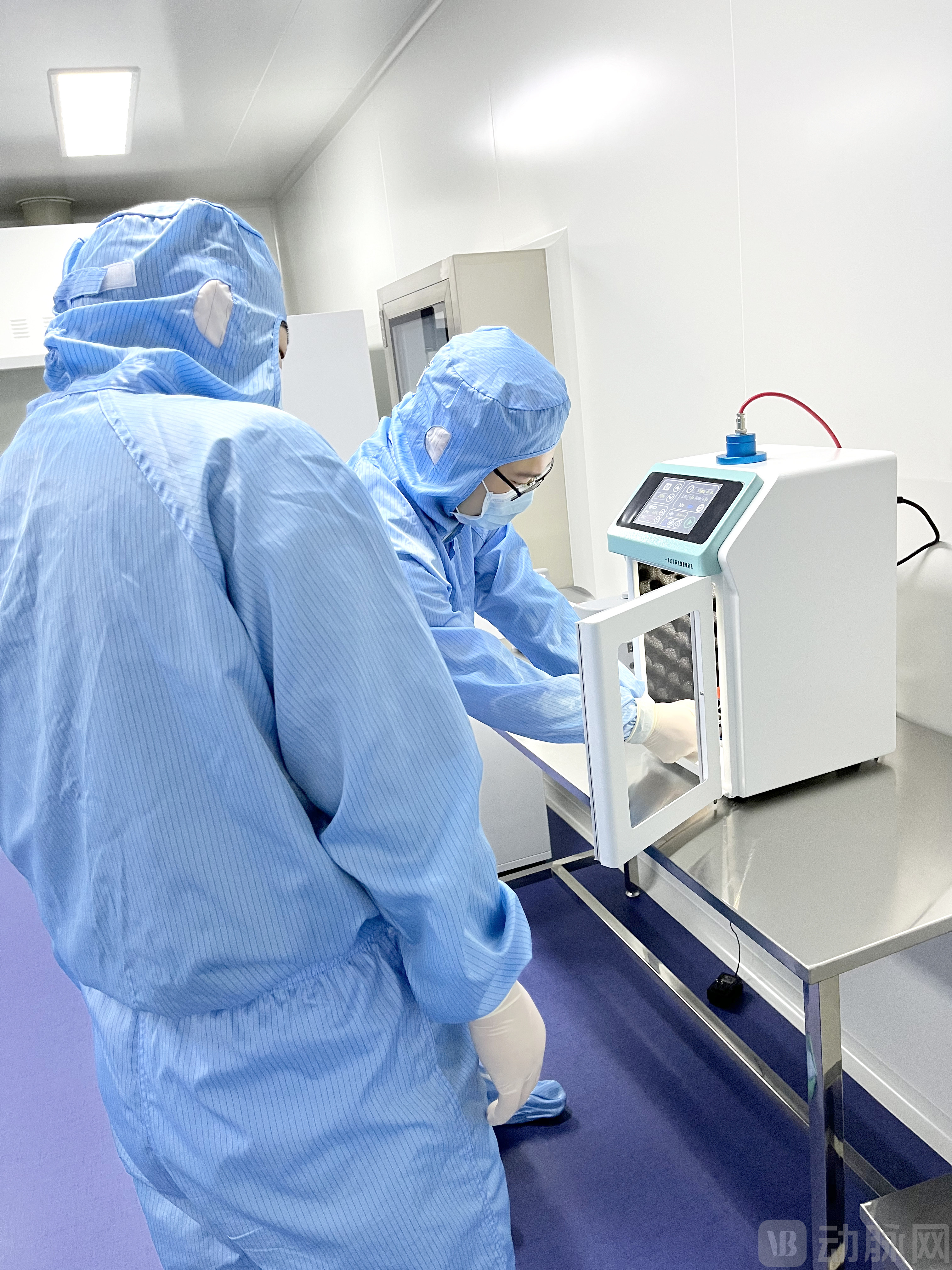
It is reported that the platform has signed and is currently executing more than 20 contracted manufacturing orders, with CDMO business revenue exceeding RMB 20 million in the first half of 2022. This leapfrog development and rapid performance growth are attributed to Medicalstrong’s accumulated client base and monetization capabilities, flexible cooperation models, and professional services.
He Xiaochen stated, “Compared with the traditional R&D and production model for medical devices, the CDMO model truly helps enterprises, especially startups, address key pain points such as reducing overall costs, accelerating the translation of product technologies, and shortening time-to-market.”
Taking Weimai Medical, a partner client of Medicalstrong, as an example, Weimai Medical was established in 2021. It is the first medical device company in China to focus on energy-based ablation therapy systems as its core technology, providing comprehensive minimally invasive and non-invasive energy medicine solutions. Currently, the products that Weimai Medical is collaborating with Medicalstrong’s CDMO service platform include its first R&D project based on patented technology—the endovenous radiofrequency closure system—and its self-developed Class III medical aesthetic products.
Among these, the endovenous radiofrequency ablation system passed inspection by the Medical Device Quality Supervision and Inspection Center under the National Medical Products Administration (NMPA) in March 2022, obtained a medical device inspection report, successfully completed animal studies, and is poised to initiate clinical trials. Since project inception, execution teams from Medicalstrong’s regulatory testing, quality management system, clinical trials, and CDMO divisions have been involved throughout the process, providing comprehensive pre-market consulting services that included production of type-testing samples, quality management system guidance, regulatory testing, and clinical trial support.
According to He Xiaochen, Weimai Medical completed the aforementioned milestones at least 1–1.5 years ahead of schedule by adopting the CDMO model, compared with the traditional approach.
The founder of Weimai Medical stated: "Weimai Medical has always adhered to a research and development path that integrates medicine and engineering. Our core team consists of clinical experts from Tsinghua University, Columbia University in the United States, and Peking University Health Science Center, who are well-versed in clinical application needs and hold multiple technical patents. If we were to follow the traditional route by building our own manufacturing facilities and teams, not only would our R&D efforts be diluted and constrained by various operational matters, but we would also need to venture into unfamiliar territory to study regulatory requirements. Most importantly, the company's internal funds could only support advancing one product to the type testing or clinical trial initiation stage. However, by collaborating with Medicalstrong through its CDMO model, we can simultaneously push 2–3 products through pre-market registration submissions."
Leveraging its technological patents and promising clinical application prospects, coupled with smooth progress in product commercialization and regulatory submissions, Weimai Medical has attracted significant investor interest, completing two rounds of financing within six months. Among Medstrong’s CDMO clients, there are numerous start-up innovative R&D enterprises similar to Weimai Medical.
Distinct from similar CRO/CDMO platforms in the market, Medicalstrong’s unique advantage lies in its one-stop CRO+CDMO service model, which has enabled it to stand out in the third-party outsourcing market in the short term, achieve annual revenues exceeding RMB 10 million, and realize leapfrog growth.
First, Medicalstrong has been dedicated to the medical device CRO industry for over a decade, establishing solid industry advantages and a strong reputation in business consulting areas such as regulatory submission and clinical trial research, thereby laying a robust customer and brand foundation for the market expansion of its CDMO business;
Secondly, Medicalstrong has established a professional team comprising experts with specialized backgrounds in R&D, validation, quality control, and production, with all technical personnel possessing 4–5 years of industry experience. Meanwhile, the company has implemented corresponding training systems and incentive mechanisms for talent development, emphasizing sustainable workforce growth. It remains fully prepared to deliver high-quality services to clients with strong professional competence and a dedicated service attitude.
Furthermore, Medicalstrong has accumulated a portfolio of high-quality raw material supply resources. It has currently established exclusive strategic partnerships with Grade-A suppliers of key raw materials, such as magnetic microspheres and biochemical enzymes, thereby helping customers control costs while ensuring product quality.
Finally, to address the funding challenges faced by startups, Medicalstrong has launched collaborative support initiatives with government agencies, enabling signed platform clients to receive targeted R&D subsidies covering 15%–20% of their costs.
The medical device CDMO market is currently experiencing rapid growth, but how long can this growth sustain?
We believe that the medical device CDMO market will maintain robust long-term growth, driven by the development of China’s medical device industry and the rise of domestic innovation.
Data released by iiMedia Research shows that the market size of China's medical device industry will reach RMB 1.2529 trillion in 2022. In mature overseas markets, the R&D investment of medical device companies accounts for about 15%-20% of their total revenue. Calculated based on an average of 17%, it can be inferred that:China’s medical device companies will invest over RMB 213 billion in R&D annually. If 20% of this amount is allocated to purchasing medical device CRO/CDMO services, the market size for medical device CRO/CDMO will exceed RMB 40 billion.
Frost & Sullivan projects that the compound annual growth rate (CAGR) of China’s medical device industry from 2020 to 2025 will be 10.9%, continuing to outpace the global average. It is anticipated that, driven by the rapid development of China’s medical device sector and increasing R&D investment ratios, the market size for medical device CDMOs will continue to expand.
Meanwhile, China’s medical device industry is transitioning from “domestic substitution” to “domestic innovation,” with a strong emphasis on “originality,” thereby aligning domestic technologies with the world’s most advanced counterparts. For instance, China’s vascular interventional surgical robots are among the global leaders, and its peripheral drug-coated balloons are at the forefront of worldwide development.
To advance domestic innovation, it is essential to achieve breakthroughs in technology and underlying operational logic, thereby accelerating the commercialization of innovative patents. Driven by the irreversible trend of domestic innovation, increased research funding, and a growing number of technology transfer projects, more original and first-of-their-kind Chinese products are being launched. This, in turn, is fueling the growth of the medical device CRO/CDMO outsourcing industry. However, this development also imposes higher and more stringent requirements on local CRO/CDMO providers in terms of contract execution capabilities, service quality, and team expertise.
He Xiaochen also stated that the medical device CRO/CDMO outsourcing service industry is a high-tech, knowledge-intensive sector characterized by multidisciplinary integration. A shortage of professional talent constitutes the core bottleneck hindering industry development. Medicalstrong has consistently focused on talent development and the establishment of standardized systems, yielding initial positive results. In 2020, our comprehensive service portfolio obtained international quality management system certification under BSI ISO 9001 from the United Kingdom, which served as a key enabler for collaborations with numerous internationally renowned enterprises. Furthermore, the integrated implementation of talent acquisition, training, and incentive measures has ensured that our team consistently maintains high-quality service standards.
It is worth noting that Medicalstrong’s CDMO services are currently focused on pre-market technology transfer and regulatory filing. As products gradually receive market approval, commercial contract manufacturing is expected to drive explosive revenue growth.
Overall, driven by multiple factors—including increased R&D investment ratios, the rise of domestic innovation, and supportive policies and regulations—outsourced R&D and manufacturing services are poised to become a new pillar of growth in the medical device industry.
At the end of the interview, Medicalstrong stated that the company is undertaking a new round of financing, with the raised funds to be primarily used for product research and development, factory expansion, and other areas.