

Aerin Medical Secures $60 Million Funding to Advance Minimally Invasive Solutions for Nasal Disorders

Aerin Medical
Nasal Airway Obstruction Treatment Product Developer
In recent years, global medical device giants have been strategically positioning themselves in the ENT sector.
In 2015, Medtronic acquired Sophono, a company specializing in minimally invasive bone-conduction hearing implant technology. In 2017, Stryker acquired Entellus Medical, a developer of minimally invasive treatments for chronic sinusitis, for $662 million in cash. In 2020, Johnson & Johnson MedTech acquired Acclarent, a manufacturer of sinus dilation balloons, for $785 million.
There are few life-threatening conditions in otolaryngology, making it a relatively inconspicuous department within hospitals. From a market perspective, it does not appear to be a lucrative segment—otolaryngology medical devices accounted for approximately 2% of the overall medical device market in 2020.
How Did an “Unremarkable” ENT Sector Win the Favor of Industry Leaders?
First, although severe diseases are rare in otorhinolaryngology (ENT), the patient base for minor conditions is substantial. In China alone, there are over 100 million patients with chronic rhinosinusitis, including more than 30 million with moderate severity requiring medical intervention. Second, the market size for ENT-related medical devices has a compound annual growth rate (CAGR) of up to 20%, making it one of the fastest-growing segments within the medical device industry.
In the past, otorhinolaryngology was also known as the "five-sense-organ department." As the saying goes, "the five sense organs and seven apertures," where "apertures" refer to small openings; thus, otorhinolaryngology has been referred to as "micro-aperture medicine." The anatomical spaces of the ear, nose, and throat are narrow, making traditional surgical instrumentation challenging. The extensive clinical application of minimally invasive techniques has driven the development of otorhinolaryngological surgery, with temperature-controlled radiofrequency technology being a typical example.
Parents of Children with Nasal Congestion Establish Aerin to Treat Nasal Diseases with Temperature-Controlled Radiofrequency Technology
Aerin Medical (hereinafter referred to as “Aerin”) is a medical device company headquartered in the United States, with offices in California and Texas, that specializes in treating nasal obstruction and rhinitis using temperature-controlled radiofrequency technology. The company currently has two FDA-approved products: VivAer, approved in 2018 for the treatment of nasal obstruction, and RhinAer, approved in late 2019 for the treatment of chronic rhinitis.
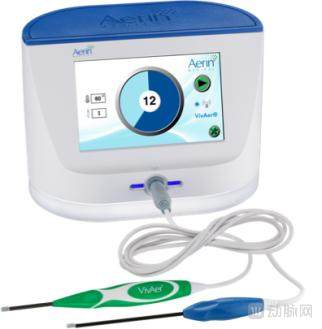
Aerin Product Image | Source: Official Website
Aerin Medical was inspired by the founder Scott Wolf’s son, who complained to his father about difficulty breathing while playing sports during his teenage years. Scott Wolf realized that his son might be suffering from nasal obstruction. As the saying goes, “prolonged illness makes a patient an expert,” and through his journey of seeking medical advice and treatment, Scott Wolf recognized the limitations of existing therapies for nasal obstruction. He also heard numerous complaints from fellow patients, gaining firsthand insight into the needs of those suffering from this condition.
Scott Wolf is a father, an M.D., and a serial medical device entrepreneur. Prior to Aerin Medical, he founded Zeltiq Aesthetics, Entoogastric Solutions, and Cardiar Dimensions.
Aerin was founded in the United States in 2011.
Scott Wolf stated that for a startup, two things are most critical: first, minimizing costs as much as possible; and second, developing the product as quickly as possible to initiate clinical trials and demonstrate the efficacy of its device.
Nasal congestion and rhinitis are common conditions in otolaryngology. According to U.S. Census Bureau estimates, there are approximately 20 million individuals with nasal congestion, 30 million with non-allergic rhinitis, and 60 million with allergic rhinitis in the United States.
The most common causes of nasal congestion are rhinitis or sinusitis, where inflammation affects the nasal mucosa, leading to congestion. The next most common cause is structural abnormalities of the nasal cavity, such as turbinate hypertrophy, deviated septum, thickening of the septal mucosa, adenoid hypertrophy, or congenital nasal deformities, which may require surgical intervention. Among these, treatments for deviated septum and turbinate hypertrophy are the most well-established. Over the past two decades, increasing attention has been paid to the role of valve area disorders, such as nasal valve collapse, in the management of nasal congestion.
The nasal valve region is not a single structure; rather, it is a complex three-dimensional structure composed of several morphologically distinct components. Located in the deep portion of the nasal vestibule and anterior to the anterior end of the inferior turbinate, it presents as a narrow, elongated triangular shape. Strictly speaking, the anterior part of the nasal septum and the head of the inferior turbinate also belong to the nasal valve region. The nasal valve area is the narrowest part of the nasal airway and the site of greatest nasal airway resistance. Changes in nasal airway resistance are proportional to the fourth power of changes in the nasal passage radius; thus, if the radius is reduced by half, nasal airway resistance increases 16-fold.
The cross-sectional area of the nasal valve region in most individuals ranges from 20 to 60 mm²; even slight collapse can significantly impede breathing, making disorders of the nasal valve area critical to the management of nasal obstruction.
The goals of treating nasal valve collapse are threefold: to widen the nasal valve angle, stabilize the mobile lateral wall, or correct soft tissue.
Treatment of nasal valve collapse is referred to as nasal valve repair. Traditional nasal valve repair methods are categorized into non-invasive and surgical approaches. Non-invasive options include external nasal dilators, which adhere to the external nose in the form of leaf spring structures and operate on a principle similar to that of “nasal strips” used for congestion during colds; surgical treatments involve various autologous cartilage grafts or metallic implants.
However, the aforementioned approaches have limitations. First, non-invasive methods often address symptoms rather than the underlying cause and yield unsatisfactory cosmetic outcomes. Second, surgical interventions typically require a recovery period and carry risks of infection, bleeding, scarring, and graft-related complications.
VivAer for Nasal Congestion: Temperature-Controlled Radiofrequency Induces Nasal Cartilage Deformation to Expand the Nasal Airway
Radiofrequency (RF) technology was first trialed in the medical field as early as the 1920s, and temperature-controlled RF technology has been applied in otolaryngology for approximately three decades. The principle of temperature-controlled RF involves emitting RF energy from electrodes into surrounding tissues to create a highly concentrated plasma zone around the electrodes. This induces ion agitation and molecular friction within the tissue, generating heat that raises the local tissue temperature (to below 100°C), thereby causing coagulation and deformation of tissue cells.
The principle of lasers, electrosurgical knives, and electrocoagulation devices is to raise tissue temperature to approximately 1000°C, resulting in extensive and severe tissue damage. In contrast, temperature-controlled radiofrequency acts only on tissues within a localized area surrounding the electrode, offering high precision and minimal trauma.
Aerin’s VivAer device utilizes temperature-controlled radiofrequency technology and consists of the Aerin console and the VivAer handpiece. The device is compact and portable, allowing for seamless integration into any clinic or hospital.
According to reports, the VivAer device is primarily designed for patients with nasal valve collapse, enabling durable remodeling of nasal cartilage and soft tissue. Additionally, the device can serve as an adjunct to other nasal surgical procedures, such as septoplasty, turbinate reduction, and sinus surgery.
A research report on its official website describes the usage protocol of the device. The VivAer device is a self-feedback device with a constant tip temperature. Prior to treatment, the target temperature and output power must be set; the temperature and power used in this report were 60°C and 4 watts, respectively.
First, administer local anesthesia to the intranasal upper lateral cartilage region. Then, insert the "touch tip" into the nasal cavity and place it directly on the mucosa at the inferior border of the upper lateral cartilage without making any incisions. Treat three distinct sites along the nasal valve angle on each side. Each treatment cycle consists of an 18-second therapeutic pulse followed by a 12-second cooling period.
The report also describes the mechanism by which the VivAer device remodels nasal cartilage: under local anesthesia, radiofrequency energy combined with pressure applied to the cartilage can induce deformation of the lateral nasal wall while preserving its elasticity. Another two-year clinical study reported that 97% of patients experienced significant improvement in nasal breathing, 94% showed improved ability to inhale air through the nose during exercise or exertion, and 89% reported better nighttime sleep.
RhinAer for Rhinitis Treatment: Posterior Nasal Nerve Ablation; Two Products Have Served 60,000 Patients
In January 2018, the VivAer device received FDA approval and simultaneously secured a $25 million financing round for market promotion and second-generation product development. The second product, RhinAer, obtained FDA 510(k) clearance in December 2019 for the treatment of chronic rhinitis, also utilizing Aerin’s temperature-controlled radiofrequency technology.
Approximately one-quarter of the U.S. population suffers from chronic rhinitis, a condition that causes persistent nasal congestion, runny nose, sneezing, and an itchy throat. Although not life-threatening, it significantly impacts quality of life. Most patients opt for pharmacological treatments or nasal sprays, while very few choose surgical intervention.
RhinAer employs neural ablation technology to treat chronic rhinitis by inserting a “touch needle” deep into the nasal cavity to destroy the posterior nasal nerves (PNN) responsible for excessive mucus production, thereby achieving a curative effect. Its procedural workflow is similar to that of the VivAer device: first, the patient receives local anesthesia; then, appropriate power and temperature settings are configured; finally, the procedure is performed.
A two-year study showed that 88.2% of patients responded to RhinAer treatment, with an average improvement of nearly 60% in rhinitis symptoms per patient.
Founder Scott Wolf stated that he aims to build a one-stop treatment platform for common ear, nose, and throat (ENT) conditions using the VivAer and RhinAer devices. Through collaborations with ENT institutions and clinics to promote its products, Aerin has already served more than 60,000 ENT patients.
Aerin Completes $60 Million Equity FinancingRecently, Aerin completed a $60 million equity financing round. The round was led by new investor Ally Bridge Group, with participation from existing investors including KCK MedTech, Questa Capital, and OrbiMed. Aerin plans to use the proceeds from this financing to expand its market presence.
A Flourishing Landscape of Minimally Invasive Technologies in the ENT Sector
The VivAer device described above primarily reshapes nasal cartilage and soft tissue using temperature-controlled radiofrequency technology. In clinical otolaryngology practice, temperature-controlled radiofrequency ablation is more widely used. There is a consensus that ENT procedures for luminal stenosis should adhere to the principle of “minimally invasive yet highly effective.” In addition to temperature-controlled radiofrequency ablation, the most commonly employed techniques in otolaryngology include carbon dioxide laser therapy and cryotherapy.
All the aforementioned techniques can be classified as minimally invasive, and the advancement of minimally invasive technologies has driven the development of the otolaryngology industry. Taking low-temperature plasma ablation for the treatment of tonsillitis as an example, this technique is costly and not covered by medical insurance. The cost of a single plasma ablation procedure for tonsillitis is approximately RMB 2,000 higher than that of traditional extraction or excision methods. Nevertheless, the volume of such procedures continues to grow rapidly at an annual rate of 30%, owing to the high safety profile and short recovery period associated with the surgery.
The ENT device market is the most favored by industry giants in the otolaryngology sector. First, there are numerous subspecialties within ENT, with common conditions including allergic rhinitis, vocal cord polyps, tinnitus, and snoring. Second, this market remains underdeveloped. For instance, the number of otorhinolaryngology and head and neck surgeries reached approximately 2 million in 2021, compared to only 500,000 five years earlier. As patients’ willingness to pay increases and living standards rise in China, the volume of various ENT procedures is expected to continue growing.