

WeDoctor Showcases Digital Healthcare 'Wenzhou Model' at 2022 World Young Scientists Summit
On June 26, the Digital Economy Special Session of the “Innovation China” Technical Services and Trading Conference, held as part of the 2022 World Young Scientists Summit, took place at the World Young Scientists Academic Center in Wenzhou. The conference aimed to leverage the resources of the “Innovation China” platform to advance its goal of promoting the integration of science and technology with the economy, expand the collaborative innovation organizations under the “Innovation China” framework, further establish southeastern Zhejiang as a highland for the digital economy, and drive the development of city-level models for the Common Prosperity Demonstration Zone through digital reform.
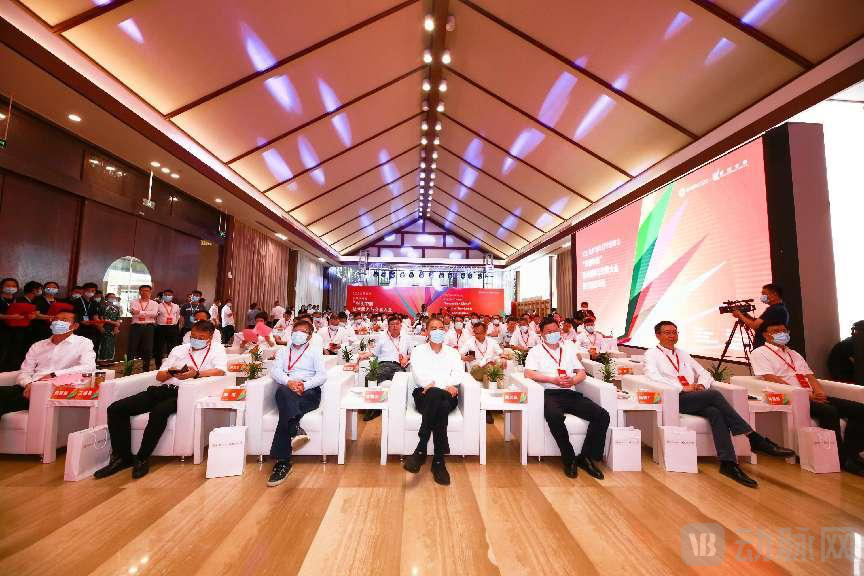
The Digital Economy Session of the “Sci-Tech Innovation China” Technology Service and Trading Conference at the 2022 World Young Scientists Summit Was Held in Wenzhou
As a leading figure in China’s digital healthcare industry, Liao Jieyuan, Founder, Chairman, and CEO of WeDoctor, was invited to attend the conference and deliver a keynote speech titled “Practices in the Digital Upgrade of Healthcare Systems.” He shared WeDoctor’s innovative practices in advancing the construction of a “Digital Health Community” and supporting Wenzhou in establishing a national demonstration zone for smart healthcare.
The 14th Meeting of the Central Commission for Comprehensively Deepening Reforms pointed out that great importance should be attached to the application of new-generation information technology in the medical and health sector, so as to reshape management and service models, optimize resource allocation, and enhance service efficiency.
“This points to the development direction of digital healthcare,” said Liao Jieyuan. As the interface between information technology and medical services, internet hospitals are becoming a “pivot” for reshaping the management and service models in the pharmaceutical and health sectors.
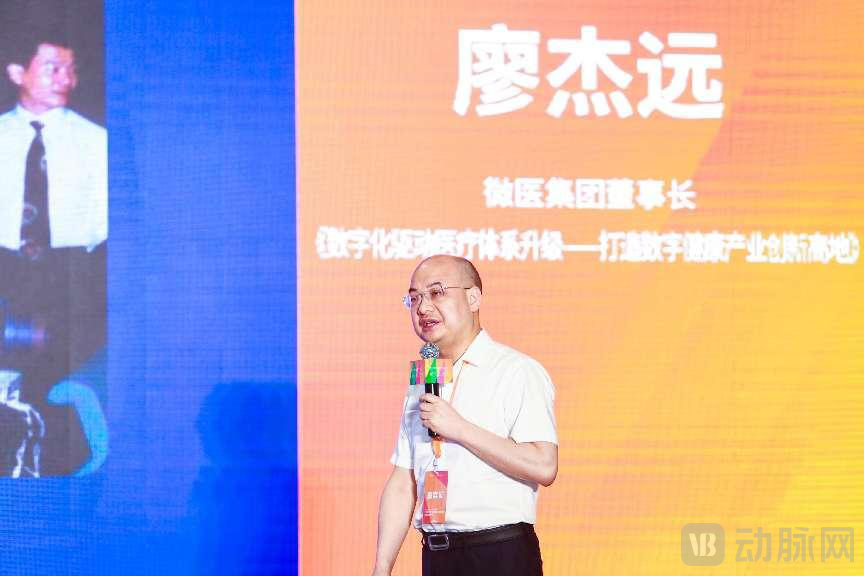
Keynote Address by Liao Jieyuan, Founder, Chairman, and CEO of WeDoctor
Internet hospitals have witnessed rapid development in recent years, and this innovative practice has facilitated the introduction of a series of national policies promoting the development of “Internet + Healthcare.” Notably, their outstanding performance in combating the COVID-19 pandemic has driven policy reforms that gradually incorporate internet-based diagnosis and treatment services into the scope of medical insurance coverage.
“During critical periods, platform-based internet hospitals have fully demonstrated their advantages in resource allocation and precision services,” introduced Liao Jieyuan. Drawing on WeDoctor’s experience in Wuhan’s fight against the epidemic, during Shanghai’s new wave of outbreaks this year, WeDoctor rapidly established end-to-end services including online cross-hospital follow-up consultations, medical insurance payment, prescription renewal and medication purchase, and home delivery of medicines. The company also formed 20 cross-district medication delivery teams and recruited over 1,800 community health ambassadors. It provided nearly 690,000 online consultation sessions in total and delivered more than 10,000 emergency orders of “life-saving medications” to patients with severe chronic conditions during the peak of the outbreak, thereby building an “aerial barrier” for Shanghai’s epidemic prevention and control.
In recent years, Wenzhou has made comprehensive efforts to advance the construction of “Healthy Wenzhou,” demonstrating distinct characteristics in industrial cluster development and clear advantages in establishing a regional medical highland and developing integrated medical and elderly care services. The 14th Five-Year Plan for the Development of Health and Wellness Undertakings in Wenzhou, issued in December 2021, explicitly sets forth that by 2025, the city will establish and improve an integrated healthcare service system that is regionally coordinated, urban-rural integrated, medically and preventively synergistic, equally emphasizing traditional Chinese and Western medicine, and resilient. It aims to build a large health industry cluster, strive to create a medical highland, consolidate its position as the province’s second pole with continuously enhancing comprehensive medical strength, and strengthen its regional radiation and driving capabilities.
“During this new period of development opportunities, the key value ‘focus’ of ‘Internet Hospitals’ lies in Internet Medical Consortia,” introduced Liao Jieyuan. Taking the close-knit Internet Medical Consortium built by WeDoctor in Tianjin—the Tianjin Grassroots Digital Health Community—as an example, it uses chronic disease management as an entry point to explore and implement a payment method based on “bundled payments by disease type and per capita.” Under total budget management, an incentive and constraint mechanism of “retaining surpluses and not covering deficits” is implemented based on the assessment results of medical and health management quality. In line with this development direction, the revenue of WeDoctor’s Internet Hospitals in cities such as Tai’an, Jinan, and Tianjin has reached the scale of tertiary hospitals, demonstrating that Internet Medical Consortia possess significant commercial value and expansion potential with considerable room for growth.
It is reported that in January 2021, the Wenzhou Municipal People’s Government signed a strategic cooperation agreement with WeDoctor to jointly promote the development of the “Digital Health Community” and establish a model for the Yangtze River Delta Health Community. In November of the same year, the Yangtze River Delta Digital Health Headquarters Base was completed in Wenzhou, and the Wenzhou Digital Hospital (Internet Hospital) officially opened, marking a significant step in implementing this strategy. This January, the Wenzhou Digital Hospital (Internet Hospital) successfully launched online and offline medical insurance settlement services and renowned specialist studios, representing further exploration and practice of the Wenzhou Digital Health Community.
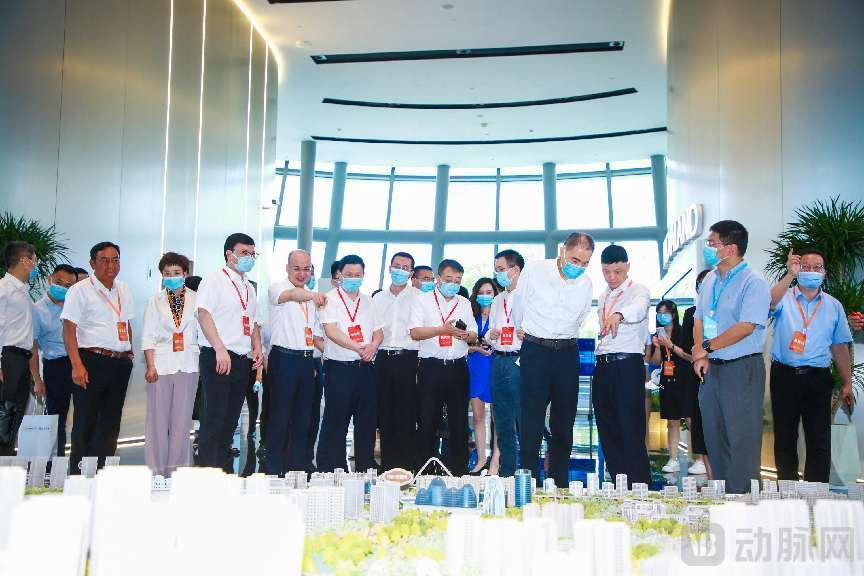
Live from the Digital Economy Session of the “Sci-Tech Innovation China” Technology Services and Trading Conference at the 2022 World Young Scientists Summit
Going forward, WeDoctor will pursue the overarching goal of shifting from a “disease-centered” to a “health-centered” model. Under the guidance of the Wenzhou Municipal People’s Government and leveraging the Wenzhou Digital Hospital (Internet Hospital), it will link high-quality medical resources across the Yangtze River Delta region to build the “Wenzhou Digital Health Community,” an integrated platform encompassing five pillars—medical care, pharmaceuticals, diagnostics, data, and insurance. This initiative aims to alleviate pressure on tertiary hospitals, strengthen primary healthcare capabilities, improve health insurance efficiency, and provide residents of Wenzhou and the Yangtze River Delta with comprehensive health management services that span the entire life cycle and all stages of health.
Liao Jieyuan pointed out that the key to building the “Wenzhou Digital Health Community” lies in identifying the right entry points—“One Specialty, One Disease, One Brain.” Specifically, by starting with oncology, WeDoctor aims to create an integrated online-and-offline tumor specialty management and service system with its distinctive features; by focusing on diabetes, it seeks to implement comprehensive digital management across the entire course of chronic disease. Meanwhile, by fully leveraging WeDoctor’s AI-powered digital health brain in both traditional Chinese and Western medicine, along with its digital advantages of “Device + Cloud + Brain,” and by establishing the Ruiyi Industrial Base and creating a green channel for medical device approval, Wenzhou will drive the clustering of a trillion-yuan intelligent medical device industry, positioning itself as a national hub for intelligent medical technology and industry.
“WeDoctor looks forward to contributing more sci-tech innovation strength on the fertile ground of innovation in Wenzhou!”Liao Jieyuan said.