

Luzhu Bio Submits Hong Kong IPO Application as China's First Domestic Recombinant Zoster Vaccine Nears Market
On June 28, Beijing Luzhu Biotech Co., Ltd. (“Luzhu Biotech”) filed its IPO application with the Hong Kong Stock Exchange. The company is a biotechnology firm engaged in the research and development of human vaccines and therapeutic biologics, with a primary focus on infectious diseases, cancer, and autoimmune disorders.
On the same day, LUZHU BIOTECH announced the completion of its Series C financing round, raising approximately RMB 218 million. The round was jointly invested by institutions including Huapu Haihe Biomedical Fund, Yizhuang Biopharmaceutical Fund, and CITIC Bank Zhenhua. This marks the second major financing closed by LUZHU BIOTECH this year and the third within the past twelve months.
Previously, LUZHU BIOTECH completed a RMB 350 million Series B financing round in August 2021 and a RMB 120 million Series B+ financing round in January 2022. Since 2019, the company has raised a total of RMB 938 million across four financing rounds. It has consecutively received investment and recognition from Xuanhong Fund, Mingfeng Capital, Shaanxi Financial Holdings/New Era Capital, Mingsheng Capital, CCB International, as well as two A+H listed companies, Tigermed and Livzon Pharmaceutical.
LUZHU BIOTECH was established in November 2001. Its founders, all from the Beijing Institute of Biological Products, include former researchers Kong Jian, Associate Researchers Jiang Xianmin, and Zhang Yanping, who jointly founded the company.
In response to the reality that no vaccines were available domestically or internationally for preventing meningococcal meningitis infection in children under two years of age, LUZHU BIOTECH successfully developed various bacterial polysaccharide-protein conjugate vaccines and high-purity, low-pyrogen polysaccharide vaccines by leveraging its mastered polysaccharide-protein conjugation technology. These products (all of which have been transferred to the listed company Zhifei Biological Products) made LUZHU BIOTECH the first company globally to develop a Group A and Group C meningococcal polysaccharide conjugate vaccine.
After more than two decades of development, LUZHU BIOTECH remains deeply committed to the vaccine and therapeutic biologics sector, having established an innovative precision protein engineering platform that supports the development of its pipeline products, including candidate human vaccines, monoclonal antibodies, and bispecific antibodies.
LZ901 Poised to Become the First Domestically Produced Shingles Vaccine in China
Currently, LUZHU BIOTECH’s pipeline in development includes three products in clinical trials and four candidate drugs in preclinical studies.
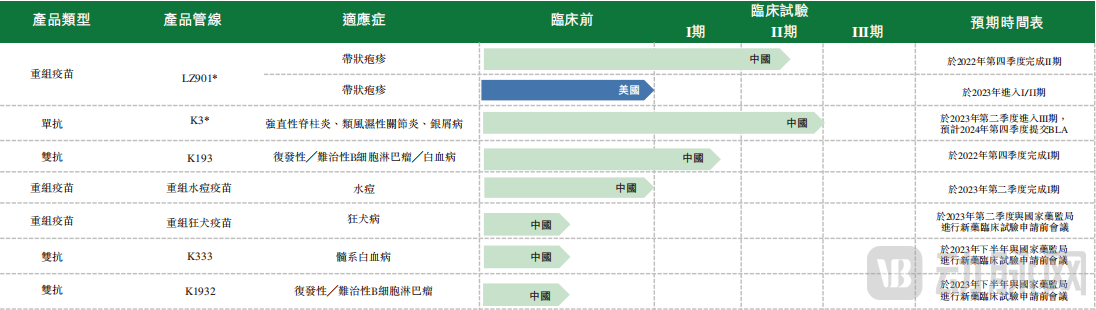
LUZHU BIOTECH’s three clinical-stage investigational products are: the vaccine candidate LZ901, and the antibody injection candidates K3 and K193. Among these, the vaccine candidate LZ901 and the antibody injection candidate K193 are innovative drugs with independent intellectual property rights owned by the company; whereas the antibody injection product K3 is a biosimilar developed by the company based on adalimumab.
LZ901 is a tetrameric herpes zoster vaccine indicated for the prevention of herpes zoster caused by varicella-zoster virus (VZV) in adults aged 50 years and older. The vaccine consists of VZV glycoprotein E (gE) expressed in CHO cells fused with two Fc fragments of IgG. Compared with naturally occurring VZV gE, LZ901 demonstrates superior immunogenicity and induces higher levels of neutralizing antibody titers.
Based on existing preclinical study data, LZ901 demonstrates excellent immunogenicity, efficacy, and safety, while also inducing robust specific humoral and cellular immune responses.
Currently, LUZHU BIOTECH has completed the Phase I clinical trial of LZ901 in China and is currently conducting its Phase II clinical trial. The company expects to complete the Phase II clinical trial of LZ901 in China in the fourth quarter of 2022, initiate the Phase III clinical trial in the first quarter of 2023, and submit the New Drug Application (NDA) for LZ901 to the National Medical Products Administration in the second quarter of 2024.
Meanwhile, the Company submitted an Investigational New Drug (IND) application for LZ901 to the U.S. Food and Drug Administration (FDA) in January 2022 and plans to initiate Phase I/II clinical trials in the United States in 2023.
Driven by the growing aging population, which is more susceptible to herpes zoster, the incidence of herpes zoster in China is rising. According to Frost & Sullivan, new cases of herpes zoster among individuals aged 50 and above in China increased from 2.5 million in 2015 to 3.9 million in 2021, representing a compound annual growth rate (CAGR) of 7.8%. The number is projected to reach 4.9 million in 2025, with a CAGR of 6% from 2021 to 2025, and further increase to 6 million by 2030, reflecting a CAGR of 4.2% from 2025 to 2030.
As public awareness of herpes zoster continues to rise and the number of available herpes zoster vaccine products increases, China’s herpes zoster vaccine market is poised for significant expansion.
According to Frost & Sullivan, measured by sales revenue, China’s herpes zoster vaccine market grew from zero in 2015 to RMB 600 million in 2021, and is projected to reach RMB 10.8 billion in 2025, representing a compound annual growth rate (CAGR) of 103.8% from 2021 to 2025, and to further increase to RMB 28.1 billion in 2030, with a CAGR of 21.1% from 2025 to 2030.
However, there is only one approved shingles vaccine in the Chinese market: GlaxoSmithKline’s Shingrix®. Therefore, LZ90 will inevitably be compared with GlaxoSmithKline’s Shingrix®.
In its prospectus, LUZHU BIOTECH pointed out that LZ901 has several advantages compared to the shingles vaccines currently on the market in China: not only is it low-cost with fewer side effects, but its molecular structure also offers advantages, being highly stable, easy to store and transport, and convenient to use; it also provides strong protection.
Specifically, the retail price of LZ901 is expected to be approximately RMB 500–800 per injection, with two injections per course. Compared to Shingrix®, which is priced at approximately RMB 1,600 per injection and also requires two injections per course, LZ901 demonstrates a significant price advantage.
In studies using BALB/c mice, LUZHU BIOTECH’s LZ901 was able to induce a more robust cellular immune response and higher expression of various immune cell activation biomarkers.
In terms of side effect management, the LZ901 liquid formulation contains only aluminum hydroxide as an adjuvant and no immunostimulants, thereby reducing the likelihood of severe adverse reactions at the injection site. Additionally, owing to its highly stable liquid formulation, LZ901 is easier to store and transport, offering greater convenience in use. It remains stable for two weeks at 37°C, 12 weeks at 25°C, and 24 months at 2–8°C.
K3 is a recombinant human anti-TNF-α monoclonal antibody injection, classified as a biosimilar to adalimumab. It is primarily indicated for the treatment of various autoimmune diseases, such as rheumatoid arthritis, ankylosing spondylitis, and plaque psoriasis.
Adalimumab is a TNF-α inhibitor marketed by AbbVie under the brand name Humira®. Humira® received approval from the National Medical Products Administration (NMPA) in 2010 and was included in the National Reimbursement Drug List. Its average selling price was initially RMB 7,729 per box in 2015, decreased from RMB 5,572 in 2019 to RMB 1,258 in 2020, and contributed to a 440% year-on-year increase in Humira®’s revenue in 2020 compared with 2019.
Driven by its broad range of indications, substantial market demand, and the continuous emergence of novel biosimilar products, the market size of adalimumab in China is experiencing rapid growth. In terms of sales revenue, the adalimumab market in China expanded from RMB 200 million in 2015 to RMB 1.6 billion in 2021, representing a compound annual growth rate (CAGR) of 41.3%. It is projected to further grow at a CAGR of 42.7% from 2021 to 2025, reaching RMB 6.8 billion by 2025.
According to Frost & Sullivan, a total of six adalimumab biosimilars have been approved in China, namely Qletli®, Sulinno®, Anjianning, Handayuan, Taibowei, and Junmaikang, with an additional ten adalimumab biosimilars currently under development in China.
LUZHU BIOTECH has developed K3 based on the antibody structure of adalimumab, maximizing its safety for use in humans. Pharmacokinetic, safety, and immunogenicity assessments of K3 indicate that it is highly similar to adalimumab, with no clinically meaningful differences between the two. This demonstrates the potential of K3 in treating autoimmune diseases such as rheumatoid arthritis, ankylosing spondylitis, and plaque psoriasis.
Currently, LUZHU BIOTECH has completed Phase I clinical trials in China for K3 in the treatment of various autoimmune diseases. According to disclosures in LUZHU BIOTECH’s prospectus, the Center for Drug Evaluation of the National Medical Products Administration (NMPA) “confirmed that LUZHU BIOTECH’s Phase I clinical trial for K3 in China has been completed and raised no objections to proceeding directly to Phase III clinical trials.” Therefore, LUZHU BIOTECH’s K3 will bypass Phase II trials in China and proceed directly to Phase III clinical development. The company plans to initiate this Phase III clinical trial in China in the second quarter of 2023, aims to complete it in the second quarter of 2024, and intends to submit a Biologics License Application (BLA) to the NMPA in the fourth quarter of the same year. Final approval of the BLA for K3 by the NMPA is expected in 2025.
In terms of pricing, K3 is expected to be priced at a retail price of approximately RMB 400 to 500 per dose.
K193 is the world’s first CD19/CD3 bispecific antibody with an asymmetric structure, indicated for the treatment of B-cell leukemia and lymphoma. K193 binds to CD19 on the surface of human B cells and CD3 on the surface of T cells, thereby activating T cells to kill B cells and B-cell-derived tumor cells associated with leukemia and lymphoma.
K193 demonstrated potent antitumor activity both in vitro and in vivo in preclinical studies, exhibiting a 10,000-fold greater capacity than the OKT3 monoclonal antibody commonly used in CAR-T therapies to activate T cells for the killing of B cells and B-cell-derived tumor cells associated with leukemia and lymphoma.
Currently, LUZHU BIOTECH is conducting Phase I clinical trials of K193 in China and expects to complete the Phase I clinical trials in the fourth quarter of 2022. In the long term, the company plans to complete the Phase II clinical trials of K193 in China in the fourth quarter of 2027 and submit a New Drug Application (NDA) to the National Medical Products Administration in 2027.
It is reported that only one bispecific antibody injection (CD19-CD3), Amgen’s Blincyto®, has been approved in China. According to Frost & Sullivan, in addition to K193, there are two other bispecific antibody injections (CD19-CD3) registered with the Center for Drug Evaluation (CDE) of the National Medical Products Administration and currently in clinical development: A-319 from Jian Neng Long Pharmaceutical Technology (Shanghai) Co., Ltd. and CN201 from Tongrun Biomedical.
Compared with globally marketed antibody injections for the treatment of B-cell leukemia and lymphoma, K193 offers the advantages of lower cost, convenient and simple administration, high affinity, and fewer side effects. It is reported that the retail price of K193 is expected to be approximately RMB 200,000 per course of treatment, with an additional RMB 200,000 for lifetime therapy, bringing the total cost to RMB 400,000. This is more affordable than Blincyto®, which has a retail price of approximately RMB 360,000 per course and an annual treatment cost of around RMB 1.5 million.
In addition to Luzhu Biotech’s three investigational products that have entered the clinical trial stage, the company has four other pipeline candidates in the preclinical stage: a recombinant varicella vaccine, a recombinant rabies vaccine, K333 (an antibody injection for the treatment of leukemia), and K1932 (for the treatment of lymphoma).
2021 R&D Investment Exceeded 40 Million, Establishing Five Major Technology Platforms
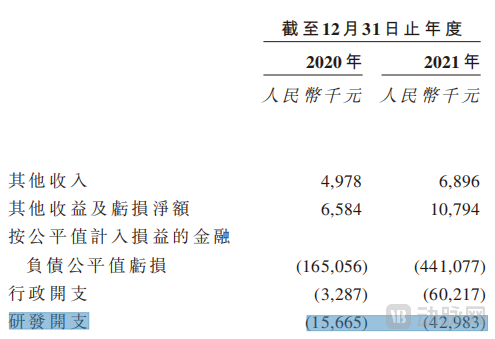
According to the prospectus of LUZHU BIOTECH, the company's R&D expenditures in 2020 and 2021 were RMB 15.665 million and RMB 42.983 million, respectively. The increase in R&D spending was primarily driven by higher third-party contracting costs. As the company advances its clinical pipeline, LUZHU BIOTECH’s R&D investments are expected to rise year by year.
From a technological perspective, LUZHU BIOTECH’s recombinant viral vaccines are developed based on antigen presentation technology and the concept of enhancing the immunogenicity of target antigens, preserving the primary structure of natural antigens while improving their immunogenicity. Based on this technical philosophy, LUZHU BIOTECH has internally developed five technology platforms, namely:
Fabite® Technology PlatformFabite® is a next-generation bispecific antibody development platform with intellectual property rights owned by LUZHU BIOTECH, applicable to various immunotherapies that activate T cells to kill cancer cells. Fabite® optimizes the purification process of bispecific antibodies, achieving high monomer purity. Meanwhile, LUZHU BIOTECH has developed multiple liquid formulations of bispecific antibody solutions, which remain stable for over three years under storage conditions at 2-8°C.
Targeted Recombinant Antigen Presentation Technology Platform: LUZHU BIOTECH’s targeted recombinant antigen presentation technology platform generates recombinant immune complexes (RICs) that express antigens and directly present viral membrane antigens to antigen-presenting cells (APCs). This technological platform significantly enhances antigen utilization efficiency, thereby inducing high-titer specific antibodies and cellular immunity. Furthermore, the antigens expressed by LUZHU BIOTECH’s targeted recombinant antigen presentation technology platform contain multiple fragment crystallizable (Fc) regions, representing an improvement over traditional fusion protein technologies that express antigens with only a single Fc region.
Polysaccharide-Protein Conjugate Technology Platform: LUZHU BIOTECH’s polysaccharide-protein conjugation technology platform links bacterial polysaccharides to carrier proteins. This technology platform can be used to develop conjugate vaccines and antibody-drug conjugates. Leveraging its polysaccharide-protein conjugation technology platform, LUZHU BIOTECH has developed three bacterial polysaccharide-protein conjugate vaccines, which exhibit enhanced immunogenicity and stability and are formulated as easy-to-administer liquid dosage forms.
Protein Purification Technology Platform: LUZHU BIOTECH has developed purification technologies for complex recombinant proteins, such as humanized monoclonal antibodies and complex glycosylated proteins. LUZHU BIOTECH employs high-speed centrifugation or depth filtration workflows to isolate proteins from cell culture media, which is highly effective in removing cells and cellular debris from soluble proteins. Furthermore, LUZHU BIOTECH utilizes a series of chromatography techniques during the protein purification process to further enhance purity. As a final polishing step, size-exclusion chromatography is employed to obtain highly purified target proteins.
Protein Stability Technology PlatformLUZHU BIOTECH has developed liquid formulations for a variety of highly stable human-derived monoclonal antibodies, bispecific antibodies, and recombinant protein vaccines. These formulations maintain the activity of most monoclonal or bispecific antibodies in solution for up to five years. Meanwhile, LUZHU BIOTECH offers multiple formulations with different stabilization mechanisms to meet diverse antibody or antigen requirements. The formulations from LUZHU BIOTECH are protein-free, satisfying background requirements for human therapeutics or specific detection systems, and can serve to stabilize enzymes and control materials in immunoassays.
Mammalian Expression Technology Platform: In 2012, LUZHU BIOTECH introduced Lonza’s GSXceed™ expression system. This system encompasses a broad range of technologies and processes, including host cells, expression vectors, and optimized culture media, providing high-quality, high-efficiency, and high-capacity production services for various biopharmaceuticals.