

Dr. Ma Dong of Jinan University: Scientist-Entrepreneurs Must Start from Clinical Needs and Act with Deliberation
Dr. Ma Dong is an expert in the field of biomedical polymer materials, with a solid research foundation in novel nitric oxide-releasing antibacterial materials, cationic polymer-based drug/gene delivery vectors, and theranostic nanomedicines. He currently serves as a Research Fellow and Doctoral Supervisor at the Institute of Biomedical Engineering, Jinan University. He is also the Vice Chairman of the Professional Committee on Biomaterials and Clinical Applications under the Guangdong Society for Biomedical Engineering. Additionally, he acts as a reviewer for internationally renowned journals such as Advanced Functional Materials and Biomaterials.
Presided over multiple scientific research projects, including the General Program of the National Natural Science Foundation of China; received two Second Prizes of Guangdong Provincial Science and Technology Awards (ranked third and seventh, respectively); selected for the “Guangdong Province Outstanding Young University Teachers Training Program” in 2014 and named a “Pearl River Science and Technology New Star” of Guangzhou City in 2015.
Over the past three years, Dr. Ma Dong has published 16 SCI-indexed papers as (co-)corresponding author in internationally renowned journals such as Advanced Functional Materials and Chemistry of Materials, including 10 papers in CAS Tier 1 journals. He has been granted six Chinese invention patents (ranked first), one of which was selected for the Outstanding Patent Project Database of the 2021 Annual Conference of the Chinese Society of Biotechnology.
In the 1998 Nobel Prize in Physiology or Medicine award citation, the committee gave high praise to nitric oxide (NO): “This is the first discovery of a gas serving as a signaling molecule in the human body,” and “this discovery has opened the door to applications of nitric oxide, which can serve as a weapon against pollution, a regulator of blood pressure, or a controller of blood flow distribution to different organs.”
Earning a place on the Nobel Prize stage signifies that nitric oxide (NO) has become an indispensable health messenger in the human body, particularly marking a new milestone in the treatment of human cardiovascular and cerebrovascular diseases.
As the first endogenous gas molecule discovered to be involved in cellular signal transduction, nitric oxide (NO) is widely present in the human body and participates in various physiological processes. It is best known for its roles in protecting cardiovascular health, lowering blood pressure, and enhancing sexual function.
NO primarily exerts its biological functions by elevating cyclic guanosine monophosphate (cGMP) levels. Vasodilation is mediated through the NO/cGMP pathway, and Viagra represents a translational research application of NO’s physiological functions.
Of course, the applications of NO in the medical field extend far beyond this.
Over the subsequent years, clinical studies have successively confirmed the important physiological roles of nitric oxide (NO) in promoting vasodilation, combating infection, stimulating soft tissue regeneration, and preventing platelet adhesion.
During a literature review, Dr. Ma Dong accidentally discovered the antibacterial effects of nitric oxide (NO). Leveraging his years of research experience in the field of biomaterials, Dr. Ma led his team to conduct an in-depth study on the antibacterial properties of NO starting in the second half of 2016.
In 2021, Dr. Ma Dong’s project “Nitric Oxide Antibacterial Materials” was successfully selected.Chinese Society for Biotechnology “High-Value Patent Project Database in the Field of Biomedicine”.
Dr. Ma Dong told VCBeat’s Orange Fruit Bureau that the misuse of antibiotics not only causes environmental pollution, but antibiotic resistance has also become one of the greatest threats to global health, food safety, and development. In addition to antibiotics, traditional antimicrobial materials or agents, such as silver ions and triclosan, also pose certain potential risks due to factors like toxicity and stability.
The potential of NO as a novel antimicrobial material is beginning to emerge.
Dr. Ma Dong stated, “The primary prerequisite for bacteria to cause infection is their survival. Bacterial biofilms provide robust protection against external threats, including antibiotics. Consequently, biofilms are one of the key contributors to bacterial antibiotic resistance. Nitric oxide (NO) demonstrates significant efficacy in dispersing biofilms by disrupting this initial barrier, thereby penetrating deep into the bacterial structure to exert its bactericidal effect. Furthermore, the combination of NO with antibiotics can address the issue of bacterial resistance, achieving superior eradication of drug-resistant strains.”
“Short-Term” Project Commercialization First, Supporting “Long-Term” In-Depth Research
NO demonstrates potent antibacterial and antiviral effects, with related drugs and medical devices already in clinical trials abroad.
Currently, Dr. Ma Dong’s “Nitric Oxide Antibacterial Materials” project has addressed issues related to the safety, drug resistance, stability, and antibacterial efficacy of traditional antimicrobial products, such as silver ions, antibiotics, and chitosan, achievingNovel Nitric Oxide-Based Antimicrobial Technology and Materials: Safe, Non-Toxic, Free of Drug Resistance, Highly Bactericidal, and Promoting Wound Healing。
Regarding the commercialization of this project,The research team has designed and developed various nitric oxide formulations, including membranes, sprays, gels, and ointments, focusing on the clinical application of nitric oxide gas.
For example, in the area of skin wound dressings, the research team developed a liquid bandage that forms a protective film on the wound surface, which not only isolates the wound from the external environment but also exerts antibacterial effects and promotes wound healing.
In the field of oral health, given the high prevalence of periodontitis in China and the lack of effective solutions, our research team has developed a gel product. By filling the gel into the affected areas of periodontitis, it can provide sustained antibacterial effects and inhibit the further progression of the disease.
In addition to short-term translational projects, the research team is also conducting in-depth studies on the use of nitric oxide (NO) for combating fungal infections.Antimicrobial products for vaginal infections currently under development have established a vaginal infection model. Following administration in gel form, nitric oxide (NO) was found to exhibit significant therapeutic efficacy against Candida albicans infections.
Dr. Ma Dong stated, “We chose to first develop liquid bandages, which have a shorter development cycle, while simultaneously laying the groundwork for vaginal antifungal products, which require a longer development timeline,”“Leverage profits from short-term projects to support the research and translation of long-term, in-depth initiatives.”
Nitric oxide (NO) holds broad prospects for application in the medical field; however, challenges related to storage and transportation have persisted in its practical use. Currently, NO is primarily stored and transported in high-pressure gas cylinders, which is highly inconvenient. Furthermore, the high concentration of NO in these cylinders can lead to side reactions during long-term storage and poses significant toxicity risks.
Furthermore, a series of NO carrier materials have been developed for the effective loading and controlled release of nitric oxide (NO) molecules. Currently, there are four main categories of NO-loading carrier materials: organic nitrates, such as nitroglycerin; metal nitrosyls, such as sodium nitroprusside; S-nitrosothiols, such as GSNO; and ionic donors, such as alkyl polyamines.
However, in practical applications, the use of the first three types of NO-loading materials is constrained. Their release of nitric oxide (NO) generally depends on the presence of specific triggering factors (such as photothermal effects, thiols, or glutathione). Since these triggers are not necessarily present in the local microenvironment of bacterial infections, the antibacterial application of these materials is limited by their required environmental conditions.
To address these challenges,The research group employed polyamine-based ionic donors as NO carrier materials, which spontaneously release NO under normal physiological conditions., without the need for electron transfer or the involvement of other molecules such as cofactors and enzymes, thereby enabling the widespread use of NO in the antibacterial field. Moreover, ionic NO donors offer advantages including prolonged drug half-life, ease of modification, and low cytotoxic side effects, holding broad prospects in the antibacterial field.
Currently, the research group has achievedAchieving the technical targets of a 95% NO loading capacity and extending the release duration to 24 hours effectively addresses the product demand for treating various trauma-related infections.
Technology, Capital, and Regulations: All Three Are Indispensable for the Long and Arduous Journey of Translating Scientific Research
Focusing on the core technologies of nitric oxide (NO), since the project was launched in late 2016, the research teamNine Chinese invention patents have been granted, addressing the challenges of efficient nitric oxide (NO) loading, stable storage, and controlled release.
The NO-based liquid bandage developed by our research group won the Bronze Award in the provincial competition of the 7th China International “Internet+” College Student Innovation and Entrepreneurship Competition, and received the Excellence Award in the 2021 “Win in Guangzhou” and Guangdong-Hong Kong-Macao Greater Bay Area College Student Entrepreneurship Competition. Currently, the product is undergoing a series of characterization studies in accordance with the regulatory requirements for medical device registration.
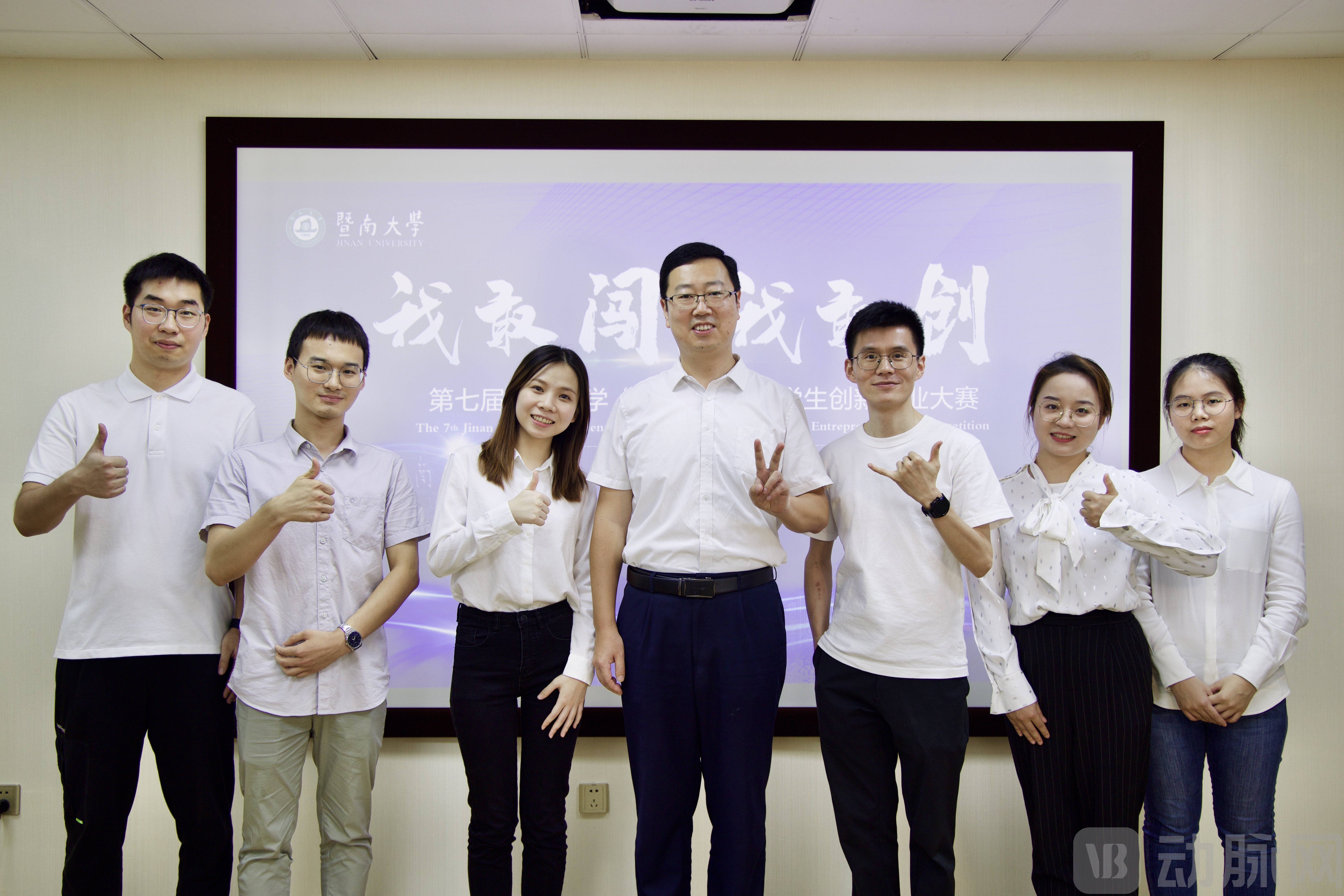
Group Photo of the "Nitric Oxide Antibacterial Materials" Research Team Led by Dr. Ma Dong
Dr. Ma Dong stated,There remains a significant gap between laboratory results, production, and regulatory approval, involving issues of funding, compliance with regulations, and process scale-up.Technology serves as the foundation and a key advantage for scientists, yet funding determines project viability, while laws and regulations require oversight and guidance from professionals. All three elements are indispensable.
However, the team initially encountered significant challenges regarding the drug-device combination format of the product. While nitric oxide (NO) is classified as a drug in clinical practice, biomaterials are categorized as medical devices. In recent years, national regulatory oversight of drug-device combinations has increasingly aligned with stringent drug approval protocols, which has deterred market participants and investors, thereby hindering commercial translation. Furthermore, the research group itself lacks a clearly defined understanding of the precise definition of drug-device combinations.
From June last year to the end of the year, the research team had been actively promoting the project externally. However, the feedback was invariably along the lines of “interested, but it’s too difficult,” which at one point hindered the progress of project commercialization.
“Given our limited platform and resources, it is challenging to effectively promote the project externally. We can only increase its visibility by participating in various innovation and entrepreneurship competitions, while actively seeking feedback from investors from a market perspective,” said Dr. Ma Dong.
In the second half of the year, Dr. Ma Dong will once again participate in the 2022 Second High-Value Biomedical Patent Project Selection and the National Conference on Medical-Engineering Integration and New Medical Technologies / Science and Technology China Industry Matchmaking Conference, engaging in in-depth discussions with investors and gathering market feedback on the product.
# Building a Solid Technical Foundation Requires a Shift in Mindset
“From a macro perspective, Sino-U.S. tensions and supply chain constraints caused by the global pandemic are exacerbating the bottleneck problem in core technologies. Where do these ‘bottleneck’ technologies originate? They actually stem from basic research, which in turn originates from universities,” said Dr. Ma Dong.
The Institute of Biomedical Engineering at Jinan University has long upheld a tradition and precedent of encouraging the translation of scientific research into practical applications. Established in 1984, it is one of the earliest institutions in China engaged in research on biomedical materials. Leveraging research platforms such as the Ministry of Education’s Engineering Research Center for Artificial Organs and Materials, and the Guangdong Provincial Key Laboratory of Biomaterials for Higher Education Institutions, the institute boasts strong scientific research capabilities and superior conditions, having incubated listed companies such as Guan Hao Biotechnology.
“These successful precedents of translation, and even market launch, demonstrate that scientific research outcomes can not only train students and yield published papers, but also truly translate into clinical practice and enter the marketplace.”
Dr. Ma Dong also noted that scientists and entrepreneurs differ in their roles and cognitive domains, and there are many practical issues that require close attention during the process of translating scientific research into commercial applications.
First,Research must be rooted in clinical practice, while the conceptualization and objectives of product development must be driven by market demands.Some professors are deeply committed to technological advancement, which is commendable; however, this approach may not always be suitable for market conditions.
Secondly, professors may overlookCost and Use Cases, which in fact also overlooks market acceptability.
Most importantly,"In addition to solidifying their technical expertise, professors must also shift their mindset."“Scientific research and entrepreneurship follow entirely different logics, and the mindsets involved are fundamentally distinct. For instance, investors focus on the returns at each milestone after capital injection, as well as short-term and long-term strategic objectives.”
“In recent years, the state has introduced various policies to encourage university professors to start businesses, but most professors may lack the experience and expertise required for company operations and management,”Adopting the roles of Chief Technology Officer or Technical Co-founder to establish clear team divisions may be more conducive to advancing the translation of scientific research.“Dr. Ma Dong said.”
