

Jiangsu's First Biological Reagents 'New Infrastructure' Project Launches, Offering Integrated Full-Value-Chain Services
On June 30, the commissioning ceremony for major projects and project signing event for the Xingong Tairong Biological Reagent Industry Cluster, jointly hosted by NANJING KEYGEN BIOTECH.CO.,LTD., Nanjing New Industrial Investment Group, and Nanjing Jiangning Binjiang Development Zone, was successfully held in the Nanjing Jiangning Binjiang Development Zone.
Han Liming, Member of the Standing Committee of the Jiangsu Provincial Party Committee and Secretary of the Nanjing Municipal Party Committee; Xia Bing, First-Level Inspector of the Jiangsu Provincial Department of Science and Technology; Jiang Yuejian, Member of the Standing Committee of the Nanjing Municipal Party Committee and Secretary-General; Shen Jianrong, Member of the Standing Committee of the Nanjing Municipal Party Committee and Secretary of the Jiangning District Party Committee; Zhang Ruili, Second-Level Inspector of the Jiangsu Provincial Development and Reform Commission; and Chang Ruping, Second-Level Inspector of the Jiangsu Provincial Department of Industry and Information Technology, conducted research and attended the event, accompanied by Wang Xuegen, Secretary of the Party Committee and Chairman of Nanjing Xin Gong Investment Group, and Wan Zhenhua, Secretary of the Party Working Committee of Jiangning Binjiang Development Zone.
The event also integrated resources from industry, academia, research, healthcare, and investment sectors. It brought together more than 100 participants, including provincial and municipal leaders, experts in the fields of new pharmaceuticals and life health, representatives of technology enterprises, and investors from renowned financial and investment institutions. Notable attendees included Zhang Junfeng, Member of the Standing Committee of the Party Committee and Vice President of Nanjing University; Hu Lihong, Member of the Standing Committee of the Party Committee and Vice President of Nanjing University of Chinese Medicine; Zhang Chaoyang, Chairman of Jiangsu Salt Industry Group; Cao Qun, Chairman of Huatai Zijin Investment Co., Ltd.; and Song Qingsong, Vice President of Bank of Nanjing and President of its Nanjing Branch. Together, they helped build an industrial platform for open exchange and collaborative cooperation.
The event was moderated by Hong Lilai, District Mayor of Jiangning. Following an inspiring address by Shen Jianrong, Member of the Standing Committee of the Nanjing Municipal Party Committee and Secretary of the Jiangning District Party Committee, Dr. Wang Xuegen, Chairman of Xin Gong Group, provided a detailed introduction to the projects in the Tairong Cluster Area.
To vigorously promote the integration of the new pharmaceutical and life health industry chain, enhance the value chain, and optimize the ecosystem chain, while actively advancing the construction of carrier platforms to establish a comprehensive, open, and shared public technical service platform system, this event announced several major developments:
First, four science and technology platforms have been successively launched: the National Medical Emergency Material Reserve Facility Project, the Jiangsu Province Green Manufacturing Innovation Base for Core Biomaterials in Biopharmaceuticals, the Nanjing Public Technical Service Platform for Industrial Chains, and the Jiangning Binjiang New Medicine and Life Health Specialized Industrial Carrier.
Second, Tairong signed park entry cooperation agreements with 16 technology enterprises, including Giant Biogene, Jiuchuan Technology, and Xingong Medicine; it also finalized signing for eight industry-academia-research innovation and commercialization platform projects, such as the National Institute of Health and Medical Big Data at Nanjing University, the Nanjing Institute of Translational Medicine, the Southeast University Suzhou Medical Device Research Institute, and the Sports Medicine Center Laboratory of Jiangsu Provincial Hospital of Traditional Chinese Medicine.
Third, leaders from Nanjing City, relevant provincial departments, and universities jointly held a grand launch ceremony to mark the completion and operational launch of major projects in the Tairong Agglomeration Area, as well as the commencement of production for the intelligent culture media production line.
The New Gongtai Rong Biological Reagent Industry Cluster Project, located in the Nanjing Jiangning Binjiang Development Zone, is a key provincial and municipal project jointly invested by Nanjing Xingong Investment Group and its subsidiary, NANJING KEYGEN BIOTECH.CO.,LTD. (Stock Code: 835272), in partnership with the Nanjing Jiangning Binjiang Development Zone. Professionally operated by Keygen Biotech, a life sciences technology company, this project serves as a new infrastructure landmark focused on technological advancement within the industry.
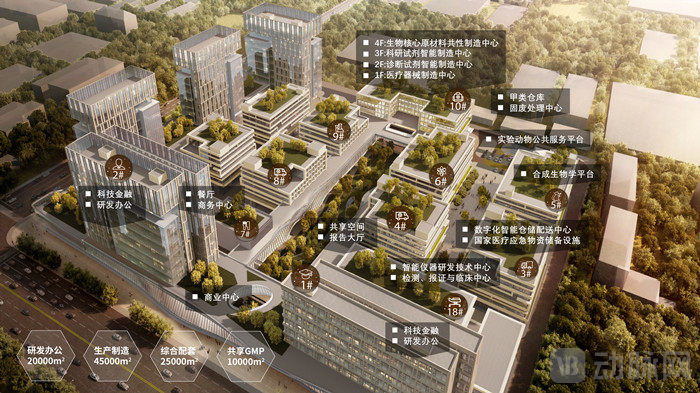
Centered on the emerging pharmaceutical and life health industries, this project establishes a Contract Manufacturing Organization (CMO) platform for the shared production of biological reagents. By breaking the constraints of traditional closed-loop manufacturing and addressing the "Darwinian trap" in the industrialization of scientific achievements, it aims to provide global biotech enterprises with an internationalized, high-end, clustered, and shared manufacturing model. The project offers integrated services across the entire industry value chain—from product development to distribution—for relevant technology companies, thereby creating a smart industrial park for biological reagents characterized by "commonality, sharing, co-creation, and win-win cooperation."
Currently, more than 10 companies have registered and established their presence in the park, with over 20 cooperative projects under discussion on the platform. It has gathered more than 30 experts from various sectors of industry, academia, and research, specializing in cross-border technology transfer, innovation, and entrepreneurship. The product pipeline focuses on the new pharmaceuticals and life health industry chain, covering R&D and industrialization projects such as biological raw materials (recombinant proteins, culture media, antigens and antibodies), scientific research and IVD reagents, and clinical diagnostic instruments. Among these, 70% are founded by high-level talents. At present, the resource aggregation effect of the four major modules has begun to emerge, and it is believed that the industrial synergy effect will be further amplified after the project goes into production.
Dr. Wang Xuegen, Chairman of New Industry Group, introduced that key raw materials for biological reagents represent the core technology and a critical link in the research, development, and production of biological reagents. As an upstream segment of the biological reagent industry, these materials are characterized by “small varieties, multiple specifications, and high technology.” Currently, China’s biological reagent sector has long been monopolized by foreign brands. Key raw materials for biological reagents constitute a crucial aspect of “chokehold” technologies and products, serving as an important prerequisite for achieving industrial self-reliance, controllability, and development.
# Large-Scale Shared Manufacturing Platform for Key Raw Materials of Biological ReagentsThe Large-Scale Shared Manufacturing Platform for Key Raw Materials of Biological Reagents is a GMP-compliant, large-scale production facility professionally planned and designed by NANJING KEYGEN BIOTECH.CO.,LTD. and supported by state-guided investment from XinGong Group. The platform features intensive, flexible, and intelligent capabilities for the preparation of various types of key raw materials. It provides contract development, manufacturing, and organization (CDMO) services—including R&D, regulatory registration, and production—to numerous small and medium-sized technology enterprises. By addressing the need for carriers and equipment in R&D and manufacturing, the platform enables tech companies with core technologies to develop and supply raw materials at minimal cost. This initiative aims to resolve the dependency on imported biological raw materials, achieve “autonomous and controllable” supply chains, and support the goal of domestic economic circulation.
Sun Yijun, Chairman of NANJING KEYGEN BIOTECH.CO.,LTD., stated that biological reagents differ from ordinary commodities. Every stage—including product R&D, registration, production, manufacturing, storage, and sales—must comply with relevant national laws and regulations. Furthermore, R&D and production activities may only commence after undergoing review and obtaining approval from the competent authorities.
In terms of production vectors and capabilities, biological reagent products are subject to stringent compliance requirements. Production facilities must be planned, designed, renovated, and evaluated for safety and environmental standards in accordance with Class I, II, or III cleanroom specifications, depending on product characteristics. Furthermore, these products impose strict demands on utility infrastructure and supporting facilities, with rigorous standards applied to purified water, steam, HVAC systems, cold storage, warehousing, and solid waste treatment systems. Consequently, barriers to entry in the biological reagent industry extend beyond R&D and regulatory registration; the manufacturing stage also presents high thresholds due to substantial capital investment and elevated fixed costs.
The fundamental constraints on the rapid development of China’s biological reagent industry extend beyond mere innovation capabilities; high industrialization costs and substantial upfront fixed-asset investments have also limited the R&D, production, and manufacturing activities of many life sciences companies. “The key function of this new infrastructure is to identify common industry technologies and establish open, shared platforms that enable more new products and technologies to be advanced at the lowest cost, fastest speed, and shortest cycle,” said Sun Yijun.
Huang Ying, General Manager of NANJING KEYGEN BIOTECH.CO.,LTD. and head of investment promotion for the Tairong Cluster, provided additional insights. The “Tairong” brand was established in Nanjing Jiangning High-Tech Zone in 2013. In collaboration with the local government, it built a shared technology integration platform targeting the R&D phase of technological achievement transformation for biopharmaceutical enterprises. Since 2013, Tairong has helped Jiangning attract 210 technology-based enterprises and over 100 high-level talents, while serving nearly 10,000 users. Binjiang “Tairong” is an extension of the industrial chain of the High-Tech Zone’s “Tairong,” focusing on the industrialization phase of technological innovation. It has established intelligent production lines for shared manufacturing and assembled a professional technical team dedicated to transformation and production. Its industrial positioning targets core “chokepoint” projects in the life sciences sector. As such, it represents Binjiang’s “new industries” and “new infrastructure,” and serves as a specialized industrial carrier within Binjiang’s “3+2” leading industries.
Among the projects signed and settled today are a National Key Laboratory dedicated to pioneering frontier basic research, “Specialized, Refined, Differential, and Innovative” (SRDI) enterprises focusing on niche market segments, “import substitution” ventures that have already attracted capital interest, and listed companies seeking to leverage the Tairong platform to access new products and technologies. This diversity of signing enterprises aligns precisely with Tairong’s service objective: to provide enterprises and industries with advanced technological achievement transformation and technical solutions.
Under the national macro-policy framework for high-quality development, the project was officially put into operation in 2022. Tairong is committed to bridging the “last mile” of independent innovation, addressing the structural contradiction between the abundant quantity of technological achievements and the insufficient effective supply. With the professional planning, technical support, and market-oriented operations provided by Keygen Biotech, a technology enterprise with years of experience in the development and service of upstream life science tools, Tairong is poised to reach new heights.
Huang Ying further stated that KeyGen Biotech’s products, services, and scientific innovation platforms have already established brand recognition and achieved economies of scale in the life sciences sector. This enables more precise alignment with customer needs, attracts upstream and downstream enterprises to cluster, and leverages the micro-ecosystem within the Tairong platform to facilitate the rapid integration of new products and technologies among participating companies. Furthermore, KeyGen Biotech’s clinical products have established distribution channels across hospitals of all tiers throughout China, which will better support the commercial translation of in-park enterprises’ research-based products into clinical applications. “Over the past two years, during investment promotion activities, I have keenly observed that entrepreneurs in the life sciences sector have an increasingly strong demand for industrial platforms that focus on technological capabilities and can simultaneously provide specialized shared infrastructure and high-quality scientific and technological services.”
“Gathering Strength, Sharing the Future”: The first phase of the Tairong Cluster, spanning 135,000 square meters, is scheduled for phased completion and commissioning in the second half of the year. Nanjing’s new industrial landmark for innovative medicine and life health is poised for takeoff.
About Tairong
The Xin Gong Tai Rong Biological Reagent Industry Cluster Project is located in the Nanjing Jiangning Binjiang Development Zone. It is a key provincial and municipal project jointly invested by NANJING KEYGEN BIOTECH.CO.,LTD. (Stock Code: 835272), Nanjing New Industrial Investment Group, and Nanjing Jiangning Binjiang Development Zone, and professionally operated by Keygen Biotech, a life sciences technology company. This project serves as a new infrastructure initiative aimed at establishing an industrial landmark focused on technological innovation.
This project focuses on the new pharmaceutical and life health industries. By establishing a Contract Manufacturing Organization (CMO) platform for the shared production of biological reagents, it breaks the limitations of traditional closed manufacturing models and addresses the "Darwinian trap" in the industrialization of scientific and technological achievements. The project aims to provide global biotech enterprises with an internationalized, high-end, clustered, and shared manufacturing model, offering integrated services across the entire industry value chain—from product development to distribution. It seeks to create a smart industrial park for biological reagents characterized by "commonality, sharing, co-creation, and win-win cooperation."The project covers a land area of 117 mu, with a total investment of RMB 1.2 billion. Phase I occupies 100 mu, with a construction area of 135,000 square meters, including approximately 70,000 square meters for production facilities, 20,000 square meters for R&D and testing, 10,000 square meters for warehousing, and 35,000 square meters for shared supporting facilities. The park is designed to attract 30–50 domestic and overseas tech companies and facilitate the implementation of 80 industrialization projects.
In 2020, the project was designated as a key national initiative for strategic medical material production capacity and reserves. In 2021, it was awarded the titles of “Jiangsu Province Green Manufacturing Innovation Base for Core Biomaterials” and “Nanjing Public Technical Service Platform for Industrial Chains.” In accordance with the Nanjing Municipal Work Plan for Promoting High-Quality Development of Industrial Chains (Ning Zheng Fa [2020] No. 35), the project will focus on the new pharmaceuticals and life health industrial chain, prioritizing the development of a base for upstream key raw materials—such as enzymes, monoclonal antibodies, and cytokines—for antibody drugs, recombinant protein drugs, and diagnostic reagents. By aggregating global resources and factors in the new pharmaceuticals and life health industries, the project aims to establish a highly influential landmark industry.