

Precision Autoimmune Therapeutics Inc. Completes RMB 140 Million Series Angel Financing to Advance PAT-A001 into Clinical Trials and Expand HDPM Precision Stratification Platform
Recently, Beijing Precision Autoimmune Therapeutics Inc. (hereinafter referred to as “Precision Autoimmune”) announced the completion of a RMB 140 million angel financing round, jointly invested by renowned healthcare funds ETP Zhihe Daokang and Danlu Capital, with strategic investment from listed pharmaceutical company Kaixin Yuanda.
Tianshi Tongda is China’s first innovative pharmaceutical company developing drugs for autoimmune diseases (hereinafter referred to as “autoimmune diseases”) based on its HDPM precision subtyping platform. The company collaborates withAcademician Tang Chao, Member of the Chinese Academy of Sciences and Dean of the Institute for Advanced Interdisciplinary Studies at Peking University, andProfessor Ren Sun, Chair Professor of Systems Biology at Westlake University and Director of the Center for Emergency Medicine Research at Westlake University...and other internationally renowned experts in immunology, precision medicine, and artificial intelligence, deeply integrating multi-omics technologies, single-cell technologies, and big data analytics to enable precise subtyping of autoimmune diseases, enhance the success rate of innovative drug development for autoimmune conditions, and achieve personalized medication, thereby providing patients with more efficient and safer therapies.
The proceeds from this financing round will be used to accelerate the filing of IND applications for Tianshi Tongda’s investigational product, PAT-A001, in both China and the United States, further expand the application of its HDPM (High-Definition Precision Medicine) platform, and develop novel therapies for a broader range of autoimmune and inflammatory diseases.
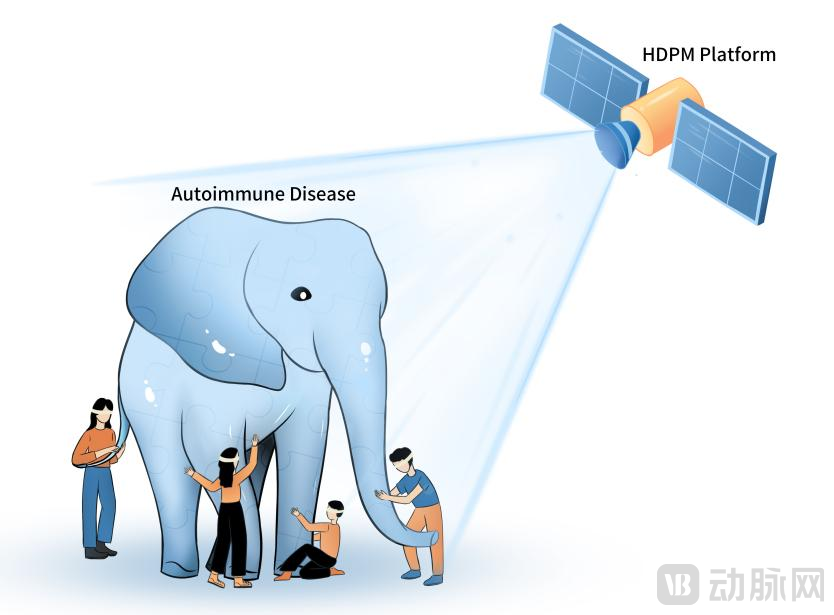
Precision Subtyping Ends the “Blind Men and the Elephant” Approach to Treating Autoimmune Diseases
Autoimmune diseases refer to conditions caused by a reduction or breakdown of immune tolerance to self-components due to certain factors, leading to damage of the body’s own organs and tissues by autoantibodies and/or sensitized lymphocytes, and manifesting as functional impairments of the affected tissues and organs.
Data from Scientific American in 2021 indicated that approximately 4.5% of the global population is affected by autoimmune diseases. The American Autoimmune Related Diseases Association states that more than 100 autoimmune diseases have been identified to date, with common examples including rheumatoid arthritis, systemic lupus erythematosus (SLE), ankylosing spondylitis, psoriasis, inflammatory bowel disease, and bronchial asthma. The year-on-year increase in disability and mortality rates further underscores the significant challenges facing the diagnosis and treatment of autoimmune diseases, highlighting substantial unmet clinical needs and a gap in innovative therapeutics.
According to a 2021 research report by Industrial Securities, the global market for autoimmune disease drugs is projected to grow from USD 116.9 billion in 2019 to USD 163.8 billion in 2030. China’s autoimmune disease drug market continues to lead global growth rates, with its overall market size increasing from USD 2.4 billion in 2019 to USD 24.1 billion in 2030, representing a CAGR of 26.3% from 2019 to 2024 and a CAGR of 20.9% from 2024 to 2030.
However, current therapeutics for autoimmune diseases still rely on traditional R&D models, characterized by low success rates. Moreover, even approved drugs often pose significant toxicity and side effects, offering limited patient benefit. Over the past 60 years, the U.S. FDA has approved only two innovative therapies for systemic lupus erythematosus (SLE): Benlysta (belimumab), approved in 2011, and Saphnelo (anifrolumab), approved in 2021. There is an urgent need for a revolutionary R&D paradigm in autoimmune disease drug development. By enabling precise patient stratification, such an approach can enhance R&D success rates and address unmet clinical needs.
In contrast, in the field of oncology drug development, which is characterized by significant heterogeneity, it is very common to leverage precision stratification technologies to enhance R&D efficiency. A classic example is the revolutionary anticancer drug Vitrakvi (larotrectinib). The most significant difference between larotrectinib and traditional oncology drugs lies in its development and clinical trials, which were conducted based on NTRK gene fusions rather than being restricted to a specific tumor type. Larotrectinib achieved an overall response rate of 75% in patients with NTRK-positive tumors and successfully received FDA approval.
In fact, not only tumors but also many autoimmune diseases exhibit significant heterogeneity. Systemic lupus erythematosus (SLE), mentioned above, is a typical example. Its pathogenesis is extremely complex and involves multi-organ pathology. Therefore, it is necessary to combine precision subtyping technologies to develop drugs for autoimmune diseases, thereby moving beyond the current “blind men feeling an elephant” approach to treatment.
Tianshi Tongda, established in January 2022, has developed the HDPM platform for precise subtyping of autoimmune diseases based on cutting-edge precision subtyping technologies, significantly improving the success rate of drug development.
Members of the Company’s Scientific Advisory Committee includeAcademician Tang Chao, Member of the Chinese Academy of Sciences and Dean of the Institute for Advanced Interdisciplinary Studies at Peking University, and the company's co-founderProfessor Sun Ren, Chair Professor of Systems Biology at Westlake University and Director of the Center for Emergency Medicine Research at Westlake Universityand other internationally renowned experts.
The first drug for which the Company accelerated R&D progress by leveraging its HDPM precision subtyping platform is PAT-A001. PAT-A001 is a fully human monoclonal antibody licensed from Tusk Therapeutics, a UK-based biotechnology company focused on tumor immunotherapy that was acquired by Roche in 2018 for $759 million. This antibody recognizes a unique antigenic epitope of the CD38 protein, and Tian Shi Tong Da holds exclusive global rights to it in the fields of autoimmune diseases and inflammatory diseases. The antibody eliminates CD38-expressing target cells through antibody-dependent cellular cytotoxicity (ADCC) and antibody-dependent cellular phagocytosis (ADCP).
Experimental data clearly demonstrate that PAT-A001 possesses best-in-class therapeutic potential compared with multiple existing anti-CD38 monoclonal antibodies, particularly in terms of efficacy and safety. PAT-A001 exhibits superior antibody-dependent cellular cytotoxicity (ADCC) and antibody-dependent cellular phagocytosis (ADCP) activities, while lacking any complement-dependent cytotoxicity (CDC) and showing minimal binding to red blood cells. Results from the Phase I clinical trial of PAT-A001 in humans have already indicated a favorable safety profile. Given that patients with autoimmune diseases require long-term medication, drug safety is one of the core factors influencing treatment adherence. Therefore, PAT-A001 holds promise as an excellent therapeutic agent for autoimmune diseases.
A study published in The New England Journal of Medicine in 2020 reported that two patients with life-threatening, refractory systemic lupus erythematosus (SLE) experienced significant reductions in SLEDAI-2K scores, urinary protein levels, and anti-dsDNA antibody titers, along with marked improvement in renal function and substantial disease remission, following treatment with an anti-CD38 monoclonal antibody and subsequent maintenance therapy. Furthermore, there have been numerous reports on the successful use of anti-CD38 monoclonal antibodies in treating other autoimmune diseases. Therefore, anti-CD38 monoclonal antibodies hold great potential to achieve success in the treatment of autoimmune diseases comparable to that of PD-1 monoclonal antibodies in oncology.
Looking ahead, Tianshi Tongda will further leverage the HDPM platform to advance a more diversified pipeline of precision therapeutics for autoimmune and inflammatory diseases, while developing novel therapies such as cell-based treatments in these fields, with the aim of becoming a global leader in precision medicine for immune-mediated diseases.
Professor Sun Ren, Chair Professor of Systems Biology at Westlake University and Director of the Center for Emergency Medicine Research at Westlake UniversityIt stated: “Since the 20th century, with social progress and improvements in hygiene conditions, the incidence of autoimmune and allergic diseases has been gradually rising. Particularly since the onset of the COVID-19 pandemic, public health awareness has significantly increased, leading to a ‘cleaner’ lifestyle, which is likely to further accelerate the growth of autoimmune and allergic diseases. Thus, it is evident that the treatment of autoimmune and allergic diseases will become a rapidly growing demand.”
Currently, the diagnosis and treatment of patients with autoimmune diseases rely on only a few indicators for broad classification, and therapies are largely non-specific, often yielding unsatisfactory outcomes. Leveraging advances in high-throughput sequencing and omics technologies, Tianshi Tongda conducts multi-omics evaluations of patients using tens of thousands of biomarkers to enable comprehensive and precise diagnosis and stratification of autoimmune diseases, thereby facilitating precision medicine. This strategy will truly benefit patients and significantly advance the field of autoimmune diseases.
Mr. Su Zhenbo, Founding Partner of Danlu Capital“The diagnosis and treatment of autoimmune diseases are facing significant challenges. With the advancement of genomics and single-cell sequencing technologies, precision therapy for autoimmune disorders represents the future direction. PAT-A001, the first product developed by Tianshi Tongda using its HDPM precision subtyping platform, is a monoclonal antibody targeting CD38. It has demonstrated favorable safety in Phase I clinical trials and holds promise as a long-term therapeutic option for autoimmune diseases. We are delighted to collaborate with this outstanding team and look forward to supporting Tianshi Tongda in becoming an internationally leading innovative pharmaceutical company specializing in precision treatments for autoimmune diseases.”
Dr. He Weiwu, Founding Partner of ETP Zhihe Daokang Fundstated: “ETP Zhihe Daokang Fund has long been deeply engaged in the frontier of biomedical technology. Throughout this journey, we have witnessed the rapid advancement of omics technologies and experienced the revolutionary changes they have brought to the treatment of highly heterogeneous diseases such as cancer. We believe that these new technologies will bring about even greater transformation in the field of autoimmune diseases, which is also characterized by high heterogeneity and has given rise to ‘blockbuster drugs.’ Now is the right time to actively enter this field.”
“Technological sophistication is one of our golden criteria for selecting portfolio companies. Therefore, from day one, we established a diversified and international Scientific Advisory Board for Tianshi Tongda, embedding it with the DNA of hard technology. By integrating single-cell technologies with multi-omics approaches, Tianshi Tongda has developed the HDPM precision subtyping platform, taking a solid step toward revolutionizing the treatment paradigm for autoimmune diseases. We are honored to partner with Danlu Capital and such an outstanding founding team to pioneer the blue ocean of precision therapy for autoimmune and inflammatory diseases, building a leading global enterprise in the field of precision therapeutics for immune-mediated diseases, ultimately benefiting patients.”
About Beijing Tianshi Tongda Pharmaceutical Technology Co., Ltd.
Beijing Tianshi Tongda Pharmaceutical Technology Co., Ltd. (Precision Autoimmune Therapeutics Inc.) is a company dedicated to the research and development of innovative drugs for the precise treatment of autoimmune and inflammatory diseases. By leveraging its HDPM precision subtyping platform, the company significantly enhances drug development success rates and shortens development timelines, providing urgently needed safer and more effective therapies to patients with autoimmune and inflammatory diseases worldwide, while taking a leading position in the blue ocean market of precision therapeutics.
Tianshi Tongda has established an in-depth collaboration with the publicly listed pharmaceutical company Kaixin Yuanda, leveraging its extensive experience and resources in innovative drug development in the United States to accelerate the research and development of drugs such as PAT-A001 in both China and the United States.
About Danlu Capital
Danlu Capital is an investment firm specializing in early-stage equity investments in innovative medical technologies. It was co-founded in early 2018 by Lu Qinchao, former Partner at Sequoia Capital China, and Su Zhenbo, former Managing Partner of Fenxiang Investment Management. The core team members all come from renowned venture capital firms and possess extensive healthcare industry resources in both China and the United States. Danlu Capital continues to deepen its focus on the early-stage healthcare sector, systematically investing across multiple areas including innovative medical technologies such as high-value consumables, in vitro diagnostic reagents, consumer healthcare, and digital health, as well as innovative drugs and novel healthcare services.
About the ETP Zhihe Daokang Fund
Emerging Technology Partners (abbreviated as “ETP Zhihe Daokang Fund”) was founded in 2000 by Dr. He Wei, a seasoned entrepreneur and investor, with a focus on early-stage venture capital in the biomedical sector. Dr. He graduated from Nanjing University and, supported by the CUSBEA program, went to Baylor College of Medicine in the United States in 1986 to pursue his Ph.D. He conducted research for many years at the Mayo Clinic and Massachusetts General Hospital of Harvard Medical School, and in 1993 joined Human Genome Sciences, founded by J. Craig Venter, the “father of the human genome,” as one of its first scientists. The company successfully developed Benlysta through genetic technology, the first innovative drug approved by the FDA in nearly 60 years for the treatment of systemic lupus erythematosus (SLE), and was subsequently acquired by the renowned pharmaceutical company GlaxoSmithKline for approximately $3.6 billion. ETP Zhihe Daokang Fund currently has branches in Beijing, Wuxi, Silicon Valley, Boston, and Maryland, and has invested in or founded more than 110 biotechnology and biomedical companies, including several unicorns. The ETP RMB fund aims to facilitate the introduction of advanced global life science achievements and biomedical technologies into China, thereby supporting the development of China’s healthcare industry. Innovative medical enterprises in which ETP Zhihe Daokang Fund has been deeply involved in founding or investing in recent years include: Genetron Health, Edigene, Baijia Medical, Tianke Ya, Heyuan Biologics, Meilian Taike, Origene (Zhongyuan Union Cell & Gene Engineering), Dimabio, Chen’an Biologics, Bendao Genetics, Innovent Bio (Note: Context suggests a different entity given the list, likely Innovec Bio or similar based on phonetics "Yinnuoweikang"), and Houwu Biologics, among others. Some of these companies have grown into leading enterprises in their respective niche sectors.