

Shanghai Yongci Rehabilitation Hospital Marks 5th Anniversary: Pioneering the Future of Specialty Rehabilitation Care
Cerebral Hemorrhage with Multiple Complications—After the family of a patient surnamed Hu sought treatment at multiple hospitals without any improvement, they heard that the newly opened Shanghai Yongci Rehabilitation Hospital (hereinafter referred to as “Yongci Hospital”) might offer effective therapeutic and rehabilitative care. On July 25, they arrived at the hospital. That afternoon, a multidisciplinary consultation was promptly convened, and a series of treatment plans were immediately implemented. Ultimately, Mr. Hu regained his limb muscle strength and was successfully discharged.
This was also the first critically ill patient admitted by Yongci Hospital in 2017, which officially began operations on July 2, 2017.
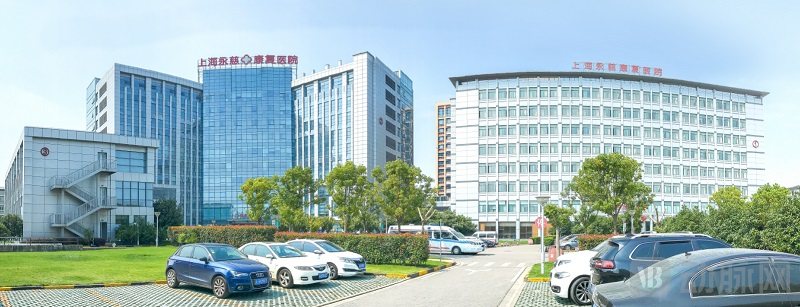
Having established a strong reputation in the field of critical care rehabilitation, Yongci Hospital has subsequently appeared on numerous industry rankings. In the recently released KPMG 2022 “Top 50 Private Rehabilitation Medical Institutions” list, Yongci Hospital was featured as a recipient of the “Leading Specialized Rehabilitation Hospital Award.”
In 2022, Yongci Hospital, under the Yingkang Yisheng platform, celebrated its fifth anniversary. Over these five years, how did Yongci Hospital gradually grow into a leading institution among specialized rehabilitation hospitals?
The annual number of hospitalized patients reaches as high as 6,000, with a bed occupancy rate of up to 97%.
Some data may better illustrate the achievements of Yongci Hospital over the past five years.
Currently, Yongci Hospital has 400 designated beds, with a capacity to expand to 600 beds. In 2021 and prior years, the hospital admitted nearly 6,000 inpatients annually, maintaining a bed occupancy rate of approximately 97%. The number of medical staff has grown from just over 10 at its inception to more than 600.
Behind the “achievements” lies the result of Yongci Hospital’s step-by-step exploration—
2017, the year Yongci Hospital was inaugurated. In that year,Yongci Hospital quickly laid the foundation for its own development.In July of that year, Yongci Hospital established its reputation in the field of critical care rehabilitation; in October of the same year, the hospital was integrated into the national medical insurance system, laying the foundation for broader patient coverage.
2018, isYongci Hospital Establishes Platform Strengthperiod. First, Yongci Hospital chose to improve its own rehabilitation treatment methods and built a hyperbaric oxygen chamber; secondly, it increased cooperation in the field of domestic and international rehabilitation specialties—establishing a medical technology collaboration center with Zhongshan Hospital Affiliated to Fudan University and setting up China's only international base for disorders of consciousness in partnership with the Coma Science Group at the University of Liège School of Medicine in Belgium. Through these collaborations, Yongci Hospital has further enhanced its capabilities.
2019, isYongci Hospital Focuses on the Development of Smart Hospitalsperiod. By integrating and consolidating disparate data, it achieves interoperability of information among various hospital business application systems and across departments, optimizes hospital business processes, and provides support for hospital research and management through data mining and analysis;
In 2020, as the pandemic broke out, Yongci Hospital dispatched medical teams to aid Wuhan., contributing to epidemic prevention and control. The Hubei-aiding medical team from Yongci Hospital provided targeted support to Wuhan Vocational College Hospital. The Second Ward, under its management, cumulatively admitted 39 patients, transferred 3 to other departments, and transferred 2 to other hospitals. All 34 discharged patients were cured, achieving “zero recurrence” among discharged patients and “zero infection” among medical staff.
In 2021, with the establishment of the “Clinical Application Base for Intelligent Rehabilitation Robots,” Yongci Hospital entered a new era of development in IoT-enabled rehabilitation construction.
Looking back on the past five years, the transformations at Yongci Hospital have been visibly evident. Prior to 2017, the campus site intended for development was still overgrown with wild grass. Today, on every mild and pleasant day, a distinctive scene unfolds: while patients requiring ventilator support at other hospitals remain confined to intensive care units (ICUs), those at Yongci Hospital can enjoy the gifts of nature outdoors, basking in sunlight and fresh air. “What used to be a field of wild grass has now become a vibrant landscape of patient recovery full of vitality. This is perhaps the most profound change I have witnessed over the past five years,” said Cheng Peng, Vice President of Medical Services at Yongci Hospital.
This is also attributable to Yongci Hospital’s self-driven model innovation, which addresses the current pain points in the rehabilitation medical industry.
Addressing the Imbalance in Rehabilitation Medical Resource Supply to Provide High-Quality, Accessible Services
The current rehabilitation medical industry still has many pain points that have not been resolved.
From an industry perspective, the most critical issue remains the imbalance in the supply of rehabilitation medical resources, with the sector facing significant shortages in both hospital beds and rehabilitation professionals.According to relevant research reports from Ping An Securities, China currently has 270,000 rehabilitation medicine hospital beds, leaving a substantial shortfall against the target of 440,000. Furthermore, the “Notice on Opinions for Accelerating the Development of Rehabilitation Medical Services” states the goal of “striving to achieve 6 rehabilitation physicians and 10 rehabilitation therapists per 100,000 population by 2022; and 8 rehabilitation physicians and 12 rehabilitation therapists per 100,000 population by 2025.” Currently, compared with these targets, China faces a shortage of 39,000 licensed (assistant) rehabilitation physicians (with only 46,000 currently practicing) and a shortage of 81,000 rehabilitation therapists (with nearly 60,000 currently practicing).Furthermore, although the healthcare industry is gradually shifting from its historical emphasis on treatment over rehabilitation to a greater focus on rehabilitation, the concept of rehabilitation still requires broader dissemination.
From the Perspective of Rehabilitation Stakeholders: During the rehabilitation process, different stakeholders continue to face distinct pain points—
① Patients—revolving around doctors, untimely information communication, and poor experience...
② Family members—poor information communication, cumbersome visitation procedures, inability to conduct remote visits...
③ Medical staff—exerting considerable effort and wasting precious treatment time on non-therapeutic matters...
How to provide patients with higher-quality, more accessible medical services amid the current imbalance in the supply of rehabilitation resources is undoubtedly the core issue facing rehabilitation healthcare institutions. To address these pain points, Yongci Hospital has undertaken a series of exploratory initiatives in service delivery models—
First, there is the strength of innovative disciplines, providing high-quality medical service supply.
On one hand, Yongci Hospital is developing its rehabilitation specialty through collaborations with external institutions, establishing itself as an academic hub. As early as 2018, the second year after its establishment, Yongci Hospital partnered successively with Zhongshan Hospital Fudan University and the Coma Science Group at the University of Liège in Belgium to build medical technology collaboration bases and establish an international center for disorders of consciousness, thereby enhancing its capacity to deliver high-quality medical services.
On the other hand, as the first rehabilitation hospital under the INKON Life platform, Yongci Hospital can leverage the platform’s sharing mechanism to mobilize experts from other hospitals, thereby enhancing its own clinical specialty service capabilities. This enables the horizontal replication of specialized expertise from other institutions, ultimately benefiting its patients.
Secondly, the “integrated doctor-patient” model and the construction of smart hospitals enhance the capacity for consistent delivery of high-quality services.
Historically, patients revolved around doctors; however, at Yongci Hospital, the cross-industry replication of Haier’s “RenDanHeYi” model in the healthcare sector has realized the integration of doctors and patients. This transformation is turning medical practitioners into healthcare makers and establishing a normalized service model where medical staff revolve around patients. Unlike other hospitals, medical personnel at Yongci Hospital consistently prioritize patient experience, reflecting their personal value enhancement through the experiences of patients and their families.
Yongci Hospital also recognized that merely changing the medical service model could not resolve the challenges in rehabilitation diagnosis and treatment. Consequently, it chose to promote the construction of a “smart” organization by advancing the hospital’s informatization and intelligent infrastructure. Leveraging network collaboration and the technological capabilities of the INKON Life platform, Yongci Hospital has developed a comprehensive solution centered on five major smart scenarios: “Smart Ward, Smart Diagnosis and Treatment, Smart Weaning, Smart Settlement, and Smart Rehabilitation.” This solution addresses, in an all-around manner, the pain points faced by medical staff, family members, and patients.
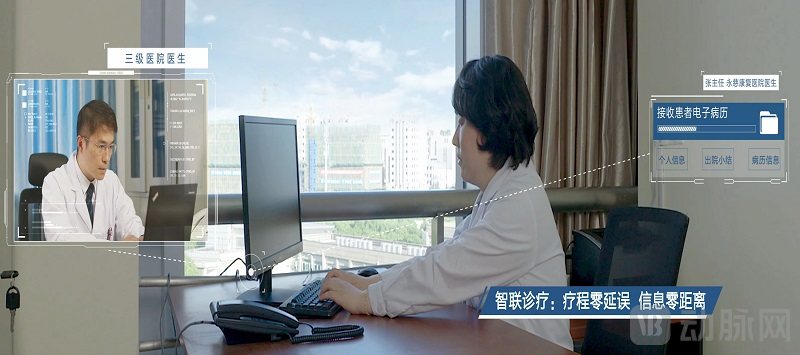
Furthermore, through initiatives such as the development of an IoT-enabled rehabilitation hub, we can further enhance the productivity of rehabilitation therapists and improve the efficiency of medical service delivery.
Traditional rehabilitation therapy often encounters various challenges. First, traditional rehabilitation typically involves one-on-one manual training conducted by therapists. Taking the Yongci Rehabilitation Center as an example, although it currently employs 170 therapists, it still faces a shortage of personnel. Second, traditional rehabilitation places high demands on therapists’ individual skills; significant variations exist in the techniques employed by different therapists, making it difficult to establish uniform standards. Third, patients often require long-term rehabilitation training due to prolonged recovery periods. Performing identical, repetitive muscle strength exercises with the same therapist may lead to treatment fatigue and reduced patient motivation.
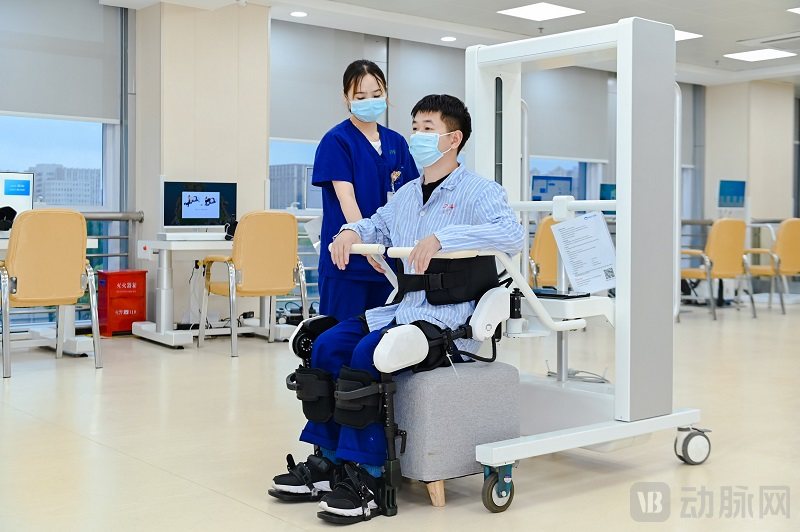
In light of this, Yongci Hospital, in collaboration with the Inkang Yisheng platform, has established China’s first Internet of Things (IoT) hub for rehabilitation robots. By integrating various rehabilitation robots as hardware and a mobile-based rehabilitation system as software, the hub enables bedside rehabilitation assessments, bedside order processing, task allocation, real-time mobile fee confirmation, mobile electronic medical records for rehabilitation, mobile appointment management, mobile shift-handover management, and automatic generation of treatment records. Currently, the Yongci Hospital Rehabilitation Robot IoT Hub is equipped with over 50 devices, capable of accommodating 50 patients simultaneously. With only three therapists on staff, it achieves one-to-many rehabilitation training.
Finally, education on rehabilitation awareness and concepts is provided to patients. Through popular science-based patient education, the traditional mindset that rehabilitation begins only after treatment is completed is changed, helping patients establish correct rehabilitation concepts from the very first day of hospital admission.
In fact, the ability to carve out a unique path of exploration and development is closely tied to the support behind Yongci Hospital.
Leveraging the INKON Life platform, the hospital has achieved a unified approach to building its “Rehabilitation Specialty.”
According to Vice President Cheng, the achievements Yongci Hospital has made today are also attributable to the following factors:
On one hand, there is support from the INKON Life platform.In addition to providing support for discipline capacity building at Yongci Hospital, the Yinkang Yisheng platform also leveraged its own capabilities in smart hospital construction to help Yongci Hospital complete its intelligent and informatization infrastructure. Furthermore, by leveraging its IoT-enabled rehabilitation capabilities, the Yinkang Yisheng platform assisted Yongci Hospital in establishing China’s first Rehabilitation IoT Port project. Through the integration of intelligent rehabilitation equipment and rehabilitation robotics technologies, the platform has better supported Yongci Hospital in expanding its specialized rehabilitation services.
On the other hand, it is also related to the hospital-wide, cohesive commitment to building a “specialized rehabilitation” discipline at Yongci Hospital.As a “specialized rehabilitation” hospital built and configured in accordance with the standards for tertiary hospitals, Yongci Hospital has positioned itself from the outset as an “IoT-enabled medical ecosystem platform featuring critical care rehabilitation,” with sustained investments across multiple dimensions including operations and management throughout the entire institution.
Amid the current trend of population aging, the demand for rehabilitation services is set to rise further. As Yongci Hospital continues to enhance its infrastructure and capabilities, it is poised to play a more significant role in the specialized field of rehabilitation, thereby contributing its share to the advancement of the Healthy China initiative.