

China's 2021 Annual Report on Scientific and Technological Achievements Transformation: Over 466,882 Contracts Signed with Total Value of RMB 125.61 Billion
Recently,《2021 Annual Report on the Transformation of Scientific and Technological Achievements in China (Colleges, Universities, and Research Institutes)》(hereinafter referred to as the “Report”) was officially published and distributed in China.
Status of Scientific and Technological Achievements at Universities and Research Institutes
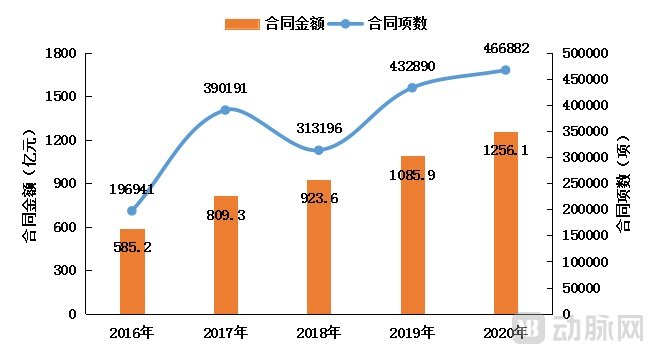
The report indicates that technology transfer activities across China remain vibrant, with scientific and technological achievements transferred through various methods showing an upward trend. In 2020, 3,554 universities and research institutes nationwideThe number of contract items is 466,882, and the total contract amount is RMB 125.61 billion.. Among them, 261 universities and research institutes achieved technology transfer outcomes exceeding RMB 100 million through assignment, licensing, equity investment based on valuation, as well as technology development, consulting, and services.
It is reported that the report was jointly compiled by the China Society for Science and Technology Evaluation and Achievement Management, the National Center for Science and Technology Evaluation, and the Institute of Scientific and Technical Information of China. The annual report has been published consecutively for four years. The 2021 annual report further expanded its data collection scope, using the 2020 technology transfer data from 3,554 public higher education institutions and research institutes across China as a sample to comprehensively analyze the progress, effectiveness, and major existing issues in the transformation of scientific and technological achievements in universities and research institutes.
What new insights can we gain from this report regarding the translation of scientific research achievements into practical applications? To this end,VCBeat Orange BureauIn-depth analysis of the report summarizes four core trends.
Trend 1: Two Core Metrics Surge, Marking a New High in Technology Transfer from Universities and Research Institutes
The report shows that in 2020, 3,554 universities and research institutes across China signed 466,882 contracts, with a total contract value reaching RMB 125.61 billion, marking a new milestone in the commercialization of scientific and technological achievements from these institutions.
The rapid increase in these two core metrics is, of course, not without reason. First,The “pressure” on universities and research institutes to commercialize their own scientific and technological achievements has surged.In recent years, as the “main force” of innovation, universities and research institutes have been continuously experimenting and exploring in the field of achievement transformation, devoting far more effort and resources than ever before. Taking R&D expenditure as an example, national R&D investment in universities and research institutes reached RMB 529.13 billion in 2020, representing a significant increase from the previous year.
Next isThe Unique Advantages of Universities and Research Institutes in Innovation and Translation. Universities and research institutes are hubs for talent, particularly for high-caliber experts; their concentration will spur breakthrough innovations in foundational technologies, thereby bringing disruptive changes to the entire industry. According to statistics from VCBeat’s Orange Fruit Bureau, among startups in the healthcare sector that completed early-stage financing in the first half of this year, more than 75% of founders came from universities and research institutes.
ThenMore Diversified Conversion MethodsResearchers have adopted various methods for commercialization, including assignment, licensing, equity investment based on valuation, as well as technology development, consulting, and services, thereby broadening the pathways for the transformation of scientific and technological achievements in universities. It is reported that 261 universities and research institutes have each achieved over RMB 100 million in value through the commercialization of scientific and technological achievements via these methods.
Finally,Accelerated Influx of CapitalFrom 2016 to 2020, the total contract value for the commercialization of scientific and technological achievements rose year by year, surpassing the RMB 100 billion threshold. To some extent, this indicates that capital markets are increasingly intensifying their “early-stage” investment efforts, with competition to recruit university professors—a distinctive talent pool—becoming progressively fiercer.
Trend 2: Policy Implementation Becomes the Top Priority
Policies are not mere “window dressing”; they must be implemented after being introduced as pioneers.
Since the national government began supporting the commercialization of scientific and technological achievements through legislation and tax incentives in 1985, China has issued a total of 434 policies on the translation of research findings over the past 37 years. We often say, “To break the ice, policy must lead the way.” However, the sheer quantity of policies has not translated into a qualitative improvement in conversion rates. Currently, the rate of commercialization of scientific and technological achievements in China remains below 10%, largely due to inadequate implementation of these policies.
So, how should the policy be implemented?
First, it is essential to address the key pain points., focusing on the core pain points in the translation of current scientific research achievements into practical applications as the fundamental basis, and introducing targeted solutions;Second, strengthen implementation., relevant functional departments must closely align with policy directives, actively cooperate, and fully leverage their value within the innovation and translation chain.
From the report, we can see thatThe implementation of policies has provided substantial support for the transformation of scientific and technological achievements in universities and research institutes.For instance, in activities involving the commercialization of scientific and technological achievements, individual rewards account for more than 50% of the total cash and equity income generated from such commercialization, while over 90% of these individual rewards are allocated to key personnel who have made major contributions to research, development, and commercialization. This has greatly stimulated the enthusiasm of R&D staff to commercialize their achievements.
It is precisely due to the introduction and implementation of these policies that the core conflicts in benefit distribution regarding the commercialization of scientific research achievements have been resolved, effectively safeguarding the interests of all parties involved in the innovation and translation chain, thereby promotingAccelerated Commercialization of Scientific and Technological Achievements from More Universities and Research Institutes.
Trend 3: Capital Focuses on “Early-Stage Investments,” with Healthcare Remaining a Hot Sector
The report also shows that more than 40% of scientific and technological achievements have been commercialized in the manufacturing sector,Over 60% are transferred to micro, small, and medium-sized enterprises. It is precisely based on this “flow” that we have found investors to be more inclined toward “investing in small enterprises.”
So, why are investors focusing on "investing in small companies"?
The first reason isPolicy SupportIn the “Guiding Opinions on Further Strengthening Financial Services for Micro, Small, and Medium-Sized Enterprises” released in June 2020, it was explicitly stated that “support should be provided for high-quality micro, small, and medium-sized enterprises to go public or list on equity trading platforms for financing.” In addition, the People’s Bank of China introduced two direct monetary policy tools aimed at supporting the real economy, to actively guide investment institutions toward micro, small, and medium-sized enterprises.
The second reason isSmall and Micro Enterprises: An Investment Blue OceanIn China, the vast number of micro and small enterprises have become an important pillar of the national economy, with a solid foundation for sustainable development. Some industry practitioners believe that although the investment value of individual entities may be limited, as a whole, they represent an untapped blue ocean for global investors who have yet to enter this market.
However, micro and small enterprises are characterized by their small individual scale, low risk-bearing capacity, and limited collateral, resulting in high default and failure rates. This necessitates that investors exercise prudent judgment in selecting geographic regions and investment directions when investing in these smaller entities.
First, let's look at the geographical region., there are significant regional disparities in the generation and absorption of scientific and technological achievements. Taking Beijing and Shanghai as examples, these cities host numerous universities and research institutes with strong scientific research capabilities. The contract value of their technological outputs transferred to other regions far exceeds the contract value of technological achievements they absorb from elsewhere, demonstrating a strong radiating effect on other regions.
Revisiting the Direction, many investors have simultaneously focused their attention on the healthcare sector, primarily based on two core dimensions: first, it has enormous industrial demand and a high industry "ceiling"; second, it features high technical barriers, allowing startups to grow rapidly while being difficult to "replicate."
。
According to statistics on startups spun off from universities and research institutes, there are 102 companies in the healthcare sector, accounting for 21.3% of the total. Investment enthusiasm in this sector ranks among the top four across all sub-sectors.
Trend 4: From Academia to the Business World, the Bridging Role of Technology Transfer Offices Becomes Increasingly Prominent
Yeda CEO Amir Naiberg believes that “collaboration between academia and industry is highly beneficial, yet it also carries significant risks, as it represents a clash of two different mindsets.”
Therefore, how can we eliminate "collisions"? This requires building a bridge between academia and commerce, which isTechnology Transfer Office or Office of Technology CommercializationIt primarily focuses on core areas such as the disclosure and evaluation of scientific research achievements from universities and research institutes, intellectual property transfer, patent applications, collection and distribution of transfer fees, and personnel training, thereby bridging the gap between scientists and industry and facilitating the commercialization of academic research outcomes.
However, how to become such a valuable "link" is a challenge currently faced by many technology transfer institutions. The report shows that more and more universities and research institutes have specially establishedTechnology Transfer Institutions Adapted to Their Own Characteristics, the transfer and commercialization of scientific and technological achievements are continuously advancing toward specialization, market orientation, and socialization.
In addition, universities and research institutes collaborate with enterprises, jointly establish R&D institutions, technology transfer agencies, and service platforms, enabling the platform to continuously attract and aggregate resources from various parties to facilitate the transfer and commercialization of scientific and technological achievements.
According to statistics, in 2020, a total of 802 universities and research institutes in China established their own technology transfer offices, representing a 16.4% increase from the previous year; additionally, 1,106 universities and research institutes jointly established R&D institutions, technology transfer offices, and commercialization service platforms with enterprises, marking a 5.5% increase from the previous year.