

Hep Pharma Completes Tens of Millions RMB Pre-B Financing to Advance Clinical Development of Hepalatide for Hepatitis B and D
VCBeat has learned that Shanghai Hepu Pharmaceutical Co., Ltd. (hereinafter referred to as “Hepu Pharmaceutical”) has successfully completed its Pre-B financing round, with exclusive investment from the Shanghai Zhangke Lingyi Fund. Hepu Pharmaceutical has cumulatively secured over RMB 100 million in investment, and the completion of this financing round marks the company’s entry into a new stage of development.
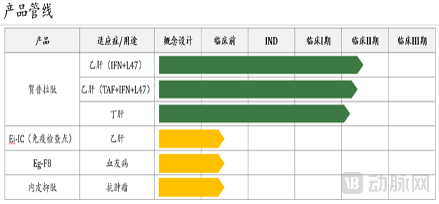
Hepu Pharmaceutical’s R&D Pipeline Data Source: Provided by the Interviewee
Shanghai Hepu Pharmaceutical Co., Ltd. has long been dedicated to the research and development of innovative drugs for viral hepatitis. Its novel hepatitis B/hepatitis D virus entry inhibitor, hepalatide, is currently in Phase II clinical trials. Shanghai Hepu Pharmaceutical and Gilead Sciences are the only two companies worldwide developing peptide-based inhibitors for hepatitis B/hepatitis D virus entry.
Bulevirtide, developed by Gilead Sciences, received conditional approval from the European Union in 2020 for the treatment of hepatitis D. The company recently announced the success of its Phase III clinical trial, in which 48 weeks of treatment with bulevirtide at doses of 2 mg and 10 mg achieved combined biochemical and virologic response rates of 45% and 48%, respectively, compared with only 2% in the control group. Gilead has now submitted a marketing application to the U.S. Food and Drug Administration (FDA). Hepalotide, developed by Shanghai Hepu Pharmaceutical Co., Ltd., is currently undergoing a Phase II clinical trial in combination with interferon for the treatment of hepatitis B. Preliminary results have demonstrated favorable clinical efficacy, and a Phase II clinical trial for the treatment of hepatitis D is set to commence shortly.
China currently has approximately 20 million patients with chronic hepatitis B, with 1 million new cases diagnosed annually. At present, only interferons and nucleos(t)ide analogues are approved for the treatment of hepatitis B, yet the cure rate remains as low as 2–3%. As nucleos(t)ide analogues constitute the mainstream therapeutic regimen, the vast majority of patients fail to meet the criteria for discontinuation, and the relapse rate after cessation is as high as 80%. Hepulotide exerts its antiviral effect by blocking the HBV infection receptor. To address the substantial clinical need for a functional cure of hepatitis B and safe discontinuation of nucleos(t)ide analogue therapy, clinical trials targeting these respective endpoints have been designed to validate its clinical efficacy, with preliminary results showing promise.
Hepatitis D virus (HDV) is a satellite virus of hepatitis B virus (HBV) and can replicate only in the presence of HBV infection. However, it carries a threefold higher risk of hepatocellular carcinoma and a ninefold higher risk of liver cirrhosis compared with HBV alone, often leading to rapid disease deterioration and progression. The U.S. FDA has classified HDV infection as a life-threatening condition. Currently, bulevirtide is the only effective treatment for hepatitis D worldwide. In China, hepatitis D is highly prevalent among ethnic minority populations, yet there are no effective therapeutic agents available domestically. In a two-year follow-up study of 35 patients with hepatitis D in China, as many as nine patients died. Therefore, the development of therapeutic drugs for hepatitis D in China is urgently needed.
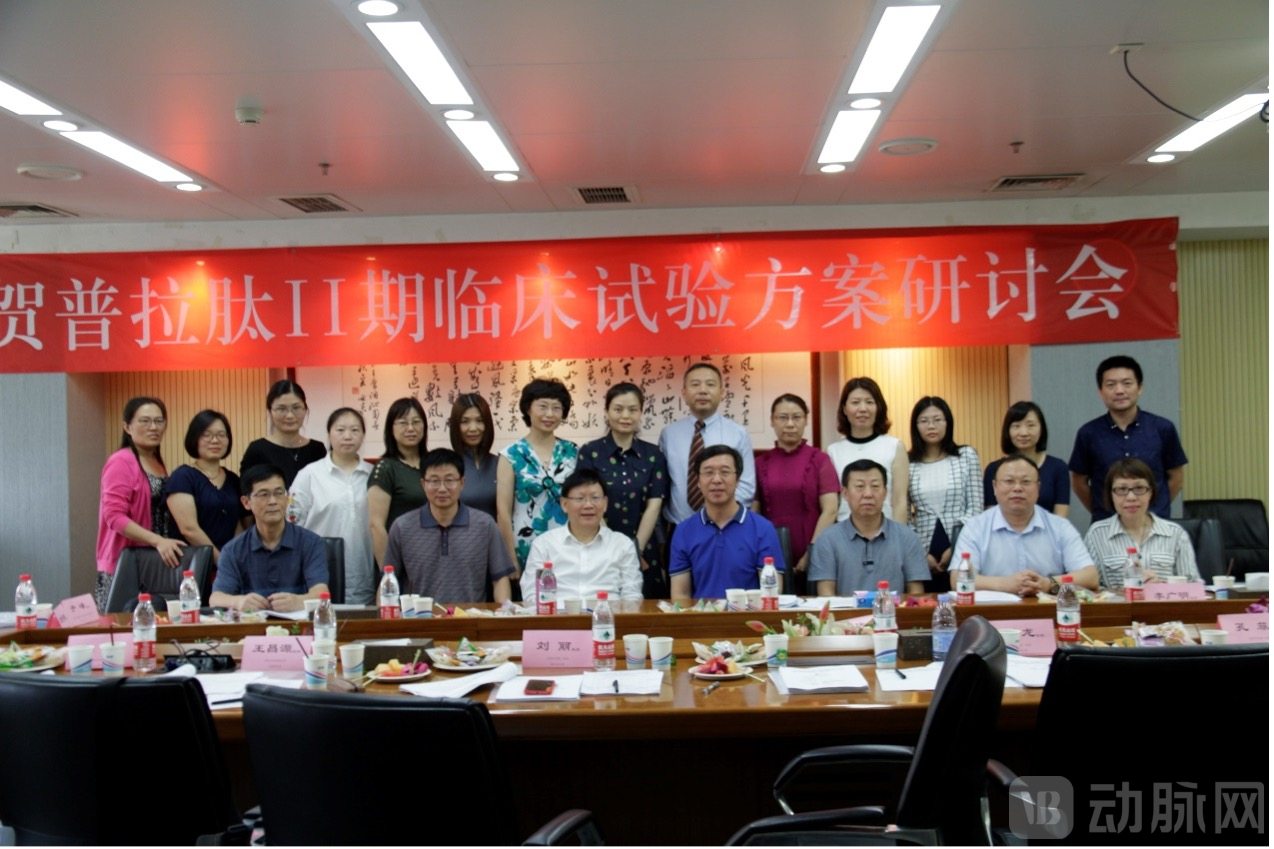
Seminar on the Phase II Clinical Trial Protocol for Hepu Peptide Image source: Provided by the interviewee
Shanghai Hepu Pharmaceutical Co., Ltd. is dedicated to the research and development of original, innovative drugs for viral hepatitis, adhering to an R&D strategy centered on fundamental competitive advantages. The development of entry-inhibiting peptides for hepatitis B and D viruses was once viewed with skepticism, with only two companies worldwide—including Shanghai Hepu—remaining committed to this field over the long term. For more than a decade, Shanghai Hepu has persevered through isolation, staying true to its original mission. During this period, the company received investment support from the Zhangjiang Biomedical Industry Development Fund and the Xiading Fund, both of which prioritize funding for pioneering, original R&D.
Zhang Ke, leading the Yi Fund, keenly recognized the prospects in this field and completed the investment closing with Shanghai Hepu Pharmaceutical Co., Ltd. immediately after work resumed in Shanghai. In the post-pandemic era, the pace of investment and financing in the biopharmaceutical industry has slowed, presenting greater challenges for new drug development. The market increasingly favors products featuring deep, substantive innovation and demonstrable clinical value. Shanghai Hepu Pharmaceutical has accumulated profound expertise in the foundational technologies for hepatitis B (HBV) drug development, gradually clarifying the direction for novel HBV therapeutics. The company has built a product pipeline based on original innovations, encompassing HBV entry inhibitors, hepatic immune checkpoints, liver-specific targeted delivery systems, and novel HBV target discovery. It aims to sequentially achieve key clinical treatment goals for viral hepatitis, including the launch of China’s first hepatitis D (HDV) therapeutic, safe discontinuation of nucleos(t)ide analogs for HBV, HBV DNA seroclearance, and functional cure of hepatitis B.
Dr. Liu Hongli, Founder and CEO of Shanghai Hepu Pharmaceutical Co., Ltd., stated, “For decades, we have been dedicated to the research and development of innovative drugs for liver diseases, particularly for hepatitis B, accumulating extensive experience in the process. We appreciate the trust placed in us by our investors. Shanghai Hepu Pharmaceutical will continue to forge ahead with unwavering commitment, striving to develop and realize the clinical value of our therapies, thereby providing more effective treatment options for the vast number of hepatitis B patients in China.”
Dr. Xia Lei, Partner at Zhangke Lingyi Fund, stated, “Zhangke Lingyi Fund has consistently focused on early- to mid-stage investments in the biopharmaceutical sector. Shanghai Hepu Pharmaceutical Co., Ltd. has been diligently and perseveringly developing its capabilities in Zhangjiang. Its professionalism in the research and development of innovative drugs for liver diseases is commendable. We believe that, through the efforts of the Hepu Pharmaceutical team, Hepulaptide will bring significant benefits to patients with hepatitis B and hepatitis D. We are also confident that Hepu Pharmaceutical will grow into a landmark enterprise in China’s innovative drug industry, realizing the long-held aspirations of pharmaceutical developers.”

Shanghai Hepu Pharmaceutical Co., Ltd. focuses on the research and development of original innovative drugs in the field of liver diseases, possessing full-process R&D capabilities from structure discovery, preclinical development, clinical concept design, and clinical validation to new drug launch. With a mission to achieve a cure for hepatitis B, the company strives for a China free of hepatitis B. Heplaprevir is an original drug developed by Hepu Pharmaceutical.

Zhangke Lingyi was established in Zhangjiang, Shanghai, in 2015, primarily investing in early- to mid-stage projects in the fields of biopharmaceuticals and innovative medical devices. Its portfolio includes ImmunOnco, Neopulse Medical, Yinuo Pharmaceutical, Zhuowai Medical, Luoqi Biologics, Jiewei Biologics, Lingnuo Pharmaceuticals, Lingtai Biologics, Xinjite Medical, and Xuanren Technology. The management team of Zhangke Lingyi has deep roots in Zhangjiang, boasting extensive industry, project, and information resources. By integrating key development factors such as capital, talent, growth space, corporate partnerships, and policy insights essential for enterprise growth, the firm works closely with entrepreneurs to drive the rapid development of their startups.