

Cutting Through the Controversy: Chen Gong Team Reinforces Feasibility of Glia-to-Neuron Transdifferentiation with Robust Evidence
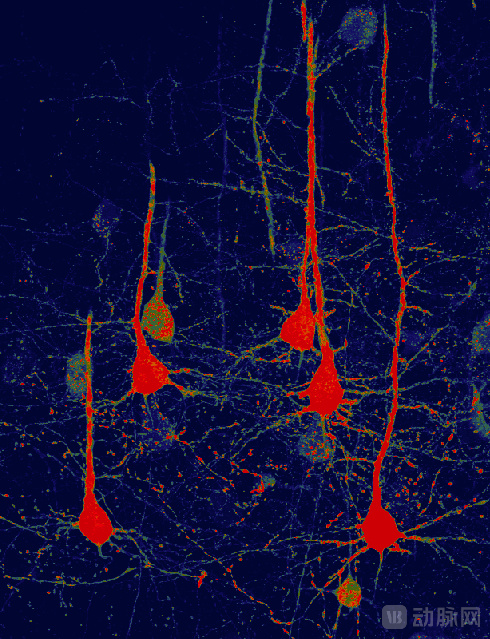
Neurodegenerative diseases represent one of the medical fields with significant unmet needs. Conditions such as Parkinson’s disease, Alzheimer’s disease, and Huntington’s disease have complex pathogenesis, are currently incurable, and have very few interventions capable of effectively slowing disease progression. With the accelerating pace of population aging, neurodegenerative diseases have become an increasingly burdensome medical and social challenge.
In recent years, numerous scientists have bravely scaled the “perilous peaks” of treating neurodegenerative diseases. A substantial body of research has revealed that significant neuronal loss occurs during the onset and progression of these conditions. Consequently, scientists have proposed a hypothesis: “Could neuronal regeneration become the dawn of a cure for neurodegenerative diseases?”
Generally, neuronal damage or loss cannot be repaired or regenerated. However, in recent years, an increasing number of scientists have attempted to directly transdifferentiate astrocytes into neurons both in vitro and in vivo. Since 2010, laboratories worldwide have continuously validated the direct transdifferentiation of astrocytes into neurons in both in vitro and in vivo settings, with the majority of researchers employing viral vectors to overexpress neural transcription factors. This has made cellular transdifferentiation a hot research area. The field of cellular transdifferentiation has developed for over a decade since Shinya Yamanaka first reported induced pluripotent stem cells (iPSCs) in 2006.
In 2013, Chen Gong’s team first reported the use of the single neural transcription factor NeuroD1 to achieve in situ transdifferentiation of glial cells into neurons within the brain. As Chen Gong’s team successfully demonstrated functional repair in multiple models of neurological diseases, the novel technology of NeuroD1-mediated in situ transdifferentiation for regenerating neurons has garnered widespread attention in the fields of neuroscience and biomedicine.

Prof. Gong Chen
In recent years, Zhang Chunli’s team has also put forward different viewpoints, questioning transdifferentiation mediated by certain pathways such as NeuroD1 and PTBP1. However, we have found that multiple international scholars, including Ling Wei, Alex Chubykin, and Jenny Hsieh, have independently replicated the NeuroD1 experiments, demonstrating that NeuroD1 can induce in situ reprogramming of astrocytes into neurons. In March 2022, the laboratory of Beverley Davidson, then-President of the American Society of Gene & Cell Therapy, successfully validated that NeuroD1 mediates a certain degree of transdifferentiation using lineage-tracing mice.
As an increasing number of researchers engage in this field, the value of NeuroD1-mediated in situ transdifferentiation technology for neuronal regeneration will be robustly validated, and the evidence will become increasingly conclusive.
Recently, Professor Chen Gong’s team from the Guangdong-Hong Kong-Macao Institute of CNS Regeneration at Jinan University, and founder of NeuExcell Therapeutics, published an article titled “Enhancing NeuroD1 Expression to Convert Lineage-Traced Astrocytes into Neurons” on bioRxiv.It identified the reasons why other teams failed to achieve transdifferentiation and provided compelling evidence, such as two-photon in vivo imaging observations of astrocytes directly converting into neurons in vivo.Dispelling the uncertainties surrounding transdifferentiation, this lays a more solid foundation for the clinical application of the technology.
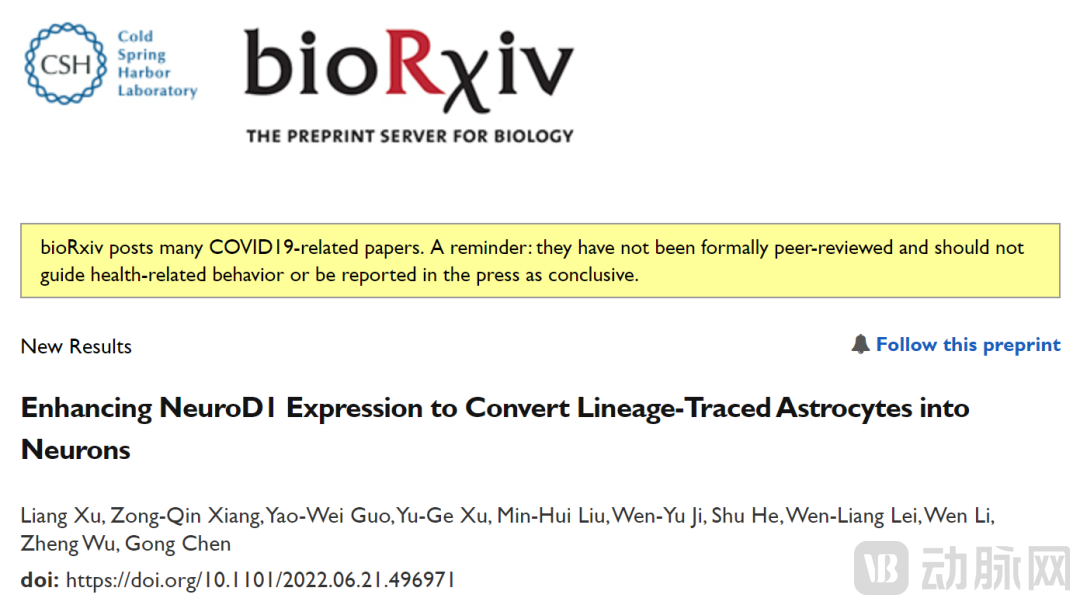
This study represents the first systematic analysis of NeuroD1-induced in situ transdifferentiation of astrocytes into neurons. By employing a series of different promoters, at varying titers, and across mice with diverse genetic backgrounds, it demonstrates from multiple perspectives that astrocytes can undergo in situ transdifferentiation into neurons.
In response to the neuronal “leakage” phenomenon reported in a previous Cell paper, Chen Gong’s team constructed three AAV vectors and tested them in the mouse cerebral cortex by driving green fluorescent protein (GFP) expression via the astrocyte-specific GFAP promoter.11、1012、1013GC/ml at three different titers. The experiment found that regardless of which promoter was used, at 1013Severe neuronal leakage was observed at a high titer of GC/ml; however, at 1011 GC/ml、1012At a titer of GC/mL, it maintains high astrocyte specificity with minimal neuronal leakage. Therefore, in the Cell paper, based on >1013The conclusion that in situ transdifferentiation technology is comprehensively challenged due to neuronal leakage caused by high-titer GC/ml is unreliable.
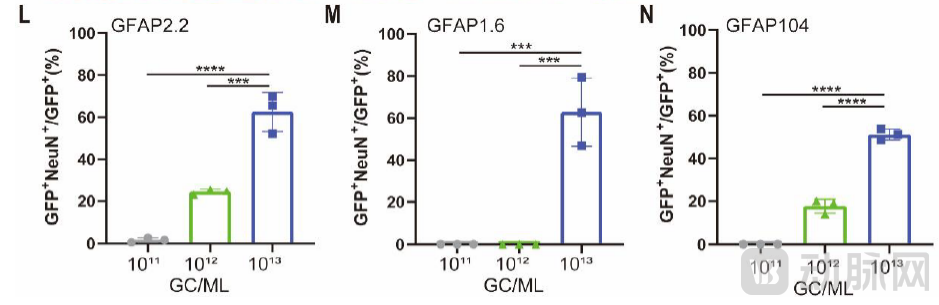
High-Titer AAV Induces Dose-Dependent Neuronal Leakage
In response to the unsuccessful results reported in a Cell paper, where lineage-traced astrocytes failed to transdifferentiate into neurons, Chen Gong’s team shared some research insights: “Lineage-traced astrocytes are more resistant to transdifferentiation than normal glial cells; enhancing NeuroD1 expression with enhancers is required to overcome this resistance and achieve in situ neuroregeneration.”Chen Gong’s team first demonstrated that NeuroD1-mediated transdifferentiation exhibits a dose-dependent effect, meaning that higher expression levels of NeuroD1 result in greater conversion efficiency.To avoid the use of high-titer viruses, Chen Gong’s team designed a GFAP::NeuroD1 vector incorporating a CMV enhancer to boost NeuroD1 expression, successfully converting lineage-traced astrocytes (Aldh1l1-CreERT2 x Ai14) into neurons.
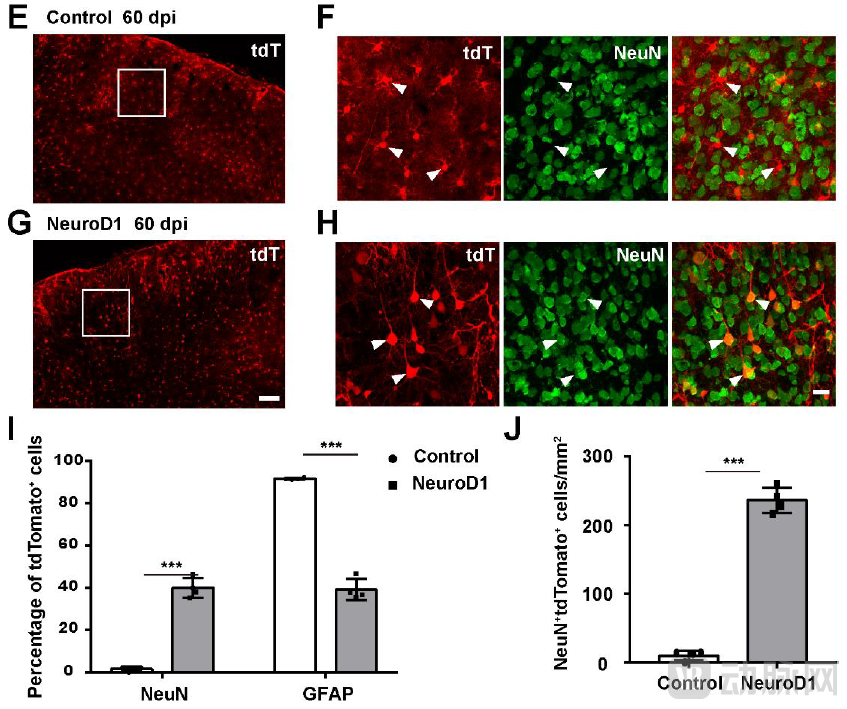
Enhancing NeuroD1 Expression with the CMV Enhancer Improves the Efficiency of Lineage-Traceable Astrocyte-to-Neuron Transdifferentiation
Furthermore, Chen Gong’s team employed two-photon in vivo imaging technology to directly capture the dynamic process by which astrocytes in the mouse cerebral cortex gradually transformed into neurons step by step. Moreover, in lineage-tracing transgenic mice, they again observed that pre-labeled red astrocytes gradually retracted numerous fine processes and transformed into red neurons with apical dendrites. To this point,Chen Gong’s team constructed various AAV vectors and achieved the transdifferentiation of astrocytes into neurons in mice with diverse genetic backgrounds.This robustly demonstrates the fact of astrocyte-to-neuron transdifferentiation and provides valuable insights into why previous teams were unable to achieve such transdifferentiation.
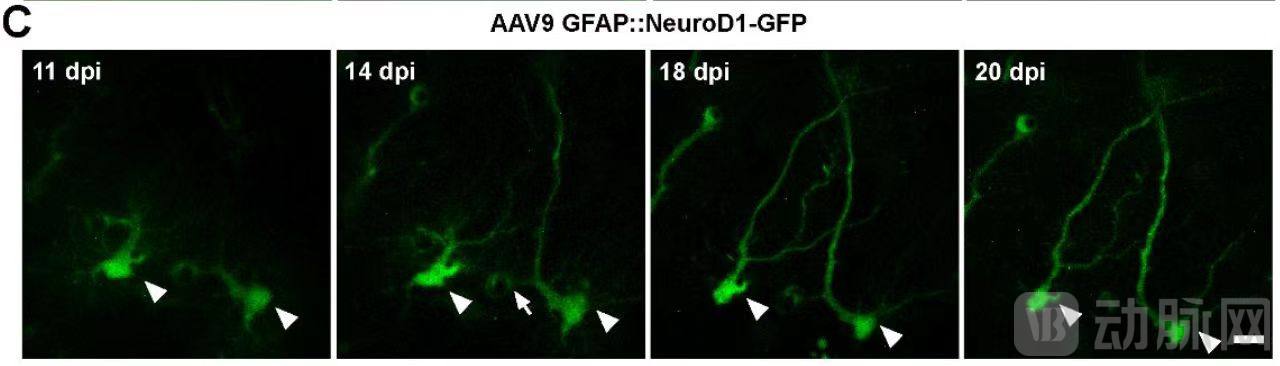
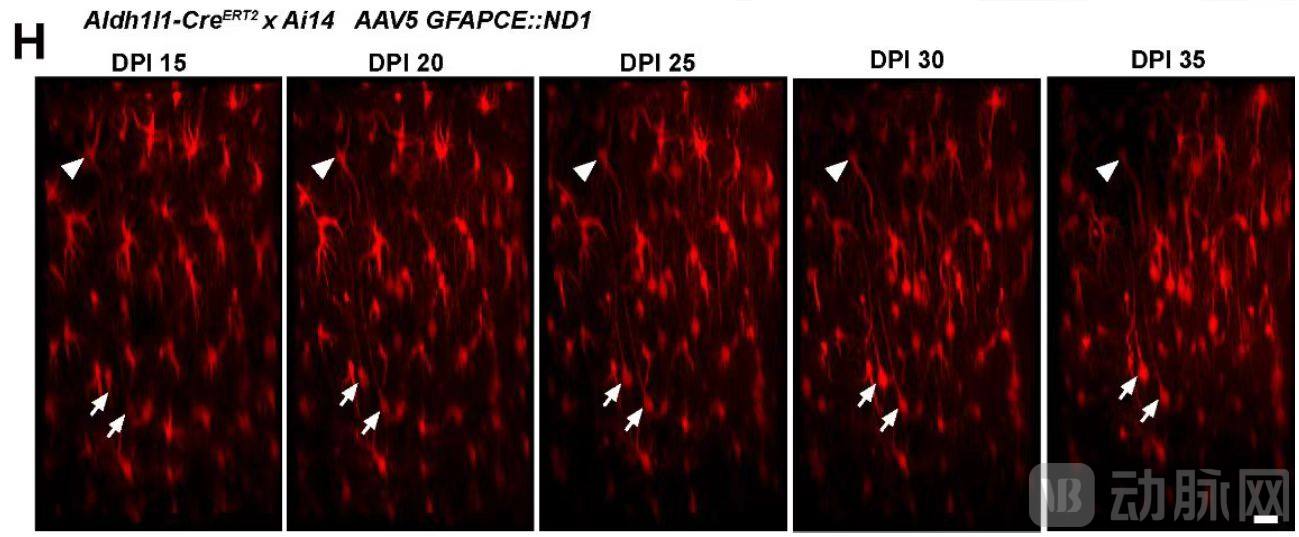
In Vivo Two-Photon Imaging
This video demonstrates two-photon in vivo brain imaging. At 15 days after NeuroD1 expression, astrocytes labeled with red lineage tracers largely retained their glial morphology; however, by day 35, many had converted into red-labeled neurons.
Undoubtedly, the Chen Gong team has outlined a clear process of transdifferentiation, providing direction for the entire field. They pointed out that,The prerequisite for transdifferentiation should be the detection of neural transcription factor expression in the nuclei of astrocytes, followed by the observation of morphological changes in these glial cells. Concurrently, they gradually lose glia-specific markers and acquire neuron-specific markers, first transforming into immature neurons and subsequently undergoing further differentiation to reach maturity.Expression of transcription factors can also be detected in neurons that have undergone transdifferentiation. Without transdifferentiation, it would be impossible for neural transcription factors to move from the nuclei of glial cells into the nuclei of neurons.
In the discussion section of the article, Professor Chen Gong’s team shared their valuable experience accumulated over more than a decade in the field of cellular transdifferentiation. They clarified common misconceptions regarding neuronal leakage in transdifferentiation studies, pointing out that because adeno-associated viruses (AAVs) infect both neurons and glial cells, neuronal leakage is an inevitable phenomenon when large amounts of AAVs are administered for glial-to-neuron transdifferentiation. Therefore, the primary objective is to minimize the proportion of off-target neuronal labeling while maximizing the efficiency of transdifferentiation.
More importantly, the goal of in situ transdifferentiation of glial cells is to regenerate neurons and treat diseases caused by neural injury. Therefore, Chen Gong’s team cautions against injecting large amounts of viral vectors into healthy brains for transdifferentiation, as this would inevitably convert normal glial cells into superfluous neurons, thereby disrupting the normal neuron–glia balance. Transdifferentiation with genuine clinical significance should focus on converting reactive glial cells into functional neurons within tissues affected by neural injury and neurodegenerative diseases, so as to reconstruct neural circuits, repair the brain, and benefit humanity.
Furthermore, it is worth noting that the feasibility of NeuroD1-mediated transdifferentiation has recently been validated by the industry:Spark Therapeutics, a Roche subsidiary and pioneer in the field of gene therapy that collaborates with NeuExcell, has successfully independently replicated the results of in situ transdifferentiation in a Huntington’s disease mouse model.
As a groundbreaking technology, in situ neuronal transdifferentiation holds promising prospects. Moving forward, further clinical validation by scientists and clinicians is required. NeuExcell, a company specializing in gene therapy for neural regeneration co-founded by Professor Gong Chen, is developing innovative therapies for major neurological disorders—including stroke, Alzheimer’s disease, Parkinson’s disease, traumatic brain injury, spinal cord injury, and amyotrophic lateral sclerosis (ALS). These therapies are based on the platform technology developed by Professor Chen’s team, which directly converts abundant astrocytes in the brain into functional neurons to repair brain damage.
Overall, in situ neuronal transdifferentiation technology remains in its early stages globally, with relatively few gene therapy companies centered on this approach. Looking ahead, Professor Chen Gong’s team and NeuExcell will remain steadfast in their original mission, continuing to advance research into in situ neuronal transdifferentiation, driven by the commitment to benefit a broad patient population.
Original article link published by Professor Chen Gong’s team on bioRxiv:https://www.biorxiv.org/content/10.1101/2022.06.21.496971v1