

Pioneering Hospitals Share DRG/DIP Reform Experience at Inaugural Training Base Launch Conference
Since 2019, the National Healthcare Security Administration has successively launched national pilots for DRG-based payment in 30 cities and DIP-based payment in 71 cities, achieving favorable outcomes. Data quality in medical institutions across these pilot cities has improved significantly, and medical practices have become increasingly standardized. The proportion of surgical and procedural groups reflecting high technical complexity has shown an upward trend, while that of internal medicine groups representing conservative pharmacological treatment has declined. Furthermore, unnecessary hospitalizations have decreased in pilot cities, the proportion of visits to primary care institutions has increased, and the issue of “over-treatment of minor illnesses” has been alleviated.
It is precisely due to the achievements of these pilot programs that the National Healthcare Security Administration issued the Three-Year Action Plan for DRG/DIP Payment Method Reform at the end of 2021, clearly outlining the timeline for nationwide DRG payment reform. In this process, pioneer hospitals in demonstration regions will play a leading role by actively responding to reforms in healthcare payment methods. They will advance lean hospital management through top-level design, objective management, and the establishment of indicator systems, and replicate these experiences across China.
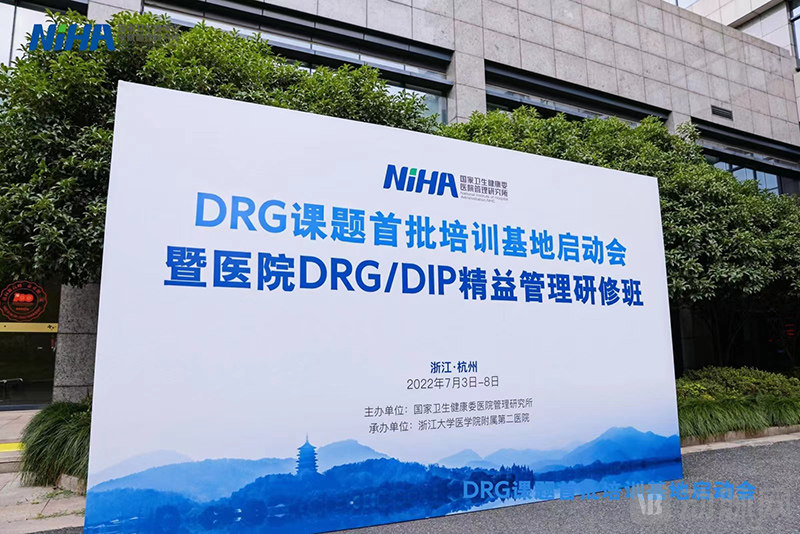
July 3, 2022The “Launch Meeting of the First Batch of DRG Project Training Bases and Opening Ceremony of the Hospital DRG/DIP Lean Management Workshop,” hosted by the Hospital Management Institute of the National Health Commission and organized by the Second Affiliated Hospital of Zhejiang University School of Medicine, was grandly held at the Binjiang Campus of the Second Affiliated Hospital of Zhejiang University School of Medicine., over 100 benchmark hospital administrators from leading regions across China convened for in-depth exchanges. As a leading brand in DRG/DIP solutions for hospitals, Huoshu Technology also actively participated in this conference.
Deliver an address to the conference.
Director Ye pointed out that payment reform is integral to the national strategy of “Healthy China.” This research topic holds significant importance. On one hand, it analyzes the impact and extent of DRG/DIP implementation on the quality of disease treatment processes; on the other hand, it discusses how hospital administrators can establish more scientific and rational management approaches to address these emerging challenges. These research findings will empower hospitals to achieve refined management under the new circumstances.
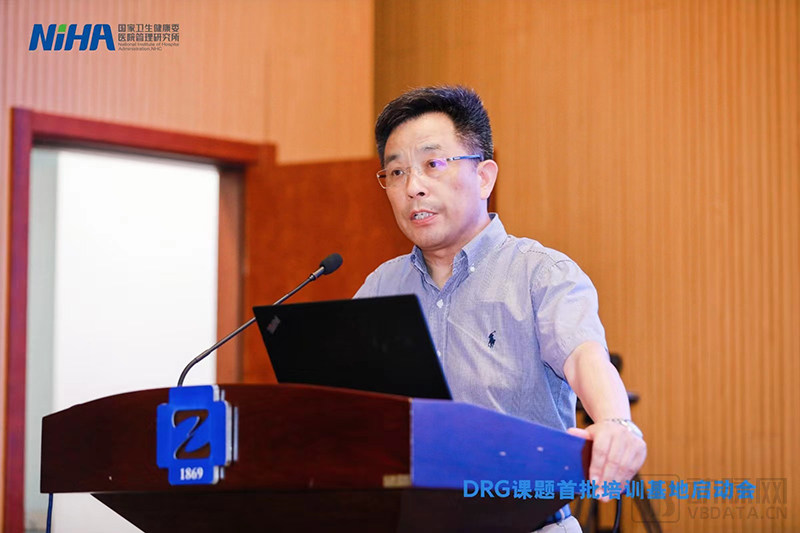
Keynote Speaker: Director Ye Quanfu (Photo provided by the conference organizer)
President Wang stated that The Second Affiliated Hospital of Zhejiang University School of Medicine (SAHZU) held an on-site project observation meeting last year. This year, the hospital organized a workshop on lean hospital management and was designated as one of the first batch of training bases for research projects. He expressed gratitude to the Hospital Research Institute and the project teams for their support and recognition. SAHZU will continue to advance lean hospital operations and management, grounded in its own understanding and practical experience, with quality and safety as the top priorities. SAHZU is committed to making greater contributions to the exchange of experiences in DRG-based hospital management.
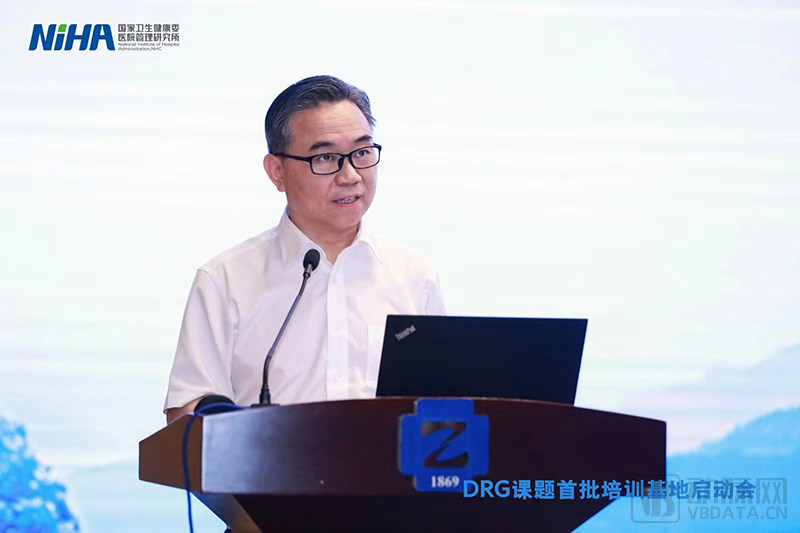
Zheng Jie, Director of the Beijing Medical Insurance Affairs Management CenterDelivered a thematic report on the “Three-Year Action Plan for DRG/DIP Payment Method Reform” under the top-level design of healthcare reform. As the head of the National Technical Guidance Group for DRG-based Payment, he introduced the National Healthcare Security Administration’s efforts to clarify the transition fromExpand Coverage, Establish Mechanisms, Strengthen Foundations, and Promote CoordinationFour key areas were outlined, with plans to complete the DRG/DIP payment reform tasks in phases and batches from 2022 to 2024. Director Zheng Jie fully affirmed the effectiveness of Zhejiang Province’s pioneering DRG reforms. He pointed out that Zhejiang’s early experiences, along with its systematic feedback and communication mechanisms, have provided valuable insights for the continued advancement and optimization of DRG/DIP initiatives nationwide.

Speaker: Director Zheng Jie (Image provided by the conference organizer)
Dong Siping, Director of the Department of Medical Policy Research at the Hospital Management Institute of the National Health CommissionPreside over the conference and provide an overview of the current progress of the research projects. This year, a series of initiatives will be rolled out sequentially, including the establishment of training bases, the development of an evaluation indicator system for medical quality monitoring, the compilation of case collections, and the organization of regional observation meetings. The list of the first batch of hospitals designated as DRG research project training bases will be announced at this conference. Meanwhile, DIP research projects will be launched concurrently with the 6th DRG Conference and the 1st DIP Conference.
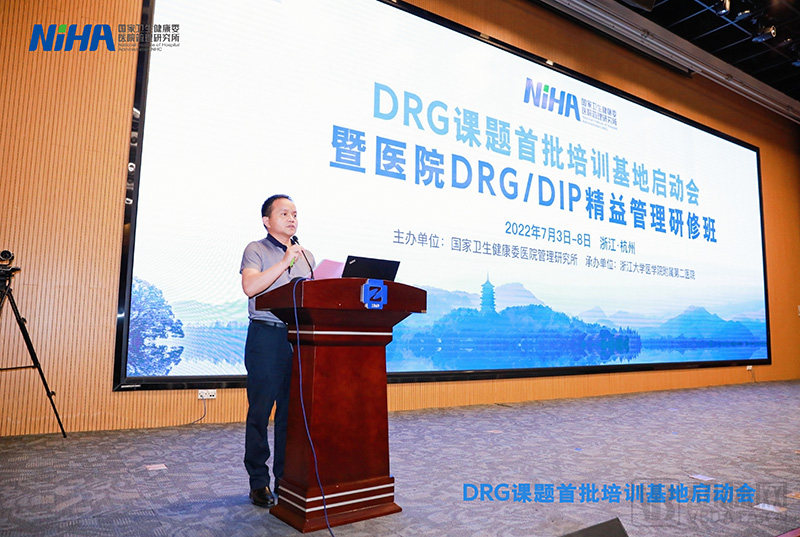
Moderator: Director Dong Siping (Image provided by the conference organizer)
To explore refined management approaches for Diagnosis-Related Groups (DRG) in hospitals and share best practices from pioneering regions, the Hospital Research Institute launched a selection process for training base candidates at the end of last year. Following two rounds of rigorous expert evaluation, 10 institutions were ultimately selected from more than 30 applicant hospitals, comprising five designated as training bases and five as training base construction units.
Training Bases (5):
•The First Affiliated Hospital, Zhejiang University School of Medicine
•The Second Affiliated Hospital, Zhejiang University School of Medicine
•The First Affiliated Hospital of University of Science and Technology of China
•The First Affiliated Hospital of Chongqing Medical University
•Wuxi People's Hospital

Training Base Construction Units (5):
•Renmin Hospital of Wuhan University
•Qingdao Municipal Hospital
•The Affiliated Hospital of Xuzhou Medical University
•The First Affiliated Hospital of Nanchang University
•Xiangtan Central Hospital
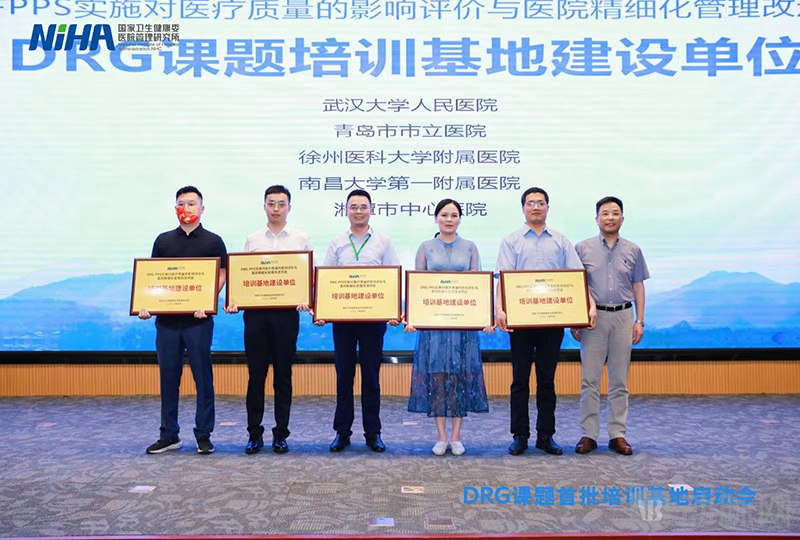
Amid the DRG payment reform and its accompanying growing pains and uncertainties, while other hospitals remained watchful and hesitant, the pioneer hospitals in the demonstration regions took proactive measures. As benchmarks for DRG payment pilots, these hospitals have led the way across China.Explore improvements in organizational structure, performance-based reform, information technology infrastructure, and refined management; foster multi-departmental collaboration to enhance hospital operational and managerial efficiency.。
The pilot initiatives have initially yielded tangible reform outcomes. Moving forward, the Hospital Management Institute of the National Health Commission will organize a series of activities—including a hospital presidents’ forum, a compendium of case studies, and a DRG/DIP conference—to invite senior executives from demonstration base hospitals to share their reform achievements, thereby fostering academic exchanges on healthcare insurance payment reforms across various regions.
Lin Min, Director of the Medical Insurance Office, The Second Affiliated Hospital, Zhejiang University School of MedicineAt the kickoff event, an introduction to the training program was presented. The first cohort of the Hospital DRG/DIP Lean Management Training Program, hosted by The Second Affiliated Hospital of Zhejiang University School of Medicine, is a five-day course comprising modules such as “Policy Analysis,” “SAHZU Practices,” “Regional Features of DRG Application,” “Data Empowerment,” and “Site Visits and Exchanges.” This series of activities was jointly developed and launched by the Hospital Research Institute, The Second Affiliated Hospital of Zhejiang University School of Medicine, and the core expert group of the research project, specifically tailored for mid-to-senior level hospital medical insurance managers.
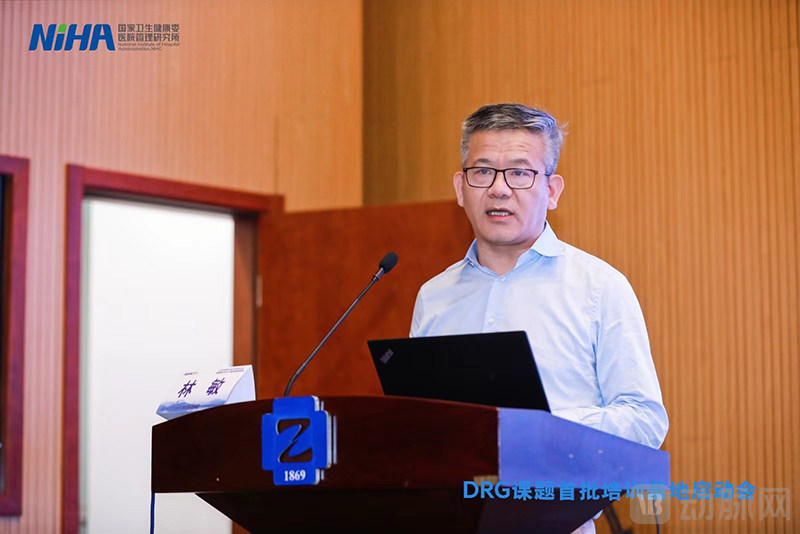
Speaker: Director Lin Min (Photo provided by the conference organizer)
Director Lin Min stated that medical peers from across China, through learning and visiting exchanges, can further clarify the ideas of refined hospital management, thereby improving quality and efficiency for the subsequent DRG reform work at their own hospitals.