

Eli Lilly to Acquire Kelonia Therapeutics for Up to $7 Billion to Advance In Vivo CAR-T Therapy

Kelonia Therapeutics
Gene Drug Developer

Johnson & Johnson
Medical Device R&D and Manufacturer

Gilead Sciences
Innovative Drug Developer, Distributor
On April 20, 2026, Eli Lilly officially announced that it had reached a definitive acquisition agreement with Kelonia Therapeutics. According to the agreement, Eli Lilly will pay an upfront payment of $3.25 billion, and if subsequent milestone payments are included, the total value of this transaction could reach up to $7 billion.This is already Lilly's second acquisition in the in vivo CAR-T field this year. As early as February this year, Lilly spent up to $2.4 billion acquiring Orna Therapeutics.
Kelonia's core technology is a system called iGPS for in vivo gene delivery. In simple terms, this technology uses specially modified lentiviral vectors to directly transform regular T cells into CAR-T cells capable of recognizing cancer cells within the patient’s body. This is fundamentally different from traditional CAR-T therapy — which requires extracting the patient’s cells, performing complex genetic modifications and expansions in external facilities, and then reinfusing them back into the body, a process that is not only expensive but also time-consuming. Kelonia’s technology, on the other hand, functions like an "off-the-shelf" drug, delivering treatment through a single intravenous infusion and completing the process inside the body, significantly reducing the complexity and barriers of treatment.
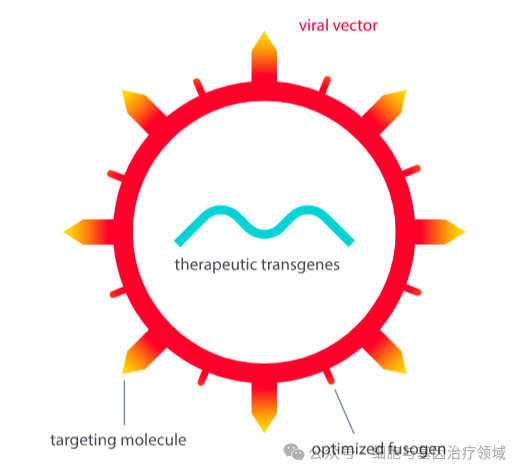
▲Schematic diagram of the innovative modified lentiviral vector (Source: Kelonia Therapeutics)
Kelonia Therapeutics' core investigational drug, KLN-1010, is an in vivo CAR-T therapy targeting BCMA, primarily used for treating relapsed or refractory multiple myeloma. Data presented at the 2025 American Society of Hematology (ASH) Annual Meeting showed that all four patients initially treated achieved minimal residual disease (MRD) negativity, with a response rate of 100%. More importantly, this therapy does not require lymphodepletion preconditioning and has demonstrated good safety, with no severe cases of cytokine release syndrome reported.

▲Kelonia Therapeutics' R&D Drug Pipeline(Image source: Kelonia)
In fact, even before Eli Lilly took action, Kelonia's technology had already drawn significant attention from the industry. Johnson & Johnson reached a collaboration with Kelonia in November 2025, and Astellas signed an agreement with them back in 2024. This high-value acquisition by Eli Lilly has further heated up the in vivo CAR-T field. In recent years, multinational pharmaceutical companies such as Gilead Sciences, AbbVie, and AstraZeneca have entered this space through acquisitions or partnerships, aiming to overcome the challenges faced by traditional cell therapies in manufacturing and accessibility.
E.N.D

ForPromote Cooperation and Technical Exchange in the Cell and Gene Therapy IndustryThe team of the WeChat Official Account "Cell and Gene Therapy Field" has established a communication group for cell and gene therapy. Press and hold the QR code below to add the editor's WeChat and join the group. Due to the large number of applicants, please include the following information when adding WeChat: Institution/Enterprise—Major/Position—Name. If you are a PI/Professor/Manager or above, please also indicate.
Statement:ReferenceInternalVolumeComeSource: Official Media/Online News, this publicPublic AccountAiming atKnowledge sharing, maintaining neutrality on the content, statements, and viewpoints of reprinted or shared materials, without guaranteeing their accuracy.Accuracy, reliability, or completeness cannot be guaranteed, either explicitly or implicitly, and the relevant content is for reference only.