

Shanghai Yongci Rehabilitation Hospital: A Leading Private Rehabilitation Institution with 97% Bed Utilization Driving Yingo Life’s Integrated Oncology Care Ecosystem
In 2017, Haier Group officially entered the general health sector, with Shanghai Yongci Rehabilitation Hospital of INKON Life (hereinafter referred to as “Yongci Hospital”) taking the lead in developing the rehabilitation industry.
Cheng Peng, Deputy Director of Operations at Yongci Hospital, still recalls the scene when he first arrived at the newly established campus: weeds and vines stretched as far as the eye could see, two abandoned inpatient buildings stood silently, and a small team of just over ten people faced each other in uncertainty. However, they quickly adjusted their mindset, keeping in mind the goal of building a rehabilitation specialty hospital that would rank among the best in Shanghai and across China, and continuously translating this blueprint into reality through practice.
Passing 12 acceptance inspections in a single attempt and exceeding national standards, securing medical insurance reimbursement within three months, completing the construction of a hyperbaric oxygen chamber within two months, establishing China’s first IoT hub for rehabilitation robots, the first ventilator weaning center, and the first Chinese clinical base of the Association for the Study of Disorders of Consciousness... Within five years, Yongci Hospital has emerged as the leading specialized rehabilitation hospital among private healthcare institutions in China.
Over the past five years, Yongci Hospital has focused on “self-examination and grassroots development.” Leveraging the resource empowerment of the INKON Life platform, it established a “Comprehensive Rehabilitation Center,” positioning itself to provide integrated “medical care + nursing + rehabilitation” services with a specialty in critical care rehabilitation. In doing so, Yongci has carved out its own innovative path in critical care rehabilitation.
Over the next five years, Yongci Hospital will enter a critical phase of “upward growth and lateral expansion,” maintaining its leading position in comprehensive rehabilitation. It will extend its reach within the INKON One IoT-enabled Rehabilitation Medical Ecosystem Network, leveraging digital technologies such as the Internet of Things (IoT), artificial intelligence (AI), and big data to build a holistic rehabilitation system with engagement from all staff and society at large.
According to the Global Burden of Disease Report released by The Lancet in December 2020, China has the largest rehabilitation needs globally, totaling 460 million person-visits. In recent years, although patients’ awareness of rehabilitation has gradually increased, the penetration rate of rehabilitation medical services in China remains low due to factors such as limited payment capacity and uneven distribution of resources.
Even after the primary disease has been treated, patients still require prolonged rehabilitation through the acute, subacute, and stable phases. Therefore, the country is actively exploring the establishment of a three-tier rehabilitation medical service system, encouraging public hospitals to set up rehabilitation departments and social capital to establish rehabilitation institutions through self-construction, investment, mergers, and acquisitions, thereby strengthening tiered diagnosis and treatment in rehabilitation, improving resource utilization efficiency, and enhancing patient recovery rates.
Amidst a surge of growth in the rehabilitation industry, Yongci Hospital has emerged as a frontrunner, distinguished by three core strengths: professional rehabilitation expertise, smart medical services, and a steadfast commitment to maximizing patient experience.
In terms of the specialization of rehabilitation standards,Yongci Hospital is positioned around “critical care rehabilitation, specialized disciplines, and comprehensive medical services,” establishing a “Major Rehabilitation Discipline Center.” It has successively launched leading specialties such as the Critical Care Rehabilitation Center, the Ventilator Weaning Center, the International Cooperation Center for Disorders of Consciousness, and the Cardiopulmonary Rehabilitation Center. By leveraging high-quality medical resources from affiliated institutions such as Zhongshan Hospital and Huashan Hospital of Fudan University, the hospital co-creates an ecosystem for rehabilitation care scenarios.
As a platform-based hospital specializing in critical care rehabilitation, Yongci Hospital has broken away from the traditional medical model of “treatment first, rehabilitation later,” instead integrating rehabilitation into critical care settings such as the ICU at an early stage.
For instance, by introducing rehabilitation therapists and equipment into the ICU, and focusing on patients’ physical needs and psychological experiences, tools such as electric tilt tables, cycle ergometers, and rehabilitation robots are utilized to enable patients to sit, stand, and even walk. This critical care rehabilitation model has transformed the previous state of closed, non-interactive, passive rehabilitation for critically ill patients, significantly boosting their confidence in treatment. It has successfully saved multiple patients who had been deemed “incurable” by other hospitals.
In the realm of cardiopulmonary rehabilitation, traditional intensive care units (ICUs) are often fully enclosed with no distinction between day and night. Patients are confined to bed for extended periods with limited views and exposed to a noisy environment, which can induce feelings of fear and loneliness, thereby triggering various complications. Addressing these issues, Yongci Hospital has established China’s first ventilator weaning center, focusing on optimized bed configurations and intelligent ventilator systems. Cardiopulmonary rehabilitation patients at Yongci Hospital who wish to leave their rooms can do so freely, enjoying sunlight, thanks to specially designed convertible beds and portable mini oxygen cylinders.
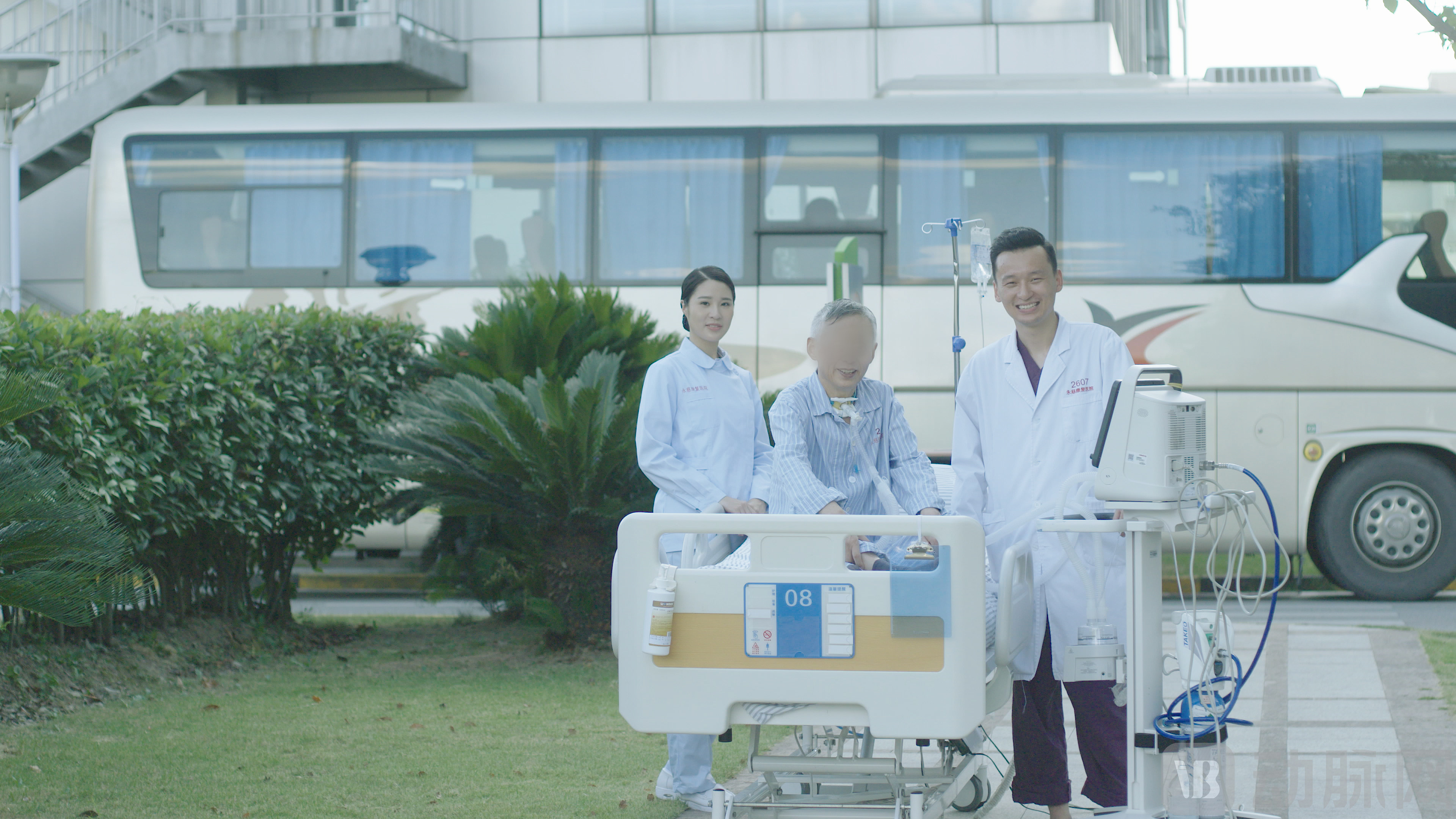
On the intelligentization of medical services,Yongci Hospital has established a benchmark IoT hospital under the INKON Life brand, guided by the “Internet of Everything” concept. The hospital has implemented five major smart scenarios—“Smart Wards, Smart Diagnosis and Treatment, Smart Weaning, Smart Settlement, and Smart Rehabilitation”—achieving bedside closed-loop management and mobile visualization of medical data, thereby delivering a more convenient experience for both medical staff and patients.
In the field of critical care, to mitigate the potential risks associated with prolonged vital signs monitoring and automated alarm processes for ICU patients, Yongci Hospital has collaborated with co-creators of ECG and ventilator equipment to integrate ECG monitors with ventilators within intensive care units. The hospital has also established cross-floor interconnectivity, enabling the ICU system to monitor critically ill patients across different wards in real time. When an alarm is triggered, all relevant medical personnel, including specialists, can access real-time patient data via a mobile app and provide online management recommendations.
The Rehabilitation Robotics IoT Hub is a major manifestation of Yongci Hospital’s “smart” transformation. By employing robots to simulate therapists and integrating gamified virtual scenarios, the system guides patients through precise training exercises. These intelligent devices deliver rehabilitation services that adhere to standardized and normalized medical protocols. While ensuring training quality, they add an element of fun, enhance patients’ initiative in rehabilitation, and free up therapists, thereby significantly improving rehabilitation efficiency. Furthermore, by leveraging IoT and internet technologies to achieve interconnectivity and data sharing among equipment, patients, and rehabilitation therapists, the system facilitates the development of more precise rehabilitation plans by therapists.
Yongci Hospital Practices the “Integration of Doctors and Patients” Philosophy, always placing patient experience at the core of our work and providing warm, “always-attended” service.
While reinforcing the specialized characteristics of rehabilitation therapy, Yongci Hospital designs personalized medical service processes—namely, “whole-process, all-around” nursing care—tailored to patients’ varying conditions, personalities, and needs. Upon admission, medical and nursing staff promptly engage with patients to assess their physiological and psychological status, formulating phased plans for clinical rehabilitation and nursing care. Throughout the extended course of rehabilitation treatment, doctors, nurses, and patients collaborate across disciplines, communicating and adjusting interventions in real time based on rehabilitation outcomes. Meanwhile, Yongci Hospital bridges the gap with patients through activities such as free clinic services, health education lectures, user interactions, ward tours, and hands-on experiences with rehabilitation equipment.
Achieving break-even within nine months and generating over RMB 100 million in revenue during the first year of operation; in 2021, the hospital admitted nearly 6,000 inpatients, with a 97% occupancy rate across its 600 beds... Over the past five years, success has not diminished Yongci Hospital’s courage to move forward; it has been continuously engaging in self-revolution. So, what stance will Yongci Hospital adopt as it embarks on its second five-year journey?
Professional talent will be the key to Yongci Hospital maintaining its reputation.Under the leadership of President Shen Xudong, Yongci Hospital leverages the resources of the INKON Life platform and adheres to a dual-track strategy for cultivating both specialized and versatile talent. By integrating internal development with external recruitment mechanisms, the hospital has established a people-oriented talent management system and a discipline construction framework, thereby helping medical and nursing staff realize their personal and professional value.
“The Integration of Doctors and Patients” Philosophy Creates an Advanced Business Management Model,Establish a normalized medical service model centered on “medical staff revolving around patients,” helping healthcare professionals enhance user experience value while achieving iterative self-value realization. Implement full-cost accounting down to the level of departments, floors, teams, and individuals; link healthcare personnel to the value they create for patients through dual performance and non-performance assessments; and further stimulate staff motivation by simulating equity ownership incentives.
Digital management helps improve hospital operational efficiency.Yongci Hospital will further leverage digital technologies such as the Internet, the Internet of Things (IoT), and artificial intelligence. By integrating fragmented data across the entire hospital, it will achieve seamless interoperability among various business application systems and departments. This initiative aims to, on one hand, enable refined management of human resources, financial assets, and materials, thereby enhancing operational efficiency and capabilities; and on the other hand, optimize diagnostic and treatment protocols, develop more precise rehabilitation plans, and lay a solid foundation for medical research.
Going forward, Yongci Hospital will continue to pursue differentiated development within the INKON Life ecosystem by establishing a tumor center focused on postoperative rehabilitation. Through scientific research and industry exchanges, the hospital aims to strengthen and specialize its oncology rehabilitation discipline, while expanding subspecialties in neurological, orthopedic, pain, and geriatric rehabilitation, ultimately forming a business structure characterized by “one dominant core and multiple strong pillars.”
In the future,The rehabilitation ecosystem centered on Yongci Hospital will also be integrated as a whole into INKON Life’s ecological cancer prevention and control strategy, which covers the entire course and full cycle of oncology care. By collaborating with hospitals and major disciplinary centers under INKON Life at various levels and across different specialties, it will jointly build a comprehensive “prevention, diagnosis, treatment, and rehabilitation” system for cancer prevention and control, truly serving human health.
Although the road ahead will not be straighter or smoother than the past five years, we believe that Yongci Hospital, with its “maker” spirit, will continue to move forward.
Vice President Cheng Peng recalled that Yongci Hospital features a large plaza, which becomes bustling every evening. Family members support patients as they take walks, exchanging pleasantries with acquaintances; some even more daring individuals dance gracefully amidst the interplay of the setting sun’s afterglow and the bright moonlight.
The grass is bearing its seeds; the wind is rustling its leaves. Even if we simply stand here in silence, it is profoundly beautiful.
Further Reading: