

Infervision's Stroke AI Product Receives NMPA Class III Approval, Becoming China's First with Dual NMPA-FDA Certification
According to the official website of the National Medical Products Administration, recently, Infervision’s CT image-assisted triage software for intracranial hemorrhage has officially received Class III medical device approval from the National Medical Products Administration (NMPA).It can display and process non-contrast cranial CT images, measure hemorrhage volume, and provide triage alerts for patients with hyperacute or acute intracranial hemorrhage. This is Infervision’s first Class III medical device certification issued by China’s National Medical Products Administration (NMPA) in the cardiovascular and cerebrovascular field. In August last year, Infervision’s stroke product (InferRead CT Stroke) had already received clearance from the U.S. Food and Drug Administration (FDA). Consequently, Infervision’s AI-based stroke solution has become the first domestic product to secure both NMPA and FDA approvals.Dual Certification in China and the United States“The product has received consistent recognition from drug regulatory authorities both in China and abroad! Furthermore,”Infervision’s Stroke Project Has Been Selected for the MIIT and National Health Commission’s 5G+ Medical Health Application Pilot Program.
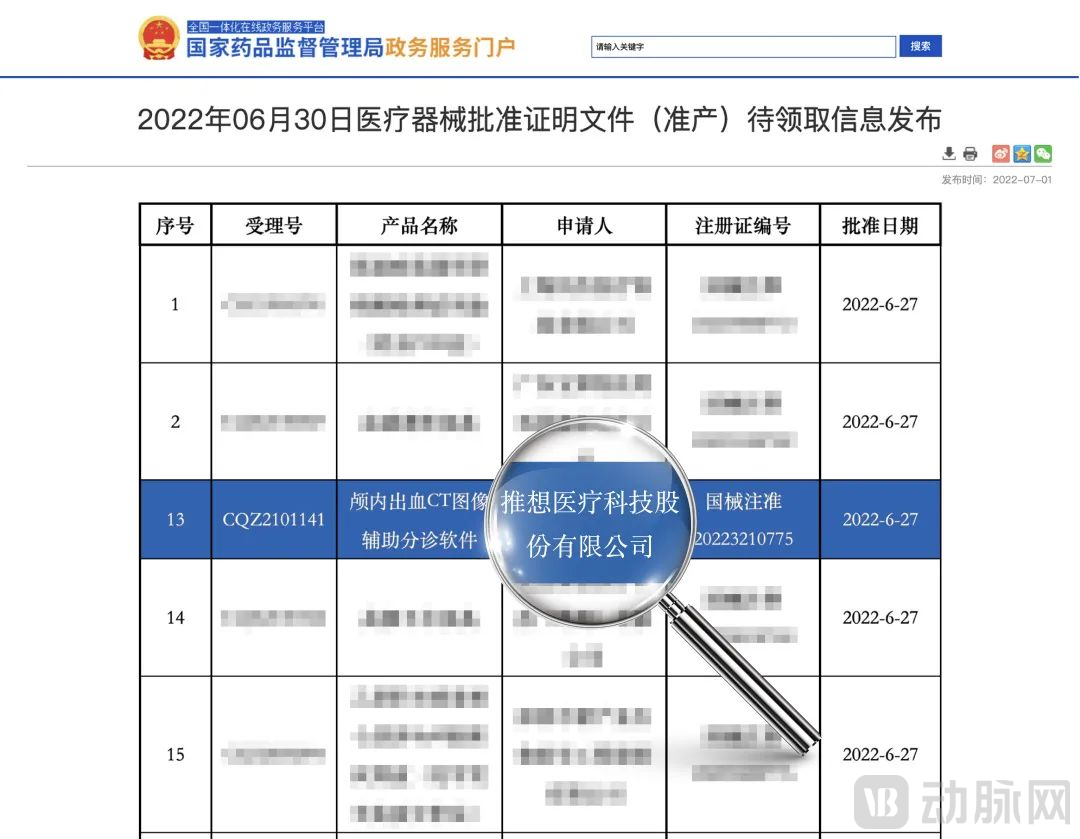
Less than two months ago, Infervision secured the NMPA’s first Class III AI certification for multi-type thoracic fractures, thereby achieving comprehensive Class III NMPA certifications for pulmonary nodules, pneumonia, and thoracic fractures. This milestone established its “golden trio” of thoracic and pulmonary AI solutions, facilitating efficient multi-disease screening for various chest conditions in China. Coupled with thisInfervision has obtained its first Class III medical device certification from the National Medical Products Administration (NMPA) in the cardiovascular and cerebrovascular fields. This signifies that Infervision has now secured NMPA certifications in both the cardiovascular/cerebrovascular and thoracic/lung domains, marking another significant breakthrough in its commercialization process.. Currently, Infervision’s AI products for pulmonary nodules and stroke have both obtained dual certification from China’s NMPA Class III approval and the U.S. FDA.
Stroke Treatment: “Speed” Is Key
Stroke is an acute cerebrovascular disease characterized by a group of conditions that cause brain tissue injury due to sudden rupture or blockage of cerebral blood vessels, which prevents blood from flowing into the brain. It includes ischemic stroke and hemorrhagic stroke. Stroke is the leading cause of death and disability among adults in China, with its incidence rising year by year, imposing a heavy burden on society and families.
The guiding principle for stroke management is “time is life,” as every second directly influences the progression of cerebral pathology. Nevertheless, challenges persist, including insufficient medical resources, difficulties in popularizing stroke screening, prolonged pre-hospital delays, slow assessment, fragmented care processes, delayed treatment, and low standardization.
Infervision has achieved multiple scientific research outcomes in the field of deep learning-assisted diagnosis of stroke. As early as 2019, Infervision’s research findings on using deep learning technology to assist in hematoma volume measurement for hemorrhagic stroke and in evaluating the Alberta Stroke Program Early CT Score (ASPECTS) for ischemic stroke were presented as oral reports at two top international radiology conferences: the European Congress of Radiology (ECR) and the Annual Meeting of the Radiological Society of North America (RSNA), respectively. To date, Infervision has published seven abstracts at these prestigious international conferences (ECR and RSNA), one paper in a core Chinese journal, and one SCI-indexed paper in collaboration with Beijing Tiantan Hospital and Zhongshan Hospital Affiliated to Fudan University, Shanghai, which was published in Frontiers in Neuroscience (Impact Factor: 4.677).
One-Stop AI Solution for Stroke CT: Supporting Precise Diagnostic Decision-Making in Stroke Emergency Care
Addressing the critical challenges in stroke prevention and treatment in China, and leveraging six years of deep expertise in AI and stroke imaging, Infervision has launched a one-stop AI solution for stroke CT. This solution supports AI-assisted evaluation of multimodal imaging, including NCCT, CTP, and CTA. It not only enables precise early screening and intelligent follow-up for individuals at high risk of stroke, but also facilitates rapid triage for patients with hyperacute and acute stroke, providing fast and accurate diagnostic decision support in emergency stroke care.
The One-Stop AI Solution for Stroke CT Imaging includes an AI-based Precision Diagnosis Module for Hemorrhagic Stroke and an AI-based Rapid Quantitative Analysis Module for Ischemic Stroke. The Hemorrhagic Stroke AI Precision Diagnosis Module comprises a CT Imaging-Assisted Triage System for Intracranial Hemorrhage and an Assistant Analysis System for Intracranial Aneurysms. The Ischemic Stroke AI Rapid Quantitative Analysis Module encompasses an Intelligent CT ASPECTS Scoring System, an Intelligent CTP Quantitative Analysis System, and an Intelligent CTA-Assisted Diagnostic System. For both ischemic and hemorrhagic strokes, Infervision provides AI-driven solutions to meet the need for rapid assessment in stroke emergency care.
Infervision’s One-Stop AI Solution for Stroke CT Offers the Following Advantages:
● Intelligence:Automatic Recognition, Automatic Segmentation, Automatic Reconstruction, Automatic Calculation
● Precision:Accurate Lesion Detection, Multi-Dimensional Visualization, Providing Rich Diagnostic Information for Physicians
● High Efficiency:AI-powered automatic reconstruction boosts post-processing efficiency by more than 10-fold
● Structured:Standardized output of image and text reports with seamless integration to hospital PACS and HIS
Infervision’s Stroke Project Selected for the MIIT and NHC 5G+ Healthcare Application Pilot
For stroke patients, early diagnosis and prompt treatment are critically important. During the hospital diagnostic and therapeutic process, traditional head and neck CTA examinations typically require two CT scans. Subtraction for bone removal and manual reconstruction take 15–20 minutes, report writing and film layout require 10 minutes, followed by final report review. This entire workflow often takes 30 minutes.
Infervision’s One-Stop AI Solution for Stroke CT Imaging leverages a single CT scan to automatically perform “vascular reconstruction + lesion analysis + film layout + structured report generation,” followed by report review. This entire process takes only 5 minutes, securing precious time for stroke emergency care.
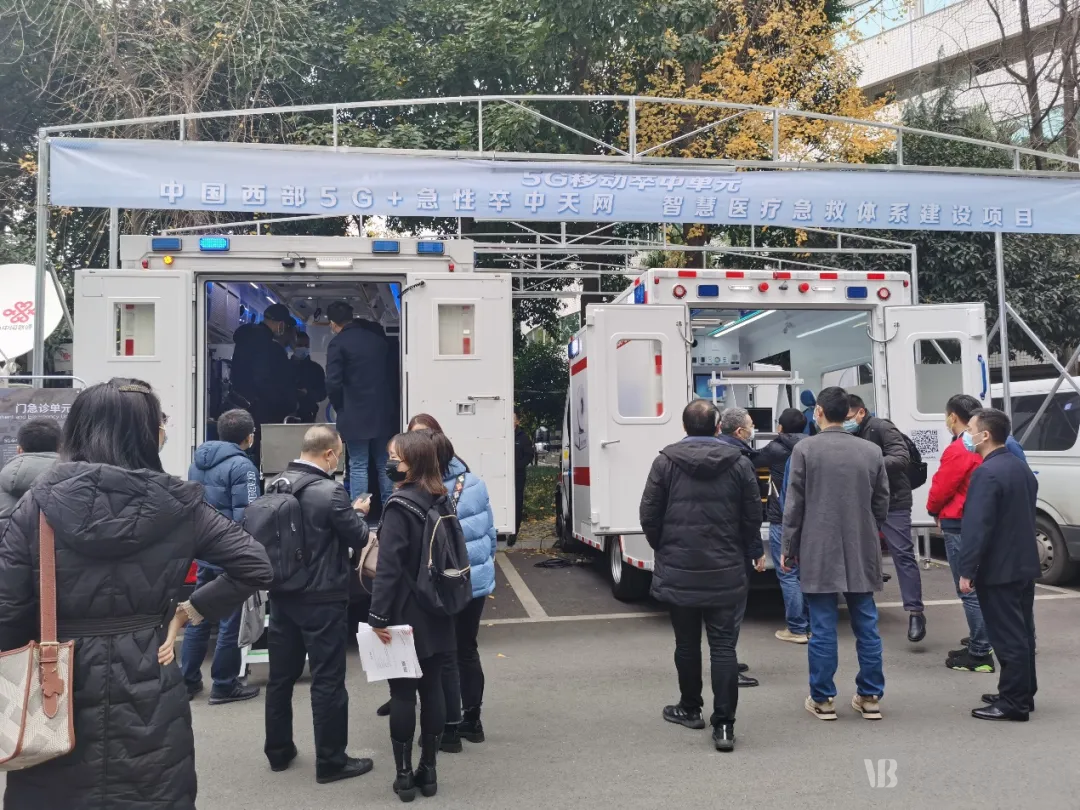
▲5G+AI+Mobile CT Stroke Emergency Care Goes on Ambulances
In September 2021, the Ministry of Industry and Information Technology and the National Health Commission jointly released the “National List of Pilot Projects for 5G+ Healthcare Applications” (Document No. 220 [2021] of the Joint Communication Letter of the General Offices). The stroke project involving Infervision was successfully selected. In December, the construction project of the 5G+ Acute Stroke SkyNet Smart Medical Emergency System in Western China was officially launched at the Sichuan Academy of Medical Sciences & Sichuan Provincial People’s Hospital. Supported by 5G, AI, mobile CT, smart ambulances, and a digital SkyNet, this initiative established the 5G+ Stroke Emergency SkyNet Project in Western China, achieving “hospital admission upon boarding the ambulance.” The integration of AI has empowered 5G+ technologies, enabling stroke patients to receive timely treatment, reducing complications and mortality rates, and alleviating the financial burden on patients and their families.
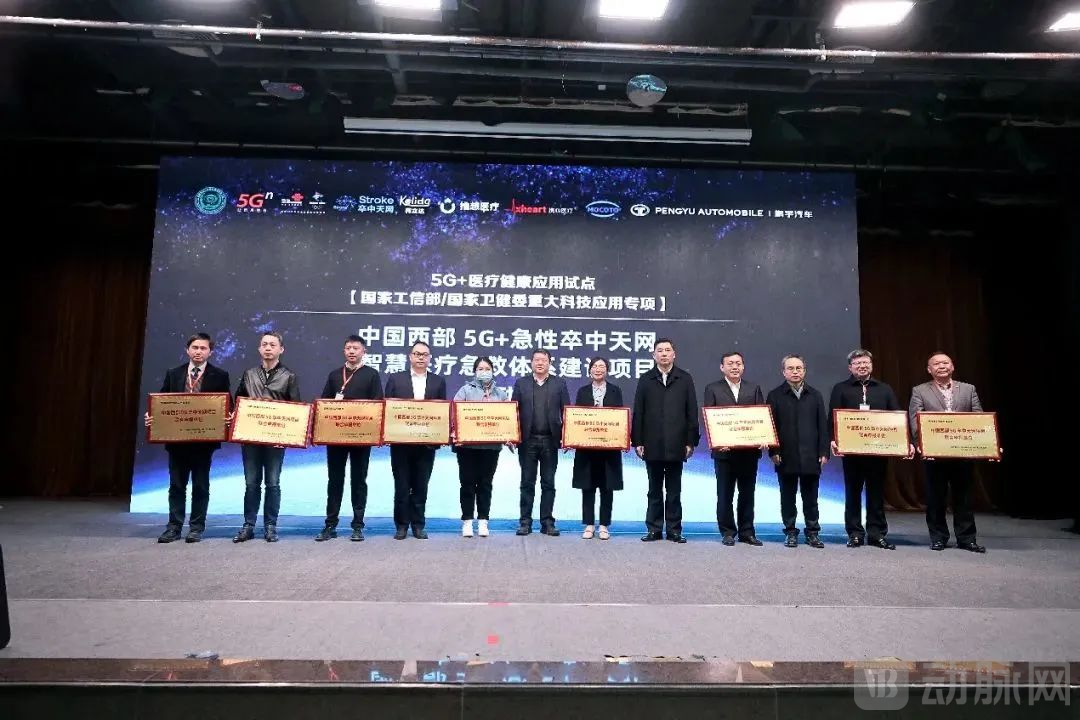
▲ Infervision and other entities were awarded certificates as the first batch of joint applicant units at the project launch ceremony
Data shows that Infervision’s one-stop AI solution for stroke CT not only improves the efficiency of interpreting NCCT, CTP, and CTA images by more than 10-fold, but also achieves diagnostic accuracy comparable to the average level of experts at tertiary hospitals. Furthermore, it automatically outputs quantitative analysis results and has received widespread acclaim from imaging and clinical specialists.
Prior to the selection of Infervision’s AI stroke project as a key initiative by the Ministry of Industry and Information Technology (MIIT) and the National Health Commission, Infervision’s capabilities in AI-driven medical innovation had already been recognized by multiple national ministries, including the MIIT. For instance, in 2020, Infervision stood out among thousands of enterprises, earning the title of “Top-Ranked Unveiling Winner” in the “Medical Imaging Computer-Aided Diagnosis System” category, thanks to its outstanding performance in comprehensive chest and lung screening.
Chen Kuan, Founder and Chairman of Infervision, stated: “This is the second NMPA Class III medical device certificate Infervision has obtained within two months. Previously, we secured the first NMPA Class III certificate for an AI solution capable of detecting multiple types of thoracic fractures, thereby forming a ‘golden trio’ of thoracic and pulmonary AI solutions that cover lung nodules, pneumonia, and thoracic fractures. This latest approval not only best exemplifies Infervision’s ‘horizontal and vertical’ product strategy but also reinforces our determination to continue deepening our expertise in this field. Our AI solution for stroke carries significant societal and patient benefits. We are fully committed to supporting the development of clinical diagnosis and treatment systems for stroke and contributing to China’s efforts in stroke prevention and control.”