

Hangzhou Shuzhiyi Targets Hundreds of Millions of Allergy Patients with Digital Therapeutics Platform
Even outside the peak allergy season, the waiting area outside the Allergy Department at The Second Affiliated Hospital of Zhejiang University School of Medicine remains crowded. Among the patients waiting for consultation are elderly individuals with gray hair, fashionably dressed young people, and toddlers just beginning to speak.
Pollen and willow catkins, mangoes and peaches, animal dander, dust mites and mold... There is always an allergen that can make people’s eyes red and watery, triggering sneezes and a runny nose.
According to the World Allergy Organization, 30%–40% of the global population is affected by allergic conditions, making allergic diseases the sixth most common chronic disease worldwide. The World Health Organization has long listed allergic diseases as one of the key conditions for priority research and prevention in the 21st century. In China, influenced by environmental factors and lifestyle habits, the number of individuals suffering from allergic diseases has been increasing year by year. According to estimates from a survey conducted by the Branch of Allergy of the Chinese Medical Association, the number of adult patients with allergic rhinitis in China alone has reached as high as 150 million.
In stark contrast to the vast population of patients is the scarcity of medical resources. According to data from the Allergy Branch of the Chinese Medical Association, there are fewer than 350 board-certified allergists nationwide, and no more than 3,000 physicians are qualified to provide allergy diagnosis and treatment. Less than 1% of medical institutions in China have dedicated allergy departments. As an emerging specialty, allergy medicine is not a standard department in most hospitals, and this supply-demand imbalance has led to irregularities such as non-standardized diagnosis and treatment.
Based on this,Hangzhou Shuzhi Medical Consulting Management Co., Ltd.(hereinafter referred to as"Digital Intelligence Medicine") emerged as the times required.
Since its inception in 2020 and the establishment of Shuzhiyi in 2021, the company has been committed to providing comprehensive, full-course solutions for allergic conditions, centered on Digital Therapeutics (DTx) and Multidisciplinary Team (MDT) approaches. It aims to build a digital therapeutics platform specialized in allergy care and has established a comprehensive database covering the entire patient journey from diagnosis to treatment. The company has now formed partnerships with large public Grade A tertiary hospitals across China, becoming one of the first domestic healthcare service enterprises focused on the vertical specialty of allergology.
Aligning closely with policy trends and leveraging founder Wang Guilin’s years of entrepreneurial experience in digital therapeutics, Shuzhiyi addresses the supply-demand dynamics of healthcare resources. By centering on digital therapeutics and multidisciplinary collaborative diagnosis and treatment, and supported by digital therapeutics for allergic diseases, the company ultimately aims to build a closed-loop allergy ecosystem comprising three major systems, two key series, and one foundational initiative.
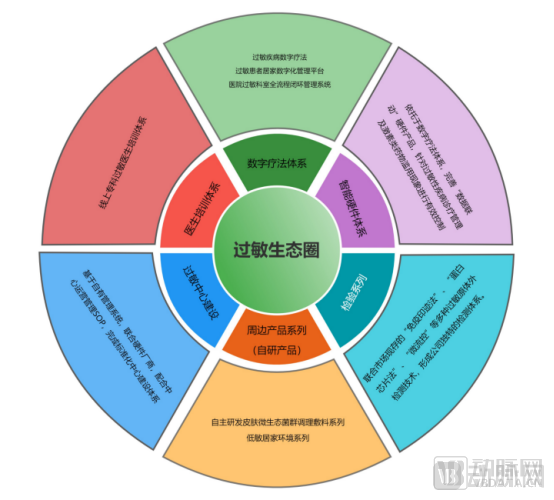
Digital Intelligence Medical Allergy Ecosystem
Establish a Specialty-Specific Digital Therapeutics Platform
Allergies are chronic conditions characterized by the potential for sudden, life-threatening episodes. As with all chronic diseases, post-diagnosis management in out-of-hospital settings suffers from gaps and fragmentation.
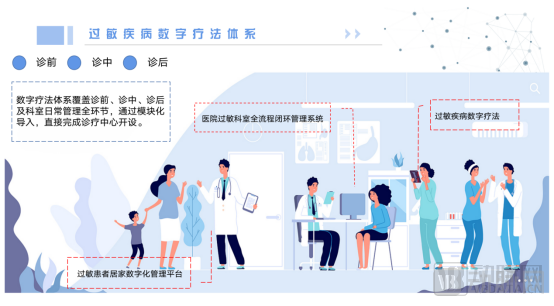
“Before the concept of digital therapeutics had taken hold in China, I had already designed and completed multiple digital therapeutic products for specialized disciplines,” said Wang Guilin, founder of Shuzhiyi. Building on his extensive and solid practical experience, he led his team in developing a digital therapeutic solution for allergic diseases that addresses core pain points in prevention, treatment, and disease management, achieving end-to-end digital diagnostic management across the pre-diagnosis, intra-diagnosis, and post-diagnosis stages.
“Allergy Diagnosis and Treatment Centers differ from ordinary clinical outpatient departments; it is crucial not to overlook the fact that allergic diseases inherently span multiple medical specialties,” stated Wang Guilin. In light of this, Shuzhiyi provides hospitals with a comprehensive, closed-loop management system for allergy departments at the administrative level. This system enables various digital management functions for diagnosis and treatment centers, and its visualized disease course management feature significantly enhances departmental operational efficiency while reducing management costs.
For patients with allergiesLet's discuss, the system will help them better manage and control their condition, while avoiding serious adverse consequences caused by drug abuse;For physicians, the use of this system enables efficient and cost-effective patient management, improves patient adherence, helps reduce disease recurrence, and prevents patient dropout or delayed follow-up visits;For the Allergy Center,, the system covers multiple functions for department management. Its modular deployment capabilities will thoroughly address the numerous pain points associated with establishing new hospital departments or allergy centers.
Allergy Center Standardized Output
“Pediatrics, ENT and Ophthalmology, Dermatology, Traditional Chinese Medicine, Respiratory Internal Medicine... Parents take their children up and down the stairs to visit multiple outpatient clinics, all to address allergy-induced dermatitis and rhinitis.”
Where Should We Seek Medical Attention for Allergies?
Who Should We See for Allergies?
What should we do in the future?
How to seek diagnosis? Whom to consult? What to do after completing medication? These have become the three core issues troubling numerous allergy patients.
According to Wang Guilin,Of the nearly 50,000 hospitals in China, fewer than 100 have established allergy departments (allergy centers).Given the significant mismatch between the allergic population and available diagnostic and treatment resources, he predicts that hospitals will increase investment in building allergy departments, and numerous allergy diagnosis and treatment centers will emerge in the market, leading to an imminent explosive growth in the industry. However, there is currently no construction standard for allergy diagnosis and treatment centers in China.
Shuzhi Yibian has taken the initiative to lead, assuming responsibility as a provider of standardized construction solutions for Allergy Diagnosis and Treatment Centers. Leveraging extensive expert resources from the Yangtze River Delta region, the company has developed comprehensive construction standards across dozens of dimensions, including hardware and software configuration, staffing, departmental development, operational expertise, and financial planning. These efforts fill existing gaps in relevant standards and support the scientific and standardized development of Allergy Diagnosis and Treatment Centers.
Independent R&D of Products, Enhancing the Allergy Ecosystem
Helping allergists manage patients through digital therapeutics and assisting in the development of allergy departments (centers) is the foundational business for Shuzhiyi as it deeply cultivates the existing market. To achieve breakthrough growth, the company must identify a second curve.
Consequently, Shuzhiyi has leveraged its independent R&D capabilities and the expert resources of Zhejiang University to develop and manufacture a traditional Chinese medicine (TCM)-based dressing for modulating cutaneous microecological flora, targeting allergic skin conditions. This achievement builds upon its establishment at the China Center (Hangzhou) of the KU Leuven Medical Innovation Center. Furthermore, for conditions such as allergic asthma and allergic rhinitis, the company has enhanced its “data-linked” portable smart hardware products by integrating its self-developed digital therapeutics for allergies. These devices effectively record measurement parameters including FVC, FEV1, FEV1/FVC ratio, and PEF, with synchronized data upload enabling visualized data management. Additionally, to address the issue of patient-driven overuse of corticosteroids in allergy treatment, the company plans to launch intelligent controllers and related products.
The three business segments progress in a layered, interlocking manner, forming a comprehensive, full-course solution for allergy management that achieves spiral upward development.
Initial Intent Determines the Endpoint. According to Wang Guilin, current participants in the allergy field are primarily pharmaceutical manufacturers and diagnostic testing companies, whose motivations are relatively singular. In contrast, Shuzhi Yili takes into account the needs of hospitals, physicians, and patients, striving to provide comprehensive, whole-course management solutions for allergic conditions to physicians and hospitals, thereby promoting refined specialization and standardized development within the industry.
Currently, Shuzhiyi has established collaborations with more than ten hospitals in Hebei, Shandong, Jiangsu, Zhejiang, Hubei, and other regions. It is also working closely with experts from Zhejiang University to lay a solid foundation for the future translation of achievements in industry, academia, and research related to allergy diagnosis and treatment. The company aspires to assume significant responsibilities, such as serving as a standard-setter for the construction of allergy diagnosis and treatment centers.
Founder and Chairman Wang Guilin, with nearly a decade of deep engagement in the mobile digital health sector. As a serial entrepreneur in mobile health, I pivoted to vertical disease-specific domains starting in 2013, continuously focusing on primary care-based chronic disease management, sleep disorders, and mental health conditions. I have been deeply involved in and witnessed the entire evolution of China’s mobile digital health industry.
At the recent project review held in Hangzhou Future Sci-Tech City, Shuzhiyi stood out among 109 comprehensive projects with its “Digital Therapeutics Platform and Full-Course Solution for Allergic Diseases,” securing an impressive ninth place. Moving forward, Shuzhiyi will focus its efforts on the Jiangsu and Zhejiang regions to establish a benchmark model for standardized allergy diagnosis and treatment centers in China.
Regarding the future of Shuzhiyi, Wang Guilin is more focused on staying grounded and excelling in present tasks: “Our near-term plan is to devote ourselves to refining our digital products. On the market front, Shuzhiyi has already initiated collaborations with more than ten hospitals. We hope that, through these partnerships, we can help elevate the hospitals’ related business operations, while also leveraging their feedback to optimize our business processes and establish a highly replicable business model.”
The company is currently launching a financing round to fund product R&D, team expansion, and marketing efforts.