

ICL Industry Under Scrutiny: Quality Excellence as the Path to Breakthrough
Since the pandemic, Independent Clinical Laboratories (hereinafter referred to as “ICLs”), also known as independent third-party testing centers, have become virtually household names.
Nearly 100 independent clinical laboratories (ICLs), including Beijing Dian Diagnostics Laboratory, Beijing KingMed Diagnostics Laboratory, Beijing Yuanma Medical Laboratory, Beijing Meihui Medical Laboratory, and Beijing Kangxu Medical Laboratory, were included in the recently released “List of Designated Nucleic Acid Testing Institutions in Beijing.” In response to the continuously growing demand for pandemic screening, the National Health Commission has been expanding the number of designated nucleic acid testing institutions. As of April this year, a total of 12,277 institutions across China were capable of providing nucleic acid testing services.
However, the expansion of the ICL market has also brought about the dilemma of "barbaric growth" in the industry.
Recently, multiple regions have reported violations by nucleic acid testing institutions, including missed detections, lost samples, and fraudulent practices. Since mid-to-late June, as of July 5, 14 localities have launched inspections of nucleic acid testing facilities. With the release of the “Notice on Further Strengthening Full-Chain Supervision of Novel Coronavirus Nucleic Acid Testing,” the industry has entered a period of stringent regulatory oversight.
This notice requires further strengthening of quality control in laboratories conducting nucleic acid testing for SARS-CoV-2, to ensure testing quality and biosafety, and to guarantee accurate, reliable test results and timely reporting.
It is evident that the ICL industry is facing a major test.
In fact, China’s independent clinical laboratory (ICL) sector represents a market with immense potential. Compared to the mature markets of the United States, Europe, and Japan, where third-party medical testing holds market shares of 35%, 50%, and 67% respectively, third-party medical testing laboratories in China account for only 5% of the medical testing market (data sourced from Qianzhan Industry Research Institute), indicating substantial room for growth.
From a policy perspective. Since 2016, the state has successively issued policies such as the “13th Five-Year Plan for Health and Wellness,” the “Opinions on Promoting the Sustained, Healthy, and Regulated Development of Socially Run Medical Institutions,” the “Decision on Amending the Detailed Rules for the Implementation of the Regulations on the Administration of Medical Institutions,” and the “Action Outline for Promoting High-Quality Development of the Health Industry.” At the same time, standards for independently established medical institutions were promulgated to encourage the development of ten categories of independent medical institutions, including medical imaging diagnostic centers, medical laboratories, pathology diagnostic centers, and health examination centers. This has driven a large number of institutions to enter the third-party medical service market or expand their own business scope.
Meanwhile, the tiered diagnosis and treatment system and medical insurance cost containment have further expanded the market for routine laboratory testing.
On one hand, primary healthcare institutions are poised to become a vast future market for the independent clinical laboratory (ICL) industry. On the other hand, under the broader context of healthcare insurance cost containment, hospital laboratory departments may evolve into cost centers. This will incentivize hospitals to gradually outsource non-core medical services, such as imaging and laboratory testing, to third-party medical service providers capable of operating at lower costs and higher efficiency. Consequently, third-party clinical laboratories may assume a more prominent position in the industry, leveraging their scaled and specialized services.
From the perspective of technological development, the continuous advancement of laboratory medicine, coupled with the integration of technologies such as big data and artificial intelligence into diagnostic testing, is expected to drive improvements in three key areas: the number of test items, test quality, and testing methodologies, thereby creating new growth opportunities for the industry.
Amid intensified policy support, technological iteration, and the sustained growth in demand for high-end testing services such as genomic testing, third-party testing institutions will leverage their advantages in capital, scale, and test offerings to increase their penetration in the high-end testing market, thereby driving up the gross profit margins of independent clinical laboratories.
However, the larger the market potential, the more intense the competition to capture a share of it. As the independent clinical laboratory (ICL) market expands, regulatory oversight has intensified. Policymakers and accreditation bodies have also imposed stricter requirements on the establishment and operation of ICLs.
Third-party medical laboratory services inherently possess certain unique characteristics. The industry presents high barriers to entry in terms of regulatory approval, quality control, capital, technology, and specialized talent. Consequently, the quality of many independent clinical laboratories (ICLs) varies significantly in areas such as regulatory compliance, quality control, technical capabilities, and professional expertise. This is one of the key reasons behind the frequent issues recently observed in nucleic acid testing institutions.
First are the industry entry barriers.Although third-party medical testing centers are relatively independent, they are still classified as medical institutions and must obtain a Medical Institution Practice License to operate. For example, conducting HIV screening or tests using PCR technology requires additional professional qualifications, such as the "Qualification for AIDS Screening Testing" and the "Technical Review Certificate for Clinical Gene Amplification Testing Laboratories."
Next is the quality control barrier.In the quality control phase, to ensure testing quality, third-party medical laboratories typically need to apply for accreditation under international laboratory quality systems such as ISO 17025, ISO 15189, or CAP. Obtaining such international laboratory quality system accreditation requires comprehensive validation across multiple aspects, including instruments, facilities, personnel, testing methodologies, facility design and layout, and environmental conditions. This ranges from major equipment configuration to minor parameters such as airborne particle counts and background air velocity.
Then there are capital barriers.The third-party medical testing industry is characterized by high initial capital investment. According to the prospectus of KingMed Diagnostics, establishing an independent clinical laboratory with comprehensive testing services and a portfolio of approximately 1,500 test items requires a fixed investment of around RMB 20 million.
Finally, Technical and Talent Barriers. Third-party medical testing integrates multidisciplinary composite technologies, including molecular biology, biochemistry, genetics, immunology, pathology, and informatics, thereby presenting a high technical barrier. This naturally raises the requirements for professional talent. In areas such as specimen collection, laboratory testing, issuance of test results, and clinical interpretation, third-party medical testing necessitates laboratory personnel and pathologists with extensive clinical experience and specialized testing expertise.
Among these, the ISO 15189 quality system is particularly noteworthy.Because this is a crucial component of ICL quality assurance, and obtaining certification for this quality system is extremely difficult.
ISO 15189 quality system certification imposes requirements not only on pre-analytical quality control of patient samples in independent clinical laboratories (ICLs), but also on analytical performance verification, operational competence of professional personnel, standardized testing, report interpretation, and intra-laboratory specimen transport processes. Laboratories seeking ISO 15189 accreditation must establish a comprehensive quality management system, ensure its full implementation and operation, and guarantee the suitability and effectiveness of the system. All testing items conducted by the laboratory must be performed in strict accordance with national standardized technical procedures to ensure the accuracy of test results.
According to the latest information released by the China National Accreditation Service for Conformity Assessment (CNAS), as of May 31, 2022, only 577 medical laboratories had obtained ISO 15189 accreditation, representing an increase of merely three since April. Very few medical laboratories have successfully achieved ISO 15189 accreditation.
Despite strengthened regulations and high entry barriers, multiple institutions have continued to make in-depth strategic investments.
According to VCBeat, in addition to the four leading enterprises in the independent clinical laboratory (ICL) sector—KingMed Diagnostics, Dian Diagnostics, Daan Gene, and Adicon—the Hefei Ping An Haoyi Medical Laboratory, under Ping An Health (Testing) Center, has been awarded the ISO 15189 Accreditation Certificate for Quality and Competence of Medical Laboratories by the China National Accreditation Service for Conformity Assessment (CNAS), officially becoming a medical laboratory in China accredited for ISO 15189 quality and competence.
Early this year, the eight medical laboratories under Ping An Health (Testing) Center (hereinafter referred to as “Ping An Haoyi Medical Laboratories”) were also included in the First Batch of Qualified Third-Party Nucleic Acid Testing Institutions for COVID-19, released by the National Health Commission.
Following the National Health Commission’s release in June of the “Notice on Further Strengthening Full-Chain Supervision of COVID-19 Nucleic Acid Testing,” among the provinces that have publicly disclosed the results of their inspections and rectifications of COVID-19 nucleic acid testing institutions, Chengdu Ping An Haoyi Medical Laboratory, Hangzhou Ping An Haoyi Medical Laboratory, and Nanchang Ping An Haoyi Medical Laboratory have all passed the inspections.
The construction experience of the eight medical testing laboratories under Ping An Health (Testing) Center undoubtedly holds certain reference value for the development of the ICL industry.
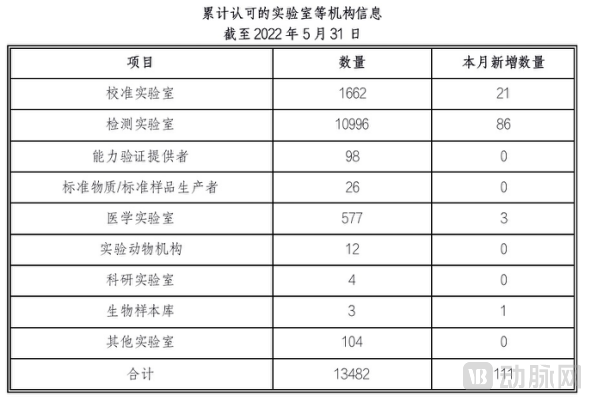
Cumulative Information on Accredited Laboratories and Other Institutions
Data source: Official website of the China National Accreditation Service for Conformity Assessment
It is reported that Ping An Haoyi Medical Laboratory has introduced an international medical laboratory management system and partnered with SRL, a subsidiary of Japan’s H.U. Group, a global medical laboratory service provider. By internalizing Japanese standards, equipping itself with cutting-edge testing equipment, and adhering to the requirements of ISO 15189 and CAP accreditation systems while referencing the “Six Sigma” principles, the laboratory has established a scientific and efficient quality management system. It implements comprehensive monitoring of personnel, instruments, equipment, reagents, methodologies, environment, and specimens, ensures full-process quality control throughout all analytical procedures, and advances quality management into the preventive control stage.
Meanwhile, Ping An Haoyi Medical Laboratory has established a grid-based coverage system through its chain layout to ensure service depth and response efficiency. By leveraging cold-chain logistics supplemented with real-time GPS tracking, temperature monitoring, and alarm functions, it ensures the proper preservation of various samples during transportation, thereby shortening turnaround time (TAT) and enhancing the quality and efficiency of regional laboratory report generation.
During the ISO 15189 quality assessment, the CNAS assessment team will also conduct on-site visits to hospitals served by the laboratory to evaluate its operations in collaboration with healthcare institutions, focusing on sample receipt and transportation, report quality, and customer satisfaction.
Breaking Through the Third-Party Testing Landscape: In addition to providing comprehensive solutions—including laboratory consulting, services, management, and operations—to various medical institutions, Ping An Haoyi Medical Laboratory has fully undertaken all testing operations of the Ping An Health (Testing) Center. This year, it has further launched a strategic initiative that deeply integrates “diagnostic imaging” with “clinical laboratory testing.”
As the first third-party medical institution to propose a “trinity” business model integrating imaging diagnosis, medical laboratory testing, and precision examinations, Ping An Health (Testing) Center has gradually carved out a clear development path through its strategic layout and explorations in recent years. Particularly in the area of early screening for cancer prevention and control, its 11 self-operated flagship testing centers across China specialize in high-end precision examinations and imaging diagnosis. With an average investment of nearly RMB 100 million per offline health checkup outlet, each center features a self-built, regionally unique “fully automated pipeline” laboratory to comprehensively handle medical laboratory testing services. The center provides customers with a whole-disease-cycle management service model centered on diseases, with core components including screening, diagnosis, monitoring, prognosis, and follow-up.
From the perspective of the “integration of testing and laboratory services” model, Ping An Health (Testing) Center’s strategy has become increasingly clear. Building on its foundation of committee-level experts and research-grade imaging equipment, the center is strengthening routine testing while expanding specialized testing, offering more than 4,000 professional laboratory tests. By leveraging at-home self-testing products such as genetic testing and two-cancer screening, it is unlocking additional business scenarios and providing a diversified portfolio of medical services to users who visit for testing.
Today, as a key component of Ping An Group’s broader healthcare strategy, Ping An Health (Testing) Center collaborates with ecosystem partners such as Ping An Health to create an integrated online-offline comprehensive medical service model. By leveraging industry-leading specialized disease referral centers, it provides end-to-end coverage across the entire user journey of “screening–diagnosis–treatment,” further advancing the development of health services and promoting the sharing of regional medical resources.
Since 2017, the independent clinical laboratory (ICL) sector has entered a period of rapid growth, marked by intense industry competition. From a policy perspective, the government now aims for third-party medical services to leverage the flexibility of social capital within the existing healthcare system, achieving breakthroughs in cutting-edge technologies, integrated business models, and personalized services, while realizing industrialization through chain operations. From the standpoint of medical development, the emphasis on diagnostics has become inevitable.
However, ICL providers are typically numerous, small in scale, and geographically dispersed, leaving many independent clinical laboratory (ICL) companies in a precarious financial position. As a labor-intensive industry, the ICL sector involves numerous operational stages, features a lengthy supply chain, and incurs high costs.
How to Break the Deadlock? While emphasizing innovation in service models, it is also essential to further enhance internal laboratory capabilities. New entrants aiming to take the lead in the industry must continue to formulate new strategies aligned with industry development to adapt to market transformations.