

World's First Polymer-Based Transcatheter Aortic Valve Replacement Successfully Performed by Academician Ge Junbo
Today,Academician Ge Junbo, along with Professor Zhou Daxin, Chief Physician Pan Wenzhi, Professor Guo Kefang, and physicians Zhang Xiaochun, Zhang Yuan, Chen Shasha, and Li Wei from his team, successfully completed the world’s first multi-polymer transcatheter aortic valve replacement (TAVR). This successful implantation marks the entry of China’s valvular heart disease treatment into a new era of multi-polymer technologies and demonstrates that Chinese cardiovascular medical device companies have begun to lead global innovation in certain fields.
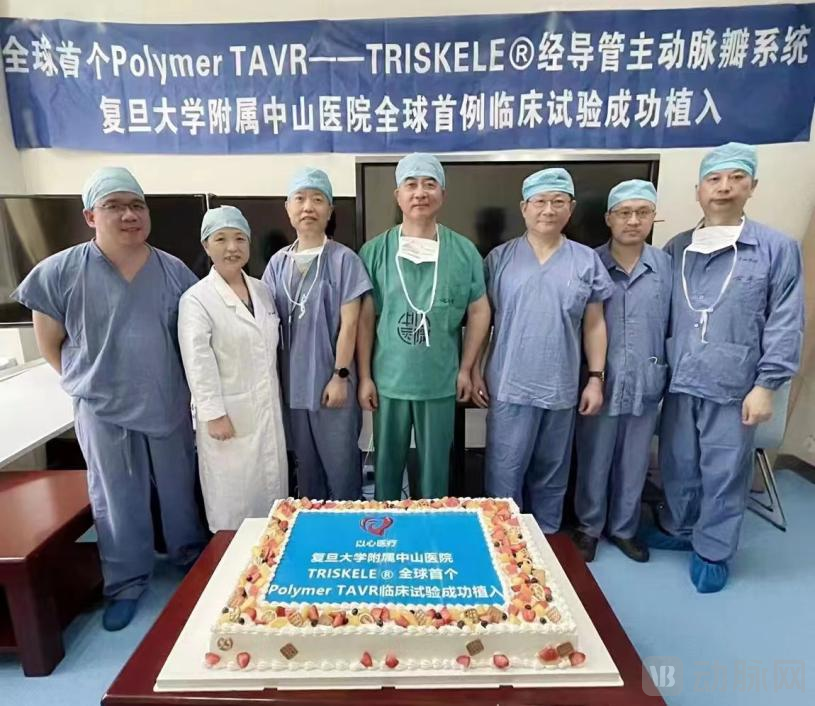
Transcatheter Aortic Valve Replacement (TAVR) is currently a highly mature clinical technology. It employs a minimally invasive transcatheter approach to treat aortic valve diseases, including stenosis and regurgitation. While the heart continues to beat, a prosthetic valve compressed within a catheter (delivery system) is advanced via the femoral artery access route along the aorta to the aortic annulus. The prosthetic valve is then deployed to replace the diseased native valve, restoring its opening and closing function. This approach avoids the significant trauma associated with traditional surgical valve replacement while achieving outcomes comparable to, or even superior to, those of open-heart surgery.The TAVR device consists of two main components: the stent frame and the functional leaflets. The stent frame serves to anchor the device, while the leaflets are the functional components that act as the artificial valve. Historically, TAVR leaflets have been made from porcine or bovine pericardial tissue (also known as bioprosthetic valves). Although animal pericardial tissue has been used clinically for many years and demonstrated favorable durability and antithrombotic properties, its service life remains limited (typically 10–15 years). Furthermore, it demands high precision in processing and suturing and cannot be easily tailored into specialized shapes.With advancements in materials science, polymer materials can partly address the limitations of pericardial valves. Polymers are easier to process and customize. In vitro simulation studies, certain polymers have demonstrated a longer service life than traditional bovine pericardial valves, reaching up to 25 years. Additionally, similar to bioprosthetic pericardial valves, polymer valves do not require lifelong anticoagulation therapy and do not produce noise.
The successful implantation of the valve this time isPolymer TAVR TRISKELE®: The World’s First Transcatheter Aortic Valve Replacement Product Featuring Self-Developed Synthetic Polymer Nanocomposite Leaflets by Shanghai Yixin MedicalAcademician Ge Junbo’s team has been involved in the evaluation of the TRISKELE® transcatheter aortic valve replacement system since the animal testing phase, expressing strong confidence in its revolutionary materials and manufacturing technologies. The TRISKELE® transcatheter aortic valve replacement system features polymer nanocomposite leaflets independently developed by Yixin Medical, which, compared to traditional bovine pericardial leaflet materials, offerZero calcification, low thrombogenicity, and high biocompatibilityadvantages. The theoretical service life of the TRISKELE® product after implantation can reach 20–25 years, making it suitable for younger patients and significantly expanding the target population for similar products. Meanwhile, its manufacturing process enables fully automated industrial production, substantially reducing raw material costs and markedly improving the pass rate. The stent design features a proprietary riveted structure made of shape-memory alloy wires, does not rely on radial force for fixation, and incorporates a large-cell mesh design. Additionally, the valve offers pre-loaded and fully retrievable characteristics.
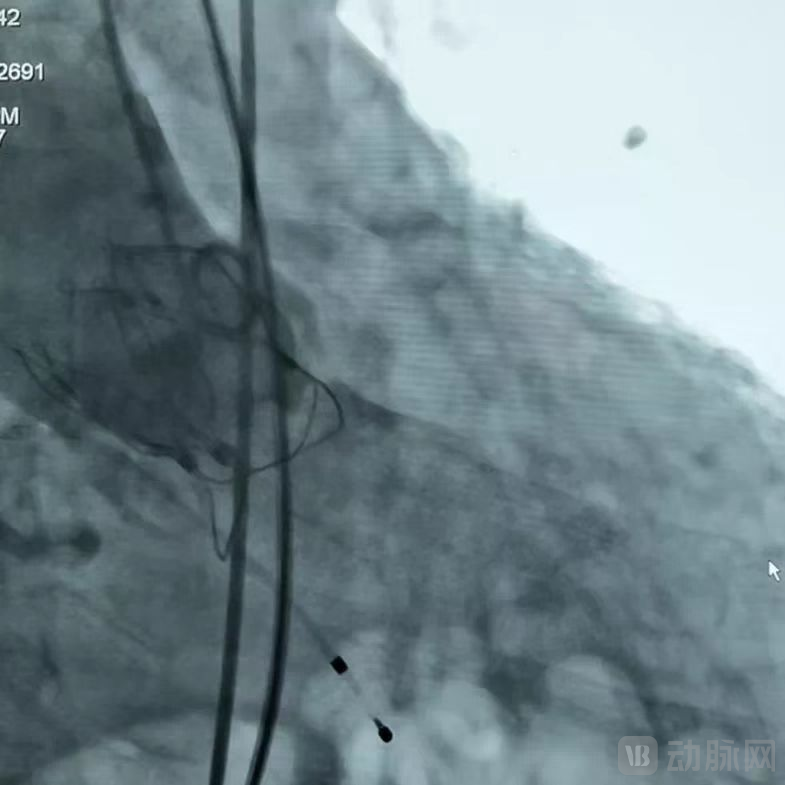
The patient who underwent the procedure was an 80-year-old individual with severe aortic stenosis and a type 1 bicuspid aortic valve anatomy. The surgery proceeded smoothly, with a catheter manipulation time of 27 minutes and unimpeded device operation. Post-procedural angiography demonstrated satisfactory valve function, with no significant paravalvular leak or transvalvular pressure gradient. There was no coronary obstruction or conduction block. The patient was successfully transferred back to the intensive care unit for recovery and is currently in stable condition.

Polymer valves represent a highly promising direction in valvular therapy, with the potential to address the limitations of current bioprosthetic valves. Several companies worldwide are currently dedicated to developing polymer valves with enhanced durability. Tria, a US-based company, has developed a revolutionary polymer material called LifePolymer, which is sutured onto surgical bioprosthetic valves. Recently published one-year clinical follow-up results have demonstrated satisfactory valve function. However, the case completed by Academician Ge Junbo marks the world’s first application of a polymer valve in transcatheter aortic valve replacement (TAVR).