

HeartSciences Launches Next-Gen 3D ECG with AI-Powered Left Ventricular Diastolic Function Assessment, Achieving 94% Asymptomatic Detection Rate

HeartSciences
Developer of Electrocardiogram Devices
Heart disease refers to various conditions affecting the heart, including arrhythmias, valvular heart disease, congenital defects, and vascular diseases. According to statistics from the American Heart Association (ACC), 50% of men and 64% of women die suddenly from coronary heart disease after being diagnosed with a heart attack, althoughNo symptoms had previously occurred.. According to statistics released by the U.S. Centers for Disease Control and Prevention (CDC), heart disease is the leading cause of death among men, women, and most racial and ethnic groups in the United States. Approximately 605,000 patients suffer a heart attack each year in the United States, of whichApproximately 20% of deaths from coronary artery disease (CAD) occur in adults under the age of 65.。
The scale of this issue is similar worldwide.In 2020, the World Health Organization confirmed that heart disease remained the leading cause of death globally over the past two decades.Ischemic heart disease currently accounts for 16% of global deaths., an estimated 17.9 million people died from cardiovascular diseases in 2019, accounting for 32% of global deaths.As heart disease progresses to more severe stages, treatment costs rise significantly, prompting governments, hospitals, and insurers to recognize the importance of shifting the diagnosis and management of these conditions to earlier stages.This approach not only reduces healthcare costs but also leads to better health outcomes for patients.Currently, there is no method or device for heart disease screening and diagnosis that simultaneously offers the advantages of convenience, low cost, and high accuracy.
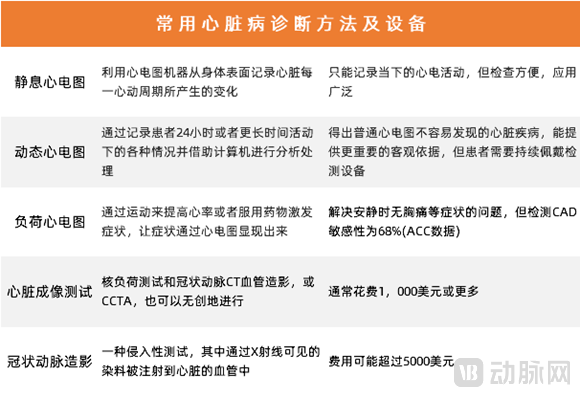
On the other hand, according to an article published by Dalene W. Kitzman, M.D., and William C. Little, M.D., in the Journal of the American Heart Association on February 14, 2012,Left Ventricular Diastolic Dysfunction (LVDD) begins in the early stages of heart disease and progressively increases in severity as the disease advances.. In 2015, the U.S. Department of Health and Human Services also stated thatLVDD is considered one of the earliest signs of heart disease.,It occurs even when patients are asymptomatic.. Therefore, early detection of diastolic dysfunction can serve as a biomarker for nearly all forms of heart disease and age-related cardiac abnormalities. However,Traditional ECG has low sensitivity for two of the three categories of heart disease: CAD and structural heart disease, not to mention its detection of LVDD.。
Heart Test Laboratories, Inc. (HSCS), a medical technology company based in Texas, USA, has developed an electrocardiogram capable of detecting LVDD using AI algorithms.The company had just announced on June 15 of this year that its initial public offering of 1.5 million units was priced at $4.25 per unit. After deducting underwriting discounts, commissions, and other offering expenses,Total IPO proceeds were approximately US$6.375 million。
Heart Test Laboratories, Inc. (hereinafter referred to as “HeartSciences”) has raised a total of $31.3 million in financing since its establishment in 2008. Since left ventricular diastolic dysfunction (LVDD) was recognized in 2015 as one of the earliest signs of heart disease, HeartSciences’ financing activities have gradually become more active, with itsThe newly launched 12-lead resting ECG, MyoVista, also received CE certification in August 2017.。
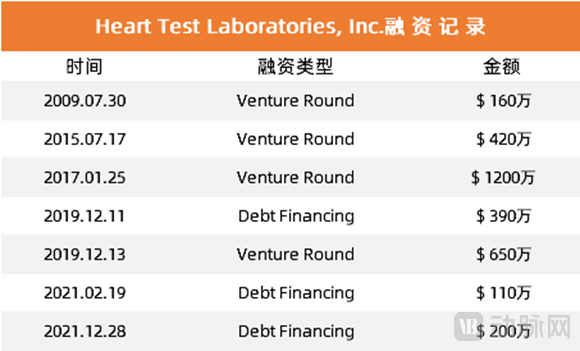
Summary of Heart Test Laboratories, Inc.'s Historical Financing Rounds (Source: Crunchbase)
However, according to HeartSciences' prospectus,MyoVista has not yet received FDA marketing authorization.. The company incurred losses of over USD 3.8 million and USD 2.45 million in 2020 and 2021, respectively; despite these substantial losses, itsR&D expenditures still accounted for 53.05% and 66.18% of total operating expenses, respectively.. What groundbreaking technology has HeartSciences, which has now successfully completed its IPO, actually brought to the market?
Traditional 12-lead resting ECG presents planar and continuous waveforms in the results based on cardiac vibrations. Each heartbeat is regarded as one cardiac cycle,HeartSciences' ECG can record energy fluctuations in each heartbeat cycle.。
MyoVista, the full name of MyoVista® Wavelet ECG (wavECGTM), the device can extract the signal frequency collected by the ECG device, and use AI to perform wavelet signal processing analysis, ultimately obtaining the MyoVista energy waveform.Simply put,MyoVista Unfolds 2D ECG into 3D, decomposing the waveform of a single cardiac cycle into multiple frequency components. Although visually aligned with traditional electrocardiogram (ECG) traces, the energy waveform diagram intuitively displays the distribution of cardiac kinetic energy within a single cycle.
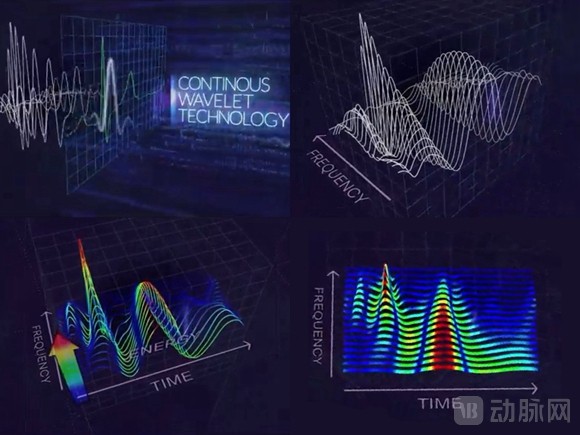
MyoVista®Schematic Diagram of the Principle of Wavelet ECG Image Presentation
MyoVista energy waves provide a nonlinear mapping of energy, combining information from each time point and frequency.Reflecting the energy levels detected from the heart. In this figure, the X-axis represents time and the Y-axis represents frequency, with a frequency range of 3–200 Hz. Color indicates the energy level at each time-frequency point: blue denotes low energy, red denotes high energy, and intermediate energy levels are displayed using a red-green-blue (RGB) color scale.
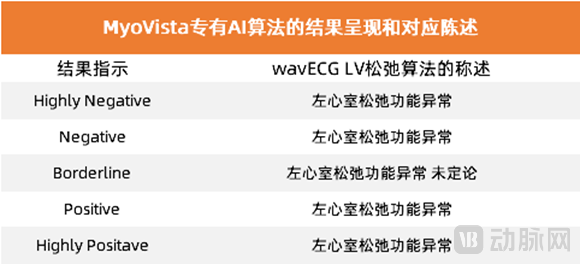
Presentation of Results and Corresponding Statements from MyoVista’s Proprietary AI Algorithms
Wavelet signal algorithms are time-frequency analysis tools that are particularly useful in applications related to biosignal processing, such as electrocardiogram (ECG) signals. HeartSciences leverages AI to run these algorithms, developing its proprietary patented algorithms from extensive time-frequency sample data and applying them to MyoVista.MyoVista is currently capable of acquiring 1,000 frequency signals within 20 seconds, identifying frequencies indicative of cardiac dysfunction using pre-configured AI algorithms, and evaluating these data.This algorithm enables the assessment of left ventricular diastolic function in patients, with results reported as negative or positive. The sensitivities of the algorithm for markedly negative, negative, positive, and markedly positive classifications are 94%, 70%, 81%, and 92%, respectively.
For the entire MyoVista ECG monitor page, in addition to the aforementioned energy wave patterns and AI algorithm results, it also providesFull-Featured Traditional 12-Lead Resting ECG, and the use ofResults of the analysis using the Glasgow algorithm (also known as the Glasgow ECG interpretation algorithm)。
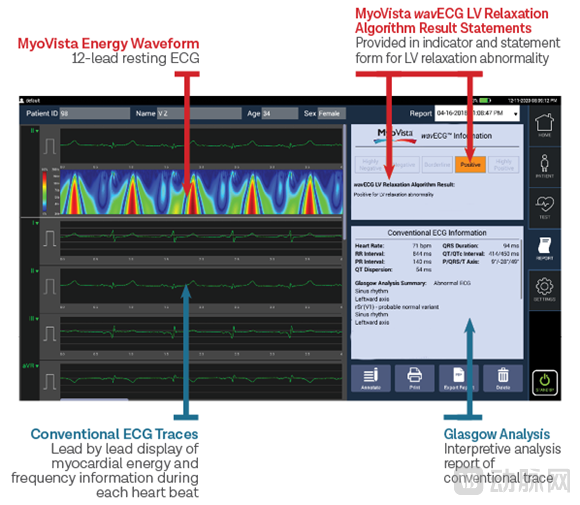
MyoVista®Four Functional Zones of the Wavelet ECG Display Page
To more accurately capture the frequency of individual cardiac cycles, HeartSciences has designed a dedicated disposable central pillar electrode.This electrode enables high-quality, low-impedance signal acquisition. Its design incorporates a hollow cylindrical connector (as shown in the figure below) that aligns securely with the complementary post on the cable gripper, ensuring a stable connection and thereby overcoming the challenges of inconsistent signal capture and induced signal noise commonly encountered in other electrode designs.

MyoVista Central Column Electrode: Structural Overview of Components
This proprietary electrode also usesHigh-Quality Hydrogels, designed to enhance the electrical conductivity and optimize consistent, high-quality signal acquisition. The hydrogel adhesive provides comfortable yet secure adhesion, ensuring conformal contact with the skin surface for optimal signal transmission and minimal signal noise. The electrodes also ensure optimal skin contact,For Single Usecan be easily and painlessly removed afterward.
As the severity of myocardial ischemia increases, the human body sequentially exhibits: cellular alterations, diastolic dysfunction, systolic dysfunction, electrocardiogram (ECG) changes, angina pectoris, and ultimately myocardial infarction.MyoVista detects changes in cardiac function by assessing left ventricular diastolic function, enabling earlier detection than traditional ECGs, which rely on observable waveform alterations.
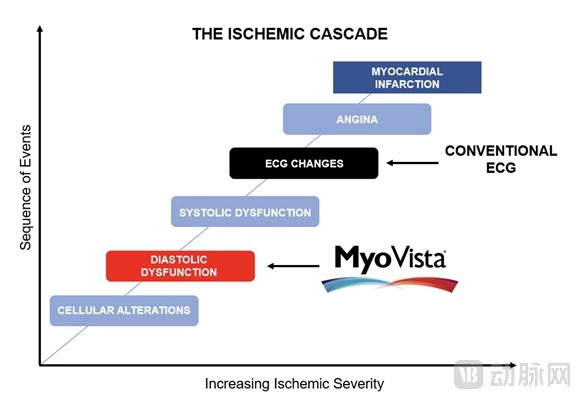
The Progression of Ischemic Heart Disease
As AI technology becomes increasingly integrated into electrocardiography (ECG), a growing number of healthcare companies are shifting from manufacturing and developing mature traditional ECG devices to exploring the potential of AI in expanding the clinical value and healthcare applications of ECG.By addressing the low detection rates of traditional ECG for structural and ischemic heart disease, while retaining its simplicity and ease of use, and without competing with portable heart rate monitoring devices, MyoVista has pioneered non-invasive screening for early-stage cardiac function, positioning itself to capitalize on an unprecedented market opportunity.
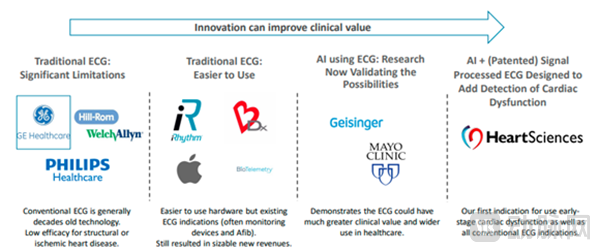
The Innovation Process of ECG Products
As the number of patients with cardiovascular diseases increases, the preventability of these conditions has gradually gained public acceptance. Currently, in addition to ECG testing, cardiovascular health management services or apps, heart rate monitoring bands, and regular comprehensive physical examinations have increasingly become integrated into daily life. With improvements in living standards, people alsoEmbracing the Consumer Mindset and Importance of Spending Small Amounts on Prevention to Avoid Large Medical Costs in the Future。
More importantly,Capital markets in the cardiac diagnostics and management sector are showing positive developments.According to data from Markets and Markets’ Global Diagnostic ECG report, approximately 770,000 ECG devices were sold worldwide in 2015. Demographic shifts, such as population aging and rising obesity rates, will drive increased demand for cardiorespiratory-related testing in the coming years, thereby boosting the utilization of ECG devices and supplies. According to Markets and Markets’ Diagnostic ECG Market (2019–2024) report, the global diagnostic ECG device market (excluding supplies) is valued at approximately USD 7.5 billion annually and is projected to reach USD 10.3 billion by 2024, with a compound annual growth rate (CAGR) of 6.4%. On the other hand, data from VBInsight shows that there were 60 financing events in the primary market for digital chronic disease management in 2021 (including 17 cardiovascular companies), with total funding exceeding USD 3.5 billion—the highest amount raised in nearly seven years.
MyoVista addresses not only the clinical detection of heart disease but also enables patients to understand their cardiac health status before any corresponding symptoms manifest.Therefore, whether in clinical monitoring or early screening and prevention of heart disease, HeartSciences has the opportunity to cultivate a larger market, but currentlyThe key lies in securing FDA marketing authorization for the product.. In December 2019, HeartSciences submitted a De Novo classification request to the FDA and received feedback from the FDA in 2020. The refined clinical trial and application report are planned to be resubmitted in the current fiscal year ending April 30, 2023. Upon obtaining FDA clearance, HeartSciences committed to launching MyoVista asPriced below traditional 12-lead resting ECG products on the market ($5,000–$10,000). By leveraging its self-established direct sales team, it has gradually expanded from the United States to Europe, Latin America, and other regions, systematically developing markets in primary care, retail healthcare, emergency departments, hospitals, surgical procedures, commercial insurance health examinations, specialized testing, and athlete testing.