

Rainmed Medical, China's First Pure-Play Vascular Interventional Robotics Company, Goes Public on HKEX

RainMed
Developer of Vascular Interventional Surgical Robots
The surgical robotics sector, known for spawning market cap myths, has welcomed another publicly listed company.
On July 8, 2022, Rainmed, a coronary intervention diagnostics and therapeutics company, was listed on the Hong Kong Stock Exchange, with a market capitalization exceeding HK$6 billion.
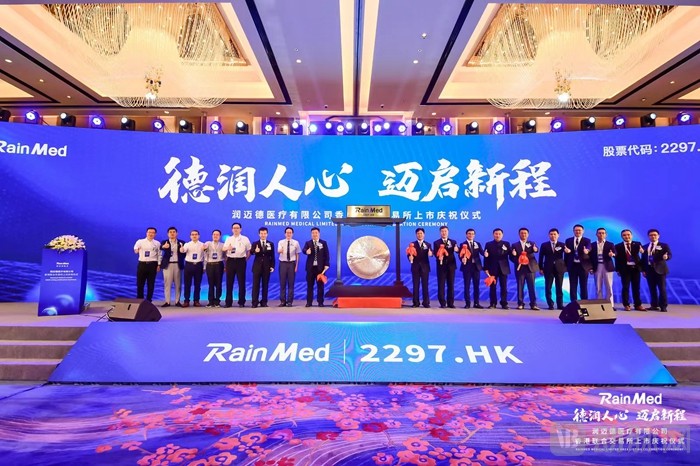
Publicly listed surgical robotics companies are heavily concentrated in the laparoscopic surgical robotics sector; however, Rainmed, Intuitive Surgical, and MicroPort MedBot each follow distinct paths. Rainmed has independently developed a vascular interventional robotics system, making it the first pure-play vascular interventional surgical robotics company to go public in China.
Vascular interventional surgical robots have long been a key focus area for both capital markets and clinical practice. Billions of yuan in investment have flowed into this sector, with total domestic financing exceeding RMB 1 billion. The combined annual volume of procedures across the three major markets—neurointerventional, coronary interventional, and peripheral interventional—is projected to surpass 3 million cases in the future. Vascular interventional surgical robots offer more precise and safer solutions.
As the first publicly listed company in the field of vascular interventional surgical robots, Rainmed has introduced a new product design. The da Vinci Surgical System comprises three core components: the surgeon console, the robotic arms, and the navigation software, which have essentially defined the architectural model for other specialized surgical robots.However, Rainmed’s surgical robot is more akin to an aircraft carrier platform.Rainmed not only possesses the traditional console, robotic arms, and navigation software of surgical robots. It can also achieve "carrier-based" integration, akin to an aircraft carrier, by integrating the caFFR system, caIMR system, and Flash RDN system from Rainmed's pipeline into the surgical robot platform.
Prior to its public listing, Rainmed attracted significant attention in the primary market. During its pre-IPO financing rounds, the company secured investments from Ping An Capital, Jinglin Asset Management, Cowin Capital, Qingzhou Capital, and internationally renowned institutions such as Seresia Asset Management and Lighthouse Canton.
In the fiercely competitive surgical robotics sector, why has Rainmed emerged as the first publicly listed company specializing in vascular interventional surgical robots, attracting investments from multiple capital firms? What are the commercialization prospects for Rainmed? VCBeat (WeChat ID: vcbeat) provides an analysis of its prospectus.
Rainmed was founded in 2014, entering a sector that would later become highly popular.
In 2019, angiography-based FFR emerged as a hot sector in China. FFR (Fractional Flow Reserve) is a key precision diagnostic metric for the functional assessment of coronary artery stenosis; simply put, it is the gold standard for determining whether stent implantation is necessary during PCI procedures. Many companies secured substantial financing by leveraging angiography-based FFR technology. Around 2020, domestic firms successively obtained registration certificates, propelling the angiography-based FFR sector to another peak of development.
Rainmed identified the pain points in precision diagnosis and treatment of coronary interventions at an earlier stage. In 2012, Huo Yunfei, the founder of Rainmed, recognized numerous challenges hindering the widespread adoption of FFR measurement based on pressure wires. These included the invasive nature of pressure wires, side effects associated with the additional use of pressure wires and hyperemic agents, the need for physicians to undergo more complex and frequent training, prolonged procedural time, and high costs.
After recognizing the numerous challenges in the market for precise diagnosis and treatment of coronary interventions, the founding team of Rainmed decided to combine their expertise in biofluid dynamics algorithms with medical science to develop an efficient, cost-effective vascular interventional diagnostic tool, targeting the nearly untapped FFR diagnostics segment in domestic percutaneous coronary intervention (PCI) procedures.Develop angiography-based FFR (caFFR) and angiography-based microvascular resistance index (caIMR) systems.
According to the prospectus, in 2020, there were approximately 800 fractional flow reserve (FFR) measurements performed per million patients with coronary artery disease in China, and the penetration rate of FFR measurement among all patients undergoing coronary angiography (CAG) was 0.4%.
After choosing to embark on an entrepreneurial journey, Rainmed did not adopt a follow-on innovation model or directly copy existing foreign products; instead, it opted for independent research and development.. Rainmed has innovatively developed the angiography-based caFFR and caIMR systems, addressing clinical pain points.
Rainmed’s angiography-based caFFR system received CE certification in the European Union and NMPA approval in China in late 2019. Used in conjunction with a pressure sensor, the system calculates FFR values from real-time imaging using a specialized computational fluid dynamics algorithm. It is easy to operate, requires neither a pressure guidewire nor vasodilators, enables FFR measurement within five minutes, and achieves an accuracy rate exceeding 95%.
Equipped with independently developed foundational technologies and capabilities, Rainmed has rapidly expanded its product pipeline, not confining itself to the single track of FFR.The caIMR system was also rapidly launched in the market for precise diagnosis and treatment of coronary artery disease. This product is a global first and is expected to receive regulatory approval in the fourth quarter of this year.
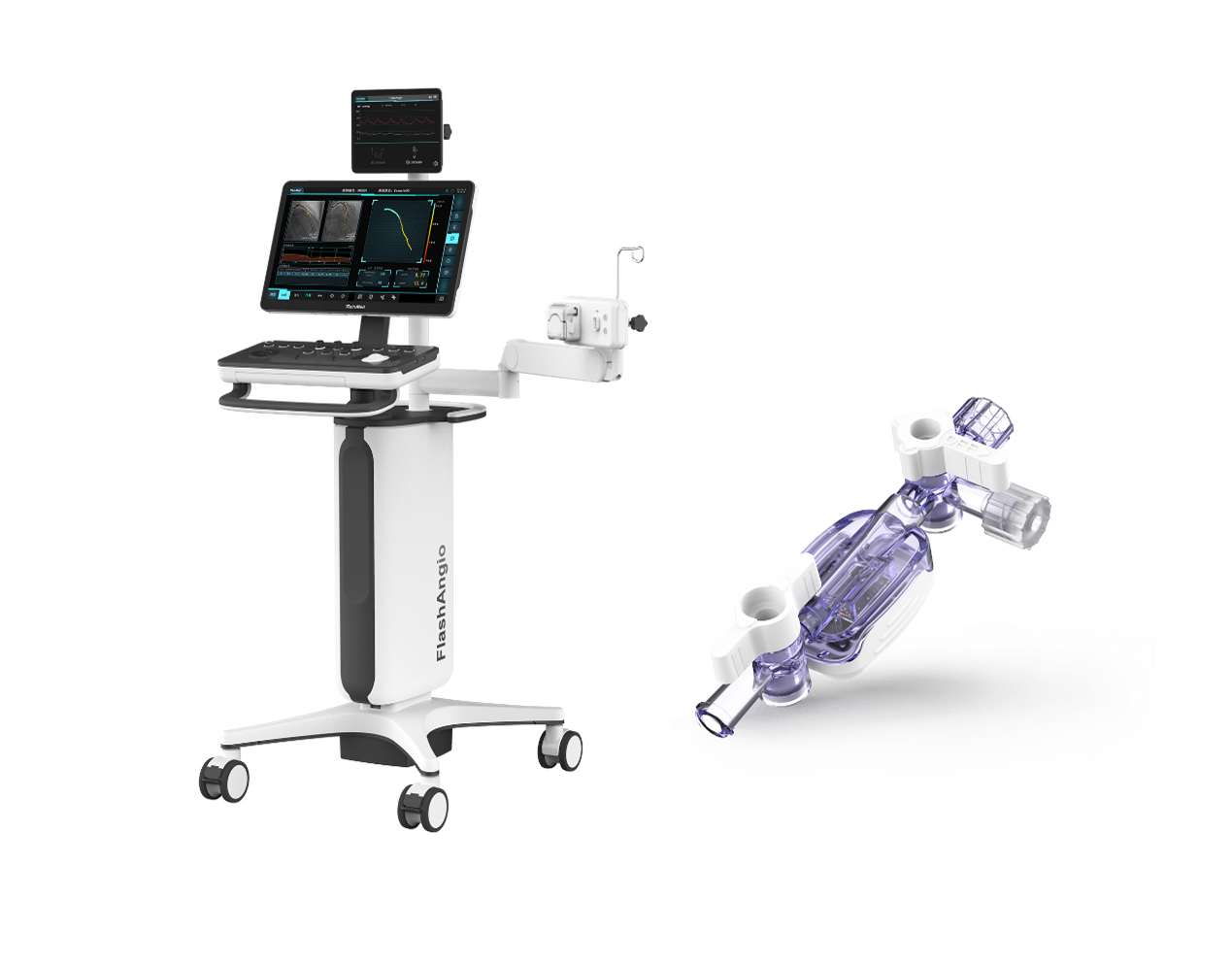
caIMR System and Associated Consumables
IMR is a quantitative method that assesses coronary microvascular function and is also used to identify effective adjunctive therapies to reduce microcirculatory dysfunction and improve prognostic management after percutaneous coronary intervention (PCI). According to prospectus data, up to 70% of patients undergoing coronary angiography (CAG) have microvascular dysfunction; however, IMR can only be measured via minimally invasive interventional procedures, which are time-consuming and yield unstable results.
Rainmed’s innovative caIMR system significantly reduces the time required for IMR measurement and diagnosis of coronary microvascular disease to an average of less than five minutes.
Independent R&D is a more challenging path, but it enables one to reach greater heights than mere imitation. Independent innovation has always been a core competency valued by Rainmed. In 2020, Rainmed’s R&D expenditure amounted to RMB 11.82 million, increasing to RMB 26.97 million in 2021.
Independent R&D has enabled Rainmed’s products to achieve the highest accuracy among wire-free FFR systems, while also enhancing the uniqueness of its business model through a “system + consumables” approach, thereby laying the foundation for Rainmed to become the first publicly listed company specializing in vascular interventional surgical robots.
At the initial market launch, Rainmed faced challenges in gaining physicians’ trust. However, after using the product, doctors expressed strong endorsement. Some physicians who trialed the product during the early preclinical phase promptly indicated their willingness to support Rainmed in conducting preclinical trials.
Since its market launch, Rainmed’s caFFR has not only gained recognition among physicians but also achieved rapid commercial returns.
Rainmed’s wire-free caFFR product generated RMB 6.1 million in sales in 2020 and RMB 81.2 million in 2021. To date, Rainmed’s caFFR has been adopted by more than 1,000 hospitals across 29 provinces, municipalities, and autonomous regions in China.
A single product line struggles to gain a foothold in the market, while a fragmented product portfolio also lacks competitiveness. Therefore, since its establishment in 2014, Suzhou Rainmed Medical Technology Co., Ltd. has defined the strategic goal of developing vascular interventional surgical robots. After nearly a decade of solid accumulation, the company took the lead in launching the core product of the digital functional diagnosis module for vascular interventional surgical robots and is accelerating the research and development of other robotic modules.Rainmed’s forward-looking strategic layout has widened the gap between it and its competitors, accelerated its IPO process, and helped it become the first publicly traded company specializing in vascular interventional surgical robots.
Like angiography-based FFR, vascular interventional surgical robotics is also a highly competitive sector.
Conventional vascular interventional procedures are typically performed manually under significant X-ray radiation exposure. Vascular interventional surgical robots enable physicians to operate remotely from a separate room, thereby reducing their radiation exposure.
The development of vascular interventional surgical robots is viewed favorably by numerous companies. Siemens Healthineers acquired Corindus Vascular Robotics, the developer of the latest-generation CorPath® GRX coronary intervention system. Endoways, a company specializing in disposable vascular interventional surgical robots, was acquired by Jishi Capital and introduced to the Chinese market in partnership with Denovo. In October 2020, Robocath established a joint venture with MicroPort, holding a 49% equity stake. The aggressive expansion by leading international players in the cardiovascular intervention sector underscores the growing emphasis on vascular interventional surgical robots.
Although multiple vascular interventional robotic systems have been launched on the market, these products still exhibit limitations, with primary challenges centered on haptic feedback and compatibility with disposable auxiliary devices. Commercial performance also requires improvement; Siemens’ acquired CorPath GRX system from Tuo Ling received regulatory approval as early as 2016 and has facilitated over 10,000 procedures cumulatively.
Meanwhile, the primary beneficiaries of current vascular interventional surgical robots are physicians; however, since physicians are not the main payers for these products, the value proposition for patients needs to be enhanced.
Similar to angiography-based FFR, Rainmed has also established its unique competitive advantage in the field of vascular interventional surgical robots.
Rainmed’s surgical robot primarily comprises robotic arms, a control console, and a surgical image navigation system. The robotic arms manipulate interventional devices such as catheters, mimicking human hand movements to perform actions including pushing, rotating, retracting, and bending. The control console is equipped with a master controller and a footswitch panel, enabling physicians to operate the robotic arms. The surgical image navigation system provides visual imaging to guide physicians to the target location.
Unlike most companies whose product lines operate independently, Rainmed’s portfolio is designed to be fully integrated into its vascular interventional surgical robot system. This includes products such as caFFR, caIMR, the intelligent angiographic injection system, and the Flash renal denervation (RDN) system.
Rainmed enables deep integration between vascular interventional surgical robots and consumables, transforming the robot from a mere guidewire delivery device into a platform capable of performing “one-stop hybrid procedures” that combine diagnosis and treatment. Equipped with additional modules, the surgical robot can more precisely measure anatomical structures and device positioning during procedures, while also providing radiation protection for physicians.
Meanwhile, each module can also be commercialized independently.Taking Rainmed’s modular intelligent angiography injection system for its vascular interventional surgical robot as an example, physicians can perform injections remotely via a handheld switch, minimizing radiation exposure while precisely controlling injection flow rate, volume, and pressure to achieve standardized angiography.
The integration of caFFR and caIMR with vascular interventional surgical robots has also enriched the commercialization channels for these two core early-stage products. The addition of more intelligent diagnostic modules has significantly enhanced the value of vascular interventional surgical robots for patients.
Overall, the development of vascular interventional surgical robots is still in its early stages, with no products yet approved in China. It is foreseeable that not all vascular interventional surgical robots will ultimately reach clinical practice, as market forces will drive the survival of the fittest. The vascular interventional surgical robots that achieve widespread clinical adoption and handle millions of procedures will be those that meet the most diverse needs with the highest efficiency, maintain stable output capabilities, and deliver multi-party benefits. Rainmed is well-prepared across all these dimensions.
Rainmed seized the strategic opportunity in precision diagnosis and treatment for vascular intervention at an early stage. After eight years of development, these two major markets have begun to scale up significantly. The domestic market for angiography-based FFR is experiencing rapid growth, demonstrating strong substitutability for wire-based FFR.
Within Rainmed’s product pipeline, whether it is wire-free FFR, wire-free IMR, RDN products, or the subsequently integrated vascular interventional surgical robots encompassing all its offerings, the focus fundamentally revolves around the large patient population suffering from cardiovascular diseases.
Rainmed’s products provide comprehensive coverage, ranging from early-stage hypertension to the precise diagnosis and treatment of coronary artery disease.
According to the latest "Report on Cardiovascular Health and Diseases in China 2021," the estimated number of prevalent cardiovascular disease cases is 330 million, including 13 million stroke cases, 11.39 million coronary heart disease cases, 8.9 million heart failure cases, 5 million cor pulmonale cases, 4.87 million atrial fibrillation cases, 2.5 million rheumatic heart disease cases, 2 million congenital heart disease cases, 45.3 million lower extremity arterial disease cases, and 245 million hypertension cases.
The vast patient population has underpinned the rapid growth of this niche market, with the volume of percutaneous coronary intervention (PCI) procedures in China reaching the million level.According to Frost & Sullivan data, the market size of intraoperative FFR in China is expected to increase from less than RMB 100 million in 2020 to RMB 2 billion in 2025, and further grow to RMB 5.5 billion by 2030.
Wireless FFR products entered the Chinese domestic market around 2019–2020. Within just over a year of their launch, data from Frost & Sullivan indicates that in 2020, wireless FFR measurements accounted for approximately 25% of all FFR procedures in China. This share is projected to exceed 90% by 2030, representing a compound annual growth rate (CAGR) of approximately 121.4% from 2020 to 2030.
The robust growth of wire-free FFR indicates a high level of market acceptance for angiography-based FFR, and also demonstrates that the launch of wire-free FFR will effectively enhance the penetration rate of FFR in the Chinese market.Improving the accuracy of vascular interventional diagnosis and treatment. Following the commercialization of wire-free FFR measurement products, the penetration rate of FFR measurements rapidly increased from 0.4% in 2020 to 1.6% in 2021.
caIMR and caFFR share many commonalities in terms of patient population and market pain points; the strong market performance of caFFR also brings favorable conditions for the commercialization of caIMR.
In the IMR market, no contrast-based products are currently available; however, caIMR serves a large user base, as up to 70% of patients undergoing coronary angiography (CAG) have microvascular dysfunction and thus require IMR measurement. In China, this potential patient population reached 2.7 million in 2020 and is projected to reach 7.6 million by 2030, representing a compound annual growth rate (CAGR) of 10.8%.
The market for vascular interventional surgical robots is also substantial. The global market size for vascular interventional surgical robots is projected to reach USD 182 million in 2022 and increase to USD 4.48 billion by 2030, representing a compound annual growth rate (CAGR) of 49.2% from 2022 to 2030.
Although the market is vast, it cannot accommodate all players. In this rapidly growing market, who will emerge as the leader?
The research and development (R&D) of medical devices is a capital-intensive, high-risk sector. While most companies are still in the cash-burning R&D phase, the importance of self-sustaining revenue generation is becoming increasingly prominent in long-term development.
Rainmed focuses on building its own commercial self-sustainability capabilities. In terms of business model design, Rainmed adopts a “system + consumables” approach to reduce the cost of hospital product adoption, while generating long-term and stable commercial returns.
Unlike angiography-based FFR products that only sell systems, Rainmed’s wire-free FFR product also includes pressure sensor consumables. Its sales model encompasses the sale of both control panels and consumables. Since at least one type of consumable must be purchased per patient for the FFR measurement procedure, these consumables provide Rainmed with sustained and stable commercial returns, thereby diversifying its revenue streams.
This model has delivered significant commercial returns.
From a financial perspective, Rainmed Medical’s revenues in 2020 and 2021 were RMB 6.097 million and RMB 81.2 million, respectively; its gross profits were RMB 5.26 million and RMB 69.03 million, respectively, reflecting substantial revenue growth. Notably, revenue from the sale of consumables increased from RMB 2.1 million in 2020 to RMB 56.9 million in 2021. This growth in consumable revenue not only highlights the advantages of its business model but also underscores the market acceptance of Rainmed’s products.
Meanwhile, securing hospital admission and medical insurance coverage has long been a major challenge in the commercialization of medical devices. In this regard, Rainmed has achieved a breakthrough: its consumable products have been included in the medical insurance reimbursement list, significantly lowering the barriers to hospital entry and paving the way for subsequent volume growth.
According to the prospectus, Rainmed’s FlashPressure caFFR pressure sensor, part of its caFFR system, has been included in the medical insurance reimbursement lists of 15 provinces and regions (such as Shanghai, Guangdong, Chongqing, and Henan).
Although Rainmed incurred losses of RMB 145 million in 2020 and RMB 630 million in 2021, these losses were primarily attributable to fair value losses on financial liabilities, which reached RMB 490 million in 2021. Notably, such “fair value losses on financial liabilities” are not related to the company’s operational performance; they mainly resulted from the increase in the company’s valuation, which led to a corresponding rise in the fair value of its preferred shares.
In terms of the adjusted net loss for the year, Rainmed’s adjusted net loss was RMB 26.99 million in 2020 and RMB 51.685 million in 2021.
From the perspective of industry development cycles, the market for precision diagnosis and treatment in vascular intervention, where Rainmed operates, is still in the early stage of its lifecycle, offering immense potential for future growth. Listing in its eighth year of establishment marks a critical milestone in its business operations. To break through the ceiling of its existing business and become a participant in the broader surgical robotics market, Rainmed has already formed a combination strategy in product, market, and R&D. In the future, it is expected to leverage the opportunity of listing on the Hong Kong Stock Exchange to bring more advanced and inclusive solutions to China and even the world.