

WeiRui Medical: Pioneering Smart Home-Based Peritoneal Dialysis in China
Dialysis treatments can be categorized into in-center dialysis and home dialysis based on the treatment setting. In-center dialysis refers to regular treatments administered by healthcare professionals in clinical environments such as hospitals or dialysis centers. Home dialysis, on the other hand, is performed by patients in their own homes under the guidance of trained medical personnel.
Under the in-center dialysis model, patients generally need to adhere to a regimen of visiting hospitals or dialysis centers three times per week or even more frequently throughout the year, which significantly impairs their normal daily life. In contrast, the home dialysis model offers greater flexibility, allowing treatment plans to be reasonably scheduled according to the patient’s actual needs.
Home dialysis modalities include peritoneal dialysis (PD) and home hemodialysis (HHD). However, due to the high professional requirements for operators of hemodialysis, as well as the large footprint and high cost of dialysis equipment, peritoneal dialysis has remained the primary approach to home dialysis globally since the inception of home hemodialysis in the early 1960s.
WeiRui Medical Technology Co., Ltd. (hereinafter referred to as “WeiRui Medical”) is an international medical device company integrating research and development, production, and sales, committed to building China’s leading brand for smart home-based peritoneal dialysis.
In 2017, WeiRui Medical officially launched its automated peritoneal dialysis (APD) machine. Recently, WeiRui Medical’s “Digital-Enabled Home Dialysis Treatment System and Multi-Source Information Management Platform” was featured in the Digital Healthcare Track of the 2022 Digital China Innovation Competition – Entrepreneurship Competition and advanced to the finals. In light of this, VCBeat conducted an interview with Dr. Pan Li, founder of WeiRui Medical.
One in ten adults worldwide suffers from chronic kidney disease (CKD). According to research data published in the medical journal The Lancet, the global average prevalence of CKD was 9.1% in 2017, representing a 29% increase compared with 1990; the number of deaths reached 1.23 million, marking a 41.5% increase relative to 1990.
The situation in China is even more concerning. Data show that China has the largest number of chronic kidney disease (CKD) patients worldwide. More alarmingly, most patients are unaware of their condition, thereby missing the optimal window for intervention and leading to largely irreversible disease progression. When CKD advances to its final stage, it becomes end-stage renal disease (ESRD), commonly known as uremia, which requires dialysis treatment.
Centralized dialysis is the mainstream model in the industry. Developed countries and regions, such as the United States and Europe, have undergone years of development, resulting in a highly dense distribution of dialysis centers. However, with the increasing number of patients undergoing dialysis treatment, the drawbacks of centralized dialysis have become increasingly apparent. This was particularly evident during the global pandemic outbreak in 2020, which pressed the pause button on various industries, causing significant disruption to the operation of dialysis centers and patient treatment.
Prior to the pandemic, in an effort to alleviate fiscal burdens and minimize disruptions to patients’ daily lives, the United States had already issued a presidential executive order encouraging 550,000 patients with end-stage renal disease (ESRD) to undergo home hemodialysis, thereby promoting the decentralization of hemodialysis services. The trend of shifting dialysis care from hospitals to home settings has regained significant momentum within the industry.
In China, to address the substantial supply gap in dialysis treatment, policies have provided guidance across multiple dimensions, including the research and production of medical devices, health insurance cost containment, and the development of medical services. Against the backdrop of a resurgence in home dialysis, could this present an opportunity to both increase the dialysis treatment rate and reduce healthcare expenditures?
Years ago, Dr. Pan Li returned to China to embark on his entrepreneurial journey. In response to the insufficient supply of dialysis treatments in the country, he founded WeiRui Medical in the fall of 2009. Prior to this, he pursued his Ph.D. in Biomedical Sciences at Rutgers University and the University of Medicine and Dentistry of New Jersey in the United States. He subsequently worked for international companies involved in blood purification, such as Baxter, accumulating over two decades of experience in product development, laboratory testing, and standard setting in the fields of blood purification, trauma care, biosensors, and respiratory and anesthesia care.
How can the overall level of patient treatment and management be improved? How can costs for both patients and hospitals be reduced? How can the gap between domestic dialysis equipment and international standards be bridged? These are not only challenges facing the development of China’s dialysis industry but also the goals pursued by WeiRui Medical.
In light of the current industry trend toward home-based dialysis, WeiRui Medical has long focused on the home application of dialysis equipment since the development of its automated peritoneal dialysis (APD) machine. At the 2017 Annual Academic Conference of the Chinese Society of Nephrology, WeiRui Medical presented clinical studies on its APD machine, highlighting its advanced features for both clinical and home use.
Dr. Pan Li stated, “Given the substantial capital investment and staffing resources dedicated to dialysis centers, the development of China’s dialysis industry is likely to bypass the expansion and widespread adoption phase of center-based dialysis and transition directly to home-based dialysis scenarios.”
In 2010, WeiRui Medical initiated the research and development of automated peritoneal dialysis (APD) devices; in May 2017, the automated peritoneal dialysis machine received regulatory approval. Reportedly, this is the first domestically developed powered automated peritoneal dialysis machine with independent intellectual property rights.
Specifically, WeiRui Medical’s automated peritoneal dialysis (APD) machine employs dual-diaphragm pump drive technology, unique ultrafiltration monitoring and early-warning processing technology, precise air bubble detection and removal technology, and mobile communication with cloud data processing technology. It supports continuous flow peritoneal dialysis (CFPD), continuous cycler-assisted peritoneal dialysis (CCPD), intermittent peritoneal dialysis (IPD), and tidal peritoneal dialysis (TPD) modes.
It is suitable for dialysis treatment in hospitals or at home. For home-based treatment, patients must obtain a physician’s prescription and complete in-hospital training before using the device at home. The device is user-friendly; non-professionals can become proficient in its operation after short-term training. In terms of safety, it is equipped with a comprehensive control, monitoring, and alarm system that automatically terminates treatment upon detection of abnormalities to ensure patient safety during dialysis.
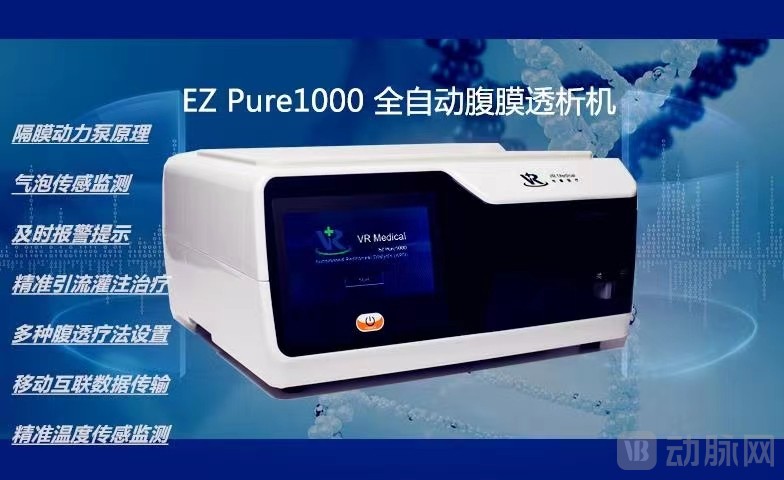
Source: WeiRui Medical
During the development of its automated peritoneal dialysis machine, WeiRui Medical filed 80 patents domestically and internationally for this product alone. To date, the company has filed a total of over 150 patents, including 23 granted Chinese invention patents, 6 PCT patents, and 10 granted foreign invention patents, along with 51 granted utility model patents and 9 granted design patents.
Furthermore, this automated peritoneal dialysis machine, integrated with the “Digital-Enabled Home Dialysis Therapy System and Multi-Source Information Management Platform” launched by WeiRui Medical, facilitates data management for patients, hospitals, and other stakeholders.For example, it provides comprehensive management of patients’ dialysis data monitoring, personalized treatment plans, and more. From a data management perspective, it connects patients across central hospitals, community hospitals, and home settings, forming an integrated management solution.
In the future, the platform will continue to incorporate more scenarios into its system.For instance, by addressing patients’ in-hospital diagnostic tests, medication usage, and other needs, the platform facilitates a more comprehensive transition of patient care from the hospital setting to the home setting, thereby establishing a more holistic management model. Furthermore, with chronic kidney disease (CKD) as the foundational condition, the platform aims to intervene in patient management at an earlier stage—initiating disease management before CKD progresses to uremia.
Home-based peritoneal dialysis is the core business of WeiRui Medical. In addition to its renal dialysis product portfolio, the company has also launched product lines for wound care and high-end consumables.Among them, multiple products, including negative pressure wound therapy devices, disposable closed sputum suction systems, and disposable heat and moisture exchange filters, have obtained medical device registration certificates and been launched on the market.
Dr. Pan Li stated that, as a startup, the product lines beyond the kidney dialysis business have provided significant positive support to WeiRui Medical, supplying the company with ample cash flow and enabling it to achieve self-sustaining financial capability.
In the future, WeiRui Medical will rapidly expand its renal dialysis product line based on its existing business. On one hand, it will continue to advance automated peritoneal dialysis and remote management for home dialysis; on the other hand, the product line will extend into areas such as wearable dialysis devices and home hemodialysis equipment.