

Over 400 Chain Pharmacy Closures in a Year: Can New Retail Be the Lifeline?

LBX Pharmacy
Private Retail Pharmacy Chain Brand

Yifeng Pharmacy
Pharmacy Chain Retailer

Yixintang
Company-operated Chain Pharmacies
The pharmaceutical retail industry has been facing tough times recently.
Net Profits of Listed Pharmacy Chains Continue to Decline. For the first time since its listing five years ago, Dashenlin reported a decline in net profit, with its 2021 annual net profit decreasing by 25.51% year-on-year and nearly 100 stores closed. Meanwhile, Yixintang Pharmacy, hailed as the “leading listed pharmacy chain,” saw its net profit drop by 31.17% year-on-year in the newly released financial report for the first quarter of 2022, despite an increase in revenue.
On the other hand, the scale of the pharmaceutical retail market is also shrinking. According to IQVIA data, the national retail pharmacy market size in the first quarter of 2022 was RMB 202.1 billion, with negative growth in the retail market. The year-to-date (MAT) year-on-year growth rate was -1.2%, a decrease of 2.1 percentage points compared to the previous quarter.
Industry insiders have confirmed,The pharmaceutical retail industry has currently entered a state of weak growth.. At the 2022 West Lake Forum held recently, Xie Zilong, Chairman of LBX Pharmacy Chain Joint Stock Company, a leading chain pharmacy representative, also mentioned that China’s pharmaceutical retail industry has entered an era of weak growth when discussing the development trends of the pharmaceutical retail sector.
Can the new retail model, which has been gaining momentum in the industry over the past five years, serve as a sharp tool for chain pharmacies to break through their current predicament? And at what stage has the new retail transformation of these chain pharmacies actually arrived? These are the questions VCBeat will address next.
Slowing Net Profit Growth: Two Underlying Reasons
A Hint of Fatigue After the Land Grab.
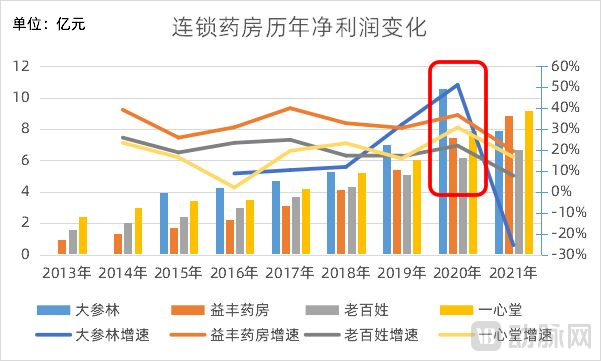
Amid the pandemic,Chain Pharmacies See Broad Slowdown in Net Profit Growth. In 2021, the annual net profits of Dashenlin, Yifeng Pharmacy, LBX Pharmacy, and Yixintang were RMB 791 million, RMB 888 million, RMB 669 million, and RMB 922 million, respectively, with growth rates of -25.51%, 19.42%, 7.75%, and 16.66%. Among them, despite expanding its store network by 2,271 outlets and increasing its operating revenue by RMB 2.18 billion in 2021, Dashenlin saw its net profit decline by RMB 270 million year-on-year.
Prior to the outbreak of the COVID-19 pandemic, the annual net profits of the four major pharmacy chains maintained an average growth rate of 20%, with the highest reaching 51.17%.
On the other hand,The number of store closures among chain pharmacies also hit a record high in 2021.。
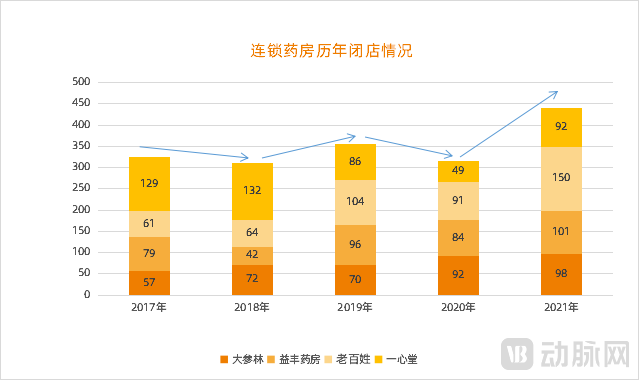
441 Stores of Leading Pharmacy Chains ClosedAs shown in the chart above, Dashenlin closed 98 stores, Yifeng Pharmacy closed 101 stores, LBX Pharmacy closed 150 stores, and Yixintang closed 92 stores, bringing the total number of store closures among the four major pharmacy chains to 441. Against the backdrop of domestic pharmacies adopting rapid store expansion as their development strategy, chain pharmacies still closed more stores in 2021 compared to previous years.
The COVID-19 pandemic not only affected people’s travel but also temporarily restricted the sale of certain cold medications at chain pharmacies.. As a retail sector, the essence lies in enabling “products” to reach “consumers.” Currently, the primary sales channel for chain pharmacies remains offline; however, epidemic prevention policies have significantly reduced the frequency of offline “consumer-product” interactions, leading to a continuous decline in the profitability of chain pharmacies in recent years.
Starting in 2021, many regions across China successively implemented bans on the sale of four categories of medications: antipyretics, antitussives, antivirals, and antibiotics. These four categories are primarily sold through chain pharmacies, accounting for as much as 13–15% of their total revenue, thereby further exacerbating the financial difficulties faced by chain pharmacies in 2021.
However, epidemic prevention policies are often adjusted in response to changes in the pandemic situation. In the first half of 2022, as the epidemic improved in some regions, restrictions on the sale of four categories of cold medications were relaxed, raising hopes for an early arrival of spring.
Reshaping the “People, Goods, and Places” of Chain Pharmacies: New Retail Addresses Three Challenges Amid the Pandemic
New retail enables more efficient reach to consumers and products.
According to the definition in the "New Retail Research Report," new retail is a data-driven, pan-retail format centered on consumer experience. In chain pharmacies, any data-driven measures aimed at enhancing consumer experience can be regarded as part of the new retail model for chain pharmacies. Examples include unmanned pharmacies, online stores, home delivery services, patient management, and self-checkout systems.
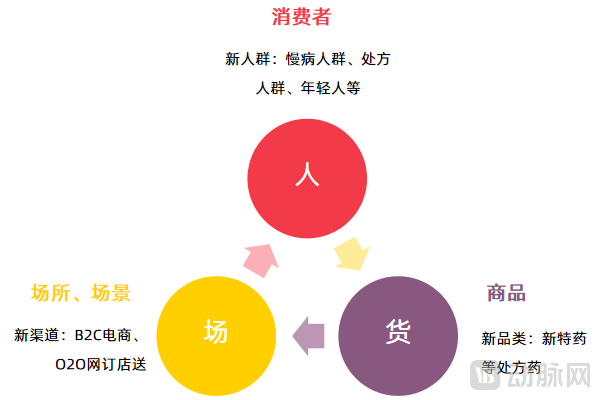
The “People,” “Goods,” and “Scene” of New Retail in Chain Pharmacies
New retail will shift from a product- and venue-centric model to a people-centric one.In traditional retail, the “place” (the location and context of consumption) often occupies a pivotal position, serving as the key link between “people” and “goods.” However, new retail has moved sales online and diversified channels, thereby weakening the attributes of the offline “place” and enabling consumption to align more closely with the matching of people and goods.
In addition to new scenarios, the new retail model of chain pharmacies also encompasses new customer demographics and new drug categories. Driven by digital upgrades, this model not only attracts a younger demographic but also enables the retention of monitoring data for patients with chronic diseases, facilitating long-term patient management and meeting diverse customer needs. Furthermore, amid the trend of separating prescribing from dispensing, chain pharmacies’ new retail operations are actively accommodating the outflow of prescriptions from hospitals.
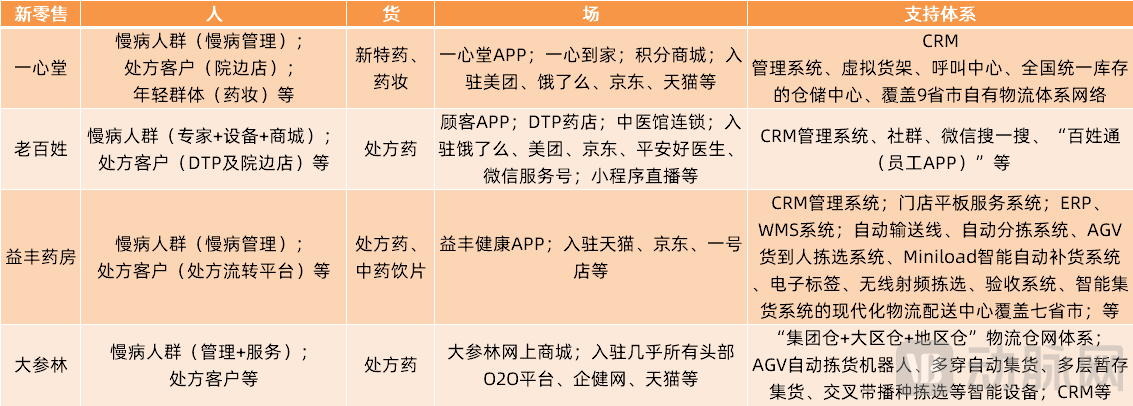
An analysis of the new retail performance of leading pharmacy chains from the perspectives of consumers, products, and scenarios reveals a high degree of similarity in their coverage of new consumer segments, channels, and product categories. New consumer segments basically include patients with chronic diseases; new product categories primarily cater to the outflow of prescription drugs; and regarding new channels, some chains build their own online malls, while others only list on third-party e-commerce platforms. In terms of support systems, CRM (Customer Relationship Management) systems are standard, and logistics and warehousing systems have generally undergone digital upgrades.
1Digitalization of channels to rapidly resolve person-product matching
The new retail model of chain pharmacies has expanded the originally single offline sales channel into an integrated online-offline system. This shift compelled pharmacies to meet customer demand—previously suppressed by the pandemic—through online channels. The resulting positive feedback has spurred major pharmacies to actively develop their online platforms, thereby safeguarding store revenue.
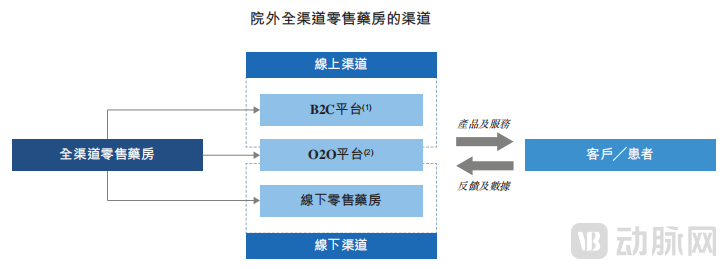
Omnichannel Retail of Chain Pharmacies (Screenshot from: Quanyuantang Prospectus)
The new channels added by new retail are mainly two categories: O2O (Online-to-Offline) with online ordering and in-store delivery, and B2C (Business-to-Consumer) online malls. Among them, O2O with online ordering and in-store delivery can be further divided into self-operated platform O2O and third-party platform O2O. Pharmacies generally first enter mature third-party platforms such as Meituan and Ele.me, and then build their own self-operated O2O platforms. Self-operated O2O platforms will extend more innovative services, such as online consultations, remote prescription reviews, and traditional Chinese medicine decoction services, to enhance consumer experience; while for B2C online malls, major chain pharmacies mainly sell drugs online by entering e-commerce platforms such as Tmall, Taobao, and JD.com.
Major pharmacy chains have largely completed their online channel deployment.Yixintang, LBX Pharmacy, Yifeng Pharmacy, Dashenlin, Jianzhijia, Shuyu Pingmin, and Quanyuantang have all completed their omni-channel layouts integrating online and offline operations. For instance, Yifeng Pharmacy has developed its own “Yifeng Health” app, while Yixintang has established the “Yixintang Daojia” e-commerce platform.
However, online pharmaceutical sales account for a relatively small proportion of the total revenue of pharmacy chains.Currently, online drug sales account for less than 15% of the total retail volume of chain pharmacies. While the integration of online and offline channels represents an exploration of innovative business models, it has not yet disrupted the prevailing dominance of offline sales in chain pharmacies. Furthermore, with the entry of specialized pharmaceutical e-commerce platforms originating from the internet sector into this field, chain pharmacies face significant competition in their efforts to vigorously expand online channel sales.
2Refined Customer Management to Enhance Engagement with Personnel and Premises
Chain pharmacies have a large member base, with the membership of the top four major chains each exceeding tens of millions. They require professional customer relationship management (CRM) systems to enhance customer shopping experiences and satisfaction.

Number of Members and Active Members of the Four Major Pharmacy Chains (Data Source: Annual Reports from Previous Years)
Leverage CRM management systems to deliver precise pharmaceutical care services to customers. Chain pharmacies are widely adopting CRM solutions to match membership benefits with different tiers based on member profiles and disease categories. They organize or invite members to participate in diversified online and offline patient education sessions, live streams, and other targeted marketing interactions, thereby advancing tiered membership management. Meanwhile, they are establishing a member satisfaction evaluation system, conducting customer satisfaction monitoring and research, collecting customer feedback through multiple channels, strengthening the quality management of products and services, and gradually enhancing customer satisfaction.
Emphasize the development of private-domain traffic to achieve refined user management. In the era of big data, pharmacy chains are increasingly prioritizing the growth of private-domain traffic. By leveraging platforms such as WeChat Official Accounts, WeCom, WeChat Channels, and Mini Programs, they are actively building private-domain traffic pools. Through new retail models, these chains implement refined user management to enhance consumer experience.
Taking Shuyu Pingmin as an example, the pharmacy chain integrates CRM member data with the overall data of its WeChat private-domain ecosystem. It positions private-domain transactions on the “Shuyu Pingmin+” WeChat Mini Program, offering 30-minute delivery and various membership services.
3Smart Supply Chain: Maximizing Efficiency in Goods and Venues
The supply chain of traditional retail is confined to procurement, production, and logistics, with insufficient coordination with consumers and sales channels, often leading to issues such as inventory overstock. In contrast, new retail leverages big data and information systems to integrate customer demand, enable intelligent command and dispatch, and ensure comprehensive coordination that maximizes service capabilities, thereby making services more precise and the supply chain more transparent.
Aggressive expansion, store proliferation, scaling up, and market dominance constitute the main theme of the current development of chain pharmacies in China. It is estimated that chain pharmacies in China are expanding at an annual growth rate of nearly 30%.
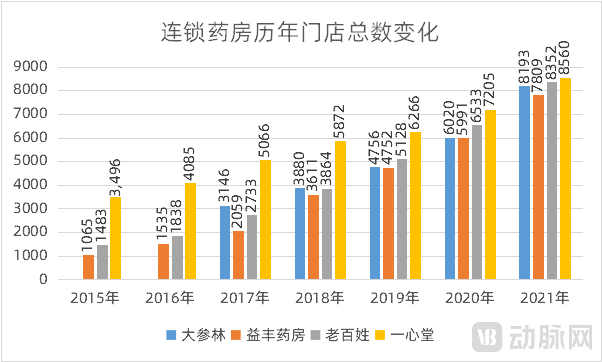
A robust logistics system serves as the foundational guarantee for the continuous expansion of pharmacy chains. Establishing proprietary digital logistics centers enables more rational and controllable drug supply across chain pharmacies, providing strong support for their rapid growth.
For example, LBX Pharmacy Chain Joint Stock Company applies various supply chain information systems, including ERP, WMS, WCS, AS/RS, DPS, MCS, and TMS, to its logistics distribution network, achieving digital decision-making and scheduling through intelligent algorithms and big data analytics. By leveraging ERP and SRM systems, LBX Pharmacy stores and suppliers can automate inventory clearance and implement proactive replenishment. Furthermore, the entire process—from inbound receiving, inventory management, and outbound processing to final delivery at the logistics center—is managed through intelligent information system operations, significantly enhancing the efficiency and timeliness of logistics distribution.
Automated replenishment systems are not uncommon in chain pharmacies; companies such as Shuyu Pingmin and Yifeng Pharmacy have established intelligent warehousing and logistics systems. Shuyu Pingmin’s store-level intelligent replenishment system, launched in 2021, facilitates rationalized management of store sales, inventory, expiration dates, and stockouts. Yifeng Pharmacy’s Miniload intelligent automated replenishment system, integrated with advanced technologies including automatic conveyor lines, automated sorting systems, AGV (Automated Guided Vehicle) goods-to-person picking systems, electronic shelf labels, radio-frequency picking, receiving systems, and intelligent consolidation systems, forms a modern pharmaceutical distribution center.
Another example is Jianzhijia’s e-commerce picking and sorting system, which automatically routes B2C orders to the nearest warehouse upon entry into the platform, thereby enhancing order response efficiency, enabling end-to-end digital management, and improving collaboration levels. It is reported that Jianzhijia processed 4 million B2C orders in 2021, with the system capable of handling a peak volume of 52,000 orders per day.
4Other New Retail Formats of Chain Pharmacies
New retail is also evident in the digital transformation of offline pharmacy chains. Offline, chain pharmacies have largely introduced tools such as self-checkout kiosks, scan-to-purchase systems, and cloud warehouses to enhance operational efficiency. They have also built systems including business analytics dashboards, digital display screens, management cockpits, and marketing automation platforms to empower store operations and management. For instance, LBX Pharmacy Chain Joint Stock Company’s “Smart Pharmacy” initiative optimizes product assortment and store layout using tools like heat maps, enabling precise customer engagement.
It is reported that the daily computing capacity and data processing volume of LBX Pharmacy’s intelligent information server room can exceed 5 billion records, with a total business computation volume reaching 1.8 trillion records. This ensures the efficient operation of the company’s various information systems and its entire industry chain, supporting a scale of up to 100,000 stores nationwide for LBX Pharmacy Chain Joint Stock Company.
Unmanned pharmacies are also a manifestation of offline new retail. By leveraging the Internet of Things (IoT) to interconnect people, objects, and scenarios, unmanned pharmacies enable automated services or self-checkout without queuing. This reduces the retail sector’s reliance on labor, lowers consumers’ time costs to a certain extent, and thereby enhances the shopping experience. Additionally, it significantly reduces rental and labor costs associated with pharmacy operations. Represented by Dashenlin, companies are exploring new retail initiatives such as cross-border e-commerce, unmanned drug sales, and smart remote shopping assistance.
How much have Yixintang, LBX Pharmacy, Yifeng Pharmacy, and Dashenlin invested in new retail?
The New Retail Layout of the Four Major Chain Pharmacies Was Earlier Than You Imagine.
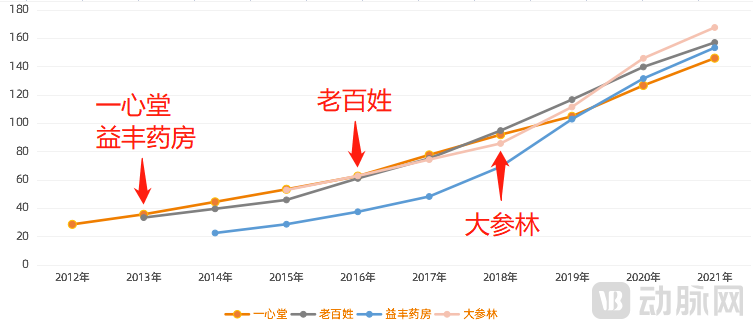
Changes in Annual Operating Revenue of the Four Major Pharmacy Chains (Unit: 100 Million Yuan)
Yixintang Pharmaceutical Co., Ltd. and Yifeng Pharmacy Chain Co., Ltd. began planning their online e-commerce operations as early as 2013. Specifically, Yixintang joined the Hybris e-commerce platform in 2013, started building an omnichannel marketing network centered on O2O (Online-to-Offline) integration of online and offline channels in 2015, launched its “Yixin Daojia” B2C service in 2019, fully engaged in the new retail operational model in 2020, and commenced the organization and implementation of its self-operated O2O business infrastructure. Similarly, Yifeng Pharmacy also initiated its e-commerce business in 2013.In 2015, over RMB 36 million was invested to begin construction of the O2O Health Cloud Service Platform., established the E-commerce Business Group in 2016, and comprehensively upgraded it to the New Retail Business Group in 2019.
As can be seen from the curve in the figure above, Yifeng Pharmacy’s annual operating revenue began to catch up rapidly starting in 2018, with its growth rate once approaching 50%. This coincided with the year when Yifeng Pharmacy’s O2O Health Cloud Service Platform was put into operation. Subsequently, in June 2020, Yifeng Pharmacy established Hainan Yifeng Internet Hospital Co., Ltd. in Hainan Province, and in July of the same year, it established Hainan Yifeng Telemedicine Center Co., Ltd., thereby comprehensively advancing the company’s internet healthcare business.

Year-over-Year Revenue Growth Rate Trends of the Four Major Pharmacy Chains (Data Source: Calculated from Annual Financial Reports)
LBX Pharmacy Chain Joint Stock Company has also made substantial investments in new retail. In 2016, the same year Jack Ma proposed the concept of new retail, while other major pharmacy chains were still exploring various “Internet Plus” models, LBX had already clearly articulated a strategy to integrate customer needs with the new retail model, strengthen digital operations, and in the following year planned to invest RMB 20.5 million to establish a subsidiary for conducting O2O and new retail businesses.
Ultimately, LBX Pharmacy Chain Joint Stock Company signed a strategic cooperation agreement with Linzhi Tencent Technology Co., Ltd. in 2020, leveraging Tencent’s internet DNA to support the company’s digital transformation and thereby achieve its “New Retail” strategic development. As can also be seen from LBX’s latest financial report,The company is planning to invest an ultra-high budget of RMB 3.66 billion in building a corporate digitalization platform and new retail projects., the project progress has reached 35%.
Meanwhile, Dashenlin began advancing its pharmaceutical O2O initiatives in 2018, integrating online and offline marketing services. In 2019, the company fully embraced new retail, accelerating the development of O2O and B2C e-commerce models, which led to rapid growth in its new retail channel business that same year. Also in 2019, Dashenlin obtained an internet hospital license from Guangdong Province and established an internet hospital company in Hainan.
Traditional Chain Pharmacies Lack New Retail Innovation as Internet "Newcomers" Close In
Everyone is doing new retail, but not everyone can achieve impressive results.
Since 2019, pharmacy chains have consciously advanced the new retail model, with year-on-year increases in O2O store coverage.
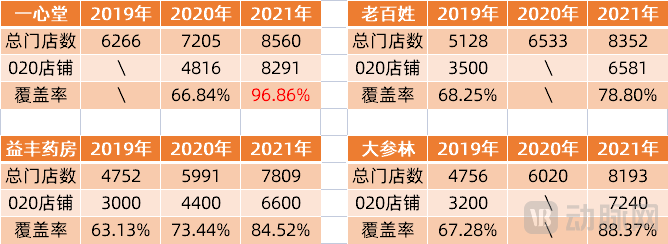
Coverage Rate of Chain Pharmacy O2O Stores (Data Source: Annual Reports from Previous Years)
Yixintang has the highest O2O store coverage rate. In 2020, Yixintang had 4,816 O2O-enabled stores, with a coverage rate of 66.84% of its total number of stores. By 2021, the number of stores participating in Yixintang’s O2O business increased by 72.16% year-on-year, reaching 8,291 stores and covering 96.86% of its total store count.
Next are Dashenlin and Yifeng Pharmacy. In 2021, the O2O store coverage rates for both Dashenlin and Yifeng Pharmacy exceeded 80%, corresponding to 7,240 and 6,600 stores, respectively. In the same year, LBX Pharmacy had 6,581 stores offering O2O delivery services and 448 24-hour stores, with an O2O store coverage rate of approximately 78.8%. Notably, the 6,600 O2O delivery stores disclosed in Yifeng Pharmacy’s 2021 annual report refer specifically to its directly operated stores.
Furthermore, an analysis of the new retail sales data is presented below (see figure).Note: Dashenlin only disclosed the year-on-year growth rates of its online sales for 2020 and 2021 compared to the previous years, which were 160% and 87%, respectively; the specific amounts of online sales were not disclosed.。
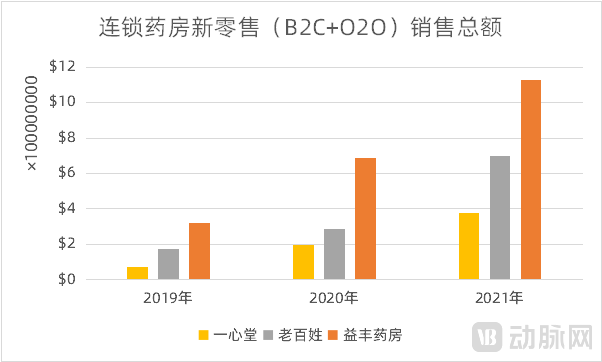
Yifeng Pharmacy Chain Co., Ltd. leads in online new retail sales. In 2021, its total online channel sales reached RMB 1.13 billion, a year-on-year increase of 64% compared to 2020; followed by LBX Pharmacy Chain Joint Stock Company, which achieved nearly RMB 700 million in online channel sales in 2021, representing a year-on-year growth of 170%.
Yixintang, despite having the most extensive O2O store coverage, recorded relatively lower total online sales. In 2019, Yixintang’s e-commerce sales amounted to RMB 73.43 million, rising to RMB 197 million in 2020, and reaching RMB 380 million in 2021. In 2021, B2C sales accounted for 19.72% of Yixintang’s total e-commerce sales, while O2O sales comprised 80.28%. Compared with previous years, the proportion of O2O sales within Yixintang’s e-commerce business has shown a significant increase.
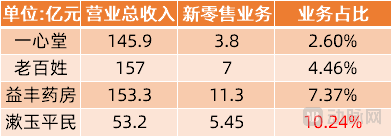
2021 Sales Share of New Retail Business in Chain Pharmacies (Note: "New Retail" here specifically refers to B2C and O2O businesses)
Finally, from the perspective of revenue share in new retail, the proportion of new retail business among the traditional "Big Four" pharmacy chains is not significant. The online sales contribution from new retail operations for Yixintang Pharmaceutical Co., Ltd., LBX Pharmacy Chain Joint Stock Company, and Yifeng Pharmacy Chain Co., Ltd. each accounts for less than 10%.
Emerging chain pharmacies have demonstrated stronger performance. In 2021, Shuyu Pingmin’s online sales exceeded RMB 545 million, with sales from its third-party O2O platform business—the largest component—increasing by 117.20% year on year. Based on Shuyu Pingmin’s disclosed annual operating revenue of RMB 5.32 billion for 2021, its new retail business accounted for approximately 10.24% of total revenue, a proportion somewhat higher than that of the “Big Four” established players.
In contrast, new-generation new retail pharmacy chains represented by Quanyuantang have a significantly higher proportion of new retail business than traditional pharmacies. In the first three quarters of 2021, Quanyuantang’s new retail business even accounted for 53.6% (Note: Quanyuantang's prospectus did not include B2C in the category of new retail.), with the B2C business once accounting for nearly 80%.
Quanyuantang was established in 2012. In 2014, it pioneered its B2C business layout by launching on Tmall. In 2017, the company piloted O2O operations and began offering SaaS solutions and supply chain services to external clients. Most importantly, in 2019, Quanyuantang merged with an information technology company (Decool), further strengthening its internet-oriented profile and accelerating the comprehensive rollout of its SaaS solutions services.
As can be seen,Emerging pharmacy chains with strong internet attributes place greater emphasis on building data analytics capabilities and developing proprietary intelligent technologies., and a higher degree of digitalization. By leveraging digital technologies and data analytics capabilities, Quanyuantang has achieved better synergy among its offline pharmacies, O2O, and B2C operations, thereby enhancing sales and operational efficiency at individual pharmacy stores. Furthermore, it has productized its supply chain and digital capabilities, enabling commercial monetization by empowering relevant clients.
However,Traditional chain pharmacies and emerging chain pharmacies have inherently followed different development paths.Internet-native “new wave” chain pharmacies tend to specialize in digitalization, intelligent technologies, and innovative models such as “Internet Plus,” striving to be both cutting-edge and refined. In contrast, traditional chain pharmacies, leveraging their larger scale, prioritize rapid market capture and territorial expansion as their core strategy. Currently, the combined market share of China’s leading chain pharmacies is less than 20%, significantly lower than the 85% market share held by the top three chain pharmacies in the United States, indicating that market concentration in China’s traditional pharmacy sector still has considerable room for improvement.
However, whether traditional or emerging, we do not deny that innovative initiatives such as New Retail can enhance a company’s risk resilience. In the face of black swan events like the COVID-19 pandemic, New Retail has clearly helped alleviate revenue pressures on pharmacy chains. Nevertheless, it is important to note that New Retail is not a panacea; the sustainable development of pharmacy chains requires continuous “evolution” to cope with survival pressures stemming from environmental changes.