

CMU Tops U.S. University Commercialization Index, Surpassing Harvard and MIT—How It Turned Over $1 Billion in Angel Capital in a Decade
Born in Pittsburgh, a heavy-industry city dubbed the “Black Country” in the early 20th century, and without the prestige of an Ivy League title, Carnegie Mellon University (hereinafter referred to as CMU) may seem unremarkable among the constellation of elite U.S. universities, yet it hasAchieving a Remarkable Turnaround Through the Commercialization of Scientific Research。
Since the early 1980s, the enactment of the Bayh-Dole Act has turned major U.S. universities into fertile ground for scientific research and invention. Carnegie Mellon University (CMU) and its home city of Pittsburgh areBeneficiaries of the Commercialization of Scientific Research Achievementsa typical representative.
Since 2011, startups incubated by CMU have cumulatively raised over1 billionUS dollars, technological innovation achievementsFar above the U.S. average。
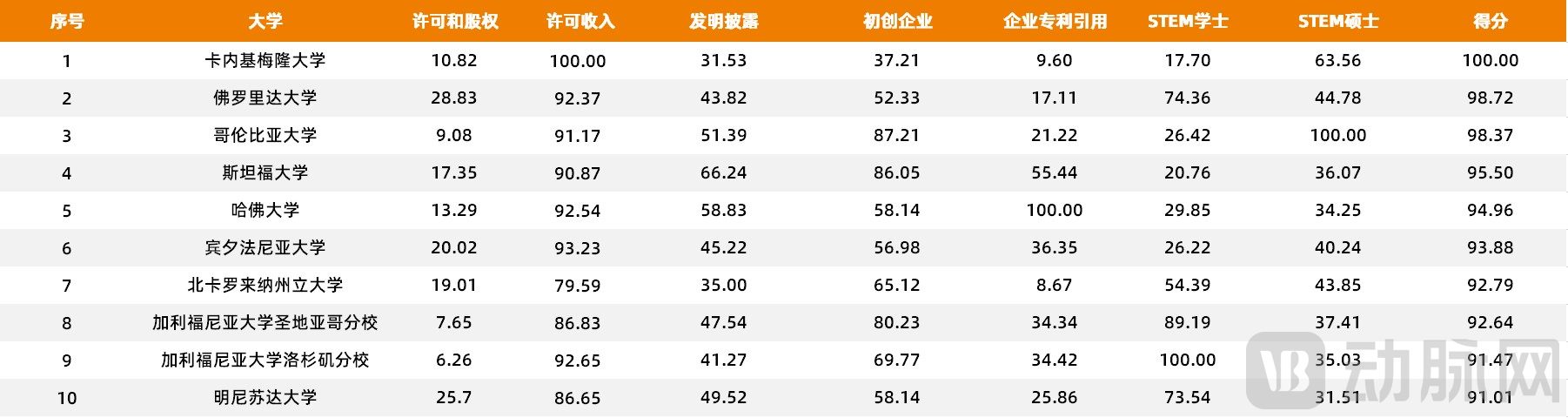
Note: Top 10 U.S. Universities in the Technology Transfer and Commercialization Index Rankings
In May this year, the U.S. think tank Heartland Forward released rankings of the University Technology Transfer and Commercialization Index (metrics include: invention disclosures, number of licenses and equity stakes, licensing revenue, startups founded, and the number of university papers cited in corporate-authorized patents). Carnegie Mellon University (CMU) outperformed Ivy League elites such as Harvard and MIT, ranking# The First in the United States, fully demonstrating the economic value created beyond universities by its interdisciplinary research and the innovation ecosystem chain of higher education institutions.
Thanks to Carnegie Mellon University’s outstanding contributions to the commercialization of scientific research, Pittsburgh has shed its former image as the “Steel City,” restructured its economy, and shifted its focus toward high-tech development. It has gradually formed a cluster of high-tech industries, with knowledge innovation as its pillar and information technology and robotics as its representatives, increasingly becoming one of the United States’ leading high-tech hubs.
So, how exactly does CMU generate value across the entire innovation ecosystem? And why does it rank first among U.S. universities in technology transfer? To unravel this mystery,VCBeat Orange BureauA deep analysis was conducted on the technology transfer system of CMU.
Innovation Genesis: Seeking Innovation at the Intersection of Disciplines
Interdisciplinary research is a hallmark of CMU, and seeking breakthroughs at the intersections of various fields is its specialty.
Supported by abundant teaching resources, CMU pursues “Innovation and Inspiration,” encouraging students to break free from traditional disciplinary constraints and continuously explore the possibilities and innovativeness of interdisciplinary integration.
Its renowned teaching program is characterized by highly innovative interdisciplinary research.According to the official website, CMU currently offers dozens of interdisciplinary courses, which have spurred the emergence of numerous research achievements in cross-disciplinary fields.
To better implement the concept of interdisciplinary innovation,Comprehensive Innovation Research InstituteThus, it was born.
The Institute has broken down the barriers that hinder innovation by integrating expertise from design, business, and engineering disciplines. It provides cross-training in values, principles, thinking, and methodologies, enabling students to rapidly master the skills for new product and service development, thereby accelerating the pace of innovation.
Jonathan Cagan, Professor of Mechanical Engineering at Carnegie Mellon University’s College of Engineering and Co-Director of the Institute, stated, “Innovation can be learned, formalized, and taught, and continuously improved through the acquisition of new knowledge. Today, we have elevated interdisciplinary integration to new heights. Meanwhile, the development of such interdisciplinary frameworks has become an indispensable component of our scientific research, innovation, and technology transfer.”
If the university’s early-stage interdisciplinary exchanges serve to inspire innovation and entrepreneurship among faculty and students, then the subsequent provision of project and resource support offers tangible assistance, guiding them to turn their ideas into reality and ultimately realize the value of translating scientific and technological advances into commercial applications.
Startup Launch: Being the Full-Cycle “Nanny” for “Heroes”
As early as 1993, Carnegie Mellon University (CMU) established the Center for Technology Transfer and Enterprise Creation (hereinafter referred to as CTTEC), with the core objective of fostering innovation within the university and encouraging the commercialization of new technologies through the creation of startups.
“At the end of the day, creators are heroes—always.”, declared Benno Bernt, founder of CTTEC, at its inception.
What CTTEC does is stand behind these “heroes,” providing them with end-to-end services for innovation and commercialization of research outcomes. First, CTTEC identifies new technological inventions, assesses their potential market value, and encourages faculty members and students to launch startups. Next, it safeguards the intellectual property rights of in-house researchers by filing invention patents and negotiating technology transfer agreements with private enterprises. Subsequently, CTTEC offers technology incubation facilities and partial seed funding to technology holders. Finally, it helps startups recruit management talent and organizes product development and marketing efforts.
Since 2008, there have been137A group of startups has secured intellectual property licenses from Carnegie Mellon University (CMU) through CTTEC, with business scopes ranging from next-generation mobile robots to advanced materials and medical devices.
To strengthen collaboration with CTTEC, CMU has further integrated its campus innovation and entrepreneurship ecosystem, in which the Swartz Center for Entrepreneurship, Project Olympus, and Venture Bridge jointly provide full-cycle support for the commercialization of scientific research achievements.
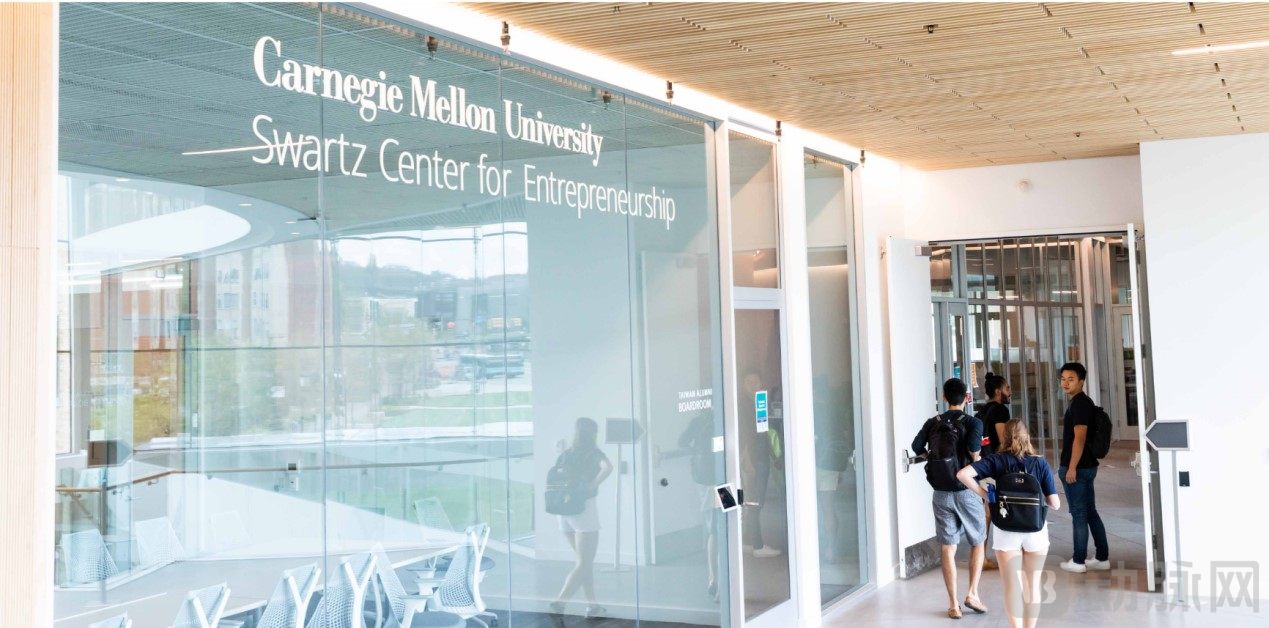
Note: Swartz Center for Entrepreneurship
From 0 to 1:The Swartz Entrepreneurship Center aims to turn entrepreneurial ideas into reality.. The Swartz Center for Entrepreneurship provides nearly 800 square meters of startup space for university entrepreneurs and startups, aiming to create a “preferred destination” for entrepreneurial faculty and students, fostering an “inside-out” approach to building successful innovative enterprises, and developing a broad and vibrant alumni entrepreneur network.
In recent years, the center has successively launched initiatives such as the Innovative Scholars Program and the Entrepreneurship Laboratory, with a focus on providing unique opportunities for entrepreneurship education and collaboration to deliver truly transformative learning experiences. Here, simulating the rigorous demands and role allocations of the business world, graduate student teams analyze various industry-sponsored cases and conduct a series of group development training activities, including executive education, customized corporate programs, and open recruitment initiatives.
From 1 to 10:Project Olympus Explores Business Operation Models. Project Olympus focuses on the early stages of the value creation chain, providing campus entrepreneurs with entrepreneurial advice, small grants, incubator space, and connections to broader regional and national business communities. Since its establishment in 2007, Project Olympus has launched1148project, established240companies, raising nearly $700 million in total.
From 10 to 100:Venture Bridge Facilitates Fundraising and Growth for Incubated CompaniesVenture Bridge provides startups with seed funding, office space, a high-quality mentor team, and an entrepreneur network to support their growth, thereby enabling them to advance more quickly to larger-scale fundraising rounds.
Venture Bridge runs a 12-week summer accelerator program annually in the San Francisco Bay Area, selecting five to eight companies to participate and facilitating connections with mentors, customers, and early-stage investors. As part of the accelerator, Carnegie Mellon University (CMU) invests $25,000 in each company and provides numerous other substantive services.
In addition to focusing on the translation of in-hospital achievements, CMU will alsoBroadening Horizons Beyond the Campus, and connect with external organizations and associations for technology transfer, such as Innovation Works in Pittsburgh and the Institute for Innovation in Practice.
Meanwhile, CMU alsoEngage in extensive collaboration with other cities and countries. To date, CMU has campuses in Qatar and Silicon Valley, as well as collaborative research institutions around the world, including in New York, Los Angeles, Washington, D.C., China, Australia, Portugal, and Rwanda.
It is evident from the above analysis that the key reason for CMU’s leadership in translating university research achievements into practical applications lies in building a comprehensive innovation ecosystem, equipping corresponding interfaces at the stages of innovation production, incubation, and output, while simultaneously expanding the innovation resource network.
The Source of Bie Shui: How to Stand on the Shoulders of Giants?
As one of the earliest universities worldwide to engage in the commercialization of scientific research achievements, Carnegie Mellon University (CMU) has witnessed wave after wave of technology transfer; nonetheless, it continues to hold the top position among universities for commercial value.
In the field of translating scientific research achievements into practical applications, what experience and inspiration can Chinese universities draw from Carnegie Mellon University (CMU)?
"First, focus on cultivating students' research capabilities.". From CMU’s perspective, scientific research constitutes the most fundamental training in graduate education, requiring both master’s and doctoral students to conduct in-depth investigations within a specific research field. Chinese universities should also place greater emphasis on cultivating graduate students’ research capabilities. Specifically, assessments of graduate students’ research competencies can be incorporated into their academic training plans.
Secondly, it is to protect the intellectual property rights of university faculty and students.Intellectual property rights are the prerequisite and foundation for the successful commercialization of university achievements; the exclusivity inherent in patent rights undoubtedly enhances opportunities for investment returns. As Song Liuping, Chief Legal Officer of Huawei, stated, without ownership of intellectual property, true independent innovation is unattainable, and core patents serve as the backbone of innovation.
Finally, providing substantial resource support. CMU actively provides partial seed funding (ranging from $50,000 to $500,000) through loans or equity investments, encouraging faculty and staff to establish private companies by contributing their technologies as equity. During the startup phase, the university also offers numerous preferential policies.
Specific policies include: During the initial 1–3 years, entrepreneurs may rent equipment and office space at incubation stations at reduced rates, while receiving social welfare benefits on par with other faculty and staff. Regarding the distribution of economic benefits, the university places significant emphasis on safeguarding the immediate interests of technology inventors. Fifty percent of the revenue from technology transfers is allocated to the inventor’s affiliated unit (department or school), while the remaining 50% is used to cover necessary daily expenses related to technology transfers or to improve teaching and research conditions, thereby encouraging further technological innovation.
At present, China is also being swept up in the wave of commercializing academic research achievements.
Subra Suresh, a member of the U.S. National Academy of Sciences, believes that China has a solid foundation and has made more adequate investments in science, technology, and engineering research than other countries, which contributes to technological innovation and translation.
Equally indispensable, however, are efficient mechanisms for translating scientific research into practical applications and early-stage resource support.
As Jared Cohon, the current president of Carnegie Mellon University (CMU), stated, “Innovative talents require a fertile ‘soil’ for their cultivation. Both governments and universities must provide an environment conducive to their ‘growth,’ without unduly restricting their freedom.”