

CTE Medical Files for IPO: Pioneering Direct Data Capture to Build an Efficient and Cost-Effective Clinical Trial Ecosystem
There is a severe disconnect between the data requirements of hospital informationization and drug R&D.
“We have observed that clinical trial data management in China remains at a nascent stage, with 95% of Electronic Data Capture (EDC) data still collected manually. This is hard to imagine in the 21st century, an era marked by the rapid development and rise of digitalization and automation. Nevertheless, such inefficient, cumbersome, unscientific, and unsafe practices in clinical research are widespread,” said Wang Taifeng, Founder of Yansu Medical.
Under this manual-dominated model, the poor quality of hospitals’ raw data has become a major pain point in drug development. Contract Research Organizations (CROs) and Site Management Organizations (SMOs) typically do not establish dedicated digital systems for the execution of a single project. Pharmaceutical companies, meanwhile, tend to prioritize outcome-based data, paying insufficient attention to in-hospital data, workflows, and integration. Furthermore, it is difficult for any single pharmaceutical company to accomplish hospital data governance on its own, causing this pain point to persist over the long term.
In recent years, as hospital electronic medical record (EMR) grading and data interoperability initiatives have rapidly advanced, drug development costs have continued to rise. Research institutions (hospitals) and sponsors (pharmaceutical companies) are placing increasing emphasis on the quality of clinical trial data. In particular, following the introduction of the 2020 version of the Good Clinical Practice (GCP) regulations, regulatory authorities have imposed stricter requirements for the protection of subject data.Motivating hospitals, as research institutions, and pharmaceutical companies, as sponsors, to commit to the efficient management and compliant utilization of subject-related data。
In the healthcare industry, particularly in the clinical trials sector, informatization remains at a nascent stage of data governance, posing significant challenges in data management and process automation. Meanwhile, as regulatory oversight of medical data has tightened, Wang Taifeng and his key partners decided to establish CTE (Yansu Medical).
The Yansu Medical team possesses interdisciplinary expertise in artificial intelligence, biomedicine, and related fields. Leveraging its unique strengths, the team directly addresses persistent challenges in clinical trials! It is the first to achieveIntegrating Multi-Center Data to Reshape Clinical Trial Data Services Through Direct Data Capture (DDC)!
Yansu Medical, with a subject-centric perspective, pioneered the construction of holistic subject profiles, management models, and clinical research thematic databases based on direct data acquisition. This digital approach seamlessly integrates the entire workflow, including site feasibility studies, clinical trial management, early subject identification, informed consent and enrollment, multiple visits, (remote) monitoring and queries, adverse event management, and central imaging. Premised on regulatory compliance, Yansu Medical has unlocked hospital-wide and cross-institutional (multi-center) clinical data assets from tertiary Grade A hospitals, facilitating the translation of scientific achievements and the development of research-oriented hospitals. It has enhanced the efficiency of clinical trials and the level of data security for research institutions, while helping sponsors expand the radius for subject screening and enrollment. This enables the achievement of the overall trial objectives of “greater volume, faster speed, higher quality, and lower cost,” thereby reshaping the landscape of clinical trials.
In November 2021, the Center for Drug Evaluation (CDE) released the Annual Report on the Status of New Drug Registration Clinical Trials in China (2020), which showed a significant increase in the number of new drug clinical trials in 2020. A total of 2,602 clinical trials were registered, representing an overall increase of 9.1% compared to 2019. However, due to increasingly stringent regulatory policies for clinical trial applications and drug approval reviews, as well as rising patient recruitment costs, both the economic and time costs associated with clinical research have been climbing year by year.
Wang Taifeng stated, “Patient recruitment alone accounts for 30% of the total cost of clinical trials. In recent years, as innovative drug development has become increasingly concentrated on similar targets, patient recruitment has become even more challenging. Furthermore, purely manual subject management models pose risks to data security and accuracy, making traditional clinical data collection difficult and progress uncontrollable. These factors contribute to the inefficiency and high costs of drug development, causing significant distress to pharmaceutical companies.”
Wang Taifeng stated, “The core reason for the high costs and low efficiency of clinical research is its insufficient data-driven nature.”
First, data standards within and outside hospitals are not unified.The diagnostic and treatment data required for clinical trial indications are scattered across multiple hospital systems, including HIS, EMR, LIS, and PACS. The lack of standardized protocols among these systems results in substantial time costs for collecting comprehensive subject visit and monitoring data during drug clinical trials.
Secondly, hospitals are filled with a large amount of unstructured data, which cannot directly meet the requirements for CRF data collection.Clinical trial Case Report Forms (CRFs) are based on the CDISC-CDASH definitions. However, in current Electronic Medical Record (EMR) systems, a large volume of medical records are stored as free text, or in structured formats but lacking unified metadata governance. Such formats lead to ambiguity and non-standardized descriptions during further data processing, failing to meet the requirements for clinical trial data collection. Furthermore, traditional medical documentation practices within hospitals rarely align with actual diagnostic and treatment logic, and the integration with clinical pathways seldom incorporates high-level medical analytics specific to various disease types.
Additionally, there are concerns regarding data security and patient privacy; traditional EDC data collection methods carry a high risk of information leakage.In traditional clinical trial data collection processes, researchers must manually extract subject-related clinical data from various operational systems and then enter it into Case Report Forms (CRFs). This approach fails to achieve closed-loop management, complicates accountability tracking, and cannot ensure data security or patient privacy.
Therefore, the industry urgently needs a data service partner that can deliver efficient, accurate, traceable solutions enriched with clinical diagnostic logic, while ensuring safety and regulatory compliance. There is also an urgent need for service providers that thoroughly understand the underlying data structures within hospitals and can directly capture data from multiple systems, such as EMR and PACS, into Electronic Data Capture (EDC) systems.
When engaging with vendors of digital clinical trial solutions, pharmaceutical companies typically raise the following questions: What types of data can you access? How timely and high-quality is the data? And how well do you understand the medical logic underlying the data?
Wang Taifeng previously co-founded a medical SaaS company, accumulating extensive resources of principal investigators (PIs) in the oncology field, and gaining profound insights into data security and clinical diagnostic logic. Yansu Medical, through“Direct Data Acquisition” Model, thereby effectively ensuring the richness, timeliness, and quality of data types.
“It can be said that Yansu Medical guarantees 100% data security and compliance, while also achieving a deep understanding of diagnostic and treatment logic, at least in the field of oncology, rather than merely serving as a simple recording tool.”
Regarding Yansu Medical’s direct data acquisition model, Dr. Sun Hualong, Chief Operating Officer of Kelin Likang Medical Research Co., Ltd., commented: “Direct data capture reduces the costs associated with source data verification, minimizes human errors during manual transcription, and enhances data quality as well as the efficiency of clinical trials."Meanwhile, as the direct data acquisition system interfaces directly with hospitals’ electronic records, it enables the identification of a larger pool of subjects meeting clinical trial eligibility criteria. In the event of public health emergencies such as pandemics, remote monitoring and data cleaning can be conducted to mitigate the adverse impacts."
Yansu Medical has developed an innovative clinical research service platform that, by synergizing with hospital big data centers and various operational databases, utilizes its self-developed big data direct acquisition adapters to rapidly aggregate heterogeneous, multi-source data—including structured, semi-structured, and unstructured data—into a subject-oriented database for clinical trial participants. Furthermore, the company has developed specialized data management models integrated into in-memory databases, laying a solid foundation for efficient data utilization.
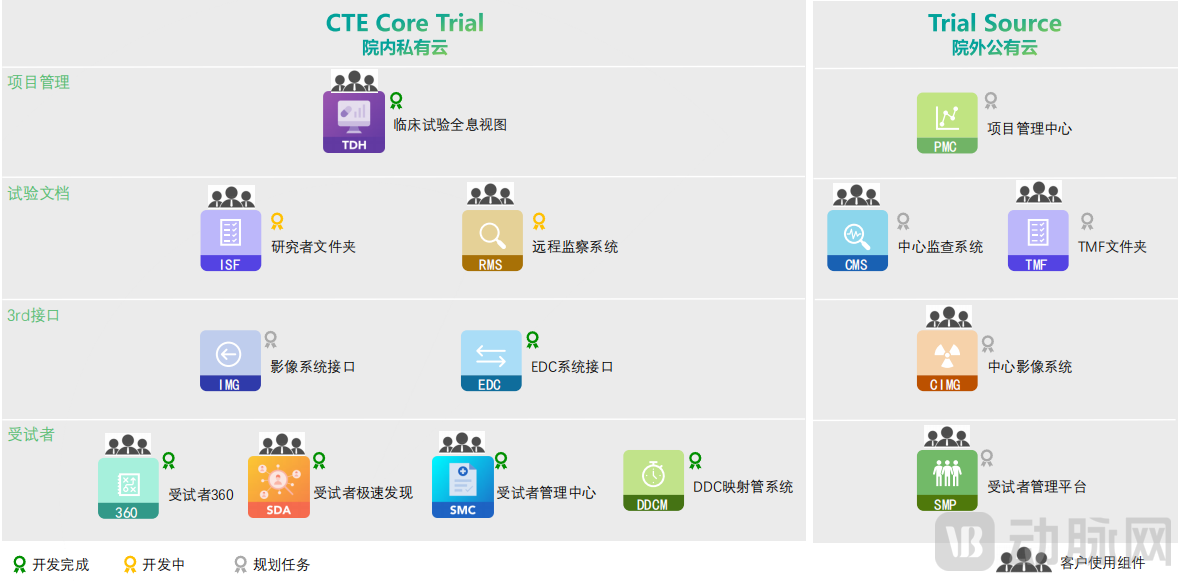
Yansu Medical's Product Portfolio
Currently, Yansu Medical has successfully launched three products: the Trial Data Holographic View (TDH), Subject Discovery Accelerator (SDA), and Subject Management Center (SMC). These solutions have been deployed in three specialized oncology hospitals and multiple general hospitals, with eight clinical trial projects currently operational.
For example, in a multi-arm Phase II project involving patients with metastatic breast cancer who developed resistance after two cycles of chemotherapy, Yansu Medical has successfully implemented direct data capture and automated transcription.Reduced CRC data collection workload by nearly 90%, demonstrating the high efficiency of the direct data acquisition model.Furthermore, after a Grade A tertiary hospital deployed the “Rapid Subject Identification” system, it screened 24 eligible subjects meeting the inclusion and exclusion criteria for a non-small cell lung cancer (NSCLC) project on the very first day, whereas only two subjects had been recruited prior to this implementation.
From an institutional perspective,Major hospitals across China are actively striving to become research-oriented institutions; however, clinical trial management in these hospitals currently faces numerous challenges. Yansu Medical can help hospitals enhance the efficiency of clinical research management, mitigate data security risks, strengthen their capacity for managing clinical trials, secure more project opportunities in a more compliant manner, and significantly increase revenue in this field.
From the sponsor's perspective,Yansu Medical’s “Rapid Subject Discovery” solution helps sponsors select more suitable investigative sites and identify a greater number of eligible subjects who meet inclusion/exclusion criteria in advance. Meanwhile, its “Subject Management Center” intelligently, real-time, and automatically captures and transcribes visit data into the Electronic Data Capture (EDC) system, while also enabling efficient remote monitoring. By integrating multi-center operations, it provides sponsors with a unified dashboard that presents progress and analytics across multiple sites, facilitating centralized monitoring and imaging interpretation, thereby driving high-quality and accelerated clinical trial execution.
After subject enrollment, due to the historical deployment of multiple application systems provided by various medical informatics vendors at the institution, and because the data standards used in clinical trial Electronic Data Capture (EDC) systems differ from those within the research institution, Clinical Research Coordinators (CRCs) generally need to perform manual data entry. Yansu Medical’s “Subject Management Center” addresses this by adopting a direct data acquisition model. It deconstructs the sponsor’s Case Report Form (CRF) into standardized data elements according to the institution’s internal data format, builds a data model, and establishes mapping relationships with the CTE Clinical Research Subject Database. This process generates institution-specific CRF forms. Upon completion of visits, data is directly pushed to the Subject Management Center, converted into EDC data standards, and then transmitted to the EDC system. Throughout the entire process, data remains de-identified and protected by firewalls, ensuring full automation while maintaining data security.
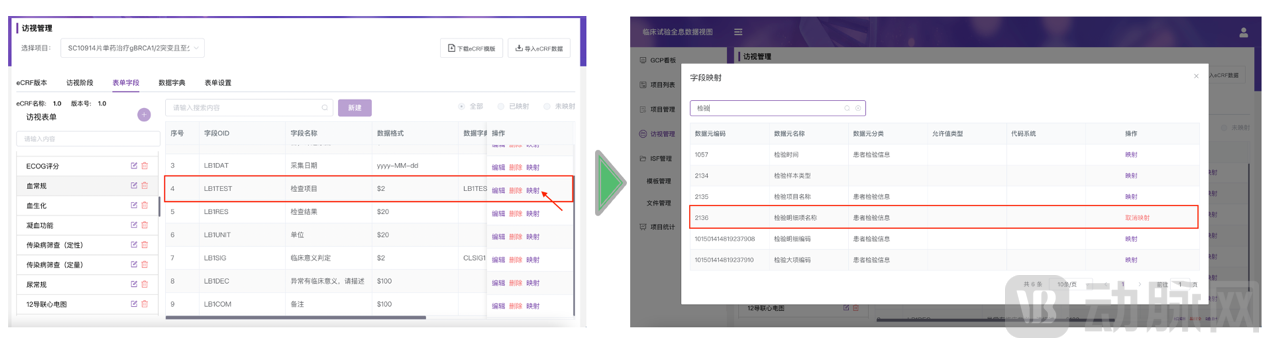
Mapping of Form Fields to Data Elements
In other words, after a subject completes a visit at the hospital under the guidance of a Clinical Research Coordinator (CRC), their data—including laboratory tests, medical records, and imaging—are structured and entered into the Subject Management Center. The data are then converted and transcribed into the external Electronic Data Capture (EDC) system, thereby fully automating what was previously a manual data collection process.
From the monitor's perspective,Previously, CRAs were required to travel to hospitals to reconcile discrepancies between source data in systems such as HIS, EMR, and LIS and suspect data in the EDC. Now, leveraging Yansu Medical’s fully automated direct data capture model, CRAs can simply log into the CTE platform. In their CRA role, they can access certified copies of source data and track dynamic data changes, enabling remote monitoring from off-site locations while ensuring data de-identification.
Professor Wang Jiejun, Deputy Chairman of the National Health Commission’s Committee on Rational Use of Oncology Medications, commented: “As a Principal Investigator (PI), balancing research and clinical responsibilities requires an intelligent system that can timely, automatically, and accurately match eligible participants during clinical practice, thereby improving efficiency—a top priority in clinical research. Meanwhile, a system capable of proactively and error-free ensuring that participants complete all scheduled visits as early as possible according to the trial protocol can reduce the workload of Clinical Research Coordinators (CRCs), Clinical Research Associates (CRAs), and other personnel. These are critical unmet needs in clinical practice. The CTE platform has effectively addressed these challenges, enabling investigators to devote more energy to more innovative research projects while ensuring the reliability of clinical research data.”
Zhang Liming, Chairman of Thinker Technology Co., Ltd., stated that as a leading enterprise in healthcare informatics, YiHui Technology has been continuously focusing on innovative development in the medical industry. It is actively leveraging emerging technologies to promote an integrated model of clinical practice and scientific research, thereby accelerating hospitals’ transformation into “research-oriented hospitals.” YiHui Technology fully recognizes, supports, and invests in YanSu Medical’s breakthrough initiatives in the field of clinical trials. The company firmly believes that, through insights derived from business data, YanSu Medical can systematically address prevalent bottlenecks in current clinical trials, including issues related to process compliance, data security, and operational timeliness.
Overall, digitalization is an irreversible trend in clinical trials. Previously, industry stakeholders were not indifferent to digital transformation but rather lacked the means to implement it. With its robust data governance capabilities and deep business insights into the clinical research sector, Yansu Medical has bridged the data gap between research institutions and sponsors. It is foreseeable that an increasing number of vendors will enter this field.
Wang Taifeng told VCBeat that as interoperability of in-hospital data advances and electronic medical record (EMR) grading systems are implemented, hospital data will become increasingly structured and standardized. As industry-wide data standardization improves, barriers to entry will diminish, requiring companies to fully leverage industry resources to achieve rapid growth.
Next, Yansu Medical will release version 2.0 of its in-hospital system, along with products such as centralized monitoring and central imaging for out-of-hospital settings, as well as a unified view for sponsors, thereby comprehensively covering service offerings including “site feasibility,” “trial execution,” and “remote monitoring.”
“It is expected that in 2022, the company will achieve coverage of more than 15 specialized oncology hospitals, and hopes that by the end of 2023, the number of service projects will exceed 100.”