

Proximie Secures $80 Million in Series C Funding to Expand Its AR-Powered Connected Surgical Platform

Proximie
Virtual Surgical Software Platform Provider
Nadine Hachach-Haram, founder of Proximie, stated that most great ideas capable of shaping the future never see the light of day, as they are eroded by a lack of courage, time, and resources.
What Will Future Healthcare Look Like? There are many perspectives, but telemedicine is undoubtedly indispensable. In ancient times, people aspired to strike targets from afar and retrieve objects through the air; in the new era, people yearn for the “metaverse.” All these aspirations reflect a desire to transcend the constraints of time and space. Although healthcare is an industry heavily reliant on hands-on practice, augmented reality technology has made a significant entry into the medical field in recent years.
Indeed, it made a grand entrance into the healthcare industry.
In 2016, various new internet technologies rushed into the healthcare industry, with big data, AR/VR, and internet hospitals all experiencing a boom that year. Among them, AR/VR was the hottest sector. Some had predicted that this field would reach its peak growth in 2019, but unexpectedly, the medical AR/VR sector cooled down shortly after; in 2017, there was only one financing deal in China’s medical AR/VR space.
“Only when the tide goes out do you discover who’s been swimming naked,” as Warren Buffett said. After 2017, investors stopped buying into the AR/VR hype, and practical medical AR/VR applications began to take hold. Currently, active medical AR/VR applications on the market fall mainly into four categories: surgical procedures, education and training, rehabilitation, and medical imaging.
According to Global Market Insights, the global market size for AR/VR in healthcare exceeded $1.9 billion in 2020, with a projected compound annual growth rate (CAGR) of over 35.8% from 2021 to 2027. The firm also identifies the surgical segment as the primary driver in this field, expecting the market size for surgical AR/VR to reach $4.6 billion by 2027.
2D Surgical Live Streaming Has Limitations; Proximie Leverages AR Technology to Enable 3D Live Streaming
Proximie is a technology company that enables remote surgery through augmented reality (AR) technology. Founded in 2016, when medical AR was at its peak, the company weathered the industry’s downturn and witnessed its subsequent recovery. Since 2021, Proximie has secured two consecutive rounds of financing, with the total amount exceeding $100 million.
The idea of establishing a remote surgery platform originated from Nadine Hachach-Haram’s childhood. Born in a city with abundant medical resources, she moved with her parents to a small town at the age of six—a place severely lacking in healthcare infrastructure. “In some areas, there is only one doctor and one machine,” she said. “Patients who cannot travel to major cities generally opt for conservative treatment.”
After growing up, she pursued a master’s degree at UCL Medical School and subsequently worked as a surgeon in the United Kingdom for ten years. Throughout this decade, she never forgot her childhood experiences and aspired to build a platform that would enable remote surgery. Her early attempts involved telecommunications platforms, which allowed distant physicians to participate in surgeries via images, videos, or conference calls. However, she believed that both video and conferencing methods only enabled doctors to engage in surgeries in a 2D format, severely limiting their level of participation.
It must be said that the founding of Proximie was somewhat serendipitous. Hachach-Haram is not only a surgeon but also an avid video game enthusiast. AR games actually had products launched around 2010, but they remained lukewarm until the release of Pokemon Go in 2016, which propelled AR games into the mainstream.
AR gaming inspired Hachach-Haram, as the 3D, real-time, and tangible nature of AR technology aligns precisely with the goals of remote surgery. She once presented her concept of AR-enabled remote surgery to numerous pioneers in the medical industry, only to be met with responses such as “low feasibility” and “overly cumbersome operation.”
This is why the article opens with the statement, “Not every great idea can be turned into a great enterprise.” Hachach-Haram noted that the biggest challenge along this journey was getting Proximie up and running.
Another turning point came when she met telecommunications engineer Talal Ali Ahmad, who also believed that the development of communication technology should hold greater significance beyond merely facilitating human interaction, including applications in surgical procedures.
The two parties hit it off immediately, and Proximie was officially established in 2016.
Slow Growth in First Four Years, Surgical Volume Surges 430% During Pandemic
Remote surgery via the Proximie platform does not require million-dollar equipment; it only needs two display screens and four high-definition cameras.
Four cameras are installed in the four directions of the operating room, and images from four different angles are synthesized into 3D imagery using artificial intelligence technology for transmission to remote online physicians. In addition to the four fixed cameras, the Proximie network can also connect to various devices in patient wards, including electrocardiographs and laparoscopes.
Two display monitors are installed, one in the operating room and the other in front of the remote physician.
Remote physicians log into their Proximie accounts via computers, tablets, or smartphones to view real-time 3D images of the surgery and provide intraoperative guidance to on-site surgeons through online voice and video communication. If the remote physician is equipped with compatible devices, they can engage more deeply in the procedure by scanning their hand movements; the captured gestures are then overlaid onto the real-world scene and displayed on the monitors in the operating room.
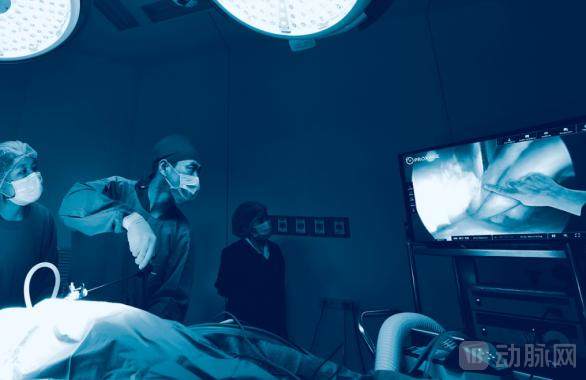
Proximie Real-World Application Scenarios. Image source: official website
This is somewhat akin to the relationship between players on the field and coaches off the field, with on-site physicians performing procedures while remote physicians provide guidance.
The most challenging issue in this process is how to maintain absolute image stability and low-latency data transmission. To address this challenge, Proximie partnered with 8x8’s callstats.io initiative. Leveraging artificial intelligence, 8x8 provides real-time monitoring of communication quality, instantaneous troubleshooting, and comprehensive support, including account configuration.
In addition to real-time remote surgery, Proximie also provides preoperative schedule reminders, comprehensive intraoperative documentation, and supports postoperative case reviews and educational training.
In 2016, Proximie completed its first remote surgery on the platform—a cleft lip and palate procedure. By 2022, Proximie had expanded to more than 100 countries and over 500 hospitals worldwide, with more than 13,000 surgeries performed in the past year alone.
Prior to the pandemic, Proximie implemented a series of promotional measures, including offering free access in medically underserved regions; however, these efforts yielded unsatisfactory results. It was during the pandemic that the company’s business volume truly surged. In 2020, Proximie’s surgical case volume increased by 430%. Nevertheless, Hachach-Haram believes that the pandemic merely served as a catalyst, with the fundamental driver being that telemedicine represents a major trend in the future of healthcare.
Software-First: Requires only 4 cameras and 2 displays, with no cabling needed in the ideal scenario
Proximie’s mission is to enable even the most remote hospitals with outdated hardware infrastructure to easily access high-quality telemedicine services. Emphasizing a “software-first” approach, Proximie allows remote surgeries to be conducted using just four cameras and two monitors.
But this is still not the ideal state for Proximie. Their ideal scenario is plug-and-play: starting remote surgery with just a single button, without any wiring or advance setup.
Last year-end, Andreas Christodoulou, Account Manager at Proximie, visited six countries within a single month to conduct on-site assessments at local hospitals. The purpose was to evaluate whether their operating rooms were equipped with the necessary infrastructure for installing cameras and displays, as fixed equipment must be positioned to optimize video quality without interfering with surgeons’ workflows.
The above outlines the most common installation process for Proximie. Recently, Proximie partnered with Teladoc Health, another publicly listed telemedicine company, to integrate Proximie software into mobile carts that also feature built-in cameras and storage cards, enabling rapid camera deployment through the use of these mobile units.
Founder Hachach-Haram stated that as 5G becomes widespread in hospitals, installing Proximie devices will become an increasingly preferred choice for more healthcare facilities. In the longer term, with the advancement of the Internet of Things (IoT), remote surgeries requiring no cabling or pre-configuration may indeed become feasible on the Proximie platform.
Proximie Completes $80 Million Series C Equity FinancingRecently, Proximie completed an $80 million Series C equity financing round. The round was led by Advent Life Sciences, with participation from new investor Emerson Collective and existing investors Global Ventures, Maverick Ventures, and others.
According to Hachach-Haram, this round of financing will be used to expand Proximie’s ecosystem, such as by integrating the Proximie platform with hospital databases to obtain patients’ pre- and post-operative health data, provide post-operative care instructions, and establish a comprehensive surgical platform centered on remote surgery that covers the entire perioperative process—pre-operative, intra-operative, and post-operative.
Medical AR/VR Applications Are Widely Used, with Multiple Products Commercialized
It is widely acknowledged that 2016 marked the inaugural year of the AR/VR boom, and it is also generally accepted that this surge in popularity was short-lived. However, there is no consensus on which year should be considered the turning point for AR/VR’s resurgence. A quick online search for “AR/VR resurgence” will reveal that every year since 2020 has been touted as the year of AR/VR’s comeback.
As the metaverse gains momentum, news of a resurgence in medical AR/VR has emerged, though it remains unclear whether this represents a genuine recovery or merely another false alarm. According to Rock Health data, there were 11 deals involving medical AR/VR startups in 2021, with total financing amounting to $198 million—more than double the $93 million recorded in 2019. Nevertheless, this figure still accounts for less than 1% of the entire digital health sector.
Additionally, according to incomplete statistics from VCBeat, there are approximately 21 startups in China involved in medical AR/VR. Of these, six have secured financing since 2019, with a total funding amount of RMB 131 million.
AR/VR applications in the healthcare industry primarily include education, surgery, and rehabilitation. Solutions have already been deployed across these various fields.
In the education sector, for instance, medical education streaming video libraries such as GIBLIB enable users to access a wealth of 4K high-definition and 360-degree VR video resources via computers or mobile phones. The Proximie platform, introduced in this article, can also serve as an educational resource. Domestic companies involved in this field include YeeCloud, among others.
In the surgical field, AR/VR applications extend beyond the AR-assisted remote surgery described in this article to include AR navigation systems. With these systems, surgeons wear AR devices that project navigational imaging and anatomical structures directly into their field of view, making target areas for dissection immediately visible. AR navigation is frequently employed in tooth extraction, orthognathic, and orthopedic surgeries, where it effectively enhances the accuracy of implant placement.
The application of AR/VR in the field of rehabilitation is relatively mature. For example, the VR rehabilitation software developed by the U.S. startup XRHealth has obtained FDA and CE registration for use in the rehabilitative treatment of shoulder, neck, and back injuries, as well as for cognitive training.
People are always full of expectations for the application of new technologies, envisioning various earth-shaking industry transformations. If the metaverse is indeed on its way, then AR/VR technology may well be the gateway for the healthcare industry to enter the metaverse.