

Why Are Tumor NGS Companies Rapidly Shifting to Domestic Sequencing Platforms?
MGI
Gene Sequencing Instruments and Related Reagent & Consumables R&D Manufacturer
Domestic gene sequencing platforms are reclaiming their say in the industry chain.
It is well known that cancer is an extremely complex disease; although there is substantial demand for the clinical application of tumor next-generation sequencing (NGS), it faces significant difficulties and challenges. “Even within the same cancer type, each patient’s condition varies. In this sense, tumor NGS represents true genomic big data, and the accurate analysis and interpretation of such genomic data are by no means easy,” said Tian Chao, Vice President of Genetron Health, in a previous media interview.
In early July, Burning Rock Biotech made a major announcement by revealing a strategic partnership with MGI, under which the two parties will explore commercial services and IVD product development. Previously, Burning Rock had been one of Illumina’s largest oncology customers in China. Although the specific financial terms of the collaboration were not disclosed, the move itself is noteworthy. Based on past experience, switching to or adding a new technology platform is rarely an easy decision for leading clinical tumor NGS companies, especially after they have already accumulated channel resources and obtained product approvals based on imported platforms.
Interestingly, it was not only Burning Rock Biotech; it seemed that overnight,Tumor NGS vendors have either already adopted domestic sequencing platforms or are in the process of doing so.Indeed, under the dual pressures of rising costs and stricter regulations, shifting to domestic sequencing platforms with greater autonomy is a viable solution. But are these domestic platforms merely a stopgap for gene sequencing service providers facing urgent challenges, or do they represent a long-term strategy? Has the tide turned for gene sequencing platforms? We spoke with several industry practitioners to find out.
Gene sequencing platforms are the most expensive and core tools in the genetic testing industry. It is based on the data generated by these sequencing platforms that genetic sequencing service providers can develop software and reagents to carry out precision medicine services. In the past, genetic sequencing service providers hardly had to consider which company’s sequencing platform to choose. Because in that seller’s market dominated by imported brands such as Illumina, Life Tech, and Roche, most people simply selected a few mainstream models from Illumina to build their technical platforms. Even now, they still primarily provide services based on Illumina’s sequencing platforms.
However, this balance was disrupted by MGI. According to incomplete statistics from VCBeat, in addition to BGI Genomics and Burning Rock Biotech, leading tumor NGS companies such as Genetron Health, Geneseeq, and Zhenhe Technology have all incorporated MGI, representing domestically developed technology, into their gene sequencing platform systems.And the volume of tumor NGS sequencing data they generate annually accounts for half of the domestic market.
Gene+ has opted for domestically produced gene sequencing platforms from the outset, standing as a staunch supporter of Chinese-made solutions. It is reported that for its proprietary sequencers, the Gene+Seq-2000 and Gene+Seq-200, Gene+ has performed detailed optimizations and modifications tailored for oncology applications based on MGI’s core DNBSEQ technology. In August 2019, it obtained medical device registration approval from the National Medical Products Administration.
By integrating its proprietary instrument platform with the Gene+OncoBox companion software and lung cancer genetic testing kits, Genetron Health has rapidly achieved widespread clinical adoption of its tumor NGS products. Over the past two to three years, Genetron Health has deployed this comprehensive domestically produced solution in major hospitals through tender processes, successfully implementing it for in-hospital applications.
As early as 2019, Genetron Health was among the first to accept MGI’s offer of collaboration. It initially integrated its patented “one-step” technology into MGI’s gene sequencers, thereby reducing library preparation time for sequencing. Subsequently, leveraging MGI’s DNBSEQ technology, Genetron Health officially launched the GENETRON S2000 gene sequencer, becoming the domestic tumor NGS manufacturer with the largest number of IVD certifications. Currently, the GENETRON S2000 has been widely applied in tumor genetic testing.
Furthermore, Geneseeq Technology, an oncology NGS company that proactively established a presence in the MRD sector, also procured sequencing instruments from MGI while expanding into new business scenarios. It integrated the DNBSEQ sequencing platform into its subsequently developed fully automated, end-to-end integrated NGS testing system. MRD can be used to monitor recurrence after treatment in patients with intermediate- to advanced-stage cancer and is considered the most promising new application scenario for oncology NGS. Reportedly, since initiating its MRD testing business layout in 2017, Geneseeq Technology has launched MRD testing products for multiple cancer types. “Over the past two years, domestically produced sequencers have performed well in terms of base quality and variant detection,” said Liu Wei, Laboratory Director at Geneseeq Technology and Deputy General Manager of its Wuxi base, in an interview with VCBeat.
An industry insider revealed to VCBeat, “Geneseeq is evaluating the possibility of incorporating MGI’s gene sequencing platform.” It is predictable that MGI is rapidly catching up with Illumina in terms of business volume.
In fact, managing relationships with upstream gene sequencing platforms has long been a persistent concern for gene sequencing service providers.
The uniqueness of gene sequencers lies in the fact that their operation requires specialized reagents, which are exclusively supplied by the original equipment manufacturer (OEM). This is the well-known “printer + ink cartridge” model. Under this model, the instrument itself serves merely as an entry point for gene sequencer manufacturers to participate in revenue sharing with gene sequencing service providers. During the instrument’s lifecycle, manufacturers can continuously adjust reagent prices, thereby effectively redistributing commercial profits.
The theoretical foundations of gene sequencers are extremely complex, and their manufacturing processes are highly precise. These high barriers to entry enable gene sequencer manufacturers to repeatedly raise reagent prices, thereby squeezing the profit margins of gene sequencing service providers. In the absence of alternative brands, however, gene sequencing service providers cannot afford to abandon these platforms for purely commercial reasons. After all, for gene sequencing service providers, data quality remains the core consideration among factors such as data quality, technical support, sequencing speed, and operational costs. “Gene sequencers are highly sophisticated instruments, with stringent performance requirements at the application level,” pointed out Liu Wei.
Therefore, behind the widespread adoption of domestic sequencing platforms by tumor NGS vendors lies a significant improvement in the latter's performance.Since high-throughput sequencing requires the capture of trace amounts of DNA in samples, the choice of DNA amplification and enrichment methods determines, to a certain extent, the operational efficiency and performance of the sequencing platform. Unlike many imported platforms that rely on PCR for DNA amplification—a process that can lead to error accumulation—MGI’s DNBSEQ technology does not involve PCR. It is one of the few technologies globally capable of performing template amplification in solution. By using DNA nanoballs (DNBs) for signal amplification and employing rolling circle amplification (RCA) with fixed single-stranded DNA as templates during sequencing, it avoids error accumulation and effectively enhances sequencing accuracy. VCBeat has learned that over the past few years, MGI has developed a series of patented technologies in sample preparation and library construction, such as the One-step RCA technology for DNB preparation and CoolMPS technology, which uses specific antibodies to identify bases. These innovations have laid the foundation for continuously improving sequencing accuracy and read length while reducing sequencing time.
Previously, a research team conducted a comparative analysis of the DNBSEQ-T7 and NovaSeq 6000 platforms for whole-genome sequencing applications. The results indicated that the two platforms exhibited negligible differences in fragment distribution, genome coverage, and variant detection. Notably, the DNBSEQ-T7 even outperformed the NovaSeq 6000 in detecting large deletions. Furthermore, the DNBSEQ-T7 can simultaneously run four PE150 flow cells, achieving a single-run throughput of 6 Tb, which is higher than that of the NovaSeq 6000.

First Independent Validation Results Based on MGI’s DNBSEQ-T7 Sequencer Published on Preprint Server BioRxiv Image Source: BioRxiv.org
“In fact, at this stage, not only gene sequencers but also biochemical analyzers and chemiluminescence immunoassay analyzers are transitioning to domestically produced alternatives,” said Liu Wei. “The underlying logic lies in the improvement of China’s overall manufacturing capabilities and technological innovation.” In addition to better sequencing quality, domestic platforms also offer faster sequencing speeds. For instance, generating 1T of genomic data using a PE100 flow cell takes 20 hours on the DNBSEQ-T7, whereas the NovaSeq 6000 requires 24 hours. “For clinical applications, the four hours saved are extremely valuable,” Liu pointed out.
However, the process of domestic substitution is not something that can be achieved overnight.
This is because,The effective clinical application of tumor NGS is the result of seamless integration among genomic big data, instruments, and reagents.Regulatory requirements for genetic testing have also been continuously tightening; switching sequencing platforms midstream would inevitably increase the cost of gene sequencing services. Consequently, in the early stages, it was mostly latecomer tumor NGS companies in the early phases of product R&D that attempted to adopt domestic sequencing platforms, while commercially more mature vendors have only begun to deploy domestic platforms in recent years. “The clinical application of tumor NGS relies heavily on the translation of basic scientific research,” a relevant executive from a leading tumor NGS company told VCBeat. “In this regard, due to an earlier start, research projects based on overseas platforms have advantages in both quantity and depth. Moreover, global pharmaceutical companies’ drug development efforts are largely conducted on overseas platforms, which has created a certain path dependence for tumor NGS manufacturers during their early development, leading them to initiate development based on overseas platforms.”
“However, Chinese-made platforms are rapidly integrating into the global scientific research ecosystem and new drug development,” said a relevant executive from the company. “If more overseas users can be incorporated into research efforts, making Chinese-made platforms fundamental research tools, I believe their adoption will accelerate.” In May this year, MGI was awarded $334 million in damages by a jury in its patent litigation against Illumina concerning two-color sequencing technology, and is scheduled to enter the U.S. market by the end of August. Meanwhile, in the European market, MGI recently launched its HotMPS sequencing reagents and has begun accepting orders pursuant to a consent order issued by a UK court. This signals that the globalization of Chinese-made platforms will accelerate in the second half of this year.
As the recognition of the performance of domestically produced sequencers increases, tumor NGS manufacturers have initiated systematic evaluations to switch sequencing platforms for those products or services that have already been commercialized, and are even exploring new pathways for dual-platform registration. According to VCBeat, MGI provides gene sequencers and automation products to assist in the construction of in-house NGS laboratories for users with hospital admission needs. An increasing number of third-party companies are also developing reagents or analysis software compatible with domestic sequencing platforms, providing more diversified options for gene sequencing service providers to design operational solutions based on hospital-side requirements.
“At this juncture, the decision to transition to domestically produced platforms is driven by their potential to generate greater value in future clinical applications,” the relevant person in charge further stated, “leveraging a more efficient technological platform system to accelerate clinical translation.”
Furthermore, in consideration of the security of human biological data, the Chinese government has not only enacted corresponding laws but also encouraged provinces to prioritize domestically produced platforms when procuring core life science equipment. By including “procurement of foreign gene sequencers” on the “Import Restriction List,” this policy undoubtedly facilitates the market expansion of domestic sequencing platforms.
Over the past decade, the cost of gene sequencing has plummeted at a rate even faster than that of mobile data charges, while the volume of accumulated data has expanded dramatically.
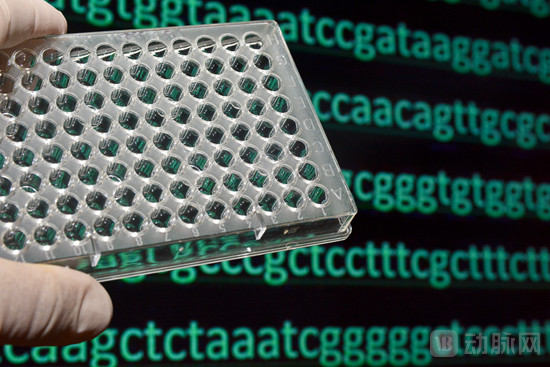
Gene Sequencing Generates Massive Amounts of Data Image source: 123rf.com
The clinical application of genetic technology has been a series of surging waves of innovative exploration, gradually becoming a fiercely contested arena for gene sequencing platform manufacturers. From companion diagnostics, which once fell into a red ocean of intense competition, to the currently hot minimal residual disease (MRD) testing and the upcoming pan-cancer early screening, gene sequencing service providers have leveraged next-generation sequencing (NGS) technology to solve many previously unknown challenges in human health, repeatedly demonstrating the powerful explosive potential of gene sequencing in clinical settings. Today, both international and Chinese domestic manufacturers are proactively strengthening their ties with midstream sequencing service providers.This appears to be competitive behavior among manufacturers, but in essence, it represents a change in market rules.
For gene sequencing instrument manufacturers, the future market is no longer about simply selling instruments and reagents, but rather providing effective solutions that enable gene sequencing service providers to truly integrate their products and services into clinical application scenarios and reach end users.The greatest competitive barrier for gene sequencers is no longer the technology and craftsmanship themselves, but rather how to leverage technology to solve practical problems.
In this new competitive landscape, everyone starts from the same baseline. If, in the previous phase of competition, domestic gene sequencing platform manufacturers that entered the market later had to strive hard to catch up and gradually reclaim share in the existing market, the much larger incremental market of the future offers them a more favorable starting point. This is because, in the new phase of competition, the interaction between gene sequencing platform providers and gene sequencing service providers has become an increasingly critical factor.
For instance, in the most mature application scenario of tumor next-generation sequencing (NGS), product compliance has become a standard requirement for surviving gene sequencing service providers, while clinical penetration capability has emerged as a key factor in market competition. After all, 14 tumor companion diagnostic products based on NGS technology have already obtained medical device registration approval. In China, however, medical resources are unevenly distributed, the patient population is relatively dispersed, and there is a high degree of heterogeneity in hospital-based tumor NGS demands.
To truly integrate tumor NGS testing into clinical diagnosis and treatment workflows, corresponding products must be easy to operate and capable of integrating with information systems. This poses significant challenges to the automation, intelligence, and data security of gene sequencers. At present, even imported gene sequencer manufacturers lack standardized overall product portfolio solutions. Consequently, configuring clinical sequencing products for genetic testing service providers has become a key factor for gene sequencing platform manufacturers to establish competitive advantages. Understanding the clinical needs of hospitals at all levels in China is undoubtedly an area where domestic manufacturers excel.
Furthermore, in certain emerging application scenarios, most sequencing service providers dedicated to developing clinical-grade oncology NGS products have already completed the exploration of know-how through small-scale model validation. The current challenge lies in conducting large-scale, or even ultra-large-scale, sample validation based on stable sequencing platforms. According to previous statistics by VCBeat, pan-cancer early screening technologies based on NGS platforms—such as Burning Rock Biotech’s ELSA-seq technology, Genetron Health’s HIFI technology, Panomics’ PanSeer®, and GenePlus’s MERCURY technology—have all completed model validation using extensive retrospective samples and are progressively entering the phase of large-scale prospective population studies. This trend imposes higher requirements on both the quality and quantity of clinical applications of NGS technology.
At this juncture, manufacturers of gene sequencing platforms must not only assist gene sequencing service providers in controlling costs but, more importantly, proactively collaborate on performance validation. Previously, Tian Chao, Vice President of Genetron Health, noted in discussions on MRD product development that without domestication, it would be difficult to reduce the price of such new products and make gene technology accessible to more cancer patients in China. Regarding performance validation, given the massive scale of projects once initiated, any mid-stream transition would result in significant losses. This necessitates close coordination between sequencing service teams and technical platform teams to proactively identify potential experimental issues and conduct a comprehensive series of performance validation assessments for the technical platform.
Admittedly, domestic sequencing platforms have, to a certain extent, reshaped the upstream market of gene technology. However, to translate more genetic innovations into efficient clinical products, professional gene sequencing service providers and high-quality gene sequencer manufacturers need to engage in richer and deeper collaborations. The endogenous advantages of domestic sequencing platforms in terms of ecosystem interaction undoubtedly raise greater market expectations. As for what structure the final market landscape will take following the entry of domestic sequencing platforms, we wait and see.