

WeDoctor's Tianjin Digital Health Community Offers Three Innovative Prescriptions to Tackle the 'Healthcare Impossible Triangle'
“No Matter Which Way the Wind Blows, the Most Worthwhile Investment Remains ‘Health’.”
The internet healthcare sector has been experiencing a “cold spell” for some time, with leading platforms gradually giving back the pandemic-driven valuation premiums they had enjoyed in secondary markets. However, recent news has injected new vitality into the industry: WeDoctor, a digital healthcare platform, has secured over RMB 1 billion in financing led by state-owned capital. Industry insiders point out that securing such substantial funding under the current circumstances directly reflects investors’ recognition of the rapid growth of WeDoctor’s core business—its Digital Health Community model—over the past two years.
As an innovative model for deepening healthcare reform, the “Digital Health Community” has become an industry-wide phenomenon. From the “Tianjin Model” of the Health Community being recognized as one of the “Top Ten New Measures to Advance Healthcare Reform and Improve Public Health” at the National Conference on Promoting Best Practices in Healthcare Reform, to the State Council’s Healthcare Reform Leading Group explicitly calling for “advancing the development of medical consortia” in its Document No. 2 last year, and further to the joint directive issued this April by five ministries and commissions—including the National Development and Reform Commission—urging localities to “explore the development of grassroots-level Digital Health Communities,” the “Digital Health Community” has rapidly emerged as a highly prominent model in China’s new round of healthcare reform within just over two years.
In recent years, internet healthcare has encountered a “cold snap.” The industry widely acknowledges that the medical services sector is inseparable from stringent regulation and possesses strong public-welfare attributes, while its digital transformation proceeds slowly and short-term profitability remains elusive. This has directly led to declining expectations in both primary and secondary markets regarding the return on investment and payback periods for internet healthcare ventures. So, what path has the “Digital Health Community” taken? Can it become the dominant model for advancing the arduous task of healthcare reform, thereby attracting state-owned capital to place their bets?
Decoding the “Digital Health Community” inevitably requires examining the “Tianjin Model.” In January 2020, the Tianjin Municipal People’s Government and WeDoctor signed the Strategic Cooperation Agreement on Digital Health, thereby launching Tianjin’s path to breaking new ground in healthcare reform through digital empowerment. From the initiation of the Tianjin WeDoctor Digital Health Community at that time until this June, exactly 30 months have passed. Over these two and a half years, driven by a profound understanding of the core objectives of national healthcare reform, Tianjin, with the courage of a reformer, collaborated with WeDoctor to jointly create a provincial-level model for digital healthcare reform.
Addressing the traditional healthcare system, William Kissick, a professor at Yale University in the United States, proposed the famous “Impossible Trinity”: under given constraints, it is difficult for a country’s healthcare system to simultaneously achieve “improved quality of medical services, increased accessibility of medical services, and reduced costs of medical services.” This also reflects the predicament faced by China’s actual healthcare environment. The so-called “difficulty and high cost of accessing medical care,” along with the incessant doctor-patient conflicts, are concrete manifestations of the “Impossible Trinity” inherent in the traditional healthcare system.
Digital healthcare is regarded as the “innovative prescription” for resolving the “impossible triangle of healthcare.” An analytical report by Essence Securities points out that, in response to the “impossible triangle” inherent in traditional healthcare systems, only the introduction of new technological and model-based increments can thoroughly break the deadlock.
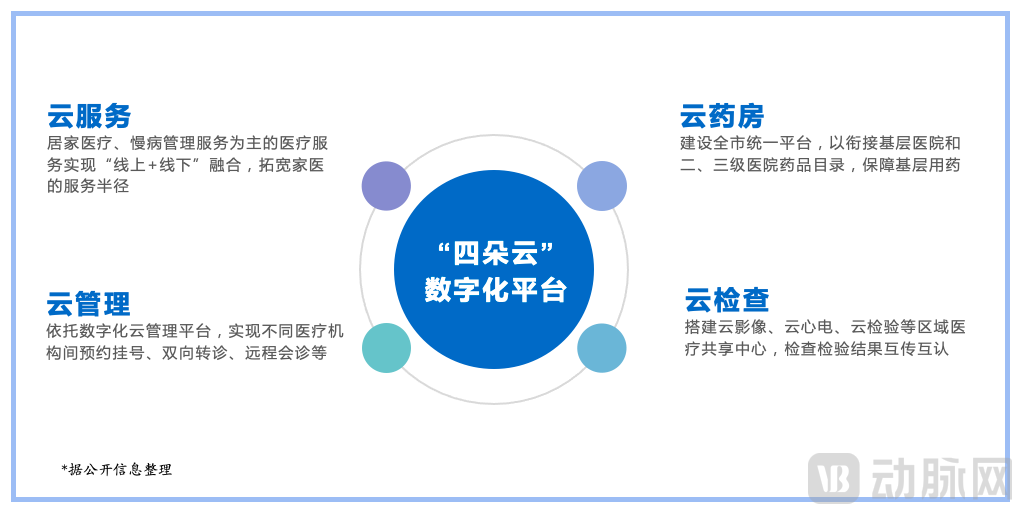
During the development of Tianjin’s Digital Health Community, WeDoctor fully demonstrated its accumulated digital technologies and integrated service capabilities, adopting a three-phase approach to establish a three-tier system: First, it built a digitalized and centralized service system to enhance the efficiency of medical resource utilization; simultaneously, it established a standardized and integrated service system to strengthen primary healthcare delivery capabilities; furthermore, it implemented a performance-based payment health accountability mechanism to incentivize primary care physicians.
By implementing a unified “Four Clouds” platform—comprising cloud management, cloud services, cloud pharmacy, and cloud diagnostics—at primary care hospitals, along with standardized offline chronic disease management centers, the Healthcare Community is providing residents with integrated online-offline medical and health services through disease-specific standardized diagnosis and treatment, centralized cloud pharmacy, and centralized cloud diagnostics.
According to public information, all 266 primary healthcare institutions across the city have completed “end-to-end” digital upgrades, achieving comprehensive data interoperability and unified operational monitoring and management. As of the end of June, the Healthcare Community had established standardized chronic disease management centers in collaboration with more than 70 primary hospitals, jointly managing over 900,000 patients with chronic diseases. This initiative has realized standardized diagnosis and treatment, facilitated coordination between physicians at different levels of care, provided clinical decision support system (CDSS) assistance during the diagnostic and therapeutic process, and enabled whole-course patient management along with health vital signs monitoring.
Among the various initiatives implemented by the Digital Health Community in Tianjin, the greatest challenge—and the most commendable aspect—lies in the local government’s spirit of policy innovation and reform, characterized by its willingness to experiment and break new ground. Driven by reforms in payment methods, such as “global bundled payments” for medical insurance and “disease-based and capitation-based bundled payments,” along with improvements in performance incentive mechanisms for primary care medical personnel, the establishment of a “pay-for-performance system” for medical services has become a key measure for Tianjin’s grassroots Digital Health Community to break through entrenched interest barriers and achieve scalable, positive development.
“Some of their designs and practices have exceeded our expectations.” Ying Yazhen, Vice President of the China Health Insurance Research Association and Deputy Dean of the National Healthcare Security Administration Institute, conducted field research in Tianjin alongside experts from the World Health Organization. In her remarks, she pointed out that WeDoctor, as the leading entity and hospital within the Digital Health Community, has also explored institutional and mechanistic innovations, enabling primary care physicians to enhance their professional capabilities while seeing their income and benefits rise in a reasonable and lawful manner.
Under Tianjin’s comprehensive series of measures, the academically endorsed “health accountability system” has been effectively implemented and achieved tangible results. Healthcare services have begun to shift from “fee-for-service/fee-for-volume” to “pay-for-performance,” achieving the goals of enhancing the capabilities of primary healthcare institutions, reducing procurement costs for pharmaceuticals and medical consumables, and improving the efficiency of health insurance fund utilization, thereby benefiting patients, physicians, and hospitals alike.
For healthcare services, user-perceived outcomes are paramount. By focusing on primary care and staying close to communities, the Health Consortium has identified its service niche, which is also a key factor enabling its rapid expansion and effectiveness. A comprehensive analysis of relevant business data shows that after 30 months of construction and operation, the Tianjin Health Consortium has delivered impressive results in three core operational “hard metrics”: improving patient health, increasing physician income, and boosting hospital outpatient visits.
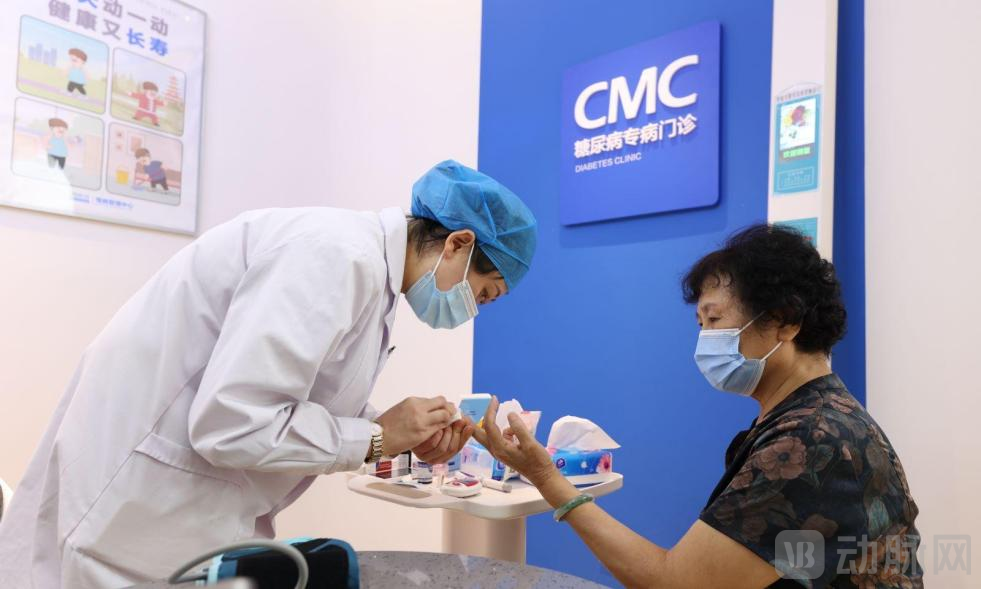 Tianjin Grassroots Digital Health Consortium Chronic Disease Management Center
Taking the management of patients with diabetes as an example, the Health Consortium is currently providing comprehensive digital management services to over 400,000 diabetic patients across Tianjin. In pilot hospitals within the Health Consortium, the standardized management rate for patients reached 76.68%. The blood glucose control rate among patients enrolled in demonstration-level chronic disease management for more than three months was 13.5 percentage points higher than that of unmanaged patients. Meanwhile, primary care hospitals implementing capitation-based payment achieved medical insurance surplus rates ranging from 16% to 31%.
In terms of physician incentives, the Health Community has integrated a “pay-for-performance” system to expand services such as family doctor care and home-based medical care. It has established performance-based incentive funds using the portion of medical insurance funds retained from savings (“surplus retention”), with health service behaviors and outcomes serving as the primary assessment indicators. In accordance with the principle of “more pay for more work and higher compensation for better performance,” this approach provides primary care physicians with greater transparent income. According to publicly available data, by the end of May this year, the Health Community platform had delivered over 15,000 home-based medical service visits to more than 8,000 patients within the city. This reflects patients’ demand for and trust in the diversified services offered by primary healthcare institutions, which has also translated into expected and substantial income growth for primary care physicians.
In promoting tiered diagnosis and treatment and increasing outpatient visits at primary care hospitals, the Health Community has also achieved natural and seamless success. Through comprehensive reforms of systems and mechanisms, the service capacity of primary care hospitals has improved, the motivation of primary care physicians has been strengthened, and patients have naturally “flowed back” to primary care settings. Relevant data show that, with the improvement of various levels of the Digital Health Community system, outpatient visits at some primary care medical institutions in Tianjin that have implemented reform measures have increased by 100%, with the highest year-on-year increase reaching 280%. The public has voted their “trust” for primary care hospitals with their feet.
Based on Tianjin’s experience, the digital transformation of healthcare management and service systems can generate substantial social benefits. However, from a business model perspective, is the “strong infrastructure, heavy operations” approach of the Digital Health Community viable? Furthermore, how does it perform in terms of timeliness in construction and operation, as well as return on investment?
Public records indicate that Tianjin WeDoctor Internet Hospital received its approval license in January 2020, while the Tianjin Primary Care Digital Health Community was fully launched in April of the same year, spanning a total of 30 months to date. Notably, the daily outpatient volume of the Health Community has exceeded 10,000 visits, with monthly revenue surpassing RMB 100 million. This demonstrates the growth potential and breakthrough impact of digital hospitals compared to traditional ones. By contrast, Peking University International Hospital, a typical tertiary private hospital, took nearly 12 years from submitting its application in 2002 to opening in 2014.
Using a simplified calculation based on common models in the internet industry, in a medical insurance pooling area with approximately 10 million insured individuals, the Health Community achieved a daily consultation volume equivalent to that of a large Grade A tertiary hospital (10,000 visits) within 30 months, with an annual ARPU (Average Revenue Per User) of RMB 100. From an industrial perspective alone, the return on investment for the Digital Health Community exceeds 10-fold.

On-site Photo of Tianjin WeDoctor Internet Hospital
With impressive data and remarkable results, the “Tianjin Model” of the Digital Health Community was once placed in the industry spotlight. At the 2021 National Conference on Promoting Experience in Deepening Healthcare Reform, Tianjin’s Grassroots Digital Health Community was ranked first among the “Top Ten New Initiatives to Advance Healthcare Reform and Serve Public Health.” In April this year, five central ministries and commissions, including the Cyberspace Administration of China, the Ministry of Agriculture and Rural Affairs, and the National Development and Reform Commission, explicitly proposed “guiding localities to explore the development of grassroots digital health communities.”
Prior to this, another policy warrants attention. In October 2021, the State Council’s Leading Group for Healthcare Reform issued the “Implementation Opinions on Deepening the Promotion of Sanming City’s Experience in Fujian Province and Furthering Healthcare System Reform” (hereinafter referred to as “Document No. 2”), which explicitly called for advancing the development of medical consortia. From the perspective of model innovation, the Digital Health Community can be regarded as an upgraded version of medical consortia and close-knit county-level medical communities.
As a pioneer in China’s healthcare reform, Sanming, Fujian, is also one of the earliest regions in the country to initiate the construction of a “Digital Health Community.” Since 2018, Sanming City has introduced the WeDoctor platform and launched China’s first “Three-Medical Linkage” platform (integrating medical care, health insurance, and pharmaceuticals). In the new era of advancing “Sanming Healthcare Reform 2.0,” Sanming City is leveraging WeDoctor to establish a citywide unified “Hospital Internet Digital Service Platform” and a telemedicine service network. This initiative comprehensively covers all 12 general hospitals (medical consortia) and their affiliated township health centers, laying a solid foundation for building Sanming’s Digital Health Community and realizing a modern universal health management and care system.
Zhan Jifu, the “architect” of the Sanming healthcare reform, once evaluated the “Tianjin Model” as follows: “The Digital Health Community currently under construction in Tianjin is led by internet hospitals to establish a tightly integrated medical consortium. It has instituted a ‘health accountability system’ centered on family doctor contracts and focused on chronic disease management. This is, in essence, the goal of Sanming Healthcare Reform 3.0. The related practical experience offers strong demonstrative effects, and its achievements are worthy of attention.”
Now, with the strong promotion by five ministries and commissions, combined with the ongoing reforms in medical insurance payment methods implemented across various regions, the Digital Health Community—as a digital platform capable of integrating and providing comprehensive services for the “three-medical linkage” (healthcare, medical insurance, and pharmaceuticals)—is being scaled up from Shandong, Tianjin, Fujian, and Shanghai to nationwide implementation.
What deserves even greater attention from the industry is that the Digital Health Community co-established by Tianjin and Weiyi mirrors the business model of UnitedHealth, a typical representative of U.S. Health Maintenance Organizations (HMOs).
UnitedHealth Group’s core business consists of two major segments: health insurance and health management services. By leveraging the synergistic closed-loop integration of four key capabilities—medical care, pharmaceuticals, insurance, and digital technology—it has consistently driven rapid growth in its business revenue. Similarly, WeDoctor, which relies on internet hospitals and centers its operations around the Healthcare Community model, is also underpinned by digital capabilities. It efficiently integrates elements of the medical service chain, including medical care, pharmaceuticals, and insurance, to establish a comprehensive, end-to-end closed loop for medical services. Its primary revenue streams are derived from both medical services and health management and care services.
Thus, the Digital Health Community can be regarded as an innovative implementation of Health Maintenance Organizations (HMOs) in China. Exemplified by WeDoctor’s pilot model in Tianjin, this new business model and its derived ecosystems not only serve as an entry point for resolving the “impossible triangle” of healthcare but also chart a clear and replicable path for the development of HMOs with Chinese characteristics.