

Sports Health Sector Surges with $9B Funding in One Year, Exceeding 2018–2020 Total; Hillhouse, Huawei, and Tencent Enter the Fray as Haobo Medical Files IPO
Haobo Medical, a company specializing in rehabilitation medical devices, submitted its prospectus on June 30, becoming the latest rehabilitation device enterprise to seek an IPO, following Xiangyu Medical, Vishee Medical, Pumen Technology, and Chengyitong.
In addition to traditional physical therapy equipment, Haobo Medical’s prospectus revealed that the revenue share of sports rehabilitation training equipment over the past three years was 11.82%, 16.92%, and 24.36%, respectively, showing a year-on-year increase. Meanwhile, Vishee Medical’s annual report also disclosed that, starting in 2021, a new Sports Rehabilitation Business Unit was established to meet the needs of its emerging business development.
Since the implementation of the Outline of the National Fitness Program in China, alongside national economic development and rising household incomes, the national fitness movement has become a prevailing trend. Physical exercise has become increasingly scientific and evolved into a widespread social phenomenon, giving rise to the sports and health industry.
According to data from Artery Orange, the sports and health industry secured approximately RMB 6 billion in financing over the past year, surpassing the total for 2018–2020. Chengtian Technology, which specializes in exoskeleton robots, has completed multiple rounds of funding. Major players such as Hillhouse, Huawei, and Tencent have frequently entered the market, demonstrating their confidence in this sector.
According to the “Research Report on the Development Trends and Future Prospects of China’s Sports Industry (2022–2027)” released by Zhongyan Puhua Research Institute, the total scale of China’s sports industry is projected to reach RMB 5 trillion by 2025.
In the future, for companies to capture a share of this market, they must break through with innovation, and sports health is an area that cannot be overlooked.
Exercise has transcended the realm of sports to become a widely recognized lifestyle trend.
Take this year as an example. At the beginning of the year, Wang Meng’s witty commentary during the Winter Olympics and Gu Ailing’s three medal wins repeatedly topped trending searches, igniting public enthusiasm for sports. In the second quarter, as COVID-19 cases resurged and many cities implemented work-from-home policies, Liu Genghong went viral with his “Ben Cao Gang Mu Shuttlecock Exercise,” sparking a nationwide fitness boom. Subsequently, Pamela Reif, regarded as the foremost influencer in the fitness world, joined Douyin (the Chinese version of TikTok), further propelling this wave of disciplined, mass fitness to new heights.
According to data from the General Administration of Sport of China, in 2020, the proportion of the national population regularly engaging in physical exercise reached 37.2%, equivalent to over 500 million people. The current incidence rate of sports injuries in China ranges from 10% to 20%. Based on these figures, the annual number of individuals requiring post-injury rehabilitation in China is estimated to be between 50 million and 100 million.
Furthermore, with the rising health awareness among Chinese citizens, sports rehabilitation has expanded beyond treating sports injuries to effectively address a broader range of needs. These include postural issues and fitness requirements in children; women’s demands for aesthetic posture and physical recovery during special periods such as postpartum; and musculoskeletal problems among white-collar workers caused by prolonged sedentary office work.
Therefore, how to meet the health needs of these hundreds of millions of users has become an urgent issue that needs to be addressed.
The answer to this question, however, does not lie within the traditional sports industry.
The development history of the sports industry is a process of continuous integration with other industries.
The connotation and extension of the modern sports industry have far exceeded the traditional definition, which was limited to athlete training and sports competitions. For instance, the integration of sports with video games has given rise to the esports industry, while the fusion of sports with tourism has spawned the sports tourism industry.
The integration of sports and healthcare has given rise to the sports health industry, prompting numerous companies to make targeted strategic deployments.
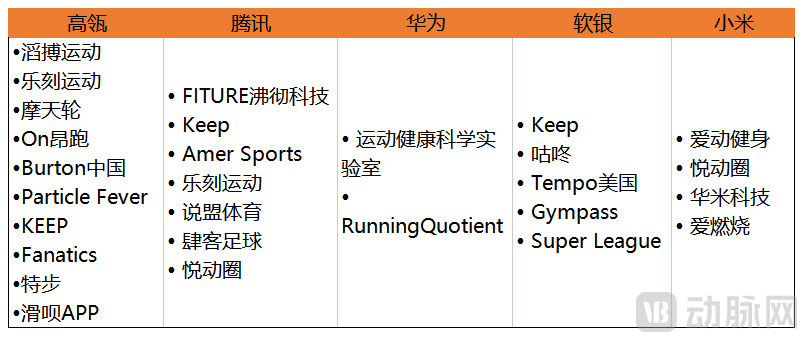
Selected Institutional Investments in Sports and Health Enterprises, Compiled by VCBeat from Public Sources
As a bellwether for primary market investments, every move by Hillhouse Capital draws significant attention.
Since acquiring a controlling stake in Topsports in 2017 to enter the sports industry, Hillhouse has successively invested in multiple niche sectors over the past few years, including fitness platforms such as LeKe Sports and Keep; sports ticketing platform Moretickets; athletic footwear and apparel brands Xtep, On Running, and Particle Fever; sports e-commerce company Fanatics; ice sports brand Burton China; and the ski app Huabei.
Facing China’s sports industry, with a total market size exceeding RMB 5 trillion, Hillhouse began its strategic investments five years ago. In the past two years, it has further taken the lead in investing in several heavyweight brands across niche segments. Perhaps in a decade, we will once again witness Hillhouse’s bountiful harvest in the sports sector.
If Hillhouse’s investments are relatively diversified, Huawei, as a tech giant, has precisely targeted the sports and health sector.
Over the past two years, although Huawei’s smartphone business has been impacted, its smart wearable devices shipped over 100 million units in 2021, cumulatively serving more than 320 million users, with the Huawei Health app reaching 83 million monthly active users. In the sports and health sector, Huawei has emerged as a leading player. Underpinning this success is Huawei’s substantial investment in scientific research related to sports and health.
As early as 2016, Huawei established the Shenzhen Sports and Health Science Laboratory. This was followed in 2020 by the establishment of the Xi’an Sports and Health Science Laboratory. In 2021, the Dongguan Songshan Lake Sports and Health Science Laboratory, with an investment exceeding RMB 200 million and covering nearly 5,000 square meters, officially commenced operations. In the same year, Huawei also invested in RunningQuotient, a company specializing in running science analytics.
Through its investments in sports and health science, Huawei has demonstrated its determination and boldness in executing its sports and health strategy.
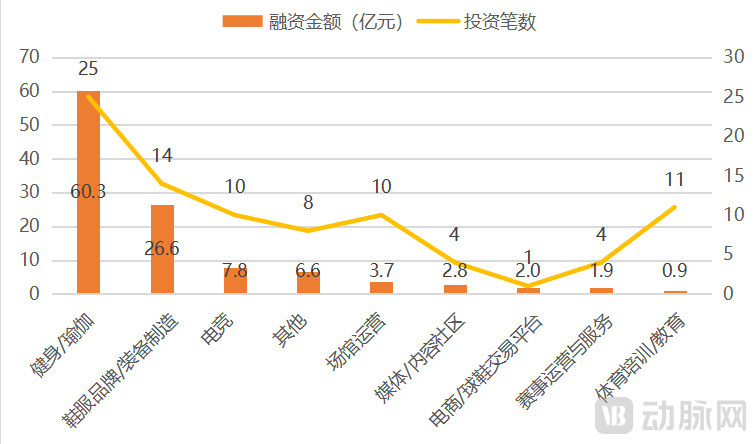
Financing Trends in Subsectors of China’s Sports Industry in 2021,Data sourced from Lanxiong Sports
Tencent, another tech giant, has aligned its strategy with the 2021 investment trends in China’s specialized sports industry sectors, where personal fitness and equipment attracted the highest financing amounts and the greatest number of investment deals. From entering the smart fitness mirror market, sports management platforms, and athletic footwear and apparel, to sports media, Tencent is building a comprehensive home-based sports and health ecosystem.
In addition to well-known investment firms, tech giants such as Baidu and Xiaomi are also actively entering the fray. These major technology companies aim to accelerate their footprint in the sports and health sector and expand their industry value chains by diversifying their business portfolios through strategic investments.
The sports and health market is experiencing explosive growth.
Health-focused products are blossoming everywhere, ranging from software to hardware and from portable devices to medium- and large-sized equipment, with an endless variety of forms emerging.
However, overall, the sports and health sector mainly consists of two core sub-sectors:
First, from a medical perspective, rehabilitation therapy products aimed at functional recovery;
Second, from a sports perspective, sports health management products aimed at injury prevention.
Both sectors have attracted significant investor enthusiasm.
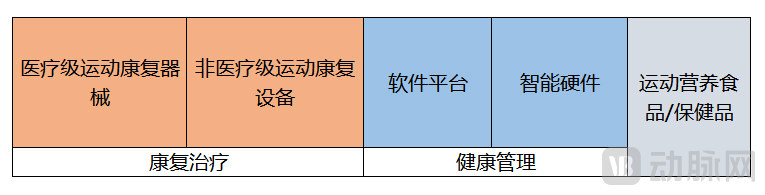
Two Major Sub-sectors in the Sports and Health Industry
Exercise Rehabilitation EquipmentIt is an essential adjunct in the process of sports rehabilitation, with demand across medical institutions, elderly care facilities, organizations for persons with disabilities, and home-based rehabilitation settings.
The bid announcement for rehabilitation equipment at Taiyuan Central Hospital in Shanxi Province reveals that very few devices have a unit price exceeding RMB 500,000, indicating an overall relatively low price level. Although imported brands account for a small proportion of the total number of devices, their unit prices are significantly higher than those of domestically produced brands.
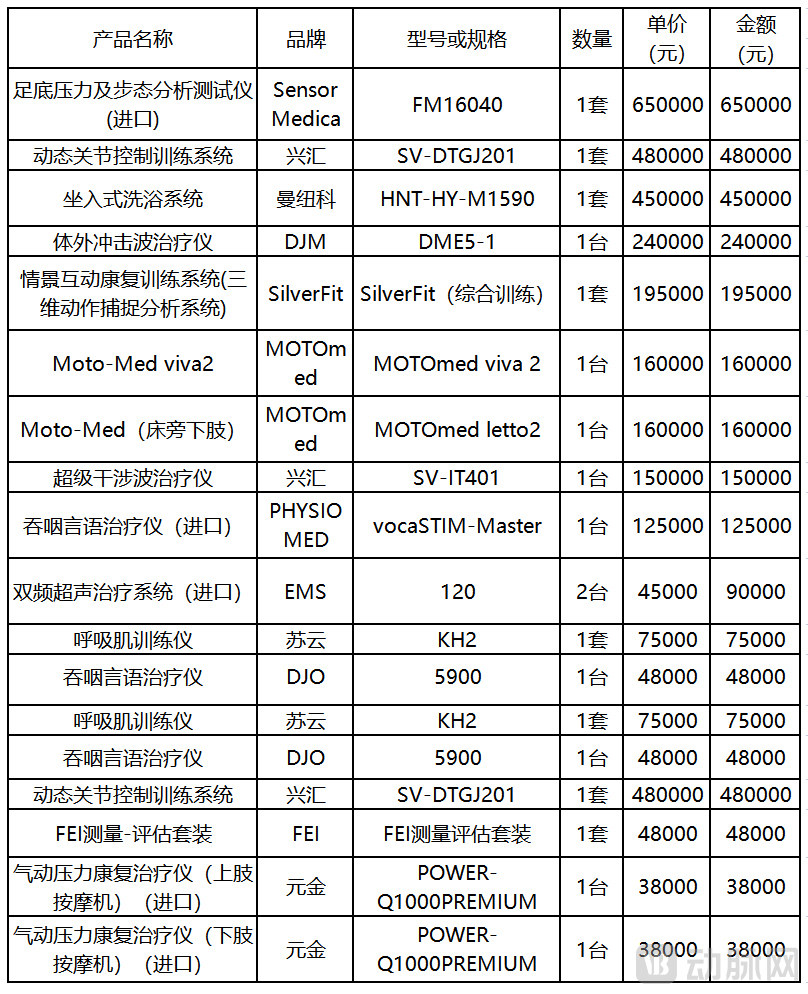
Announcement of Winning Bid for Equipment in the Hospital's Rehabilitation Department,Data sourced from the website of Taiyuan Municipal Government Information Administration Bureau
According to data from Zhongcheng Medical Devices, there are over 5,000 valid medical rehabilitation device products, with more than 90% being domestic brands. Combined with this bid announcement, it is evident that although the localization rate of rehabilitation devices in China is high, the country still relies on imported brands for high-end equipment.
The value of exercise rehabilitation equipment lies in ensuring the effectiveness of rehabilitation treatment and reducing the workload of rehabilitation therapists.
Currently, rehabilitation training still requires the assistance of physical therapists to help patients, yet there is a significant shortage of such professionals in China. Exercise rehabilitation equipment has effectively accelerated the course of rehabilitation therapy and is playing an increasingly important role in the rehabilitation process.
From the hospital’s perspective, revenue per square meter is a key performance indicator. Therefore, sports rehabilitation equipment must not only offer diverse limb-training functions but also accommodate patients across multiple stages of rehabilitation, thereby maximizing the utility of the equipment.
In accordance with this requirement, sports rehabilitation equipment has evolved from early single-function standalone units to multi-function standalone units.
Taking the four-limb linkage rehabilitation device mentioned in Haobo Medical’s prospectus as an example, it enables separate training for the upper and lower limbs and offers three modes: passive training (fully motor-driven), assisted training (motor-assisted with human effort), and active training (entirely human-powered). This design meets patients’ rehabilitation needs across varying physical conditions.
Functional diversification is merely the beginning of the iteration of sports rehabilitation equipment. In the future, empowered by digital technologies, rehabilitation devices will evolve toward intelligence and miniaturization.
In particular, data-centric, software-driven intelligent sports rehabilitation devices are poised for significant growth.
Taking the foreign rehabilitation equipment brand BTE as an example, its most distinctive features lie in two core modules: functional assessment and vocational training. The former utilizes sensors to collect various types of data, which are then integrated to generate functional capacity evaluation reports. The latter employs extended accessories to simulate a wide range of daily life scenarios, such as driving, lifting, climbing, and throwing. By presenting patients’ rehabilitation progress in real time through data and charts, the system helps patients restore their activities of daily living (ADL).
During the rehabilitation process, assessment is an essential component. The development of medical devices aims to reduce the frequency of manual assessments, enabling patients to have their data analyzed in real time by the system during rehabilitation training. This allows patients to compare each movement they perform, making rehabilitation training more scientific and efficient.
The intelligent development of medical devices has enabled rehabilitation therapy to become more precise and data-driven, with some training exercises even being performed without the assistance of a therapist.
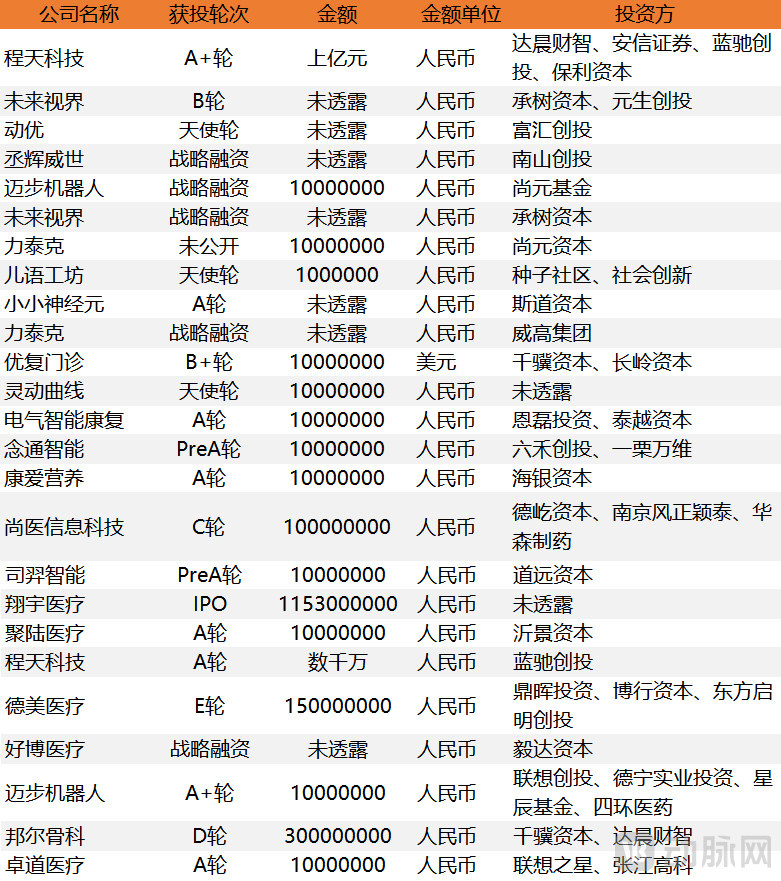
Financing Activities of Selected Companies in the Rehabilitation Therapy Sector Since 2021Data sourced from VCBeat
In recent years, the rapidly growing field of rehabilitation robotics has also been built on this product logic: starting from human gait data, it designs gait therapies that align with human physiological characteristics; and based on each patient’s individual anatomical features, it adjusts various body segments to ensure accurate joint alignment during movement training, thereby guaranteeing rehabilitation outcomes.
Vishee Medical, which has newly established a Sports Rehabilitation Division, entered the market with rehabilitation robotics products. Its X-walk200/300 lower-limb walking exoskeleton-assisted training device has successfully obtained medical device registration certification and achieved mass production, while its X-locom200/300 upper- and lower-limb active-passive rehabilitation training system and the X-walk400 have entered the registration phase.
Currently, domestically produced sports rehabilitation equipment has completed the journey from nonexistence to existence; the next step is achieving evolution from mere availability to excellence.
Sports Health Management ProductsLeaning more towards the consumer end, it encompasses a range of offerings from pure software-based sports and health management apps to smart wearable devices that integrate hardware and software, and further to intelligent hardware, gathering numerous manufacturers including Keep, Huawei, Xiaomi, Lifesense Medical, and Goertek.
This sector primarily consists of consumer goods manufacturers that have turned their focus to sports and health after facing intense competition in the consumer market.
The recent surge in popularity of Keep reflects the growing fervor for fitness and health.
Initially launched as a fitness app offering workout guidance, Keep has gradually transformed from a standalone application into an intelligent sports operator in response to evolving market demands. Centered on users’ fitness and health needs, Keep provides a one-stop sports solution encompassing fitness instruction, running and cycling tracking, social networking for athletes, dietary guidance, and e-commerce shopping, thereby establishing a comprehensive sports and health ecosystem.
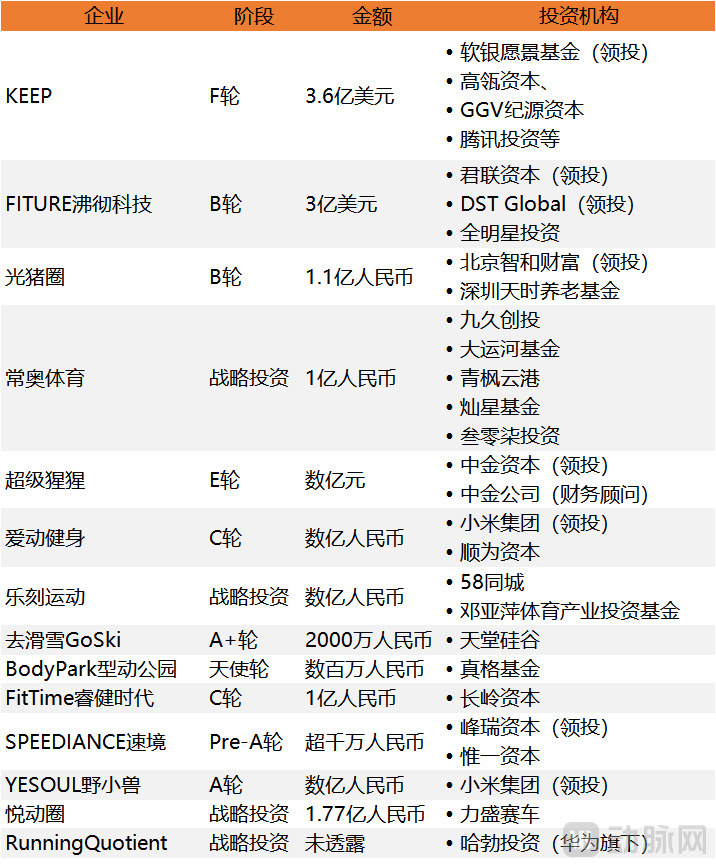
Financing Activities of Selected Sports and Health Companies Since 2021,Compiled by VCBeat from public sources
Furthermore, smart fitness mirrors have emerged as a hot sector over the past two years. Constrained by the pandemic, the offline fitness industry has faced significant operational challenges; however, public demand for fitness remains objectively present and continues to rise year by year. Coupled with growing awareness of scientific exercise, consumers’ needs have evolved from mere physical activity to scientifically guided workouts underpinned by health preservation. Smart fitness mirrors are tailored solutions designed to meet this specific demand.
Smart fitness mirrors are designed for home workouts, eliminating commute time to and from the gym while offering flexible usage. Users can select exercise plans based on their lifestyle habits and adjust them at any time. Compared with personal trainers at gyms, smart fitness mirrors provide a wider variety of courses with guaranteed quality, enabling users to engage in healthy exercise under scientifically designed programs.
From a business model perspective, the smart fitness mirror itself serves more as a bridge for companies to reach consumers; the hardware holds limited intrinsic value. The key to value enhancement lies in the health management assurance provided by the scientifically guided fitness programs behind it. In terms of revenue streams, beyond individual (C-end) users, enterprise (B-end) clients that offer fitness services and health management also constitute a source of income for smart fitness mirror companies.
Centered on the core concept of “scientific exercise,” the company has made significant efforts in AI interaction and course optimization, designing a variety of workout programs tailored to different user groups. Furthermore, the company is expanding its product usage scenarios from home environments to business hotels and sports brand stores, while also building an online fitness ecosystem that integrates exercise with social interaction.
From the perspective of primary market financing, internet-based sports and health management platforms are the most favored by capital. Benefiting from the widespread adoption of mobile internet and the sustained rise in demand for home-based fitness driven by the pandemic, these platforms have seen continuous expansion in their user base and increasingly clear business models. With capital support, they can build an ecosystem around the “Internet + Content + Hardware” model.
Whether it is sports rehabilitation equipment for B-end clients or sports health management products for C-end consumers, both will encounter new challenges during their rapid development. Companies need to plan ahead and prepare for the future.
In the development of the sports and health industry, several trends have become apparent.
First, the intelligentization of sports and health products.Whether for medical device companies or technology firms, they are committed to applying intelligence to every aspect of sports and health products. For both health management during exercise and rehabilitation after sports injuries, intelligence relies on big data, fostering cross-industry collaboration between sports and healthcare to establish a service platform centered on sports and health, thereby empowering products.
Huawei has built the HUAWEI Research academic ecosystem and the HUAWEI Health commercial ecosystem around its own products. The former helps medical institutions and industry partners research and incubate new application scenarios, new industry standards, and new detection capabilities in sports and health, while the latter enables third-party organizations and service providers in the sports and health sector to collaborate with Huawei to facilitate the commercialization of research outcomes.
Taking the exercise physiology research area at Huawei’s Sports Health Science Laboratory as an example, researchers utilize cardiopulmonary metabolic analyzers, heart rate monitors, and professional-grade large treadmills to precisely capture exercise data. By accumulating and analyzing over 200,000 kilometers of running data, they enable intelligent assessment of physical exercise status, formulate scientific running training plans, and identify potential sports risks through visualized analysis of running gait.
An industry insider told VCBeat, “If sports rehabilitation training equipment is not upgraded and iterated based on big data and driven by software in the future, it will remain a low-end product that is easily replaceable. In contrast, intelligent sports rehabilitation training equipment essentially sells software-based services, resulting in a fundamentally different profit model.”
Second, digital therapeutics are being integrated into exercise and health.Digital therapeutics are software-driven, evidence-based intervention programs used to treat, manage, or prevent diseases. Digital therapeutics can be used independently or in combination with medications, medical devices, or other therapies.
Taking ShuKang as an example, based on existing evidence-based medical data, ShuKang presents traditional exercise testing, fundamental principles of exercise prescription, and video-guided exercise rehabilitation through a smartphone application. Integrated with smart wearable devices, the ShuKang APP enables remote home-based exercise therapy for patients and remote exercise guidance for physicians.
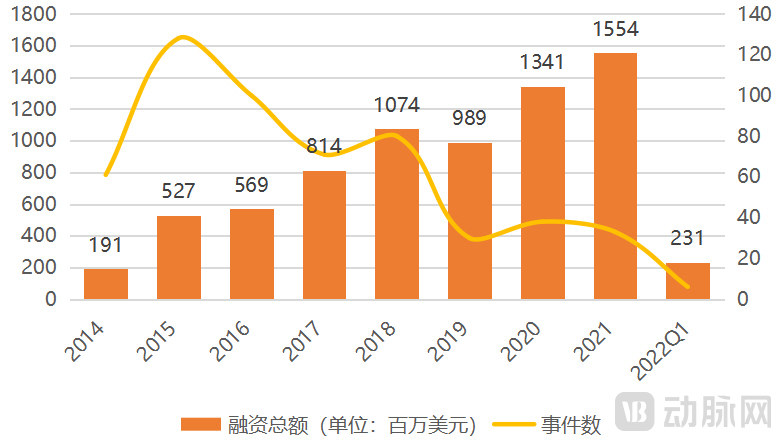
Global Funding Landscape for Digital Therapeutics in Sports and HealthData sourced from VCBeat.
Financing data reveals that the sports and health sector began to gain momentum in 2014, experiencing rapid growth in the subsequent years. Although the total financing volume during this period was not high, it marked a phase when a large number of startups entered the market and secured early-stage investments. After 2018, the number of financing events began to decline, indicating that the industry started to undergo consolidation, with influential leading companies gradually emerging.
Third, the lifestyle medicine sector will receive increasing attention.Lifestyle medicine integrates nutrition science, exercise physiology, psychology and behavioral science, sociology, sleep science, and clinical medicine to provide personalized lifestyle restructuring targeting the etiologies of chronic diseases, aiming to prevent, reverse, and facilitate recovery from chronic conditions through non-pharmacological and non-surgical approaches.
In the future, companies providing sports and health products will leverage lifestyle medicine to guide users in improving their health by focusing on lifestyle factors such as diet, exercise, and sleep. Lifestyle management will target not only patients but also the general population.
The current treatment-centered healthcare model is gradually transitioning toward a health-centered model, which is also the core objective of the Outline of the Healthy China 2030 Plan. Years of research have demonstrated that exercise exerts multifaceted effects on human physiological functions, and scientifically guided physical activity can effectively promote physiological health.
The sports and health industry aligns with the national health strategy and serves as a key instrument for implementing health services. With the influx of capital, enterprises will drive greater innovation and breakthroughs, injecting more momentum into the development of the sports and health industry.