

HyVision Medical Expands Global Footprint with Comprehensive Oncology Radiotherapy Solutions Across Over 70 Countries
According to data released by the WHO, approximately 70% of cancer patients require radiation therapy during their treatment, and about 40% of cancers can be cured with radiotherapy. The proportion of radiation therapy in tumor treatment is increasingly rising.
Amidst technological advancements, the number of radiotherapy equipment installations has surged significantly, driving continuous expansion of the tumor radiotherapy market. The domestic tumor radiotherapy market size in China has grown from RMB 27.2 billion in 2016 to RMB 51.7 billion in 2021, representing a CAGR of 13.70% (data sourced from Frost & Sullivan).
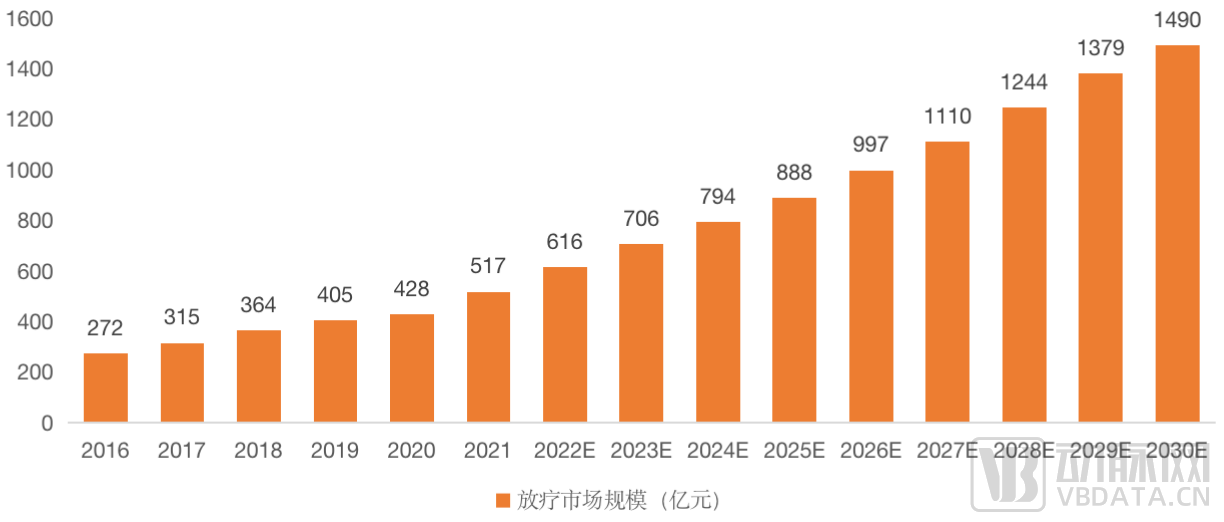
Radiotherapy Market Size
Data Source: Frost & Sullivan, Kaiyuan Securities Research Institute
Although the technological breakthroughs that surged in the early 20th century propelled radiotherapy equipment companies such as Varian, Elekta, and Accuray to prominence, enabling them to capture half of the radiotherapy market, the maturation of radiotherapy technologies, coupled with the issuance of a series of policies supporting the development of domestically produced radiotherapy equipment—including the “2018–2020 Plan for the Allocation Quantity of Large-Scale Medical Equipment”—has ushered in a wave of new enterprises in China.
Recently, VCBeat learned that TCL Healthcare Equipment (Shanghai) Co., Ltd. (“TCL Healthcare”), a multinational enterprise specializing in the R&D, manufacturing, and global sales of medical devices for tumor radiotherapy, has accelerated its expansion in the field of oncology radiation therapy. This follows its acquisition last year of the high-dose-rate (HDR) brachytherapy product line from Eckert & Ziegler BEBIG GmbH (renamed BEBIG Medical GmbH post-acquisition), one of the three global giants in brachytherapy products. In July this year, TCL Healthcare completed the acquisition of the German company Wolf-Medizintechnik GmbH (“WOmed”), further expanding its portfolio of X-ray therapy and intraoperative radiation therapy products.
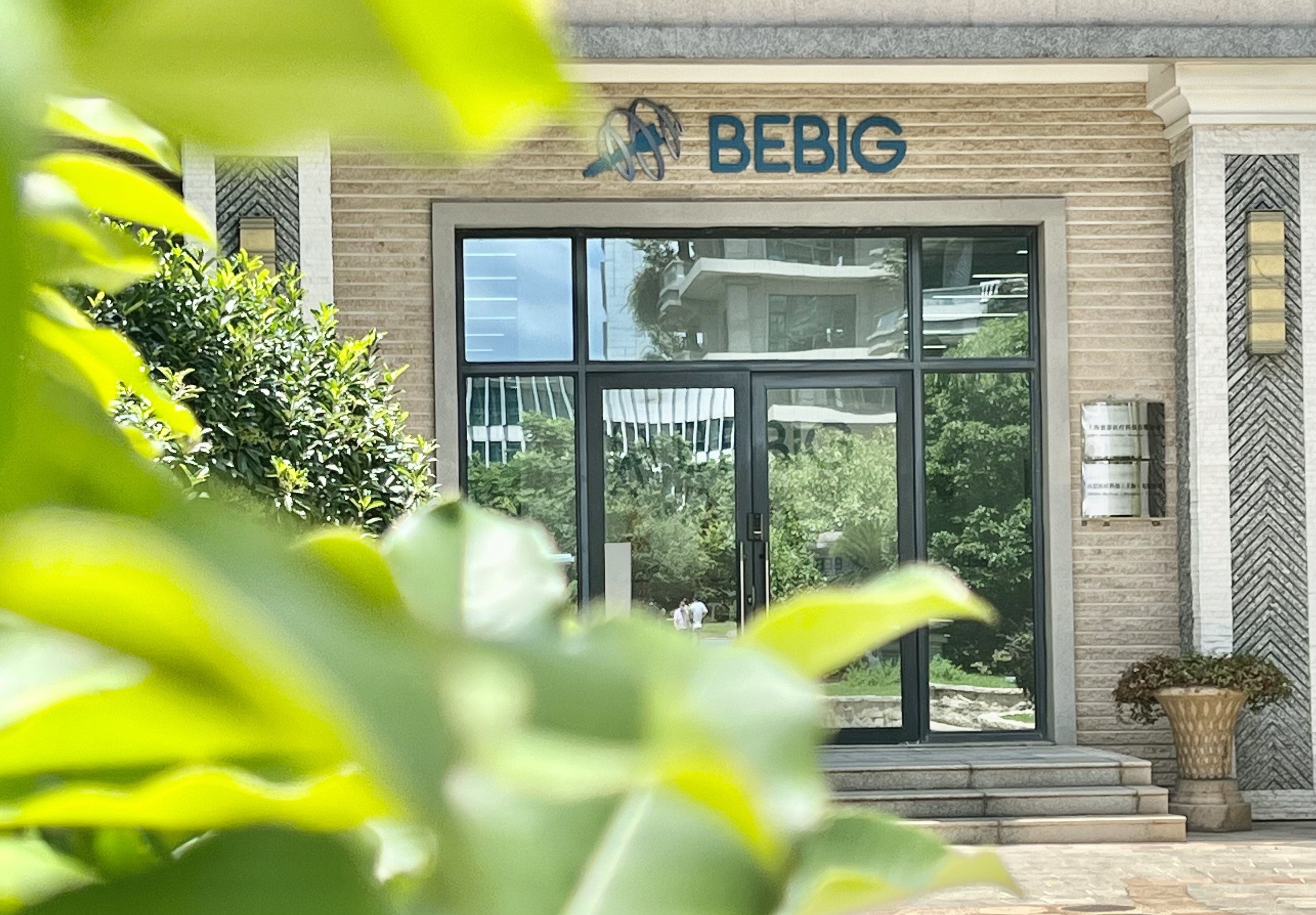
Huiying Medical Office Area
The company is continuously expanding its product pipeline of oncology radiotherapy medical devices and its global marketing network through independent technological innovation and international mergers and acquisitions. Its high-dose-rate brachytherapy products, X-ray therapy products, and intraoperative radiotherapy products have all obtained CE, FDA, and multi-country certifications, and are sold in more than 70 countries and regions worldwide, with a total of over 700 active installations.
Radiotherapy is generally classified into two major categories: external beam radiotherapy and brachytherapy.
Among these, brachytherapy is a treatment method that involves placing a radiation source inside or near the tumor to irradiate it. This radiotherapy technique not only ensures that the radiation dose precisely covers the lesion area, thereby maximizing the avoidance of radiation exposure to surrounding critical tissues and organs, but its minimally invasive nature also reduces damage to the patient's surrounding tissues and shortens postoperative recovery time.
Leveraging these advantages, brachytherapy is now widely used in the treatment of tumors in the prostate, cervix, endometrium, breast, skin, bronchi, esophagus, and head and neck regions, as well as soft tissue sarcomas and other types of cancer.
One of Huiying Medical’s core products, the afterloading brachytherapy unit, is a mainstream device for brachytherapy.
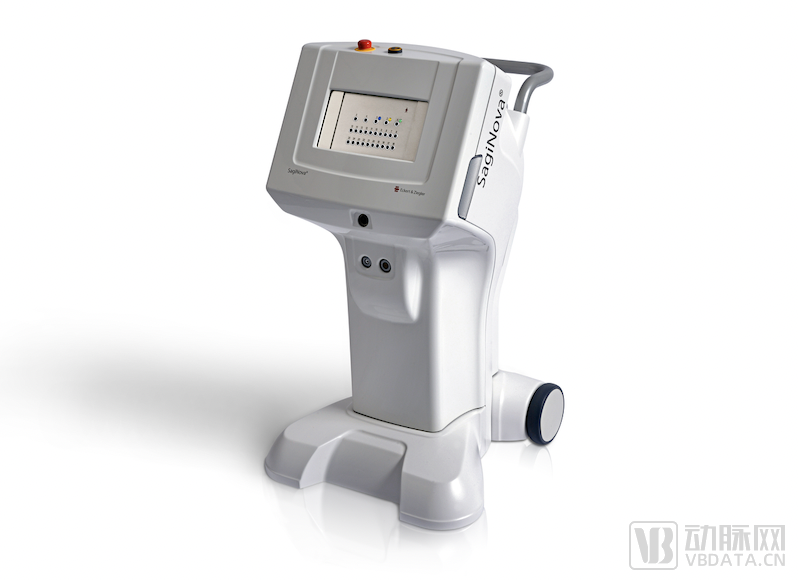
High-Dose-Rate (HDR) Brachytherapy Afterloader
It is reported that its high-dose-rate (HDR) brachytherapy afterloader uses a miniature Co-60 source.The advantage of selecting Co-60 as the radiation source lies in its suitability for all HDR clinical applications, providing more flexible solutions for clinical practice, while effectively lowering the barrier to entry for brachytherapy products. Meanwhile, this radiation source requires replacement only once every 10 years (compared to Ir-192, which needs replacement every 3–4 months), and the same device can be configured with either a Co-60 or an Ir-192 radiation source according to customer preference.
Notably, TCL Healthcare has developed a core TPS treatment planning software suite for its afterloading brachytherapy units to assist physicians with radiotherapy planning and related tasks.During the procedure, physicians need only import the relevant imaging data directly into the system, which then leverages artificial intelligence and other technologies to precisely calculate tumor location, radiation dose, and treatment duration, thereby achieving digitalization, automation, and intelligentization of radiotherapy.
Furthermore, the company has obtained the world’s first CE-certified 3D-printed applicator.Physicians can select the most appropriately sized products for patients based on imaging and related planning, thereby delivering more personalized and precise high-dose-rate brachytherapy. Its clinical efficacy has been validated, demonstrating excellent outcomes.
From radiation sources and applicators to treatment planning systems, it is evident that TCL Healthcare Equipment (Shanghai) Co., Ltd has completed a comprehensive product portfolio for brachytherapy.In the future, TCL Healthcare Equipment (Shanghai) Co., Ltd will be able to provide more tumor treatment solutions for various body parts.
In fact, as early as 2019, the National Health Commission issued the "Standards for the Establishment of National Regional Medical Centers for Cancer," stipulating that only institutions with an annual total of more than 5,000 radiotherapy visits, more than five linear accelerators, and brachytherapy afterloading equipment could be recognized as National Regional Medical Centers for Cancer.
With the continuous advancement of technology and the accelerated implementation of policies, sales of afterloading brachytherapy machines in China and globally are poised to enter a period of steady growth. Companies that master core technologies related to afterloading brachytherapy machines will seize this opportunity to achieve rapid development.
In addition to afterloading therapy units, Huiying Medical has also made strategic arrangements for radiotherapy equipment such as intraoperative radiation therapy systems and X-ray therapy machines.It is reported that in December 2021, TCL Healthcare Equipment (Shanghai) Co., Ltd. signed a Share Purchase Agreement (SPA) with Eckert & Ziegler to acquire the global business of its subsidiary WOmed in intraoperative radiotherapy and X-ray therapy.
Its intraoperative radiotherapy products are applicable to the treatment of breast cancer and lung cancer. In addition, the medical indications for X-ray therapy include joint pain, acute inflammation, scar management, therapeutic irradiation, skin cancer, and superficial cancers.
By utilizing its intraoperative radiotherapy device, the radiation oncologist and physicist need only calculate the radiation dose and depth. Meanwhile, the surgeon inserts a transparent, sterile cone through the surgical incision, directing it toward the lesion, and attaches the head of the portable accelerator to the cone. After retracting organs adjacent to the tumor during the procedure, the accelerator is activated to irradiate the tumor bed for one minute. The patient is then returned to the operating room environment, and once the accelerator is removed, the surgeon proceeds with the remainder of the operation.
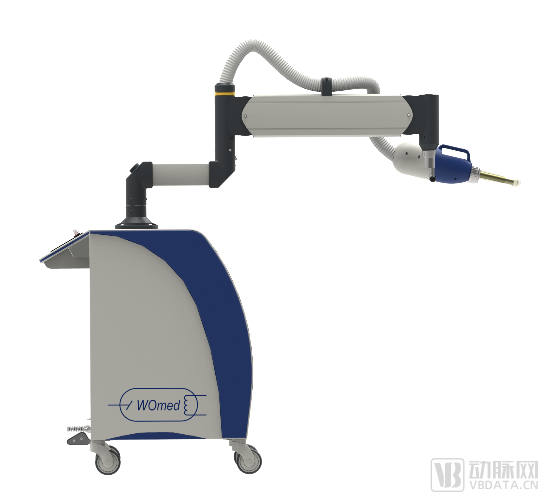
Intraoperative Radiotherapy System
The company also plans to expand into the field of long-distance radiotherapy equipment, achieving comprehensive development across all areas.
Huiying Medical currently operates manufacturing facilities in China, Germany, and the United States, with operating subsidiaries and offices established in China, Germany, the United States, Singapore, and India. The company employs over 100 people worldwide, and its products are available in more than 70 countries and regions. According to the company, the market growth rate for its related products exceeded 20% this May. This year, the company has initiated the product registration process in China and plans to enter the Chinese market next year. It aims to localize its products and adjust its sales strategy to achieve rapid market penetration in China.
Huiying Medical CEO Zeng Fanzhong previously served at Siemens Healthineers for 18 years, during which he held the position of President of Siemens Healthineers Greater China. He managed over 7,000 employees, three manufacturing plants, and 47 branches and offices, with business operations covering more than 10,000 hospitals, achieving installations of over 30,000 units of equipment and generating annual revenue exceeding €1.8 billion.
According to Zeng Fanzhong, his more than ten years of experience in corporate management have provided him with extensive insights into team management. A significant factor behind the rapid development of the TCL Healthcare Equipment (Shanghai) Co., Ltd. team within a short period is attributable to the modern management system he has distilled from his years of experience. This system will provide sustained momentum for the company’s subsequent global expansion.
Zeng Fanzhong told VCBeat, “Management is a critical component of corporate development. As the company’s business scope gradually expands and its workforce grows, modern management systems, rather than reliance on individual-led management, become essential. People-centric management lacks scientific rigor and sufficient standardization. In the future, as the complexity of the company’s operations and organizational structure increases, along with factors such as cross-border, cross-provincial, and cross-linguistic operations, corporate governance will become more challenging. Therefore, it is crucial to establish systematic, modern management frameworks during the company’s growth to enable flexible personnel deployment while enhancing management quality and efficiency. I believe that only by implementing refined team segmentation in accordance with modern management systems can teams adapt flexibly to market changes.”
According to World Health Organization statistics, the overall cure rate for cancer increased from 45% in 2000 to 67% in 2013. Radiotherapy made the greatest contribution to this improvement, raising the overall cure rate from 18% to 30%. Furthermore, radiotherapy has a broad range of indications and is applicable to 95% of cancer treatments.
In terms of treatment costs, the Swedish Council on Health Technology Assessment (SBU) predicts that surgical costs are twice those of radiotherapy, while chemotherapy incurs even higher costs.
Compared with surgical tumor resection, modern precision radiotherapy offers a series of advantages, including fewer side effects, better therapeutic outcomes, and lower overall costs. With the increasing number of installed radiotherapy devices and price adjustments for certain radiotherapy medical services, the market potential for tumor radiotherapy will be unleashed.
As a pioneer in exploring solutions for tumor radiotherapy, TCL Healthcare Equipment (Shanghai) Co., Ltd. has developed a portfolio that includes brachytherapy systems, intraoperative radiotherapy devices, treatment planning systems, and X-ray therapy units. To date, TCL Healthcare’s solutions have been sold in over 70 countries and regions worldwide, with more than 700 active installations. Looking ahead, TCL Healthcare will leverage its product strengths to accelerate the expansion of its medical device portfolio in tumor radiotherapy and drive the global adoption of its solutions.
Reference Article:
Nuclear Medicine (5) — Brachytherapy: A Comprehensive Guide to Technical Platform Principles and the Current State of the Equipment Market