

WeDoctor Secures Over RMB 1 Billion in Funding; Single-City Health Commons Generates Over RMB 100 Million Monthly Revenue — Is Digital Healthcare Making a Comeback?
In July, the healthcare market heated up, mirroring the sweltering summer weather.
After nearly a year of quiet, the secondary market has seen a surge in IPOs, while the primary market is gradually regaining momentum. Even the digital health sector, which has seen little financing activity recently, has reported positive news: WeDoctor has secured over RMB 1 billion in funding, led by a state-owned industrial investment fund.
Capital market movements often foreshadow industry trends. The internet healthcare sector has remained lukewarm for an extended period; why, then, has Weiyi secured substantial financing at this juncture? Its core business, the “Digital Health Community,” is being rapidly replicated in Shandong, Tianjin, Fujian, Shanghai, and other regions. In Tianjin, the Digital Health Community initiative, led and operated by an internet hospital, achieved a daily patient volume exceeding 10,000 and monthly revenue surpassing RMB 100 million within just 30 months of operation. Has the business model, which the industry has struggled to define, finally entered a phase of scalable revenue? As the overall healthcare market rebounds, is the entire digital health industry on the verge of a transformative breakthrough? VCBeat provides an analysis based on comprehensive multi-source research.
According to media reports, Weiyi has recently secured over RMB 1 billion in financing, led by a state-owned industrial investment fund from Shandong Province.
Shandong is one of the key provinces for WeDoctor’s strategic business layout. In recent years, centered on its Digital Health Community, WeDoctor has pioneered models in Shandong such as the Internet-based Medical Consortium for Chronic Disease Management and the Internet-based Comprehensive Health Service Platform. It has also established an Internet-based Trading Center for Traditional Chinese Medicine (TCM) Materials to boost the development of the TCM industry. The models and experience derived from these initiatives are now being widely promoted across Shandong Province.
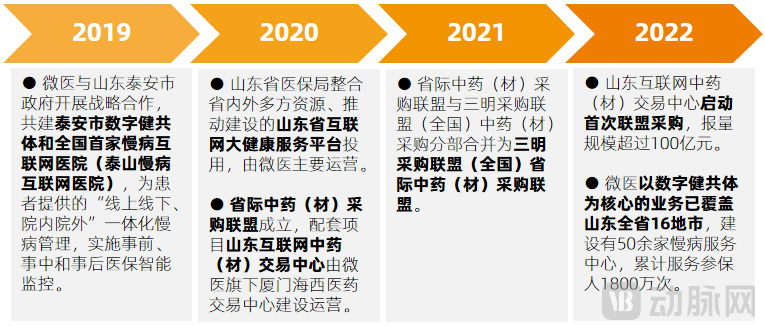
WeDoctor’s Key Business Layout and Major Progress in Shandong, Source: Public Information, Graphic by VCBeat
In 2019, WeDoctor entered into a strategic partnership with the Tai’an Municipal Government in Shandong Province to jointly establish the Tai’an Digital Health Community and China’s first internet hospital for chronic disease management, namely the Taishan Internet Hospital for Chronic Diseases.
Within the Digital Health Community, Taishan Chronic Disease Internet Hospital has joined forces with multiple local physical medical institutions to establish a Chronic Disease Internet Medical Consortium. This consortium provides patients with integrated, full-process management that bridges online and offline services as well as in-hospital and out-of-hospital care. Additionally, it has developed an intelligent healthcare insurance monitoring system for the consortium, enabling closed-loop supervision across pre-event, intra-event, and post-event stages.
In April 2020, the Shandong Internet Healthcare Service Platform, developed and operated primarily by WeDoctor through the integration of diverse resources both within and outside Shandong Province under the initiative of the Shandong Provincial Healthcare Security Administration, was launched. The platform has established a series of service and regulatory functions centered around medical insurance.
In terms of services, the platform enables online medical insurance payments for onboarded internet hospitals. Focusing on the health needs of key populations such as patients with chronic diseases, the elderly, and individuals with disabilities or partial disabilities, the platform aggregates assisted services—including follow-up consultations and prescription refills, medical insurance payments, home medication delivery, and scheduled in-home nursing care—onto web and mobile interfaces. Meanwhile, the platform facilitates data integration between basic medical insurance and commercial health insurance, thereby empowering commercial insurance companies.
In terms of regulation, the platform has established an intelligent medical insurance supervision system covering the entire healthcare process, enabling multi-dimensional intelligent cost control through real-time monitoring, intelligent analysis, dual audits, and smart management based on big data applications.
In July 2020, China’s first inter-provincial procurement alliance for traditional Chinese medicine (TCM) and TCM materials was established. The supporting project, the Shandong Internet TCM (Materials) Trading Center, was built and operated by Xiamen Haixi Pharmaceutical Trading Center, a subsidiary of WeDoctor. In 2022, the Shandong Internet TCM (Materials) Trading Center launched its first joint procurement. It is reported that the bidding for the nation’s first joint procurement of TCM decoction pieces, undertaken by this center, will open soon.
As the aforementioned initiatives advance, WeDoctor’s strategic deployment in Shandong has yielded significant results, primarily manifested at two levels: public welfare and industry.
At the public welfare level, it has enhanced the accessibility, affordability, and effectiveness of healthcare services for residents, while also improving the operational efficiency of medical institutions and health insurance funds.
The Digital Health Community integrates nearly all standard digital healthcare services, enabling residents to access online follow-up consultations without leaving their homes. To address the “digital divide” faced by the elderly, the platform has specifically launched a manual customer service hotline in addition to conventional offline and internet-based channels, thereby making medical consultations more convenient for residents.
The platform-developed inclusive supplementary medical insurance product, “Qilu Bao,” has improved the cost-effectiveness of healthcare for residents. Launched for the first time in 2020, Qilu Bao enrolled 716,000 participants in its 2020 edition, with enrollment growing to 760,000 in the 2021 edition. Building upon basic medical insurance, it better meets the diverse and personalized healthcare coverage needs of insured individuals. Furthermore, leveraging WeDoctor’s digital healthcare service capabilities, Qilu Bao also offers services such as personal health records, second opinions for oncology, and online text-and-image consultations, thereby shifting healthcare services toward prevention and early intervention.
In terms of effectiveness, WeDoctor’s diabetes management project in Shandong has achieved a diabetes control rate of approximately 64.1%, surpassing the industry average of 49.4%. Meanwhile, during the operation of the Digital Health Community, patients with chronic diseases who previously sought offline consultations have been redirected to centralized areas within hospitals, which not only reduces patient waiting times but also promotes efficient hospital operations.
Currently, WeDoctor is promoting its digital health community-centered business across 16 prefecture-level cities in Shandong Province, having established over 50 chronic disease management centers. It has cumulatively served insured individuals 18 million times, with online consultations exceeding 8 million and nearly 2 million service instances provided to patients with chronic diseases.
At the industrial level, it has become an important component of Shandong Province’s big health, traditional Chinese medicine, and digital economy industries.
The medical and elderly care health industry is one of the “Top Ten” industries under Shandong Province’s Major Project for the Conversion of Old and New Growth Drivers. The People’s Government of Shandong Province issued the Shandong Provincial Development Plan for the Medical and Elderly Care Health Industry (2018–2022) (hereinafter referred to as the “Plan”), marking the province’s first-ever development plan dedicated to the health industry.
The Plan points out the exploration of a batch of “Internet+” models; the construction of an online-offline integrated medical service model covering pre-diagnosis, during-diagnosis, and post-diagnosis stages; and the innovative development of health and elderly care service models, including chronic disease management, home-based healthy aging, personalized health management, Internet-based health consultation, and daily life care.
Shandong boasts approximately 1,500 types of traditional Chinese medicine (TCM) resources, accounting for more than 10% of the total TCM resource varieties nationwide, thereby possessing unique advantages for developing its TCM industry. In March 2021, ten departments, including the Shandong Provincial Medical Products Administration, formulated the “Several Measures on Promoting High-Quality Development of the Traditional Chinese Medicine Industry in Shandong Province” to vigorously drive the upgrading of the TCM industry.
Furthermore, building a digital society and developing the digital economy are also important strategies for Shandong Province during the 14th Five-Year Plan period.
It is worth noting that the inter-provincial procurement alliance for traditional Chinese medicine (TCM) materials, in which WeDoctor participates, differs fundamentally from the “volume-for-price” model of centralized drug procurement with guaranteed purchase volumes. The primary significance of the joint procurement of TCM materials lies in enhancing efficiency and quality. By leveraging a digital platform, it improves operational efficiency in logistics, warehousing management, transaction settlement, and other key processes, thereby enabling end-to-end quality control and traceability—from cultivation and harvesting to processing and preparation, and from finished-product testing to warehousing.
It is evident that WeDoctor has integrated digital technologies across sectors such as general health and traditional Chinese medicine, empowering traditional industries through digitalization and promoting industrial convergence, thereby realizing synergistic value greater than the sum of its parts. Overall, WeDoctor’s business layout has not only contributed to improving the quality of public services in Shandong Province but has also become a significant component of local industrial transformation and upgrading. This round of financing reflects the recognition by local state-owned capital of the progress and growth potential of WeDoctor’s business model.
Since 2022, there has been little financing in the field of Internet medical care. Why can WeDoctor obtain such a significant amount of financing at this time?
It is understood that the investors in this round did not target a specific business entity of WeDoctor in Shandong, but rather made an overall investment in WeDoctor. Given that WeDoctor’s operations have been successfully implemented and yielded results in many regions across China, this indicates that the investors are not only optimistic about WeDoctor’s growth potential in Shandong but also about the nationwide development prospects of its Digital Health Community.
Digital Health Community’s Commercial Value Emerges, Tianjin Monthly Revenue Exceeds 100 Million Yuan
In recent years, the digital health communities implemented by WeDoctor in multiple provinces and cities have achieved strong performance, with their commercial value becoming increasingly evident; Tianjin is one such example.
In April 2020, the construction of the grassroots digital health consortium, led by the Tianjin Municipal Health Commission and spearheaded by Tianjin Weiyi Internet Hospital, was launched; it has been in operation for 30 months to date.
At the 2021 National Conference on Promoting Experience in Deepening Healthcare Reform, Tianjin’s Primary Care Digital Health Consortium was ranked first among the “Top Ten New Initiatives to Advance Healthcare Reform and Serve Public Health.” In April this year, the National Development and Reform Commission and four other ministries explicitly proposed “guiding localities to explore the development of primary care digital health consortia.” In June this year, CCTV News featured a special report on the current status of internet-based diagnosis and treatment development across China, highlighting Tianjin’s Primary Care Digital Health Consortium as a typical case study.
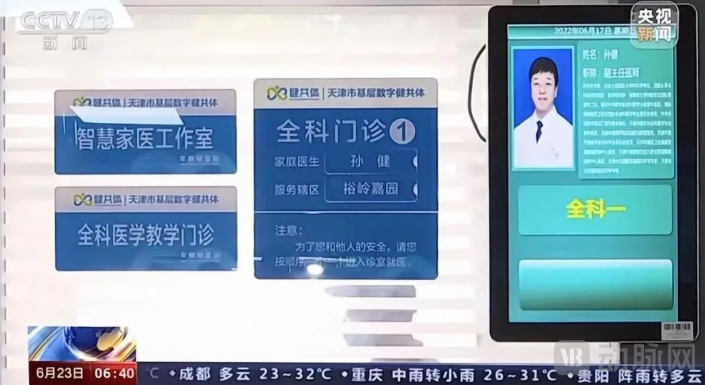
CCTV Reports on Tianjin’s Grassroots Digital Health Community, Image Source: CCTV News
The attention drawn to WeDoctor’s digital health community practice in Tianjin can be summarized as the “Three Threes”—three-tier system, three indicators, and three sets of data:
Three-Tier System: Establish a digital and intensive service system to improve the efficiency of medical resource utilization; build a standardized and integrated service system to enhance primary healthcare service capacity; and implement a performance-based payment health accountability system to boost the motivation of primary care physicians.
From technological innovation to service innovation, and then to institutional innovation, this “three-step” approach has driven the local healthcare services to shift from “fee-for-service/fee-for-volume” to “pay-for-performance,” while enhancing the capabilities of primary healthcare institutions, reducing procurement costs for drugs and consumables, and improving the efficiency of health insurance fund utilization, thereby benefiting patients, physicians, and hospitals alike.
Three indicators are reflected in three “hard benchmarks”: patient health, physician income, and hospital outpatient volume.
Patient Health: Taking Diabetes Management as an ExampleAmong the pilot hospitals within the healthcare consortium, the rate of standardized patient management reached 76.68%. For patients enrolled in demonstration-level chronic disease management for more than three months, the blood glucose control rate was 13.5% higher than that of patients not receiving such management.
In terms of physician incentives, the Medical Community implements a “pay-for-performance, surplus retention” model, establishing performance-based incentive funds from medical insurance pools. With health service delivery and outcomes as the primary evaluation metrics, it provides grassroots physicians with more transparent income in accordance with the principle of “greater reward for greater effort and superior performance.”
In boosting outpatient visits at primary care hospitals, enhanced service capabilities and increased motivation among primary care physicians have driven patients to “return” to grassroots facilities, yielding significant results in tiered diagnosis and treatment. Data show that outpatient visits at some primary care institutions within the healthcare community increased by 100%, with the highest year-on-year increase reaching 280%.
Three sets of data reflect its commercial value in terms of the business volume, overall investment, and revenue scale of the Digital Health Consortium.
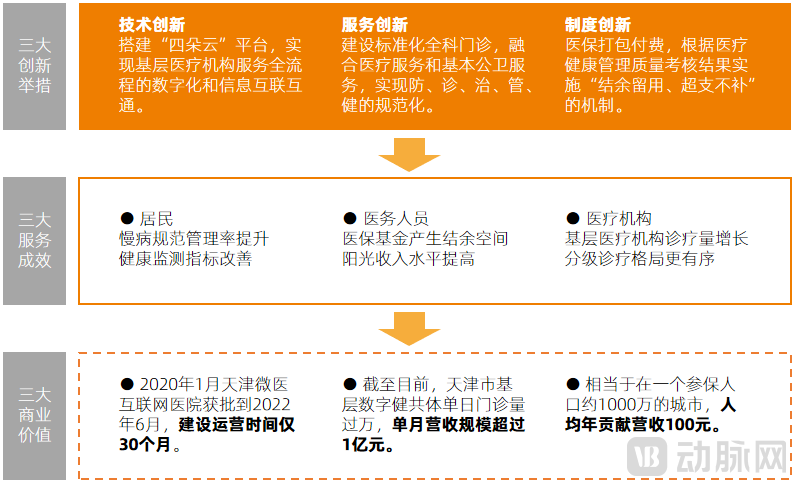
WeDoctor’s grassroots digital health consortium in Tianjin has achieved the “Three Threes” outcomes. Source: 2022 World Intelligence Congress
Public records indicate that it has been 30 months from the approval of Tianjin Weiyi Internet Hospital’s license in January 2020 to the full launch of the Tianjin Primary Care Digital Health Community in April of the same year. Currently, the Health Community handles over 10,000 outpatient visits per day, with monthly revenue exceeding RMB 100 million. This means that within a medical insurance pooling area covering approximately 10 million insured individuals, the Health Community achieved a daily patient volume equivalent to that of a large Grade A tertiary hospital (10,000 visits) within 30 months, with an annual ARPU (Average Revenue Per User) of RMB 100.
The commercial value derived from this input-output ratio is self-evident, while also demonstrating the growth potential and breakthrough effect of “digital hospitals” compared to traditional hospitals.
As can be seen, the technological and model increments brought by the Digital Health Community have yielded substantial benefits in serving public welfare, driving industrial development, and advancing healthcare reform. It is precisely for this reason that this model is regarded as a viable pathway for implementing the UnitedHealth HMO model in practice, tailored to China’s national conditions.
Multiple local governments are in negotiations; the digital health community model is poised for rapid replication
In addition to Shandong and Tianjin, WeDoctor’s Digital Health Community model has also been implemented in provinces and cities such as Fujian and Shanghai.
Significant disparities exist across China in terms of economic development, medical technological capabilities, the degree of healthcare informatization, and the surplus status of medical insurance funds. Nevertheless, the challenges confronting local healthcare service systems are fundamentally consistent: the diagnosis and treatment landscape remains to be optimized, medical insurance expenditures are rising rapidly, and the burden of chronic diseases is heavy, compounded by a lack of effective management measures.
Digital Health Community precisely addresses the aforementioned fundamental challenges by formulating feasible solutions tailored to local conditions.
In 2022, five departments, including the Cyberspace Administration of China, the Ministry of Agriculture and Rural Affairs, and the National Development and Reform Commission, proposed in the “Key Points for Digital Village Development Work in 2022” to develop “Internet + Healthcare” and guide localities to explore the construction of grassroots digital health communities. Such direct policy-level encouragement for “digital health communities” also reflects the replicable value of the WeDoctor model.
In early July, as Weiyi secured over RMB 1 billion in state-owned capital financing, reports emerged that, in addition to Shandong’s state-owned assets, multiple local governments were engaging in negotiations with Weiyi. These discussions aim to accelerate the integration of digital healthcare platforms with local medical and health service systems through such partnerships, thereby promoting the development of the local digital health industry and enhancing public welfare services.
With Micro Medical Group now backed by Shandong’s state-owned assets, other local industrial investment funds are also showing interest in investing. Overall, this is poised to create a mutually beneficial “win-win” outcome. On one hand, the company will have more ample financial resources to expand the implementation of its Digital Health Community across additional regions. On the other hand, it establishes a model demonstrating how state-owned capital can help the Digital Health Community generate dual value in both “public welfare and industry.” More importantly, Micro Medical Group’s own commercial value is becoming increasingly prominent. If further state-owned capital injections follow, the Digital Health Community’s proven, virtuous-cycle business model may be replicated and implemented nationwide at an accelerated pace.
As internet healthcare cools, the entire healthcare market has faced a winter over the past year.
In the secondary market, the healthcare sector has been in continuous decline since the second half of 2021, with new listings frequently breaking their issue prices. According to statistics from VCBeat, in 2021, 98 medical companies from China listed on global capital markets; 25 of them broke their issue prices, and 75 experienced negative growth during their first year of trading post-IPO, with both fundraising amounts and market capitalizations contracting compared to the previous year.
Affected by the negative conditions in the secondary market, some companies postponed their initial public offerings (IPOs) in the first half of 2022, and a number of firms that had already filed their prospectuses made no further progress. Consequently, over the past six months, both the number of IPO applications and the number of successful listings have declined.
The performance of the primary market is always correlated with that of the secondary market, especially in the context of the pandemic.
In the first half of 2022, investment activities in Beijing and Shanghai—key hubs for venture capital—were hindered by pandemic control measures, making it difficult for investors to conduct on-site project sourcing and due diligence, thereby impeding transactions. Although digital workflows have replaced many offline tasks, investment decisions still require repeated in-person interactions to build stronger relationships with founding teams and gain deeper insights; meanwhile, certain essential processes must still be carried out offline.
Furthermore, healthcare and medical enterprises have encountered numerous setbacks in their business operations. In Shanghai, many companies experienced months of work stoppages and production halts, significantly impacting their market activities.
Amid the winter chill, industry confidence has been dampened.
The situation finally turned a corner at the juncture between the first and second halves of the year.
During the week from June 27 to July 3, a record-high 126 companies had their IPO applications accepted by the STAR Market and the ChiNext board, with five companies successfully passing listing committee reviews. Among these, 15 healthcare companies were accepted, reaching a historical high. On the Hong Kong Stock Exchange front, five healthcare companies also submitted prospectuses. The IPO process for these enterprises has entered a period of collective acceleration.
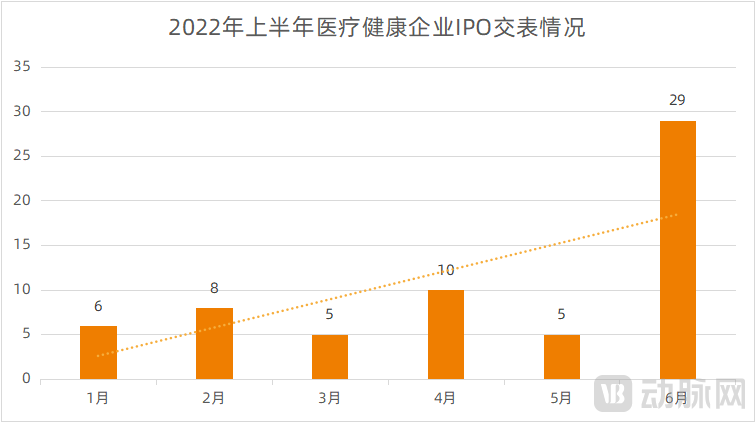
Number of healthcare companies that filed IPO applications on the ChiNext Board, the STAR Market, and the Hong Kong Stock Exchange in the first half of 2022. Data source: official websites of the respective exchanges.
In the primary market, as the epidemic was effectively controlled across various regions and prevention measures were adjusted, investors embarked on a frenzied travel schedule, engaging in “revenge-style” project scouting, due diligence, and capital deployment, while also actively raising funds.
For enterprises, getting business back on track, expanding market presence, and resuming normal financing are the top priorities moving forward.
Although the surge in IPO applications is closely tied to financial reporting deadlines, a holistic view of performance in both the primary and secondary markets, along with the recovery of corporate operations, indicates that the market is showing signs of emerging from its winter slump.
Micro Medical Group’s securing of substantial financing is also a sign of market recovery, particularly in the digital healthcare sector.
Confidence is more precious than gold. A steady stream of positive news has significantly boosted confidence across industries, including digital health, creating a more favorable environment for companies preparing to go public.
According to VCBeat’s research, with the market recovery, digital health is among the subsectors that will receive focused attention from capital in the second half of the year.
As a crucial component of digital health, what changes will the digital healthcare industry undergo following its market recovery?
For a considerable period, the industry has significantly enhanced patient access to medical care by establishing internet hospitals and providing services such as online consultations, follow-up visits with prescription issuance, and medication delivery. However, as the sector accelerates its growth, certain issues have gradually emerged: the absence of a rigorous quality management system benchmarked against offline medical institutions, and irregularities in processes such as prescription issuance and review, as well as the sale of prescription drugs. These deficiencies pose risks not only to individual enterprises but also to the industry as a whole.
In 2022, the “Detailed Rules for the Supervision of Internet-based Diagnosis and Treatment (Trial)” came into effect, with medical quality and safety as its core focus. The document emphasizes multiple aspects, including integrated online-offline quality control for internet-based diagnosis and treatment, preservation of medical records, boundaries for the use of artificial intelligence technologies, and the prohibition of commercially motivated data aggregation.
These regulations impose higher requirements on the integrated online-offline service capabilities and operational management capabilities of internet diagnosis and treatment platforms. Only through higher-standard management can higher-quality medical services be delivered. The new policy will drive the industry into a development phase characterized by quality-led growth.
Liao Jieyuan, founder of WeDoctor, has stated that China’s path toward digital healthcare must be rigorous and held to high standards. It should not merely stop at moving services online, but rather be based on the deep integration of digital technologies with the traditional medical and health industry. This approach aims to gradually develop an integrated online-to-offline model, creating a closed-loop digital healthcare ecosystem that links medical care, pharmaceuticals, and health insurance—the “Three-Medical Linkage.” Only in this way can the efficiency of the entire industry be significantly improved, steering the sector toward greater professionalism, efficiency, and sustainability.
Evidently, the innovation and development of the digital health consortium model may well be rooted in this original aspiration.
It is foreseeable that enterprises aligned with policy directions, possessing mature infrastructure and operational expertise, and deeply integrated with and empowering the existing healthcare service system will usher in another wave of opportunities.
The preceding market cooling and brief lull signify that the industry is undergoing a transformation. After this transformation comes a new beginning.