

Xsome Biotech Advances in Inhaled Exosome Therapeutics and Prepares for Pre-A Financing

Xsome
Developer of Exosome Therapy and Novel Drug Delivery Vectors
On July 4, 2022, a latest research paper by Professor Cheng Ke’s team was published in Nature Biomedical Engineering, a Nature journal.An exosome-based inhalable COVID-19 vaccine is presented, which remains stable at room temperature for over three months after lyophilization.By overcoming the limitations of stringent storage conditions for current vaccines and extending their shelf life,thereby reducing storage and transportation costs, facilitating vaccine distribution and access, and emerging as a promising COVID-19 vaccine candidate.
This research achievement has drawn widespread attention across the industry. As the scientific founder, Professor Cheng Ke spearheaded the establishment of in the United States in 2021Xsome Biotech Inc. is dedicated to developing exosome-based therapeutics and leveraging exosomes as a unique drug delivery system, positioning itself as a leader in the exosome sector.
Shortly after its establishment, the company secured millions of dollars in angel investment. Currently, it holds an exclusive license for core patents and technologies from North Carolina State University and has built a core team of nearly 10 professionals in the Research Triangle Park (RTP) area of North Carolina, covering early-stage R&D, process development, and GMP manufacturing.
Recently, Xsome has launched its Pre-A round of financing.
Upon learning of the latest developments at Xsome, VCBeat New Medicine promptly interviewed its founding team.
“Professor Cheng Ke is an undisputed industry leader in the field of exosomes. The company’s core technology stems from Professor Cheng’s research and technical accumulation in the field of exosomes over the past decade.“Building on this foundation, the company proceeded with subsequent exosome drug development and clinical studies,” Dr. Xu Gangfeng told VCBeat News.
Xu Gangfengis the company's co-founder and CEO,Bachelor’s degree from Fudan University, Ph.D. from the University of Utah, MBA from Northwestern University, postdoctoral fellowship at Harvard Medical School, and over 25 years of experience at biopharmaceutical companies including Pfizer, Abbott, and GenScript. Another individualCo-Founder and CTOMs. Wang MaomaoHe has also worked at multinational pharmaceutical companies and leading biotechnology firms, bringing nearly 30 years of experience in process development, GMP manufacturing, and laboratory and plant management.
Dr. Xu Gangfeng revealed that the core team came together based on a shared consensus: “We all recognize the exosome sector as unique, capable of addressing challenges that existing technologies cannot resolve. We also believe that the three of us working together can position Xsome as the leader in this field.”
Exosomes represent a new frontier, which means that robust industry standards have yet to be established, with many companies navigating uncharted waters. This poses challenges but also offers the opportunity to become a pioneer and help shape new industry standards.
Currently, leveraging its core patented technologies, the company has established two technology platforms for product development.
A natural exosome derived from lung spheroid cells (LSCs), discovered by Professor Cheng Ke, can be administered via pulmonary inhalation for the treatment of lung diseases.This exosome-based pulmonary delivery method is a global first pioneered by Xsome, which holds the patent for this technology.
Exosomes derived from LSCs are enriched with various microRNAs and proteins that promote the repair of lung injury, reduce inflammation and fibrosis, and exhibit strong tropism for lung tissue. Upon inhalation, LSC-derived exosomes can effectively traverse the mucosal barrier and airways, reach deep lung tissues, and accumulate at the site of injury to achieve therapeutic effects. In preclinical studies, LSC-derived exosomes have demonstrated favorable efficacy and safety profiles across multiple indications, including idiopathic pulmonary fibrosis (IPF), pulmonary arterial hypertension (PAH), and chronic obstructive pulmonary disease (COPD).
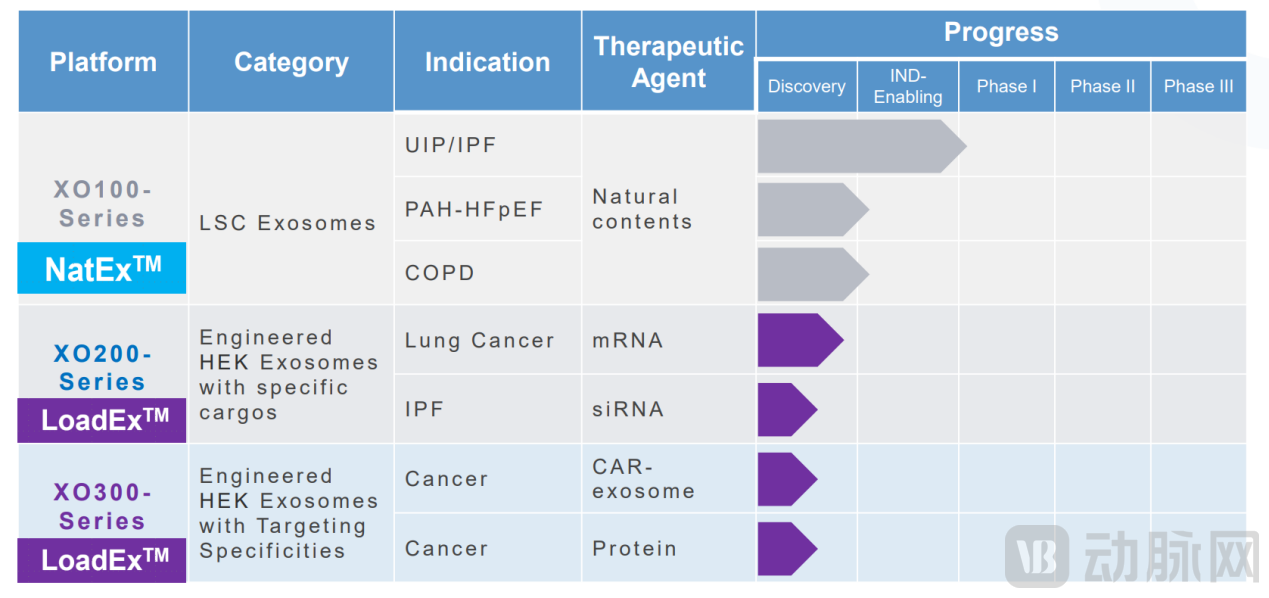
The natural LSC exosome product has received Investigational New Drug (IND) clearance from the U.S. FDA for the treatment of COVID-19-associated acute respiratory distress syndrome (ARDS). Furthermore, the product has obtained ethical approval for in-house clinical research at domestic Grade IIIA hospitals for the treatment of usual interstitial pneumonia (UIP).。The company has also developed multiple technologies related to the preparation of exosome formulations for inhalation administration, building upon its existing patented technologies.
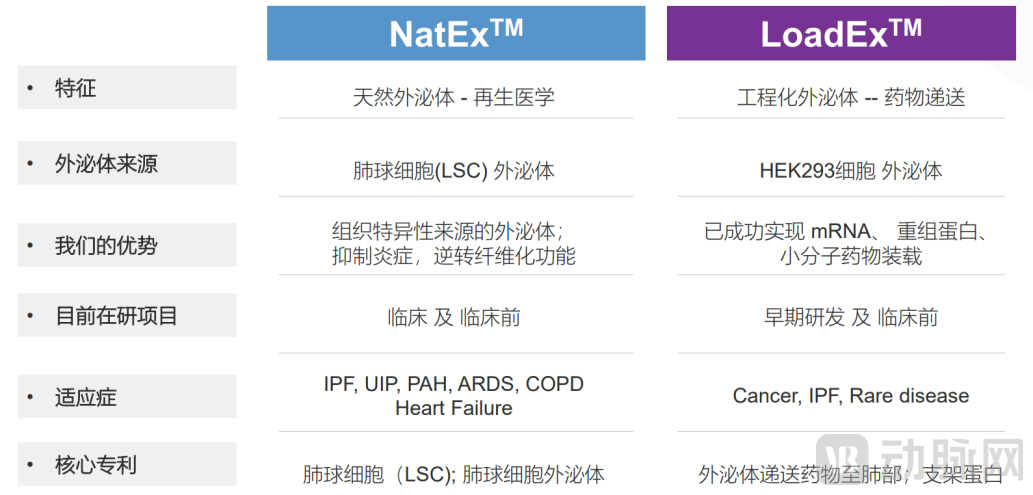
Another key offering is the engineered exosome platform. Exosomes engineered via Xsome’s technology can carry drugs in various forms: exogenous drugs can be loaded using methods such as electroporation and osmotic gradient, while endogenous drugs can be delivered through scaffold protein-guided loading. Xsome has already identified highly efficient scaffold proteins. In addition to drug loading, the platform enables surface modification of exosomes, enhancing their tissue targeting capability, thereby improving delivery precision and reducing dosage requirements. Xsome is actively expanding its repertoire of targeted surface modifications to facilitate the application of engineered exosomes across a broader range of therapeutic areas.
Exosome isolation, purification, and scalable production have long been industry pain points. Xsome has overcome these technical challenges and mastered the know-how of key technologies, laying a solid foundation for becoming an industry leader.
Xsome, though recently established, has already built a robust R&D product pipeline.Xsome has achieved significant accomplishments in a short period of time for two reasons: one is the continuous output and technology transfer from Professor Cheng’s R&D team; the other is the company’s R&D strategy and the team’s execution capability.
In Xsome’s R&D pipeline, several leading projects target pulmonary diseases, including IPF, PAH, and COPD. The company is also developing products for the oncology sector.
“Lung cancer can also be treated via inhalation. We have a preclinical project following this approach: extending from pulmonary diseases to lung tumors, and then to other solid tumors. This is the strategic direction of our current product pipeline,” introduced Xu Gangfeng. “In the short term, Xsome will continue to focus its pipeline expansion on pulmonary diseases and oncology. In the future, we may extend into rare diseases, particularly those caused by gene deletions. By leveraging the ability of exosomes to deliver nucleic acids and proteins, we can transport gene-editing tools to relevant tissue cells to compensate for congenital genetic disorders.”
Furthermore, the central nervous system (CNS) is another area Xsome aims to explore. By engineering exosomes to enhance their targeting specificity toward CNS cells, it would be possible to encapsulate relevant therapeutics within these exosomes for the treatment of CNS-related diseases.
“Xsome is still in its early stages. We have many ideas and aspirations, but we need to maintain focus,” said Xu Gangfeng. He noted that with continuous capital investment, ongoing technological advancements, and the expansion of the technical team, Xsome will undertake an increasing number of development projects.
Xsome’s founders’ decision to focus on the exosome sector and establish the company was not a whim, but a strategic move to “seize the right opportunity.”
In 2013, American scientists James E. Rothman and Randy W. Schekman, along with German scientist Thomas C. Südhof, were awarded the Nobel Prize for elucidating the regulatory mechanisms of intracellular vesicle transport, including exosomes. This achievement immediately drew significant attention from industry professionals, sparking a surge in scientific research and funding. Exosomes, once regarded merely as vehicles for cellular waste disposal, have since become a focal point of academic interest.
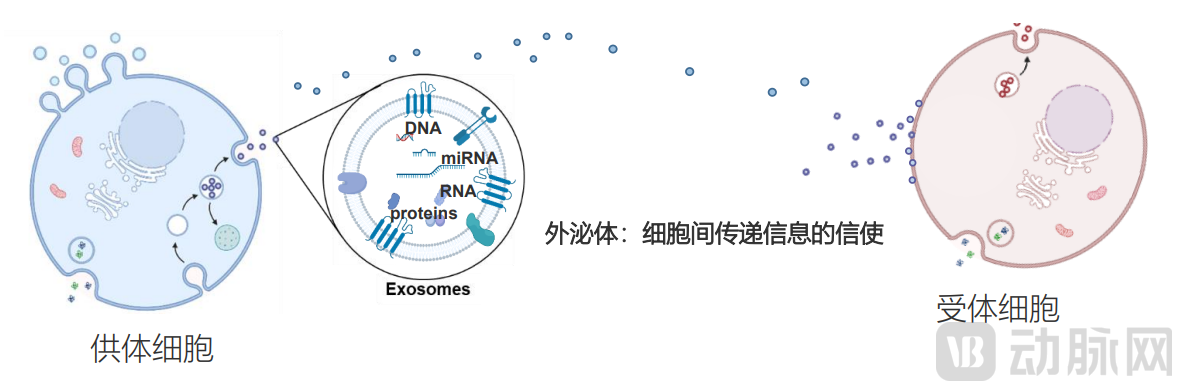
After nearly a decade of development, the applications of exosomes are no longer confined to the pharmaceutical industry. Driven by technological breakthroughs in exosome-based drug delivery systems, the potential use of exosomes as diagnostic markers for diseases has garnered increasing attention. They are increasingly recognized as biomarkers and prognostic factors, holding significant clinical value for diagnosis and treatment.
Not only are startups flooding into this sector in droves, but many well-established companies are also actively laying out exosome-related businesses. According to incomplete statistics from VCBeat, there are currently 46 companies worldwide engaged in exosome-related research. Among them, nearly one-third (14 companies) focus on exosome diagnostics, while more than two-thirds (32 companies) are primarily conducting research related to exosome-based therapies.
However, as a novel pharmaceutical formulation, exosomes also face many unknowns. Currently, there is a lack of comprehensive approval standards for exosome-based drug products that have been manufactured or are under production, and regulatory agencies still need to refine the corresponding regulations.
Xu Gangfeng stated, “It is quite normal for such phenomena to emerge when a new sector arises. This also presents us with an opportunity to guide the industry, including collaborating with regulatory authorities to jointly promote the establishment of industry standards.”